Looking with the figure
Caspar David Friedrich was born in 1774 in Greifswald on the Baltic coast and worked most of his life in Dresden. He walked for days through the mountains and along the sea, made exact pencil studies of trees, rocks and clouds, and then composed his paintings in the studio, often combining several real places into one imagined view.
His best-known works, Monk by the Sea (1808–10), Wanderer above the Sea of Fog (c. 1818), Two Men Contemplating the Moon and The Sea of Ice (1823–24), use stillness, emptiness and fog to make landscape feel spiritual. His signature device is the Rückenfigur, a figure seen from behind, who invites us to stand in their place and look. Forgotten after his death in 1840, he was rediscovered in the 20th century, and his compositions echo through film posters, album covers and landscape photography.
Visual anatomy of Caspar David Friedrich
A small figure seen from behind, looking into the scene with us.
Huge empty areas of sky, sea or fog; the horizon placed low or very high.
Dawn, dusk and moonlight; cool, quiet, glowing skies.
Calm, often symmetrical compositions with a strong central axis.
Ruined abbeys, bare oaks, Gothic windows, ships, mountains and ice.
Smooth, finely blended paint with no visible drama in the brushwork.
How to recognize Caspar David Friedrich's work
- A lone figure seen from behind, facing an immense view.
- Fog, moonlight or dawn in silent, empty space.
- Smooth, calm painting and a strong central axis.
Where people get it wrong
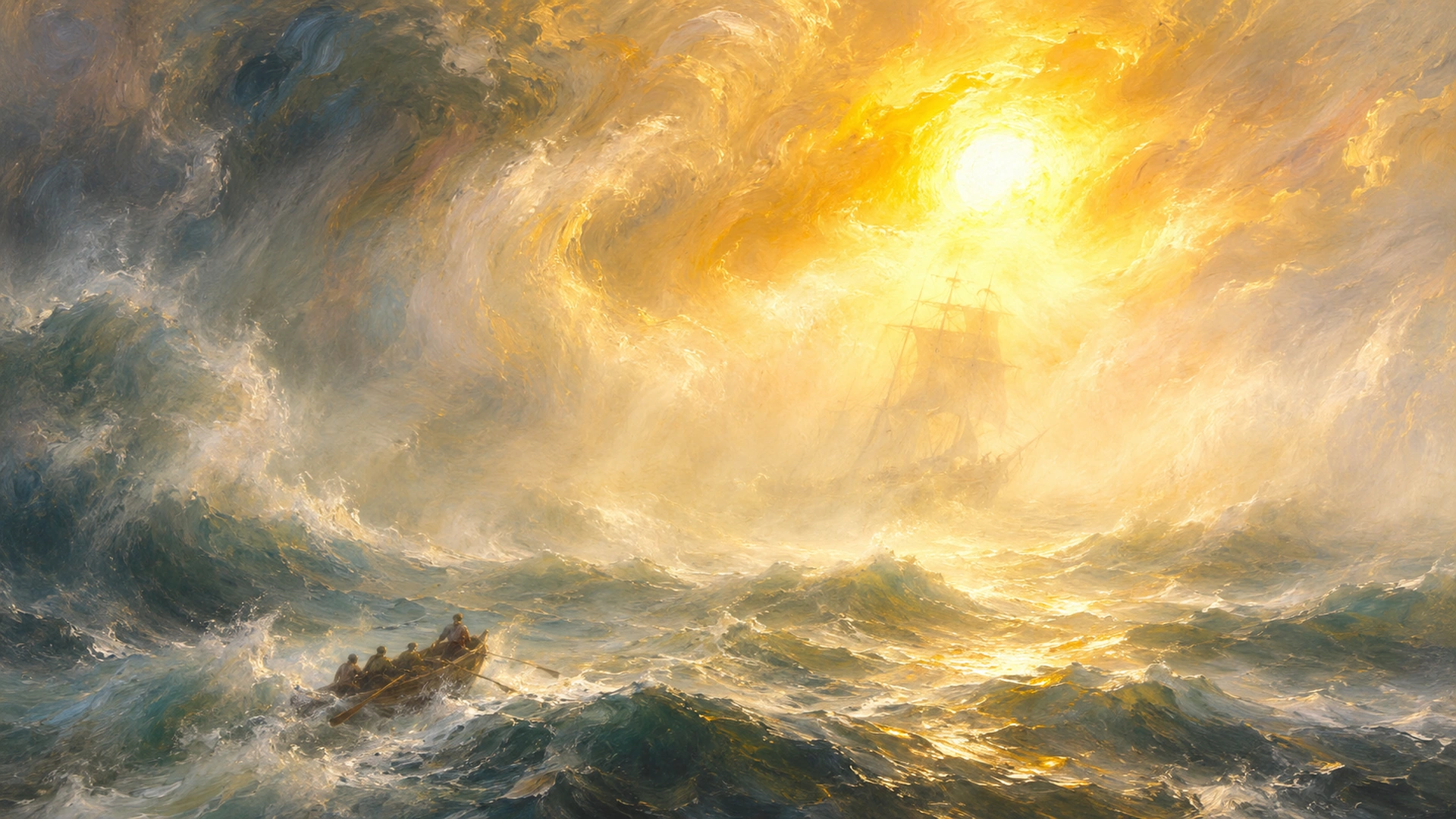
Friedrich is often grouped with Turner as 'stormy Romantic', but he is the opposite: where Turner's paint is wild and swirling, Friedrich's is silent and smooth. His drama is in emptiness and scale, not in brushwork.
Words to describe Caspar David Friedrich
Words for what you see and feel in this work. They are for describing and understanding, not a recipe for copying an artist.
- rückenfigur figure from behind
- sea of fog
- moonlit contemplation
- ruined gothic abbey
- bare oak silhouettes
- silent spiritual landscape
- low horizon and vast sky
- cool dawn light
- smooth blended paint
- romantic solitude
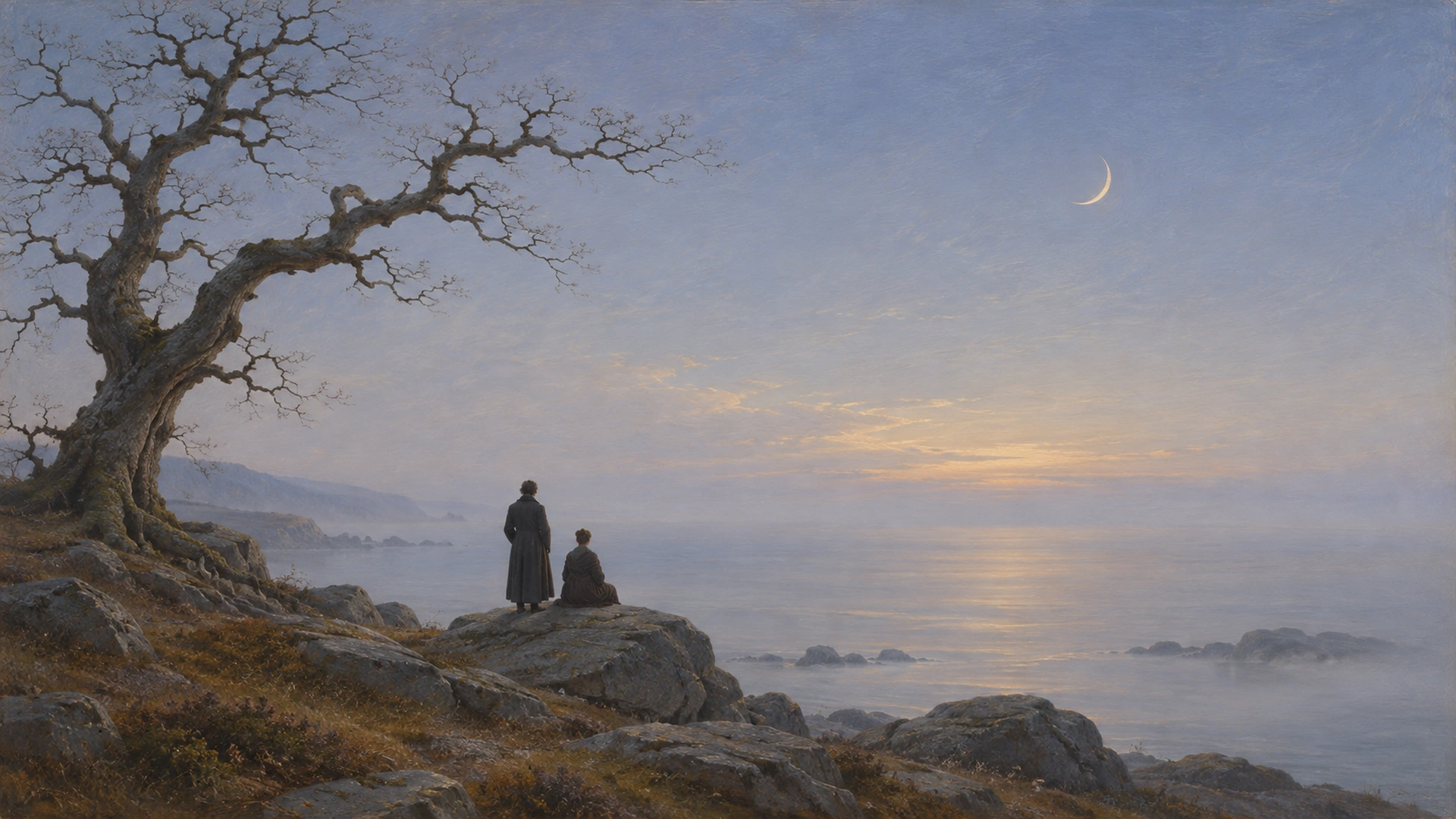
An original Romantic landscape study: two small figures in dark coats seen from behind on a rocky shore, looking at a pale crescent moon rising over a calm misty sea, a bare twisted oak on the left, cool blue and pale gold light, vast empty sky, smooth quiet painting. Not a copy of any existing painting.
What to learn from Caspar David Friedrich
- Place a figure with their back to us and let the view be the subject.
- Use emptiness: leave large areas of fog, sky or sea.
- Choose quiet light: dawn, dusk or moon, and keep the paint calm.
Questions about Caspar David Friedrich
Who was Caspar David Friedrich?
German Romantic painter of silent, spiritual landscapes: fog, moonlight, ruined abbeys and small figures seen from behind, facing something larger than themselves.
How do you recognize Caspar David Friedrich's work?
A lone figure seen from behind, facing an immense view. Fog, moonlight or dawn in silent, empty space. Smooth, calm painting and a strong central axis.
How do you describe Caspar David Friedrich in words or a prompt?
Place a figure with their back to us and let the view be the subject. Use emptiness: leave large areas of fog, sky or sea. Choose quiet light: dawn, dusk or moon, and keep the paint calm.
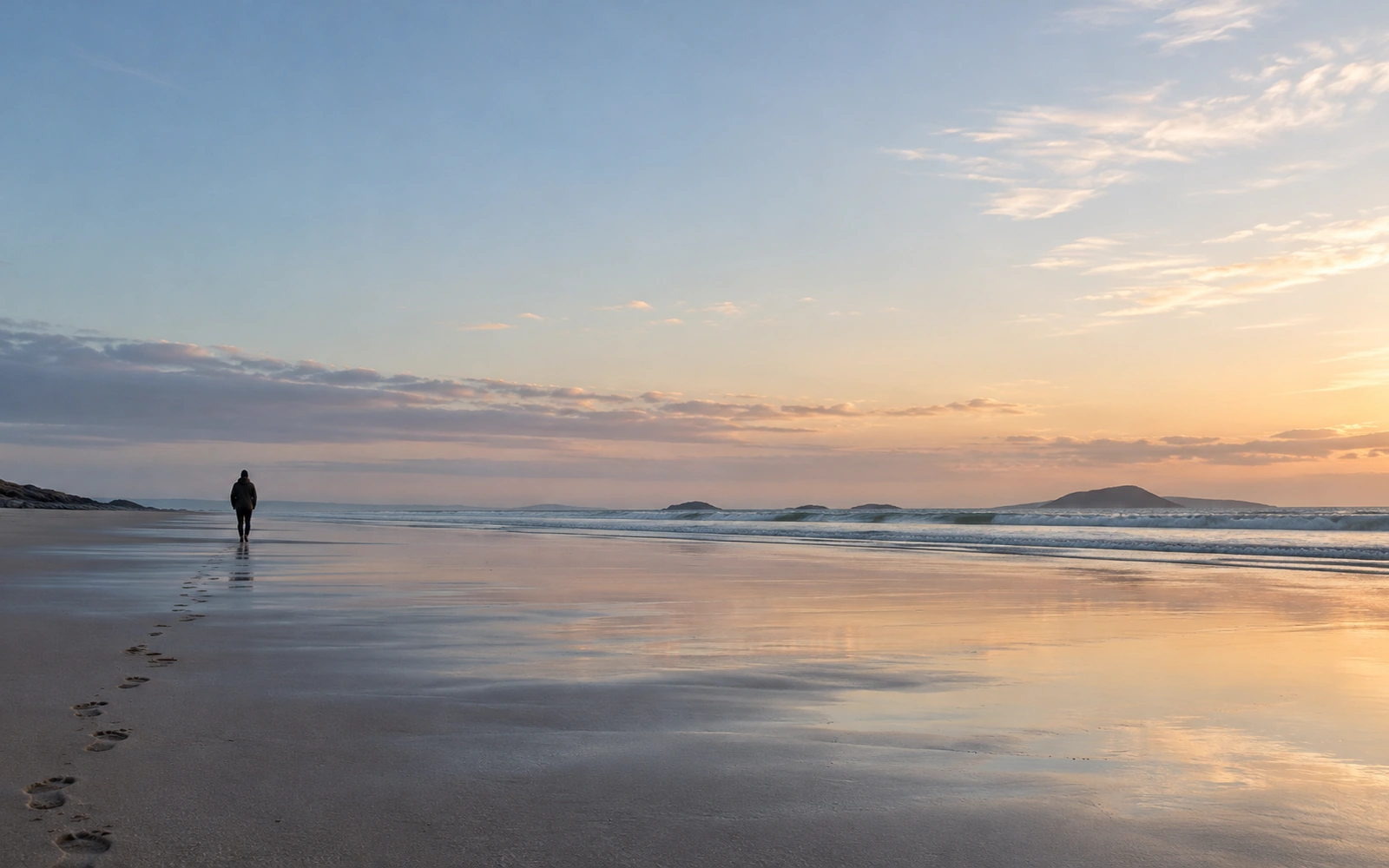
Describe a photograph of yourself or a friend seen from behind, looking at a view, the way Friedrich would compose it: where the horizon sits, how much empty space, which light, and what the figure is facing.