Painting the air itself
Joseph Mallord William Turner was born in London in 1775 and became a member of the Royal Academy young. He travelled constantly, filling sketchbooks with watercolours of landscapes, skies and seas, and painted the drama of nature, what his time called the sublime.
In later works such as The Fighting Temeraire (1839) and Rain, Steam and Speed (1844), solid objects almost dissolve into light, mist, smoke and colour. Critics of his time sometimes mocked them as unfinished; later painters, including the Impressionists, saw them as a breakthrough. Britain's Turner Prize for contemporary art is named after him.
Visual anatomy of J. M. W. Turner
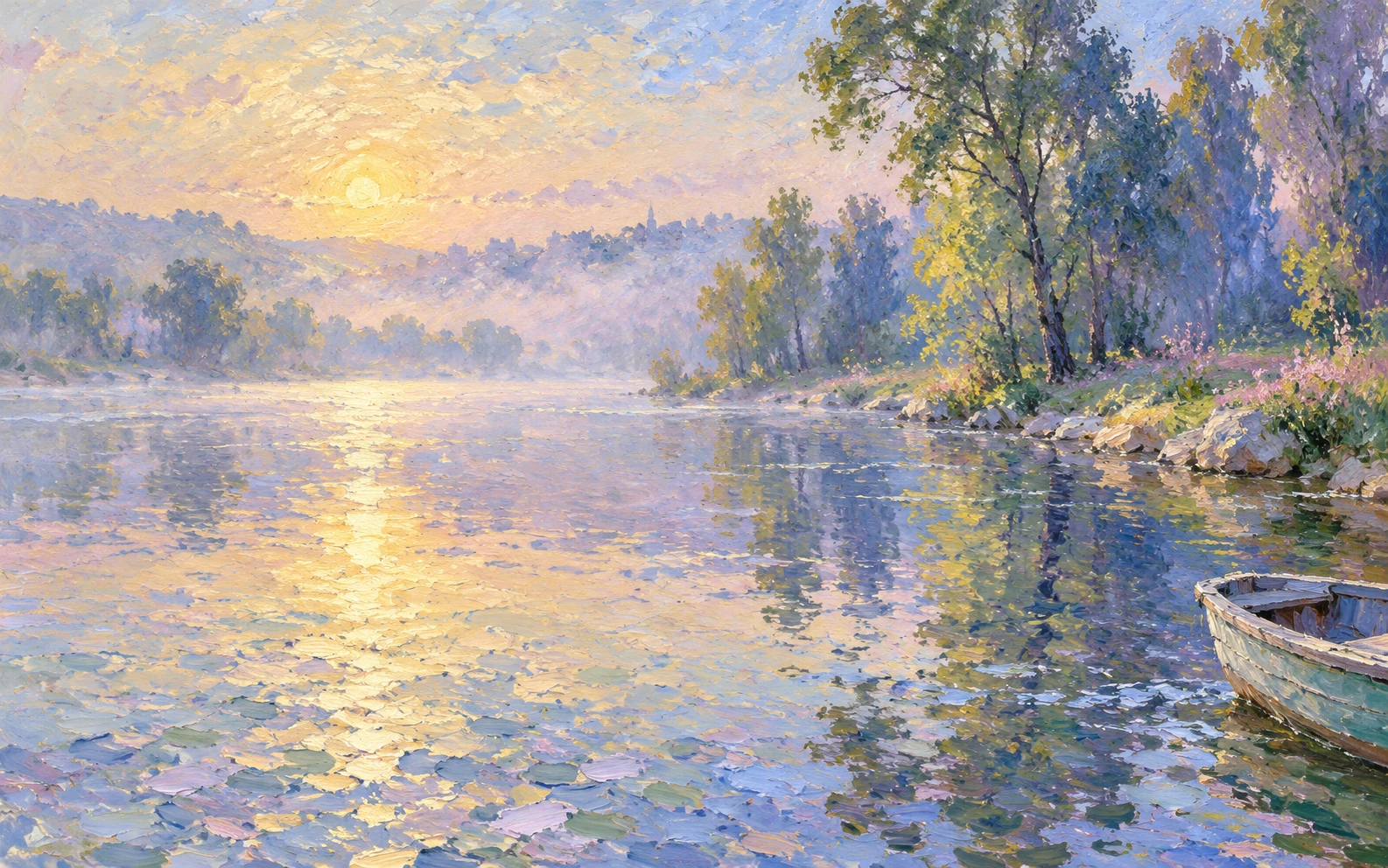
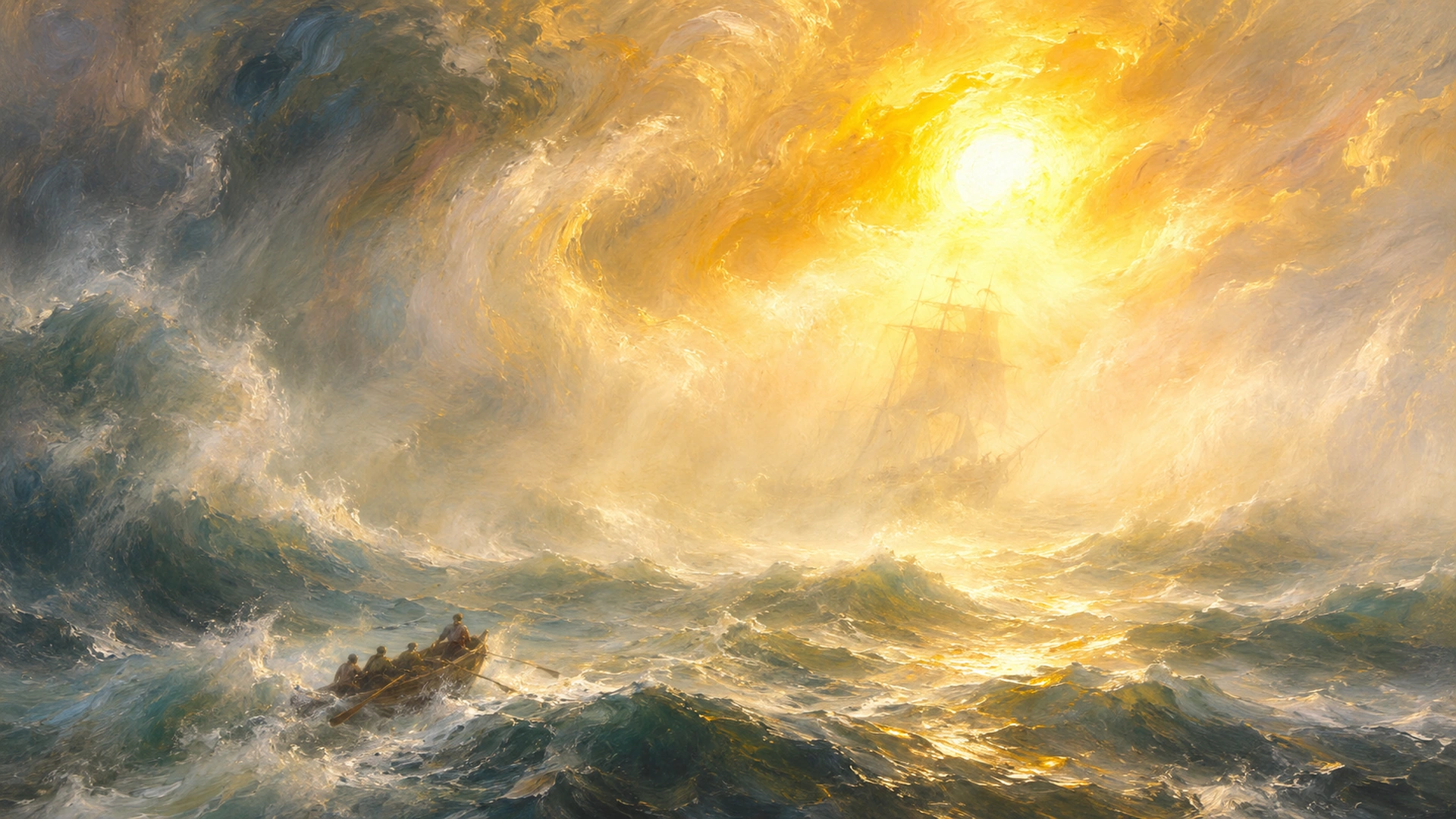
Blazing suns, glowing mist and light that seems to dissolve form.
Storms, fog, smoke, steam and spray.
Golden yellows, fiery oranges and soft blues and whites.
Loose, swirling, scraped and layered paint, especially late in life.
Seas, ships, mountains, cities and new technology like steam trains.
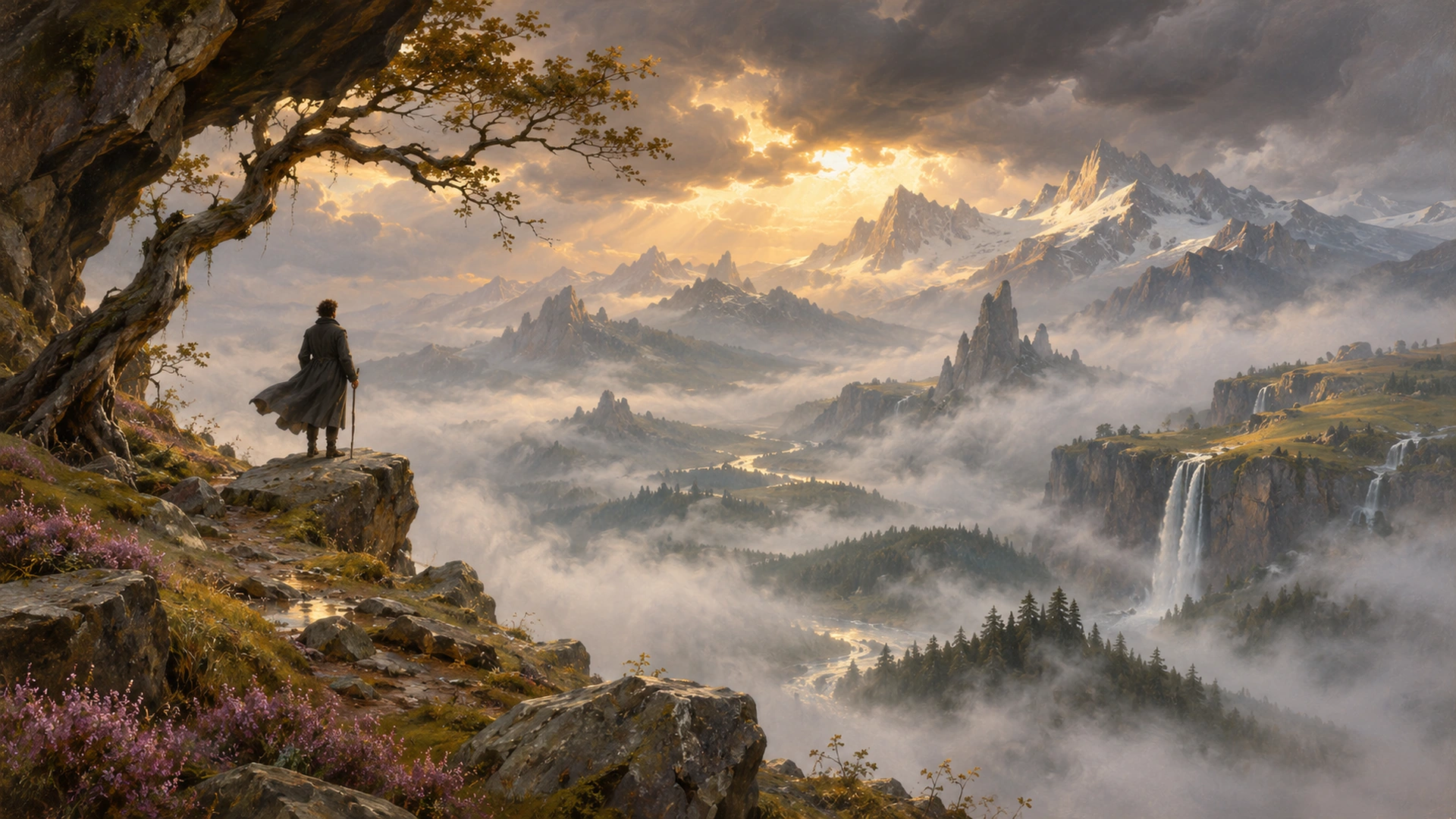
Tiny human figures overwhelmed by nature.
How to recognize J. M. W. Turner's work
- Light and atmosphere dissolving solid forms.
- Golden, fiery skies and swirling storms.
- Tiny figures in vast, dramatic nature.
Where people get it wrong
Turner is sometimes treated as a painter of pretty sunsets. His real subject was the energy and danger of nature and modern life, storms, fire and steam, painted at the edge of abstraction.
Words to describe J. M. W. Turner
Words for what you see and feel in this work. They are for describing and understanding, not a recipe for copying an artist.
- Turner-like luminous atmosphere
- blazing sun through mist
- golden and fiery sky
- swirling storm at sea
- dissolving forms
- steam and smoke
- sublime nature
- tiny figures in vast space
- loose scraped paint
- romantic seascape
An original romantic painting study: a sailing ship barely visible in a storm at sea, a blazing yellow sun breaking through swirling mist and spray, golden and white light dissolving the horizon, loose swirling brushwork, a tiny boat in the foreground. Not a copy of any existing painting.
What to learn from J. M. W. Turner
- Describe the light source and how it dissolves edges.
- Name the atmosphere: mist, smoke, spray, rain.
- Say how small the human presence is.
Questions about J. M. W. Turner
Who was J. M. W. Turner?
English painter of light, storms and atmosphere, whose dissolving seas, sunsets and steam made him a forerunner of Impressionism and abstraction.
How do you recognize J. M. W. Turner's work?
Light and atmosphere dissolving solid forms. Golden, fiery skies and swirling storms. Tiny figures in vast, dramatic nature.
How do you describe J. M. W. Turner in words or a prompt?
Describe the light source and how it dissolves edges. Name the atmosphere: mist, smoke, spray, rain. Say how small the human presence is.
Watch a sunset, a storm or fog for ten minutes. Describe it as a Turner painting: where the light is strongest, what disappears, and how the colours move into each other.