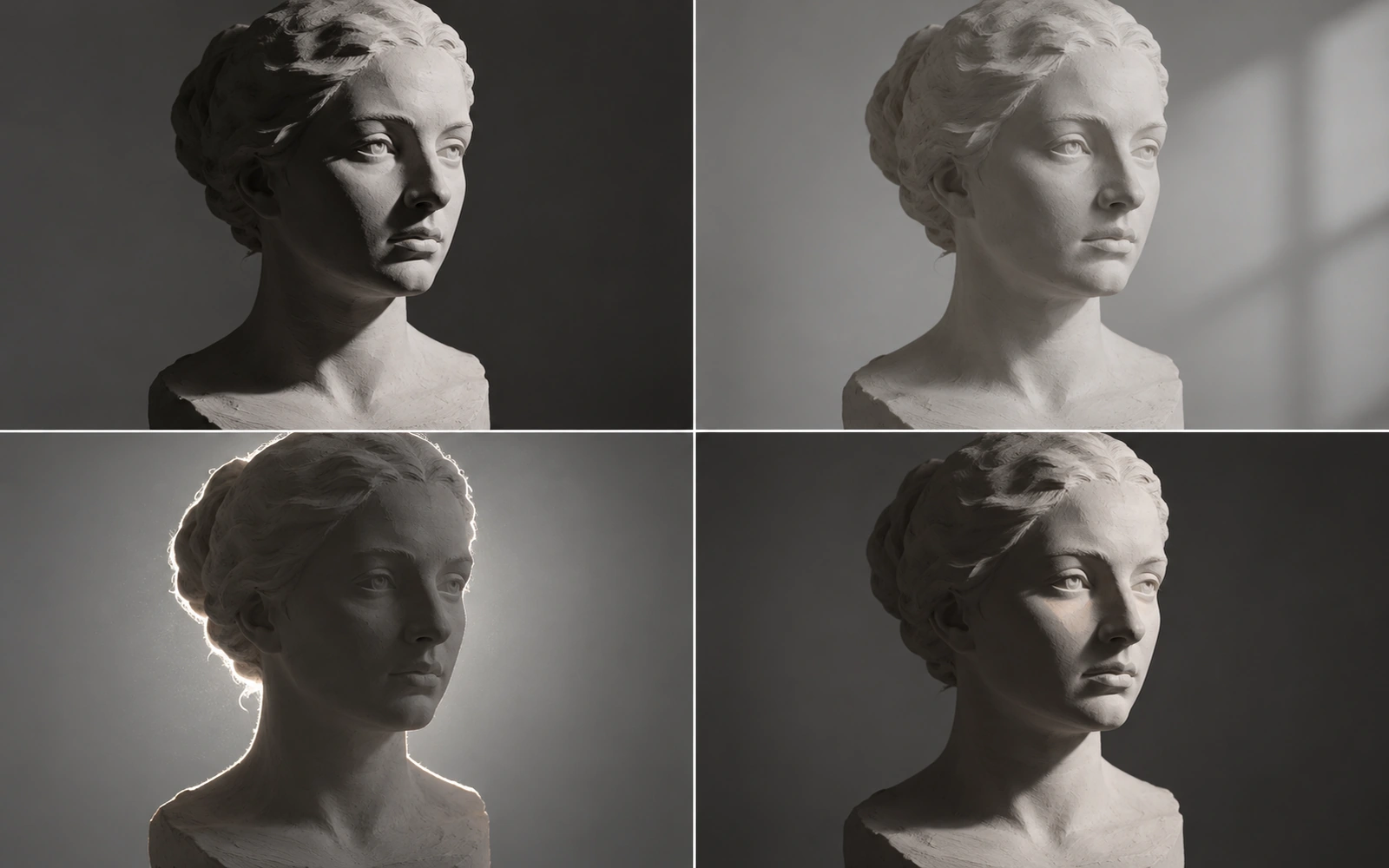
Painting the same thing in different light
Claude Monet was born in Paris in 1840 and grew up on the coast of Normandy, where he learned to paint outdoors. His painting Impression, Sunrise (1872), a hazy view of the port of Le Havre, gave its name to Impressionism when a critic mocked it in 1874.
Later he painted series of the same subject at different times of day and in different weather: Haystacks (1890–91), Rouen Cathedral (1892–94), the Houses of Parliament in London. At his home in Giverny he created a water garden and painted its water lilies for almost thirty years, ending with huge panoramic panels where water, sky and reflections dissolve together.
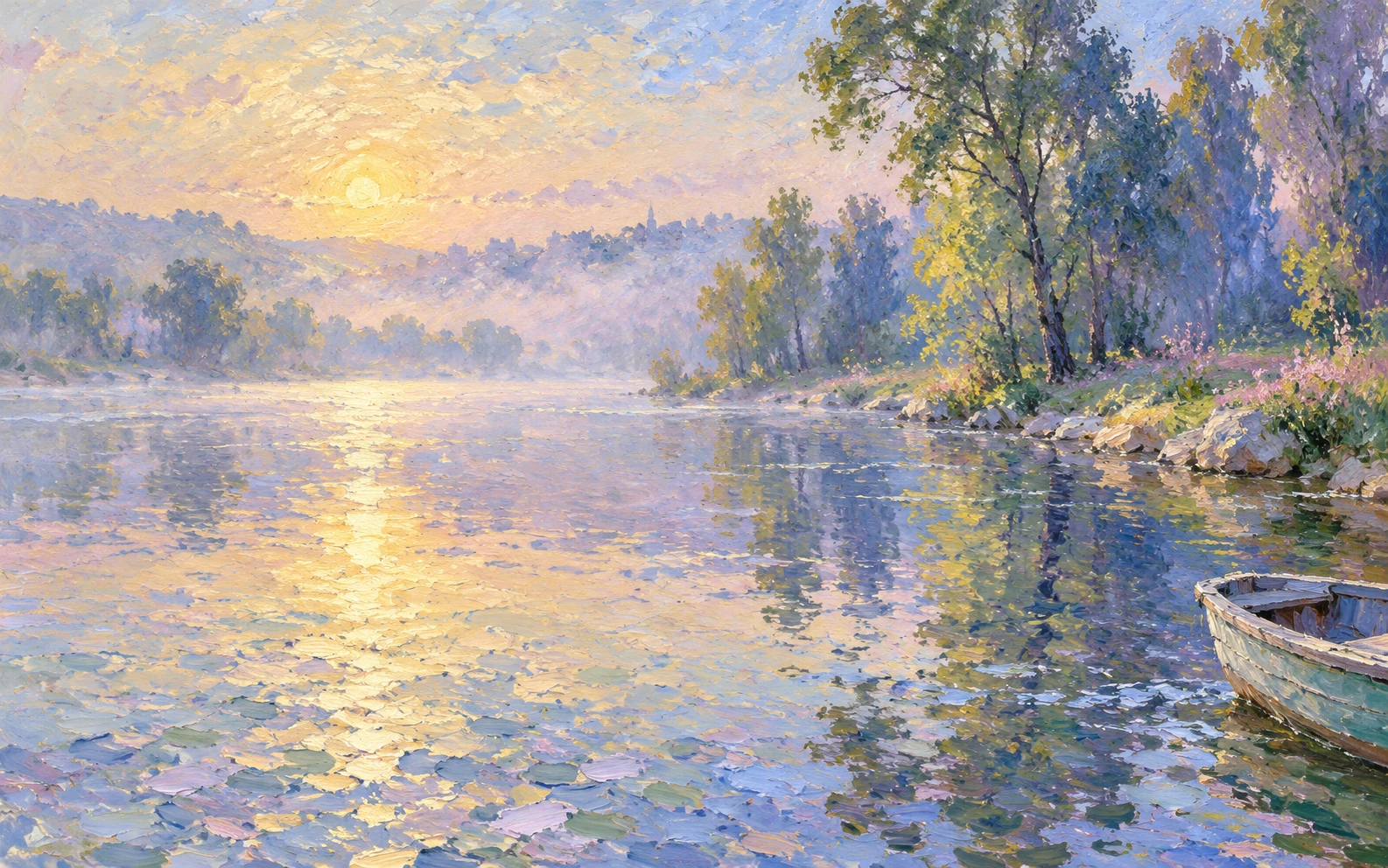
Visual anatomy of Claude Monet
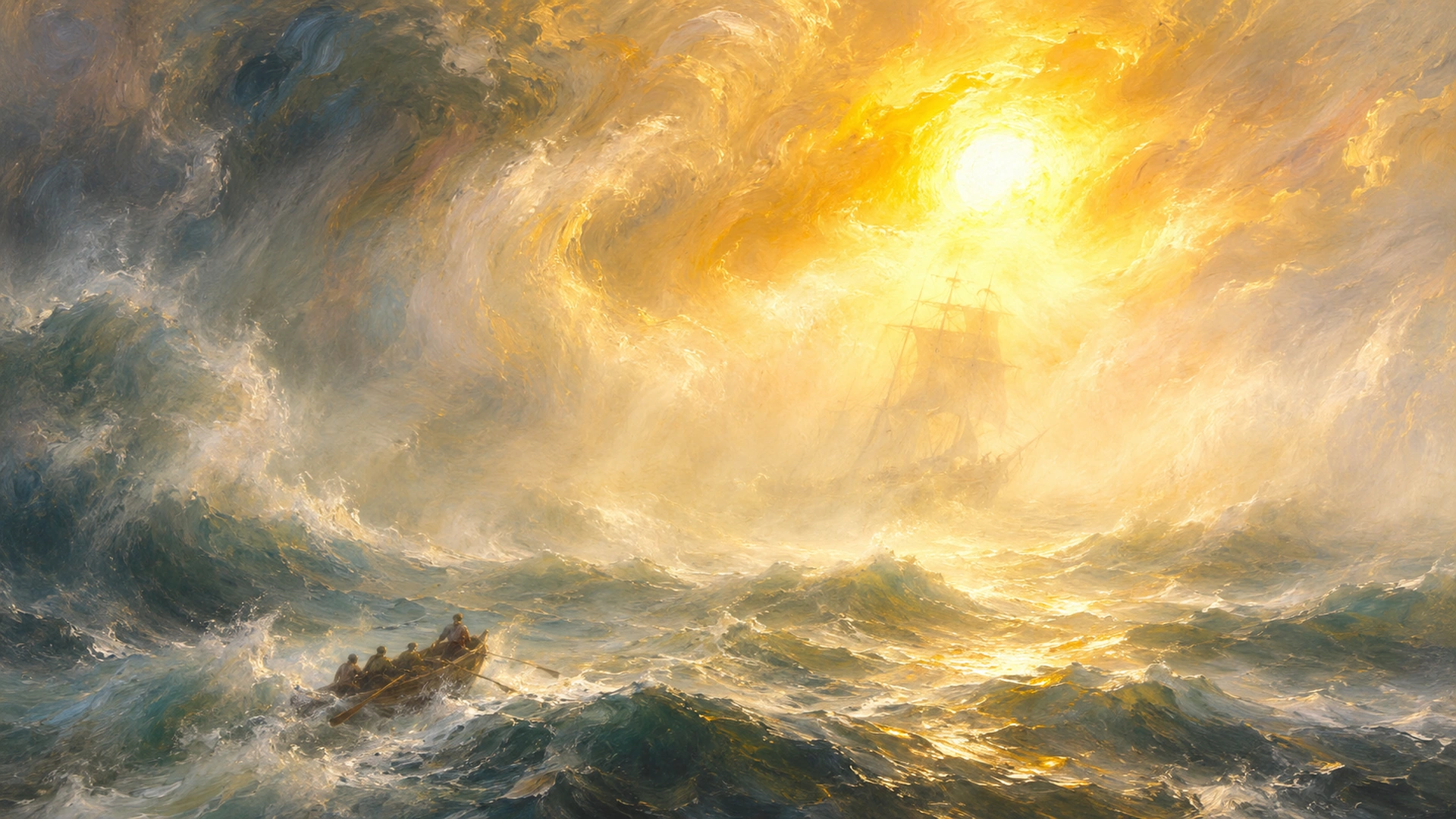
Changing natural light as the real subject: morning, fog, sunset, snow.
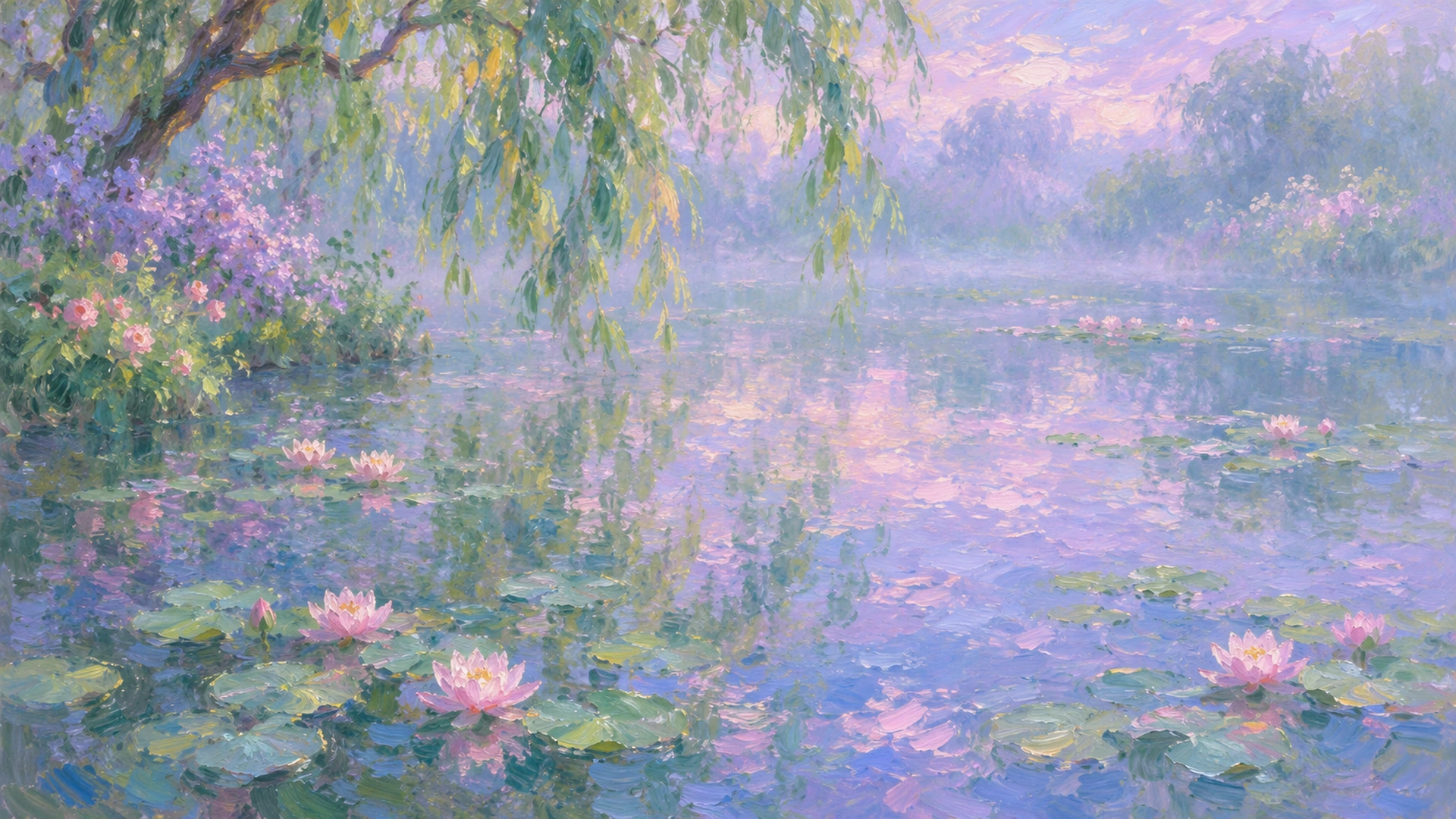
Quick, broken dabs and strokes of pure colour placed side by side.
Coloured shadows (violet, blue), no black, high-key luminous palette.
The same motif repeated in many lights and seasons.
Reflections, ripples and surfaces where sky and plants merge.
Soft, dissolving outlines; forms emerge from strokes, not lines.
How to recognize Claude Monet's work
- Broken brushstrokes of pure colour.
- Light and weather as the main subject.
- Water, reflections and soft dissolving forms.
Where people get it wrong
Monet is often seen as pretty and decorative. His series were a radical experiment in perception, and his late water lilies are close to abstraction; painters like Rothko and the Abstract Expressionists admired them.
Words to describe Claude Monet
Words for what you see and feel in this work. They are for describing and understanding, not a recipe for copying an artist.
- impressionist light
- broken colour brushstrokes
- violet coloured shadows
- water lilies on a pond
- reflections dissolving
- morning fog
- haystacks at sunset
- Japanese footbridge garden
- luminous high-key palette
- series in changing light
An original impressionist painting study of a garden pond at early morning: floating water lilies, pale pink blossoms, reflections of willow branches and a lilac sky dissolving in the water, short broken strokes of blue, green and rose, soft mist, no hard outlines. Not a copy of any existing painting.
What to learn from Claude Monet
- Name the time of day and weather first.
- Describe the colour of shadows and reflections.
- Describe the brushstrokes: short dabs, horizontal ripples, soft blends.
Questions about Claude Monet
Who was Claude Monet?
French painter whose Impression, Sunrise gave Impressionism its name, and who painted haystacks, cathedrals and water lilies again and again to catch changing light.
How do you recognize Claude Monet's work?
Broken brushstrokes of pure colour. Light and weather as the main subject. Water, reflections and soft dissolving forms.
How do you describe Claude Monet in words or a prompt?
Name the time of day and weather first. Describe the colour of shadows and reflections. Describe the brushstrokes: short dabs, horizontal ripples, soft blends.
Photograph or watch the same window, tree or wall at three times of day. Describe the three versions as a Monet series: only the light, the colours of the shadows and the air change.