Light on an empty room
Edward Hopper was born in 1882 in Nyack, New York, worked for years as a commercial illustrator, and only found success as a painter in his forties. He painted ordinary American places, such as diners, offices, hotel rooms, gas stations and houses by the railway, usually with one or two people who seem lost in thought.
His most famous painting, Nighthawks (1942), shows a corner diner at night through a huge glass window. His strong, theatrical light, his cropped views and his feeling of waiting made his work a constant reference for cinema: Alfred Hitchcock based the house in Psycho on Hopper's House by the Railroad (1925), and many directors and photographers still describe a scene as 'Hopperesque'.
Visual anatomy of Edward Hopper
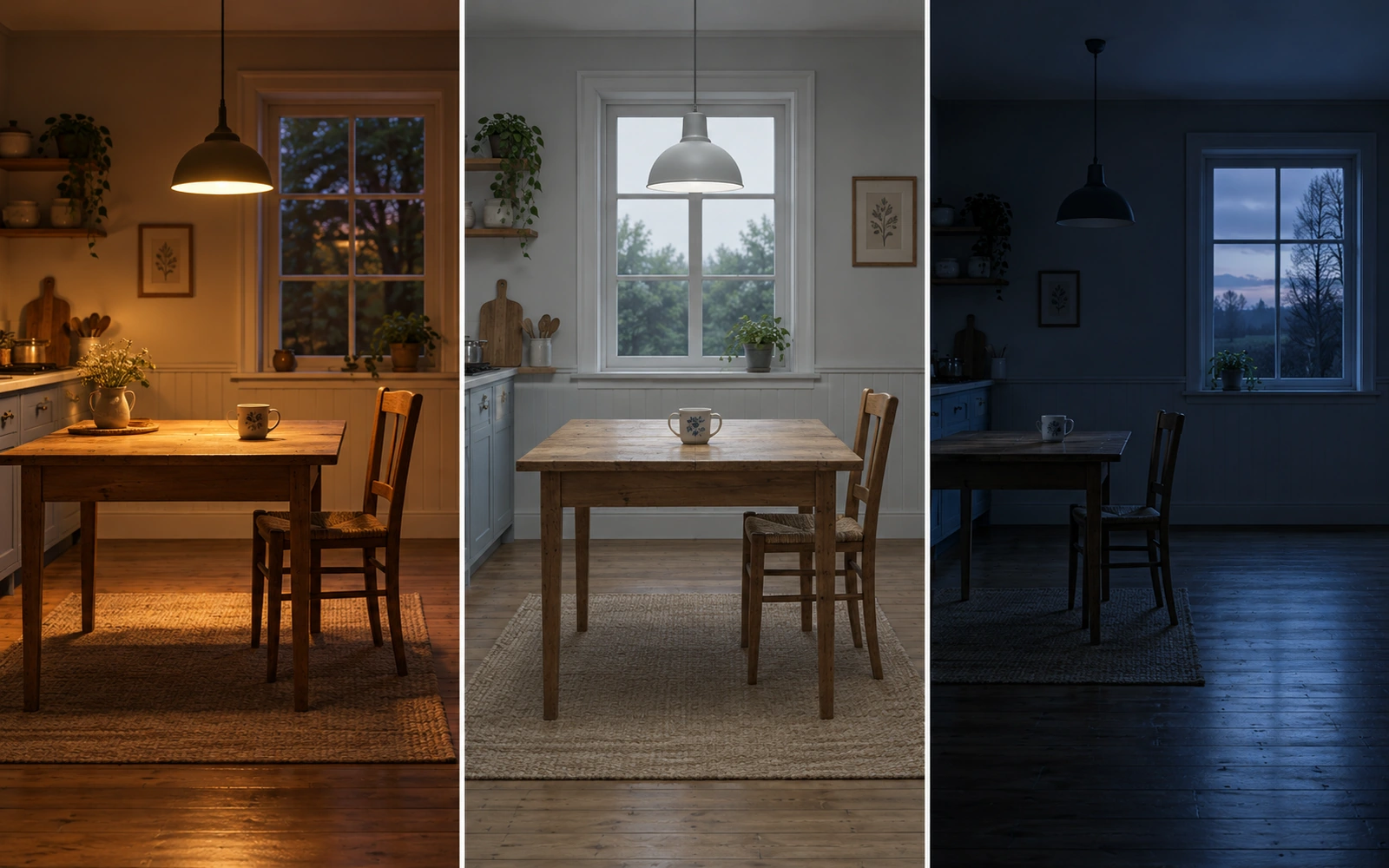
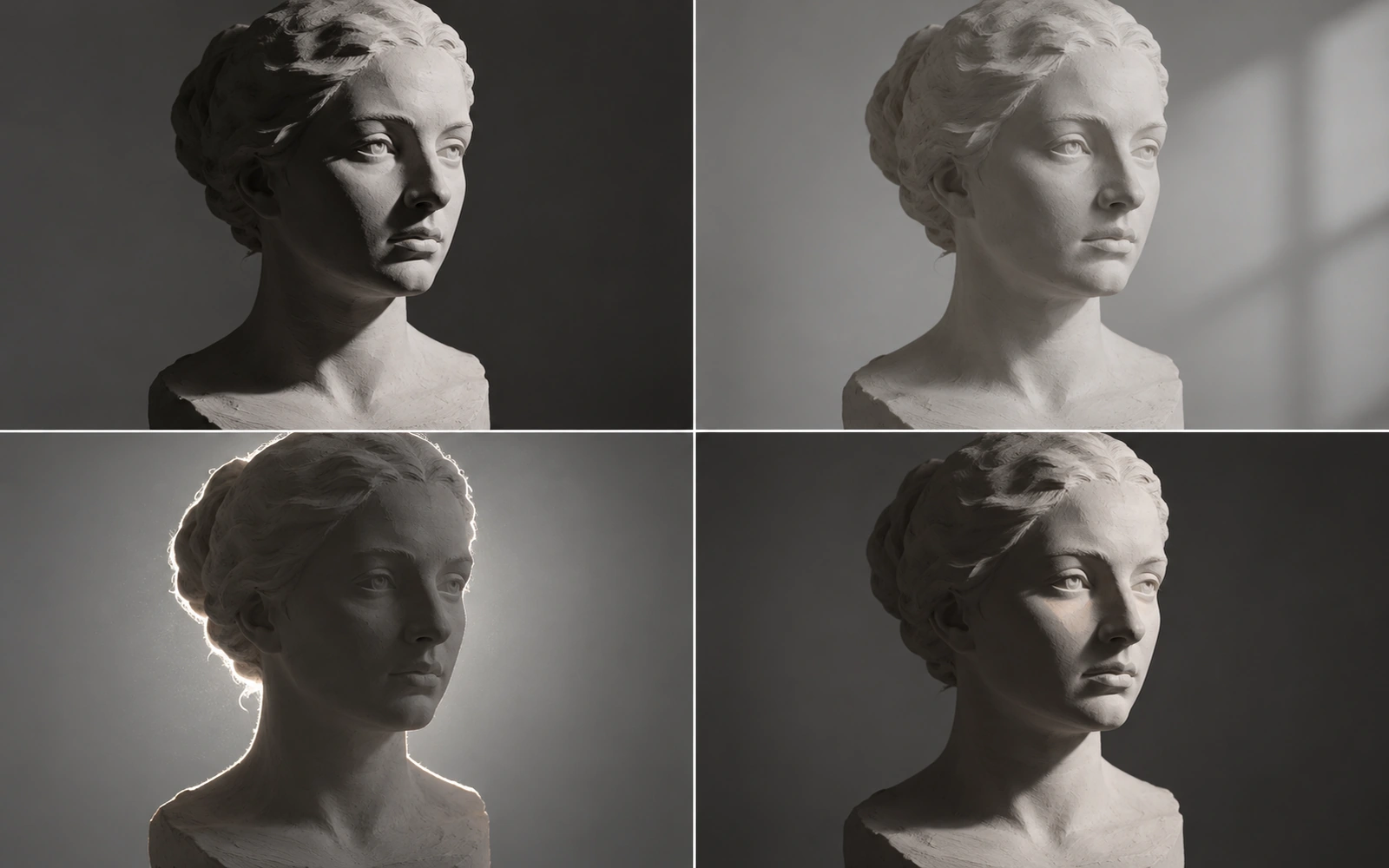
Strong, raking sunlight or harsh artificial light that cuts sharp shapes across walls and floors.
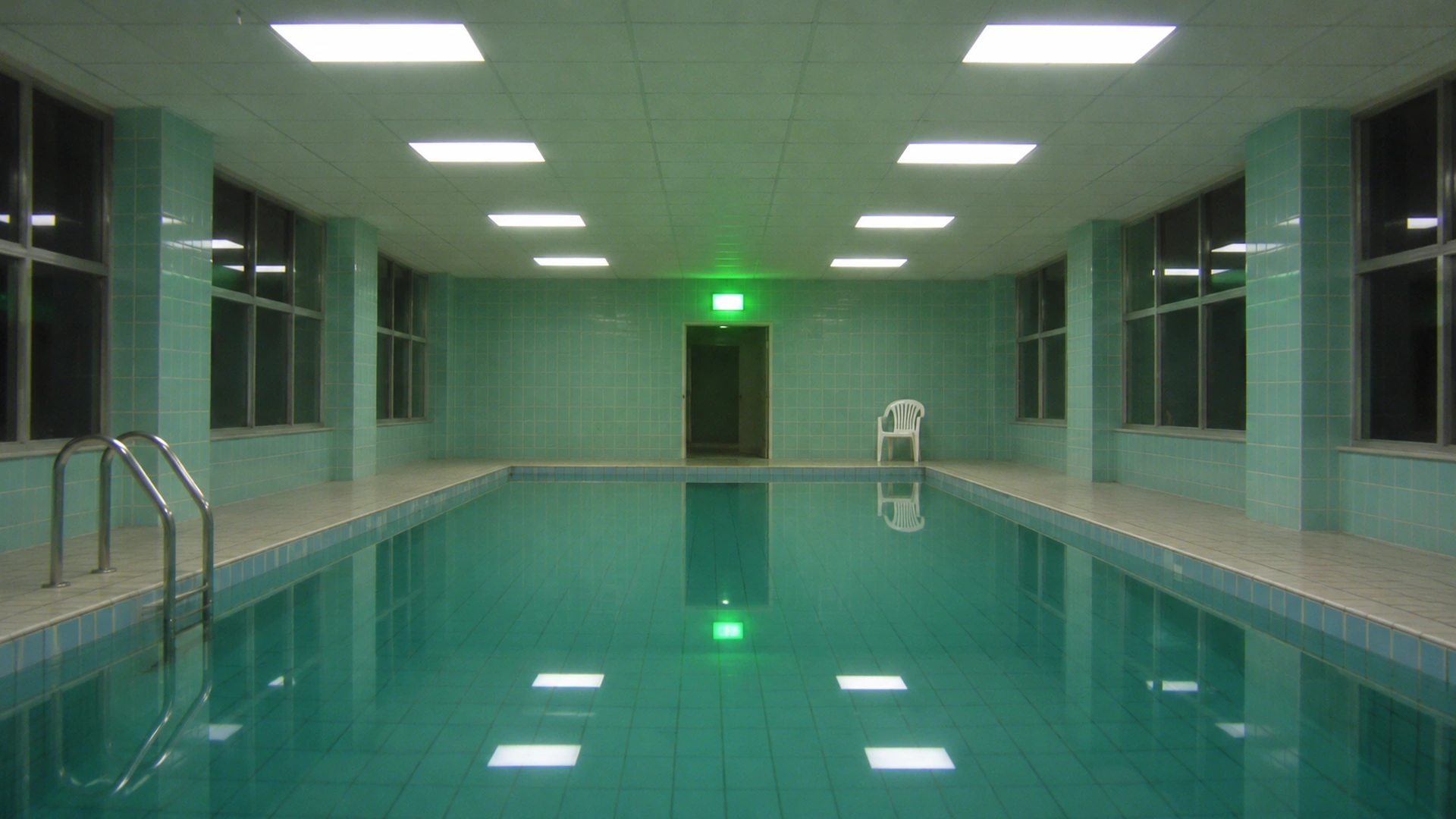
Empty rooms, streets and diners with large plain surfaces.
One or two people, still, not looking at each other, often by a window.
Views through windows or from the street, like a camera looking in.
Muted greens, ochres and reds with clean, simplified shapes.
Quiet, lonely, suspended; a moment before or after something happens.
How to recognize Edward Hopper's work
- Strong light on simple, empty spaces.
- Solitary figures lost in thought.
- A view through a window, often at night or early morning.
Where people get it wrong
Hopper is often used as shorthand for 'sad'. His paintings are more ambiguous: the light can be beautiful and calm as well as lonely, and the figures are thinking, not simply unhappy.
Words to describe Edward Hopper
Words for what you see and feel in this work. They are for describing and understanding, not a recipe for copying an artist.
- Hopperesque light
- raking morning sunlight
- sharp light shapes on walls
- solitary figure by a window
- empty diner at night
- view through a large window
- muted greens and ochres
- quiet urban loneliness
- cinematic stillness
- suspended moment
A quiet scene in the manner of American realist painting: a woman sitting alone on a hotel bed in the early morning, a sharp trapezoid of yellow sunlight across the wall and floor, a plain room with green walls, the city roofs visible through a large window, stillness and waiting.
What to learn from Edward Hopper
- Describe the light: source, angle and the shapes it cuts.
- Describe the emptiness: what is missing from the room or street.
- Describe the figure's stillness and gaze.
Questions about Edward Hopper
Who was Edward Hopper?
American painter of light and loneliness: diners at night, sunlit rooms and empty streets, whose quiet, cinematic scenes still guide film-makers and photographers.
How do you recognize Edward Hopper's work?
Strong light on simple, empty spaces. Solitary figures lost in thought. A view through a window, often at night or early morning.
How do you describe Edward Hopper in words or a prompt?
Describe the light: source, angle and the shapes it cuts. Describe the emptiness: what is missing from the room or street. Describe the figure's stillness and gaze.
At early morning or late afternoon, watch how sunlight falls through a window onto a wall. Describe the scene as a Hopper painting: the shape of the light, one person, what they might be waiting for.