Thresholds without people
'Liminal' comes from the Latin limen, threshold. Anthropologists Arnold van Gennep and Victor Turner used it for the in-between stage of a ritual, when a person is no longer what they were and not yet what they will be. Architects later borrowed it for spaces of transition: hallways, lobbies, waiting rooms, car parks.
In 2019 an anonymous post on 4chan shared a photo of an empty yellow office space with buzzing fluorescent lights and invented a story about it: the Backrooms, an endless maze you can fall into from reality. The image and the term 'liminal spaces' spread across Reddit, Twitter and TikTok, and the pandemic lockdowns of 2020, with empty streets and schools, gave the feeling a new urgency.
The aesthetic draws on older traditions: the empty streets of de Chirico, Edward Hopper's lonely interiors, the staged suburbs of Gregory Crewdson, and the low-resolution photos of 1990s childhood spaces. Related internet aesthetics include dreamcore, weirdcore and 'kenopsia', a coined word for the eeriness of a place that is usually busy, now empty.
Visual anatomy of Liminal Spaces
Corridors, stairwells, pools, malls, hotel halls, playgrounds, offices; usually interior and transitional.
No people, but signs of them: chairs, carpet stains, an open door.
Flat fluorescent or sodium light, sometimes daylight from an unseen window; no clear time.
Muted yellows, beige, pale teal, faded carpet colours; low contrast.
Eye-level, wide, centred or one-point perspective; often a phone or old digital camera look.
Uncanny familiarity: a place you might remember from childhood, but slightly wrong.
Words around liminal spaces
The in-between state of a threshold or transition.
A coined word for the eerie atmosphere of a usually busy place left empty.
An internet legend of an endless empty office maze, born from one 2019 photo.
A related aesthetic of surreal, nostalgic, dreamlike imagery.
How to recognize Liminal Spaces
- An empty transitional space: corridor, pool, stairwell, mall.
- Flat, artificial light with no clear time of day.
- Faded, low-contrast beige, yellow or teal colour.
- A straight-on, eye-level, often centred view.
- Signs of use with nobody there.
Where people get it wrong
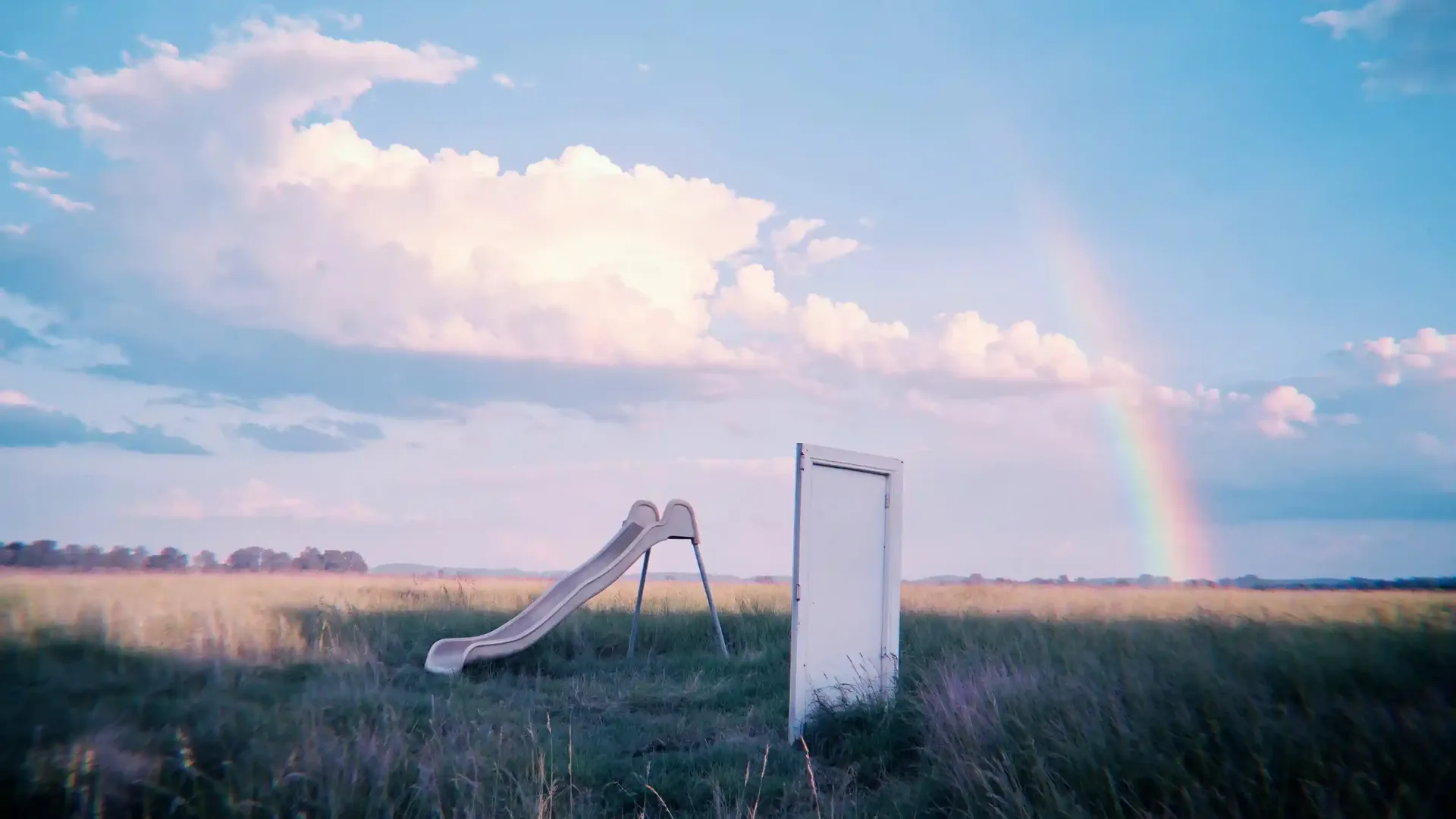
Liminal spaces are often reduced to 'creepy empty rooms' or horror. The core feeling is not fear but uncanny nostalgia: a place that feels remembered. Adding monsters, blood or dramatic shadows turns it into ordinary horror. Not every empty space is liminal either; it needs to be a place meant for passing through.
Words to describe Liminal Spaces
Precise words for the qualities above. Combine a few of them instead of naming the style or artist alone.
- liminal space
- empty corridor
- fluorescent light
- indoor pool at night
- beige and yellow
- faded carpet
- one-point perspective
- no people
- uncanny nostalgia
- early digital camera
- dreamcore
- kenopsia
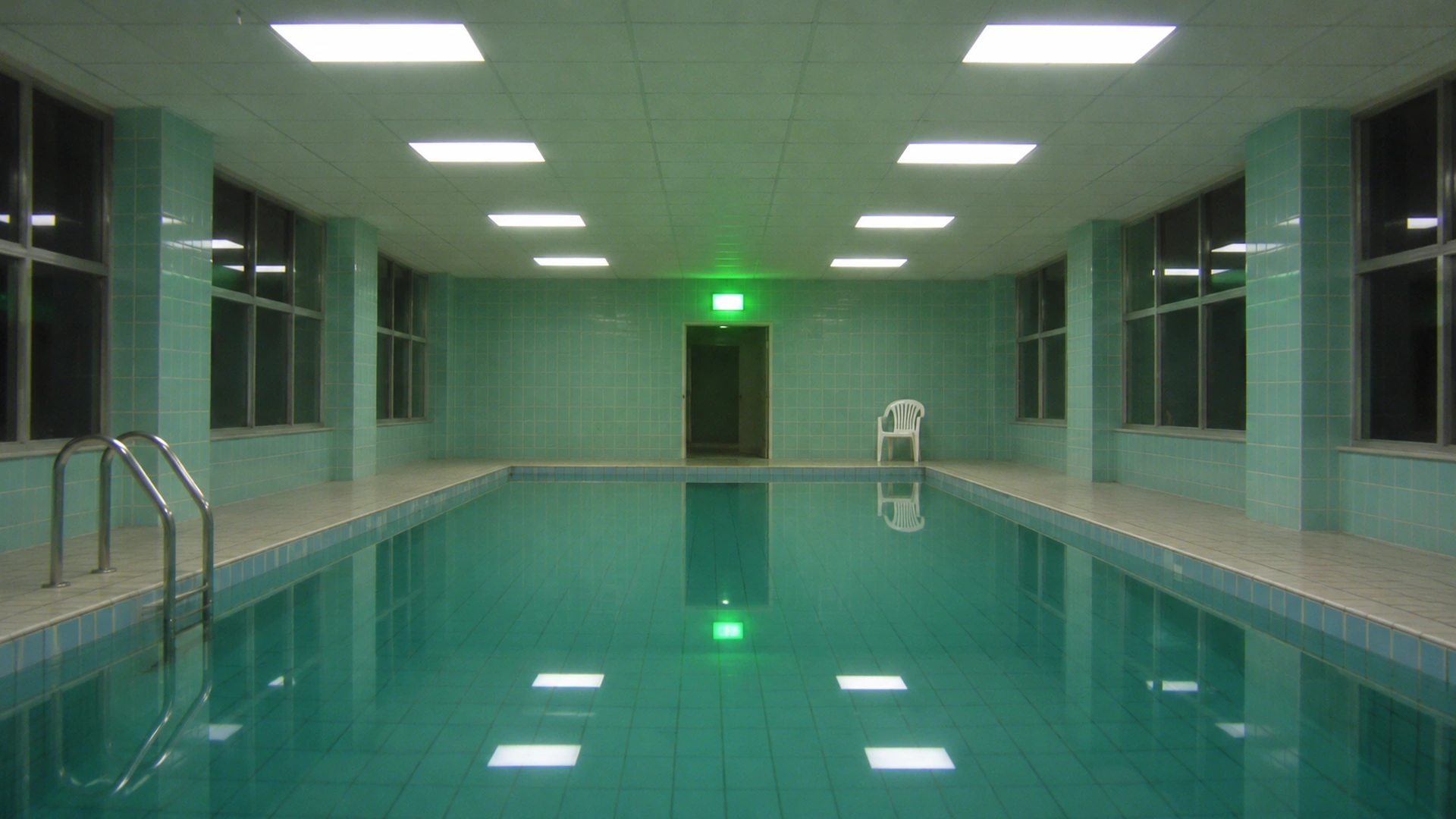
An empty indoor swimming pool at night, lit only by flat fluorescent ceiling panels, pale teal tiles and still water, a single plastic chair at the far edge, an exit sign glowing green, eye-level centred view, slightly soft early-2000s digital camera quality, no people.
What to take from Liminal Spaces today
- Choose a transitional place, not a destination.
- Keep the light flat and artificial, the time unclear.
- Leave a trace of people: a chair, a towel, a lit sign.
- Use an eye-level, centred, slightly low-quality camera look.
Questions about Liminal Spaces
What makes a space liminal?
A liminal space is a place of transition, such as a hallway, stairwell, airport or parking garage, that we usually pass through without noticing. When shown empty or at an odd hour, it feels unsettling and dreamlike because its normal purpose is missing.
What are the Backrooms?
An internet creepypasta that started in 2019 on 4chan with a photo of an empty yellow office space. The legend says you can 'noclip' out of reality into an endless maze of such rooms. It became one of the best-known liminal space images.
What is the difference between liminal spaces and dreamcore?
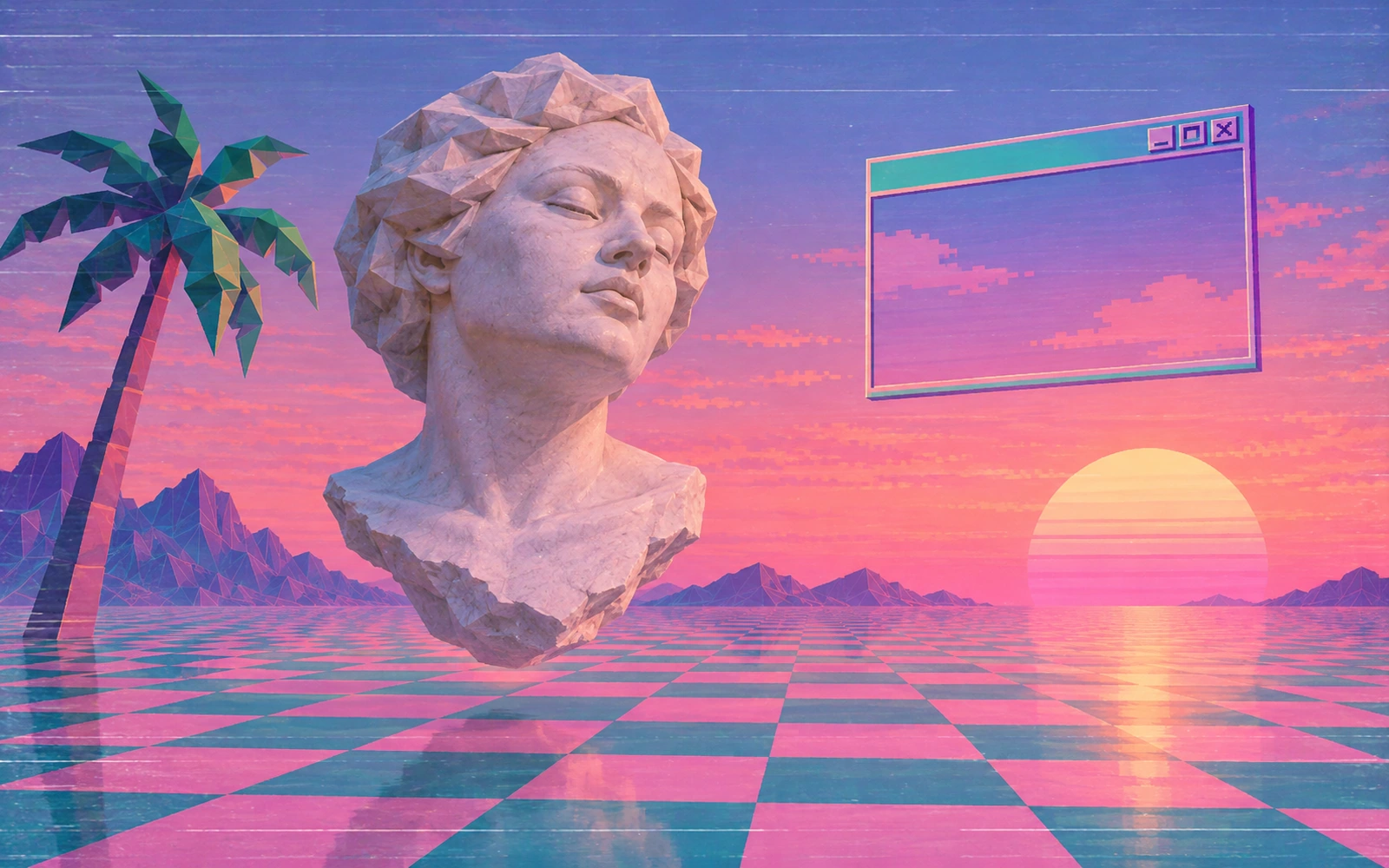
Liminal spaces focus on real, empty architecture. Dreamcore is broader and more surreal, mixing nostalgic images, odd text, clouds, eyes and distorted colours to recreate the feeling of a dream.
Think of a transitional space from your own childhood: a school corridor, a pool changing room, a waiting room. Describe it empty, at an hour you never saw it, in four sentences: light, colour, sound and one object left behind.
Sources and further reading
- Victor Turner, The Ritual Process: Structure and Anti-Structure, Aldine, 1969.
- Arnold van Gennep, The Rites of Passage, 1909.
- Aesthetics Wiki: Liminal Space.
- John Koenig, The Dictionary of Obscure Sorrows, Simon & Schuster, 2021 (kenopsia).