Drawing with scissors
Cutting paper into images is an old and widespread craft. Chinese papercutting, jianzhi, decorates windows and doors for festivals and is recognised by UNESCO; Polish wycinanki and Mexican papel picado fill homes and streets with colour. In 18th- and 19th-century Europe, cut black silhouette portraits were a cheap alternative to painted ones.
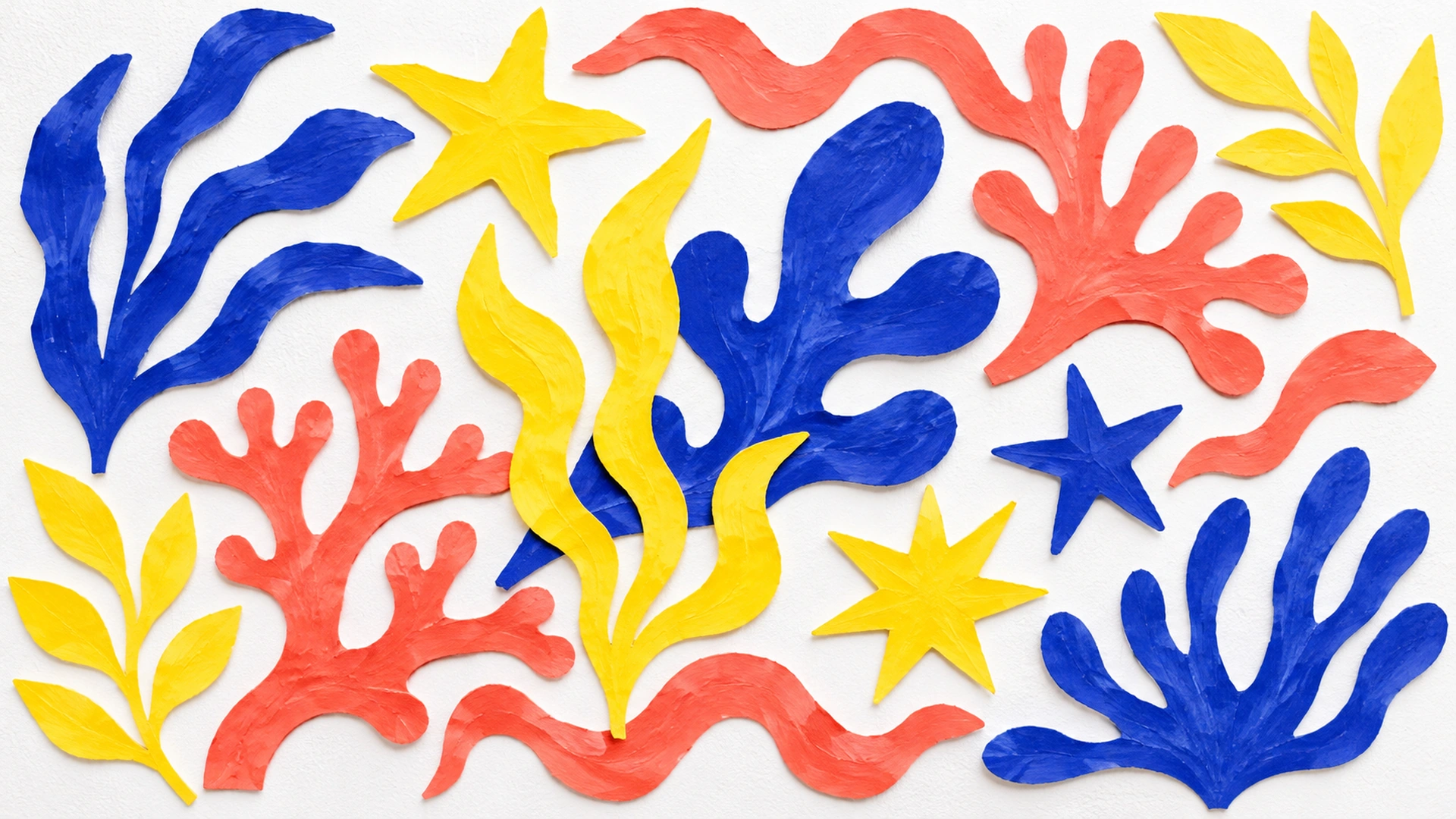
In the 1940s and early 1950s, unable to paint easily, Henri Matisse 'drew with scissors', cutting shapes from paper painted with gouache; his book Jazz (1947) made the cut-out a modern art form. Lotte Reiniger's The Adventures of Prince Achmed (1926) used cut silhouettes for one of the oldest surviving animated feature films. Today layered paper scenes, shadow boxes and digital imitations appear in illustration, packaging, editorial design and motion.
Visual anatomy of paper cutout
Crisp or slightly irregular cut edges, sometimes with visible scissor or knife marks.
Flat areas of colour, often from painted or coloured papers.
Stacked sheets at different depths, casting soft shadows on each other.
Simplified, graphic forms; positive and negative space both read.
Paper grain, fibres, slight curling and folds.
Side or top light that reveals depth between layers.
Traditions
Chinese symmetrical papercuts, usually red, for festivals.
Profile portraits cut from black paper, popular in the 18th and 19th centuries.
Gouache-painted paper cut into organic shapes, from Jazz (1947) onward.
Puppets and scenes made of paper pieces, moved frame by frame.
How to recognize paper cutout
- Crisp cut edges and flat colour.
- Layers with soft shadows between them.
- Visible paper texture.
Where people get it wrong
Paper cutout is often imitated as flat vector shapes with a drop shadow. Real cut paper has slightly irregular edges, paper grain, layers at different depths and shadows that change with the light. Those details make it read as paper.
Words to describe paper cutout
Precise words for the qualities above. Combine a few of them instead of naming the style or artist alone.
- paper cutout
- layered paper art
- crisp cut edges
- soft shadows between layers
- flat coloured paper
- paper grain texture
- silhouette papercut
- red festival papercut
- cut-out animation
- matisse-like organic cut shapes
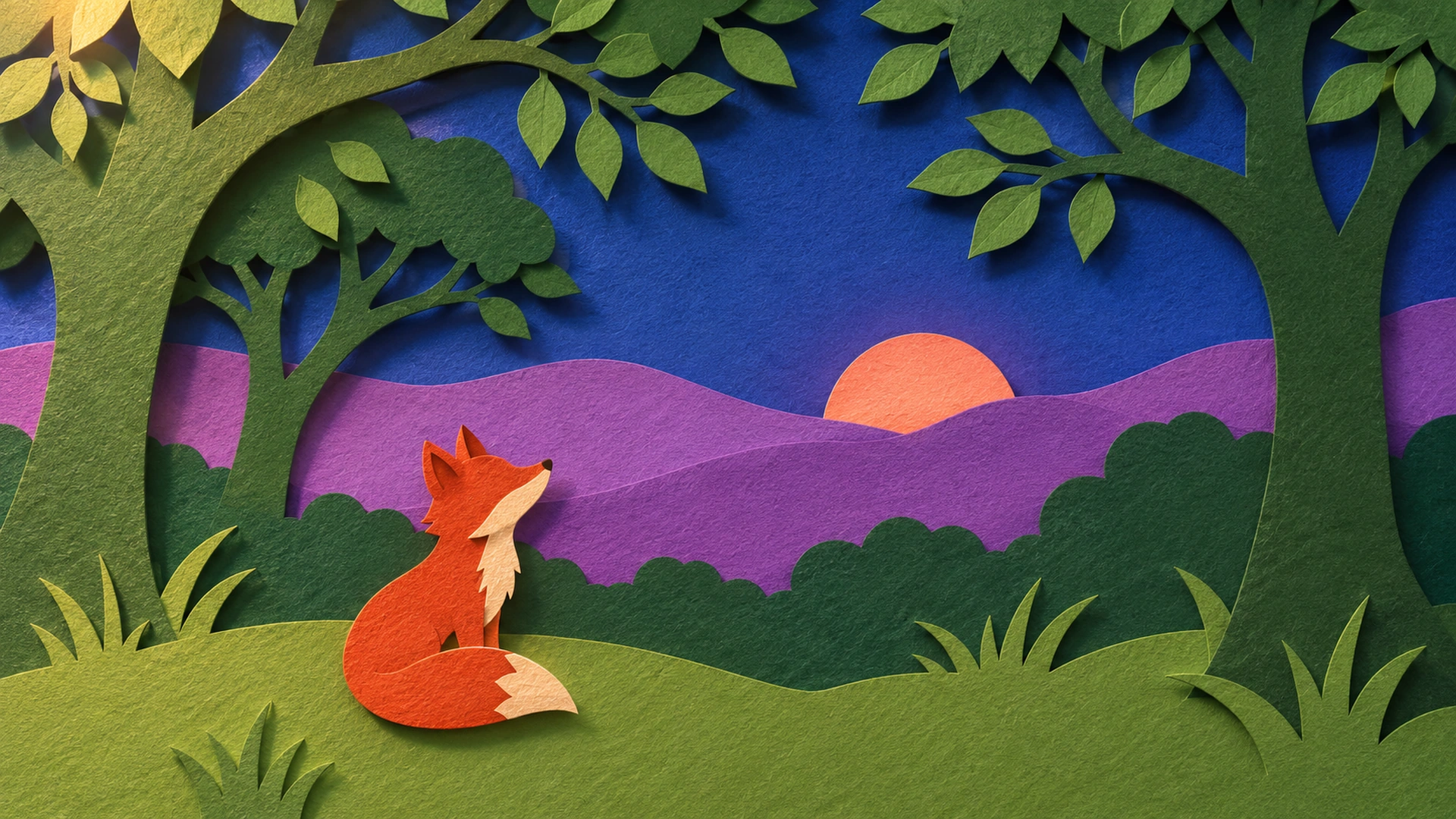
An original layered paper cutout scene: five layers of coloured paper showing a forest at dusk, deep blue sky at the back, then purple hills, dark green trees with cut-out leaves, a small red fox in the foreground, soft shadows between each layer from a light at the top left, visible paper texture. No text.
What to take from paper cutout today
- Describe the cut: crisp or irregular, scissor or knife.
- Say how many layers and how deep the shadows are.
- Name the papers: colour, texture, weight.
Questions about paper cutout
What is paper cutout?
Shapes cut from paper: folk papercuts, silhouette portraits, Matisse's colour cut-outs, layered paper scenes with real shadows, and cut-out animation.
How do you recognize paper cutout?
Crisp cut edges and flat colour. Layers with soft shadows between them. Visible paper texture.
How do you describe paper cutout in words or a prompt?
Describe the cut: crisp or irregular, scissor or knife. Say how many layers and how deep the shadows are. Name the papers: colour, texture, weight.
Design a layered paper scene of a city at night in words: how many layers, which colours, what is cut out of each layer, and where the light comes from to cast shadows between them.