The idea, in one image
Saul Bass grew up in New York, trained in design influenced by the Bauhaus and Russian Constructivism, and moved to Los Angeles. In 1955 his poster and title sequence for 'The Man with the Golden Arm', built around a jagged paper arm, changed how films announced themselves.
He went on to design titles and posters for films such as 'Anatomy of a Murder', 'Vertigo' and 'Psycho', and decades later, with Elaine Bass, title sequences for Martin Scorsese. He also designed corporate identities that lasted for decades, including logos for the Bell System, United Airlines and Minolta.
Visual anatomy of Saul Bass
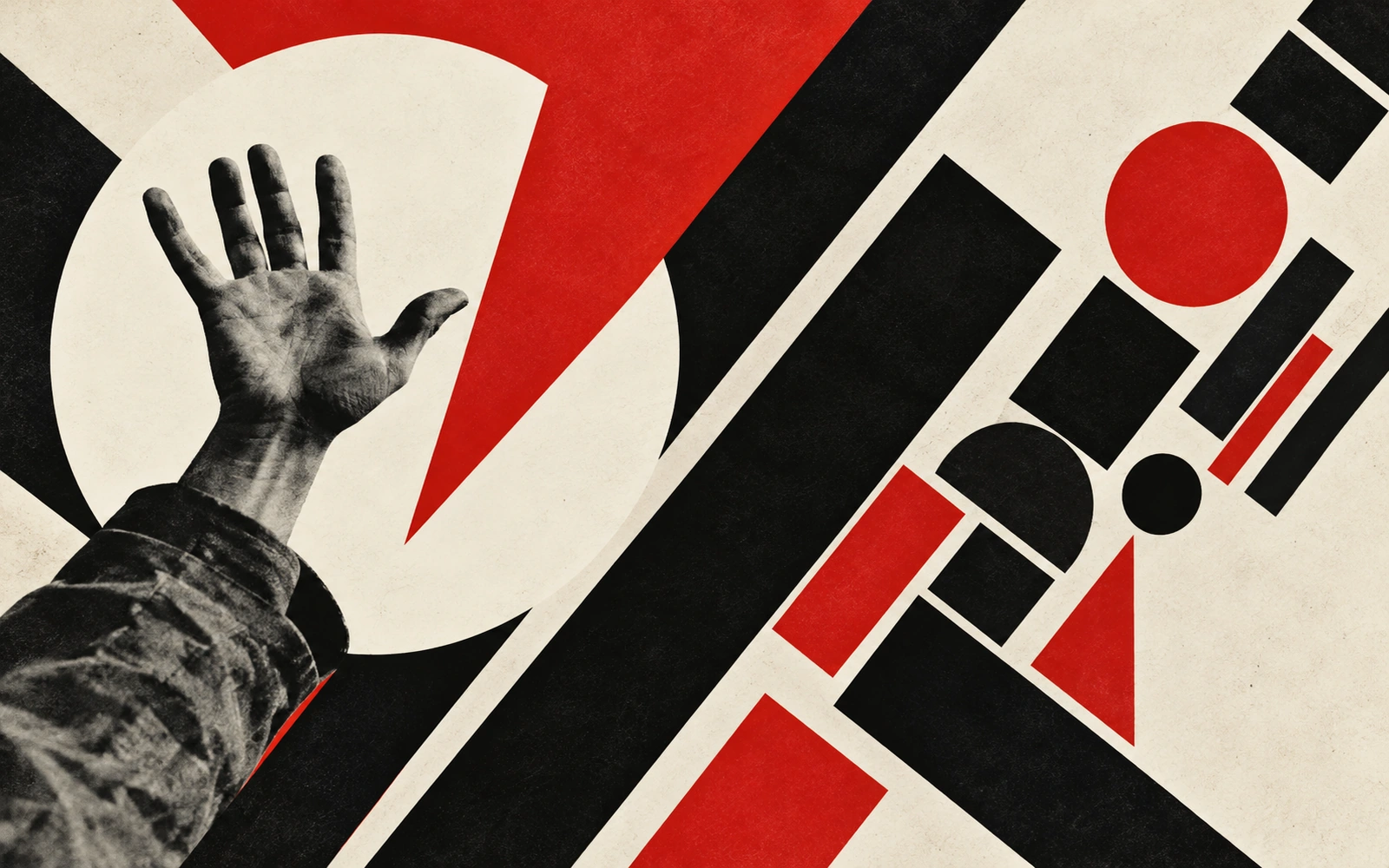
A few rough-edged, cut-paper shapes carry the whole idea.
Flat, bold fields, often black with a single strong color such as orange or red.
Hand-cut or simple sans-serif lettering integrated into the image.
Everything not needed for the idea is removed.
In titles, shapes slide, split and assemble in rhythm with the music.
One object or fragment stands for the whole story.
How to recognize Saul Bass's work
- A single bold symbol made of flat, rough-edged shapes.
- Strong flat color with black.
- Text and image working as one design.
Where people get it wrong
His style is often copied as 'retro cut-paper', but the point is reduction to a single idea, not the paper texture. The shapes are simple because the thinking behind them is precise.
Words to describe Saul Bass
Words for what you see and feel in this work. They are for describing and understanding, not a recipe for copying an artist.
- cut-paper shapes
- rough hand-cut edges
- flat bold color
- black and orange
- minimal symbol
- integrated hand lettering
- film title sequence
- mid-century graphic design
- reduction to one idea
- kinetic typography
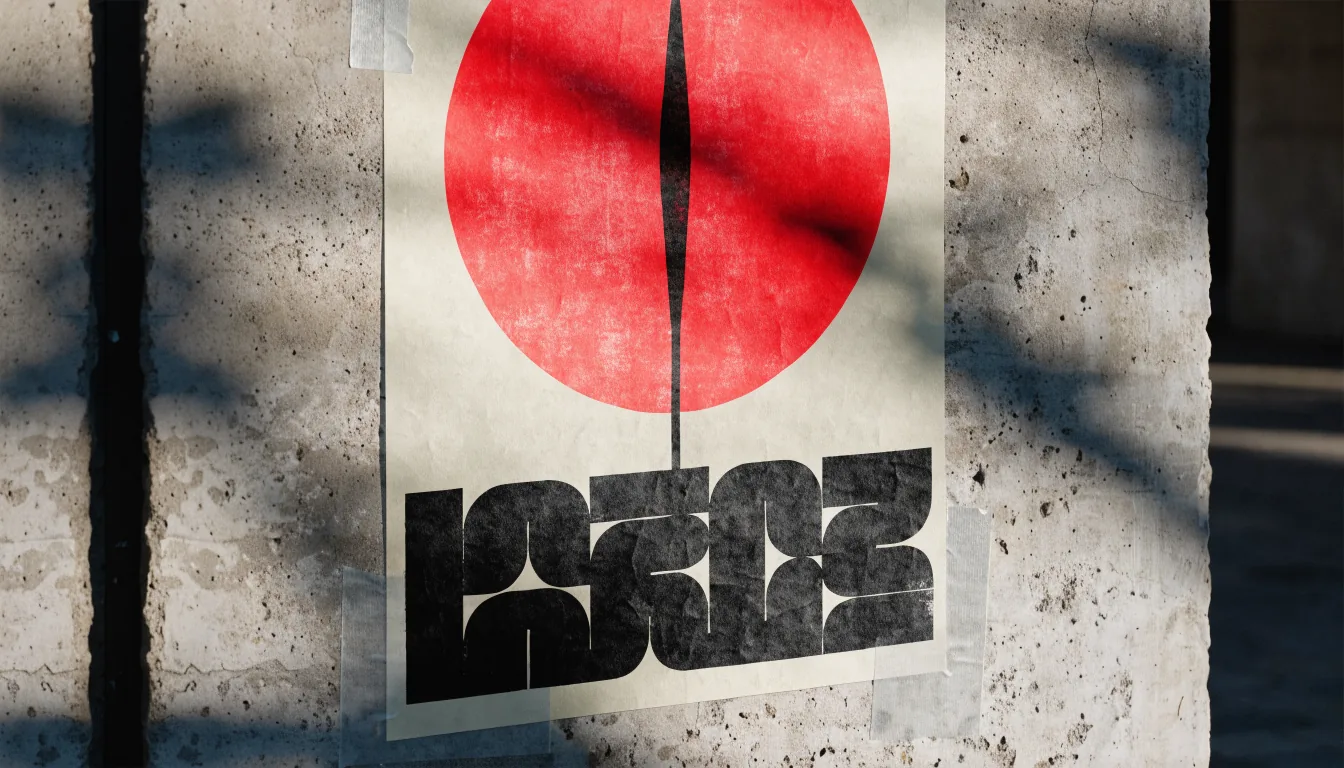
A poster on a flat orange field: one jagged black cut-paper shape like a broken arm reaching down from the top, a few rough rectangles below, simple hand-cut lettering along the bottom, nothing else.
What to learn from Saul Bass
- Find the one image that stands for the whole story.
- Remove everything that does not carry the idea.
- Describe a design by its idea first, then its shapes.
Questions about Saul Bass
Who was Saul Bass?
A graphic designer who reduced films and companies to a few bold, cut-paper shapes, and turned the opening titles of movies into an art form.
How do you recognize Saul Bass's work?
A single bold symbol made of flat, rough-edged shapes. Strong flat color with black. Text and image working as one design.
How do you describe Saul Bass in words or a prompt?
Find the one image that stands for the whole story. Remove everything that does not carry the idea. Describe a design by its idea first, then its shapes.
Choose a film you love. Describe a poster for it using only three shapes and two colors, in words. What single image would carry the whole story?