A comic panel, made monumental
Roy Lichtenstein was born in New York in 1923 and taught art for years in Ohio and upstate New York, painting in an Abstract Expressionist manner. Around 1961 he painted Look Mickey, a cartoon of Donald Duck and Mickey Mouse, and found his subject: the cheap printed images of comics and advertising.
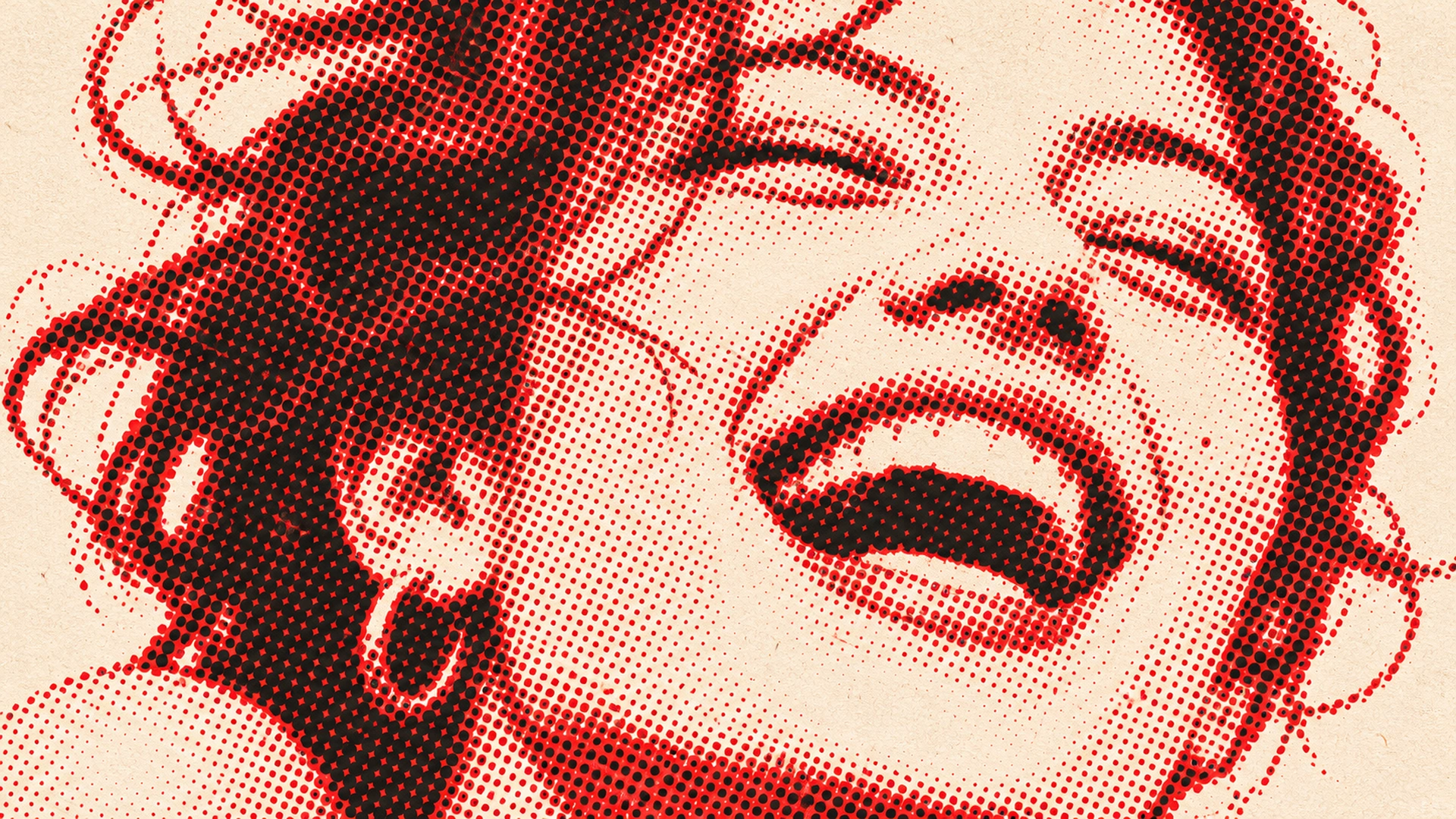
Works such as Drowning Girl (1963) and the fighter-jet diptych Whaam! (1963) take one panel from a romance or war comic, simplify and recompose it, and paint it by hand at huge scale, imitating the Ben-Day dots of cheap printing with stencils. Later he applied the same language to brushstrokes, mirrors, interiors and art history. He died in 1997, and his dots, outlines and speech bubbles are now a universal shorthand for 'pop'.
Visual anatomy of Roy Lichtenstein
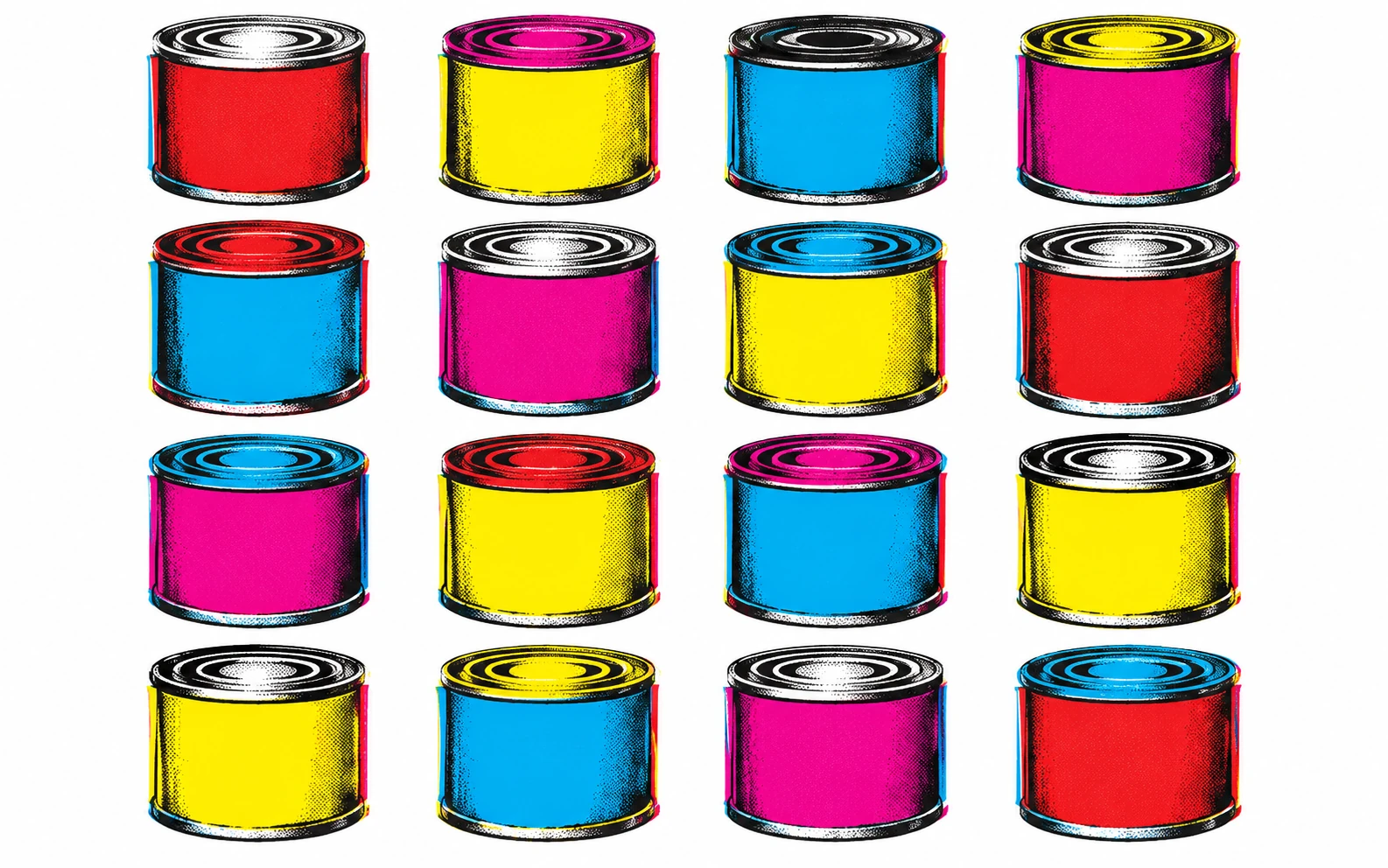
Ben-Day dots, regular patterns of coloured dots, used for skin, sky and shading.
Thick, confident black outlines around every shape.
Primary red, yellow and blue, with black and white; very little else.
Speech and thought bubbles, sound effects like WHAAM! and BRATATAT.
Melodramatic romance heroines, war comics, everyday objects, art history.
Flat and mechanical-looking, though carefully painted by hand.
How to recognize Roy Lichtenstein's work
- Visible dot patterns and thick black outlines.
- Primary colours only.
- Comic-book moments, often with a speech bubble.
Where people get it wrong
Lichtenstein did not simply copy comics. He chose one panel, changed the composition, simplified the drawing and enlarged it so that cheap printing becomes monumental. A comic filter on a photo misses that act of editing and scale.
Words to describe Roy Lichtenstein
Words for what you see and feel in this work. They are for describing and understanding, not a recipe for copying an artist.
- ben-day dots
- thick black outlines
- primary red yellow blue
- comic book panel
- speech bubble
- melodramatic close-up
- onomatopoeia sound effect
- flat mechanical finish
- halftone shading
- pop art comic style
An original description inspired by the approach, not a copy: a single comic-style panel of a woman on a phone in a tight close-up, a tear on her cheek, skin made of red Ben-Day dots, thick black outlines, yellow hair, a blue background and a speech bubble reading 'I'LL CALL BACK... NEVER!'
What to learn from Roy Lichtenstein
- Reduce a scene to outlines, flat primaries and dot shading.
- Pick the most melodramatic moment and frame it tight.
- Add a short, intense line of text in a bubble.
Questions about Roy Lichtenstein
Who was Roy Lichtenstein?
American Pop artist who blew up single comic-book panels, crying girls, fighter jets, speech bubbles, into huge paintings of Ben-Day dots, black outlines and primary colours.
How do you recognize Roy Lichtenstein's work?
Visible dot patterns and thick black outlines. Primary colours only. Comic-book moments, often with a speech bubble.
How do you describe Roy Lichtenstein in words or a prompt?
Reduce a scene to outlines, flat primaries and dot shading. Pick the most melodramatic moment and frame it tight. Add a short, intense line of text in a bubble.
Describe a dramatic moment from your own week as a single Lichtenstein-like comic panel: the framing, the expression, the colours, the dot shading and the exact words in the speech bubble.