A world made of gold
Byzantine art is the art of the Eastern Roman Empire, centred on Constantinople (today's Istanbul), from its founding in 330 to its fall in 1453. Its great monuments include Hagia Sophia (537), with its vast dome that seems to float on light, and the mosaics of Ravenna in Italy, where Emperor Justinian and Empress Theodora stand among their courts on walls of gold (around 547).
Its aim was not to imitate the visible world but to show a spiritual one. Figures are frontal, still and solemn, floating on gold backgrounds that stand for heaven. Icons, painted on wood with egg tempera and gold leaf, followed strict traditions. After a period of iconoclasm (726–843), when images were banned and destroyed, icon painting returned and spread through Russia, the Balkans and beyond.
Visual anatomy of Byzantine Art
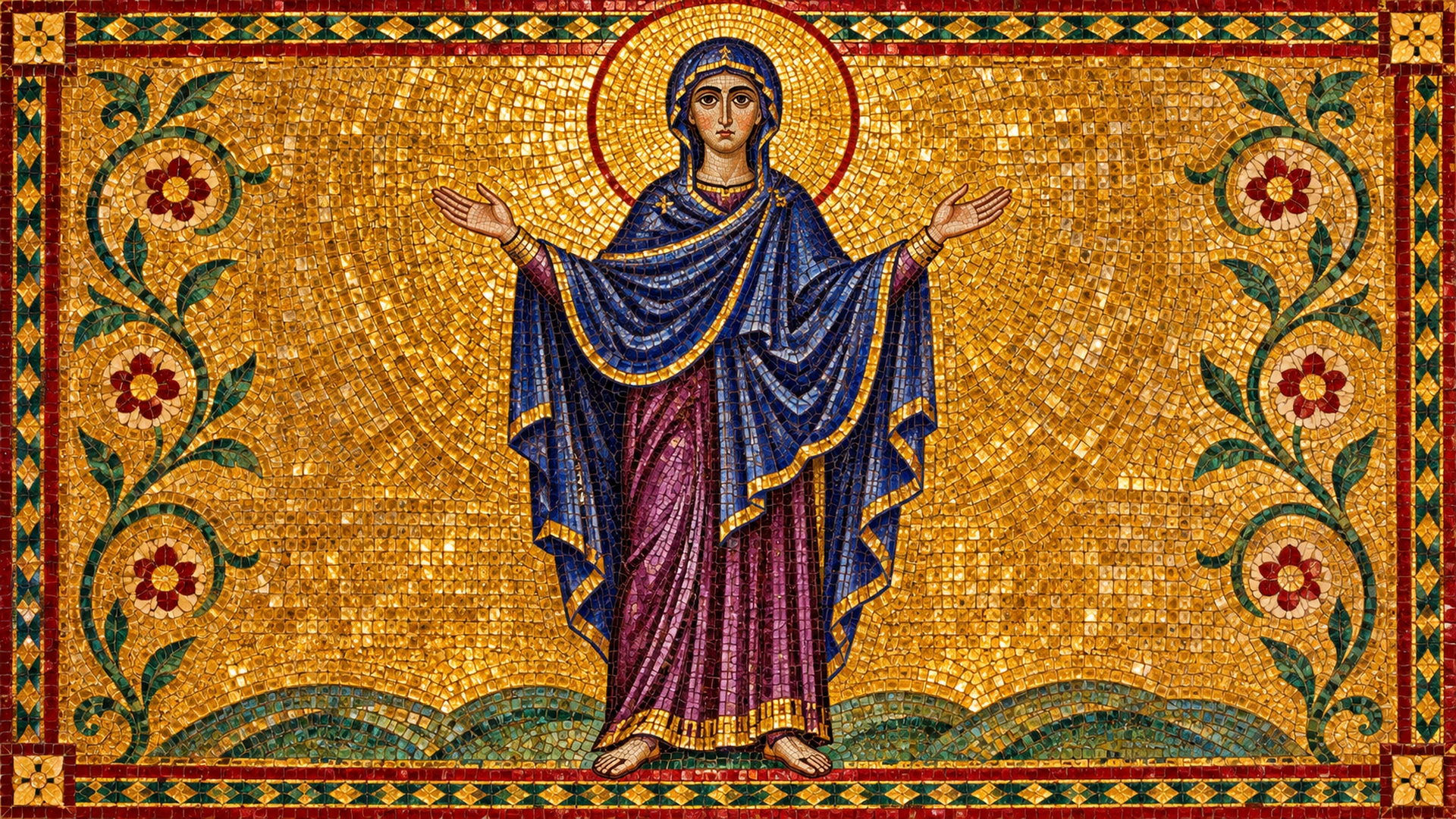
Backgrounds of gold mosaic or gold leaf instead of landscape or sky.
Figures face the viewer directly, still, with large eyes.
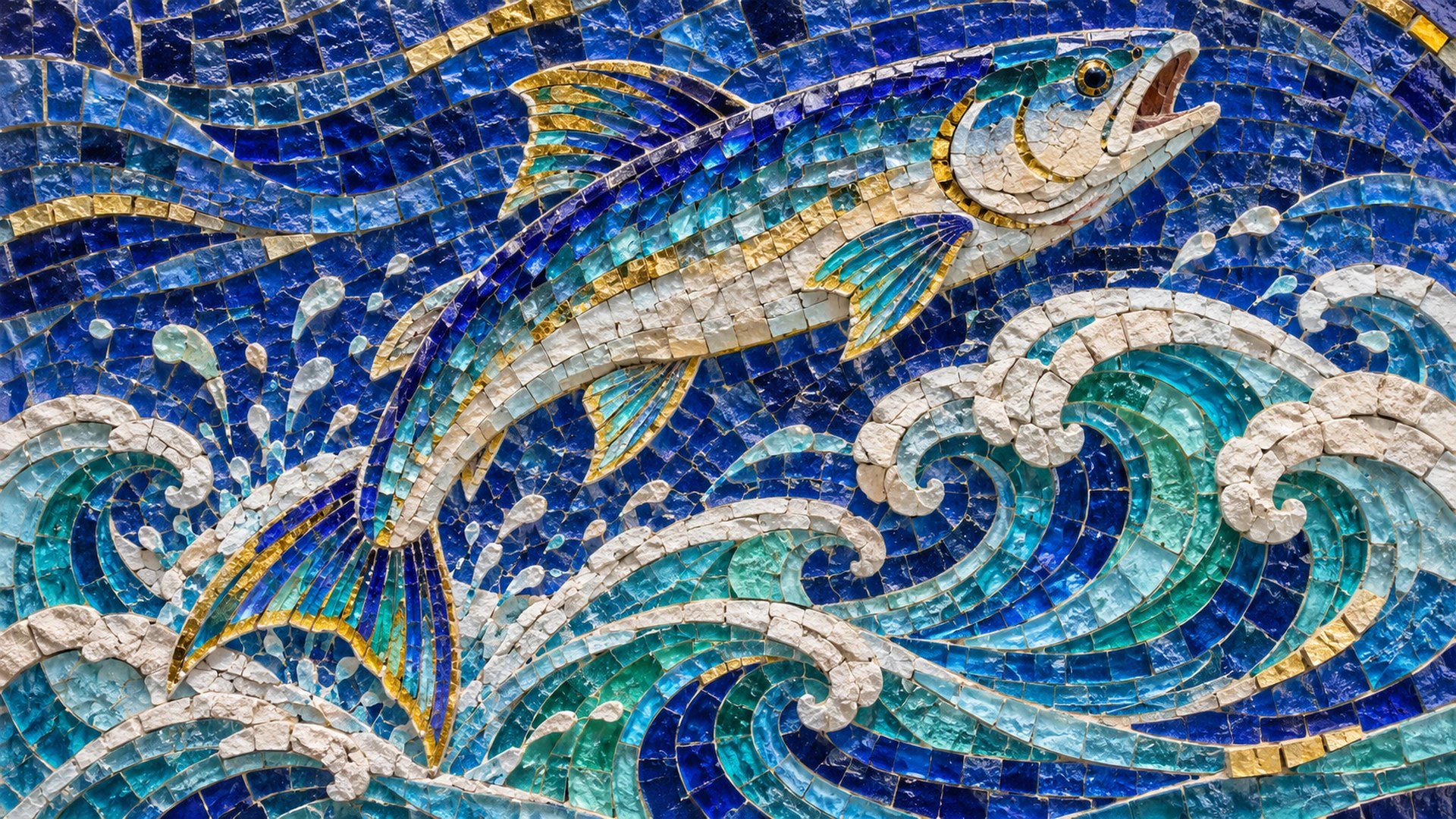
Images made of small glass and stone tesserae, often set at angles to catch light.
Little depth, no single vanishing point; sometimes 'reverse perspective'.
Long stylised folds, elongated bodies, schematic faces.
Deep blues, purples and reds against gold; symbolic rather than natural.
Key places and forms
A huge domed church whose windows make the dome seem to float.
Mosaics of Justinian and Theodora with their courts.
Portable sacred images in egg tempera and gold leaf on wood.
A period when religious images were forbidden and many destroyed.
How to recognize Byzantine Art
- Gold backgrounds and glittering mosaics.
- Frontal, solemn, large-eyed figures.
- Flat space and stylised drapery.
Where people get it wrong
Byzantine figures are often called 'primitive' or 'stiff', as if painters couldn't do realism. The flatness was a choice: the art was meant to show an eternal, spiritual order, not a moment in physical space.
Words to describe Byzantine Art
Precise words for the qualities above. Combine a few of them instead of naming the style or artist alone.
- Byzantine gold mosaic
- glittering glass tesserae
- frontal solemn figure
- large dark eyes
- gold leaf background
- egg tempera icon
- flat sacred space
- stylised drapery folds
- deep blue and purple robes
- domed basilica interior
An original mosaic study in the Byzantine manner: a standing robed figure seen frontally, large dark eyes, a halo, deep blue and purple robes with stylised folds, set against a glittering gold background of small uneven glass tesserae catching the light.
What to take from Byzantine Art today
- Describe the ground: gold mosaic, gold leaf, coloured field.
- Describe the pose and the gaze.
- Name the medium and surface: mosaic tesserae, egg tempera on wood.
Questions about Byzantine Art
What is Byzantine art in simple terms?
The art of the Eastern Roman Empire, centred on Constantinople, from about the 4th century to 1453: gold mosaics, icons and domed churches made to show a spiritual, timeless world.
What are its main characteristics?
Flat, frontal figures with large eyes, gold backgrounds that remove real space, rich colour, symbolic rather than natural proportions, and strict rules for how holy figures are shown.
How is Byzantine art different from Gothic?
Byzantine art keeps figures flat and still against gold in domed buildings; Gothic art, in western Europe, moves toward height, natural light through stained glass and gradually more lifelike figures.
Describe a portrait of someone you know as a Byzantine icon: what stays, what becomes symbolic, which colour their clothing would be and what the gold background would mean.