A colour that keeps changing names
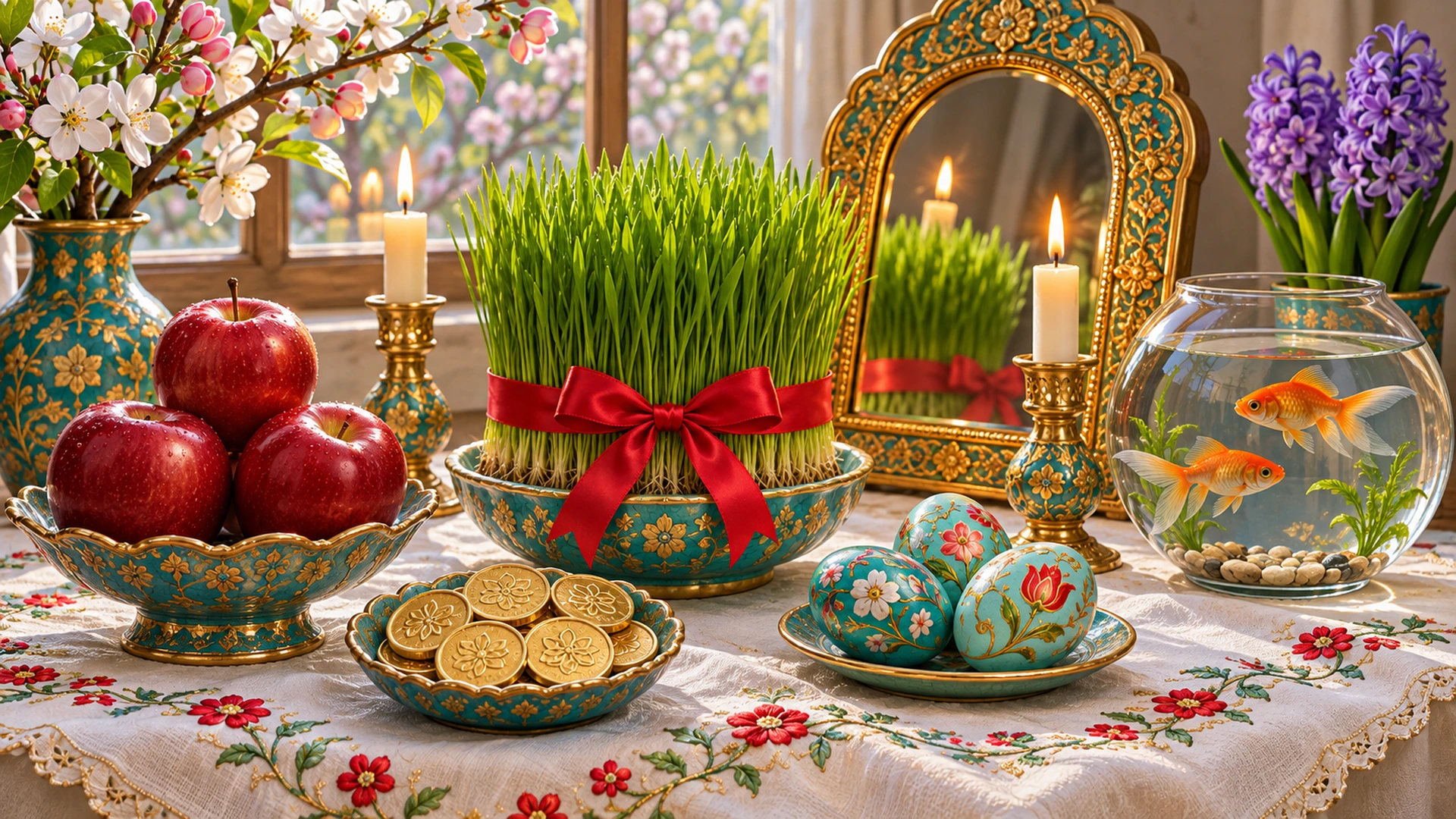
In Persian, sabz is green, but a person who is sabzeh has an olive or light brown complexion, a word said with affection. Sabzeh is also the sprouting wheat or lentils grown for Nowruz and given to running water on Sizdah Bedar. And in Hafez, 'mazra'-e sabz-e falak', the sky itself is a green field.
Linguists use the word 'grue' for languages that have one basic word for both green and blue, such as Vietnamese xanh or Welsh glas, and old Japanese ao, which is why green traffic lights are still called ao. Green is a reminder that colour borders are drawn by language as much as by the eye.
Persian greens
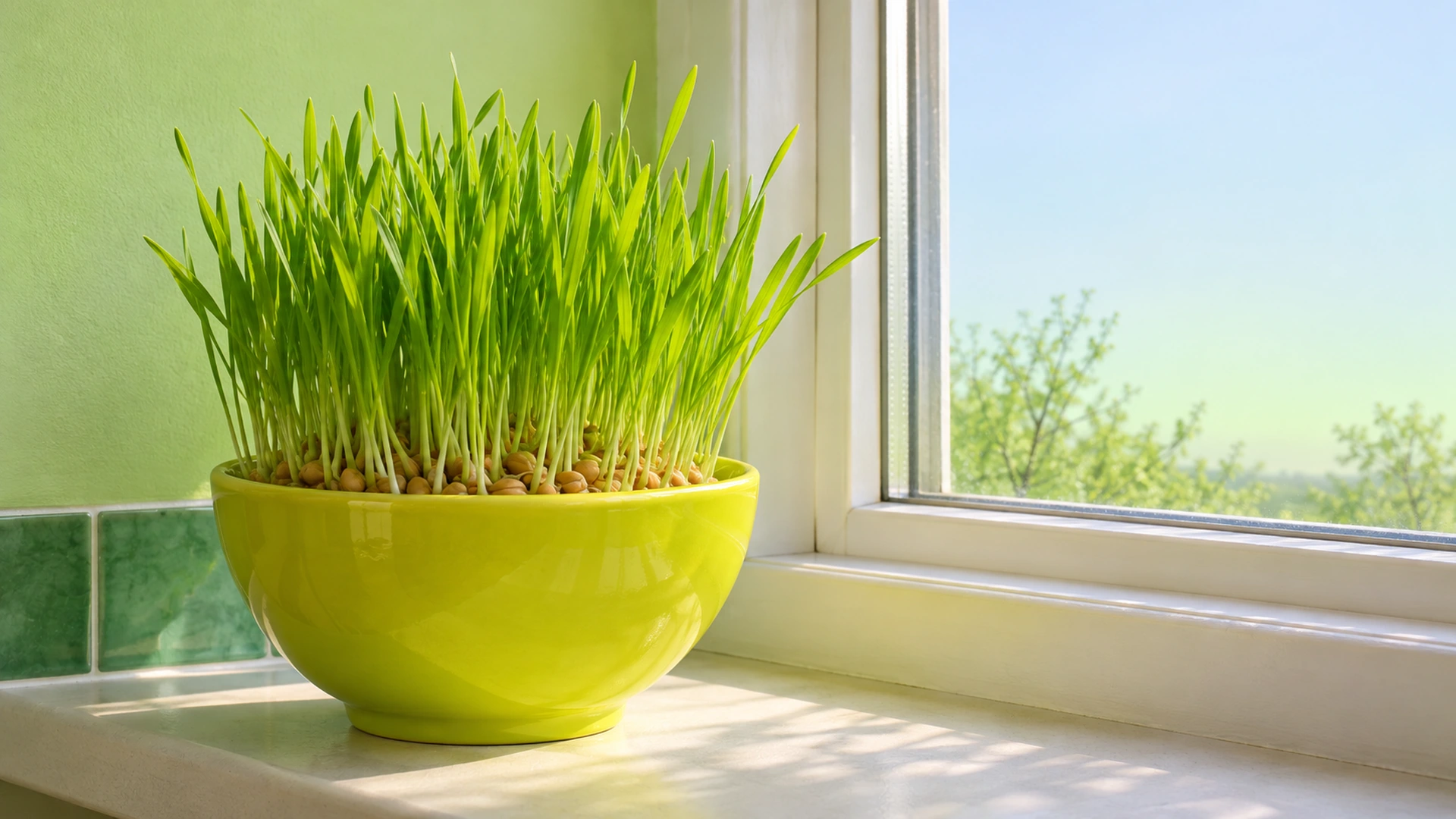
Wheat or lentil sprouts for Nowruz: fresh, bright, yellow-green.
An olive or light brown skin tone, said warmly.
Pistachio green and jade green from the Persian colour vocabulary.
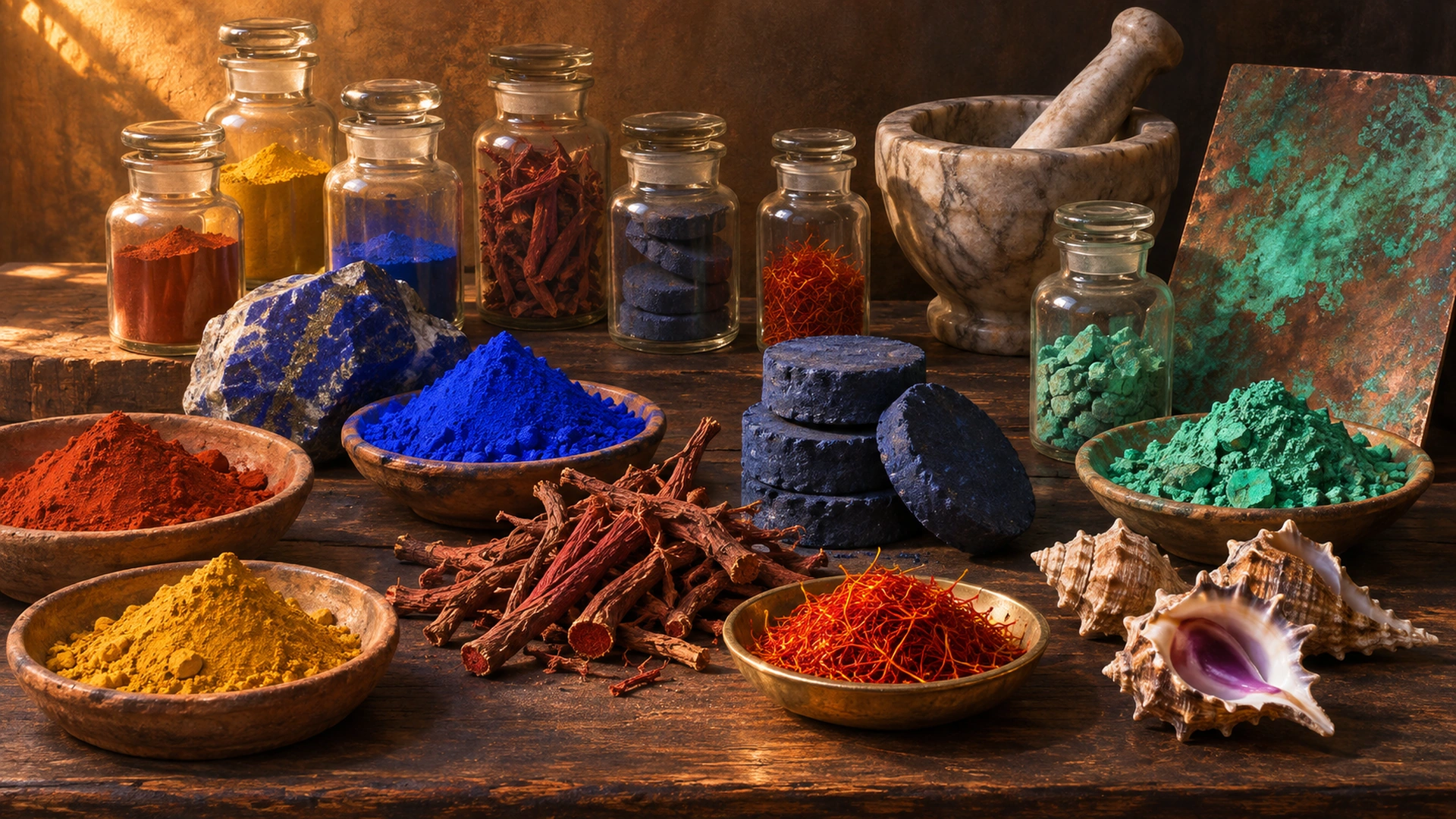
Verdigris green, the copper pigment that slowly ate manuscripts.
Hafez's 'green field of the sky', a reminder that poets draw colour borders differently.
Green in the world
One word for green and blue in many languages.
Associated with Islam and paradise; the green dome over the Prophet's Mosque in Medina.
Scheele's green and Paris green, arsenic greens used in 19th-century wallpaper and paint.
Green earth used under flesh tones in medieval painting, still visible where paint has worn.
Green on screens
Cinema and video use bright green backgrounds for chroma key because they are furthest from skin tones.
The glowing green of old monitors and night-vision images.
Traffic lights, buttons and 'success' states in interfaces.
The words to describe it
Precise words for the qualities above. Combine a few of them instead of naming the style or artist alone.
- fresh Nowruz sabzeh green
- pistachio green
- jade green
- verdigris green
- olive sabzeh complexion
- sacred green dome
- poisonous arsenic green
- green screen chroma key
- night-vision green
- grue blue-green
'A Nowruz morning on a windowsill: a ceramic bowl of bright yellow-green wheat sprouts tied with a red ribbon, soft spring light, a pistachio-green wall behind, a glimpse of a jade-green tile.'
How to put it into words
- Name which green: sprout, pistachio, jade, verdigris, screen green.
- Say whether it is natural, sacred, poisonous or digital in this image.
- Remember that some viewers read green and blue as one colour family.
Where we usually get it wrong
Green is often reduced to 'nature' and 'eco'. Its history includes poison, religion, money, envy, magic and technology. Choosing which green you mean, and which story it carries, gives a much richer image than a generic leafy green.
Find five greens around you, a plant, an object, a screen, a food and a fabric, and name each with a precise Persian or English word. Then describe one image that uses only two of them.
Sources and further reading
- Michel Pastoureau, Green: The History of a Color (2013).
- Brent Berlin and Paul Kay, Basic Color Terms (1969).
- Hafez, Divan.