Every colour has a source
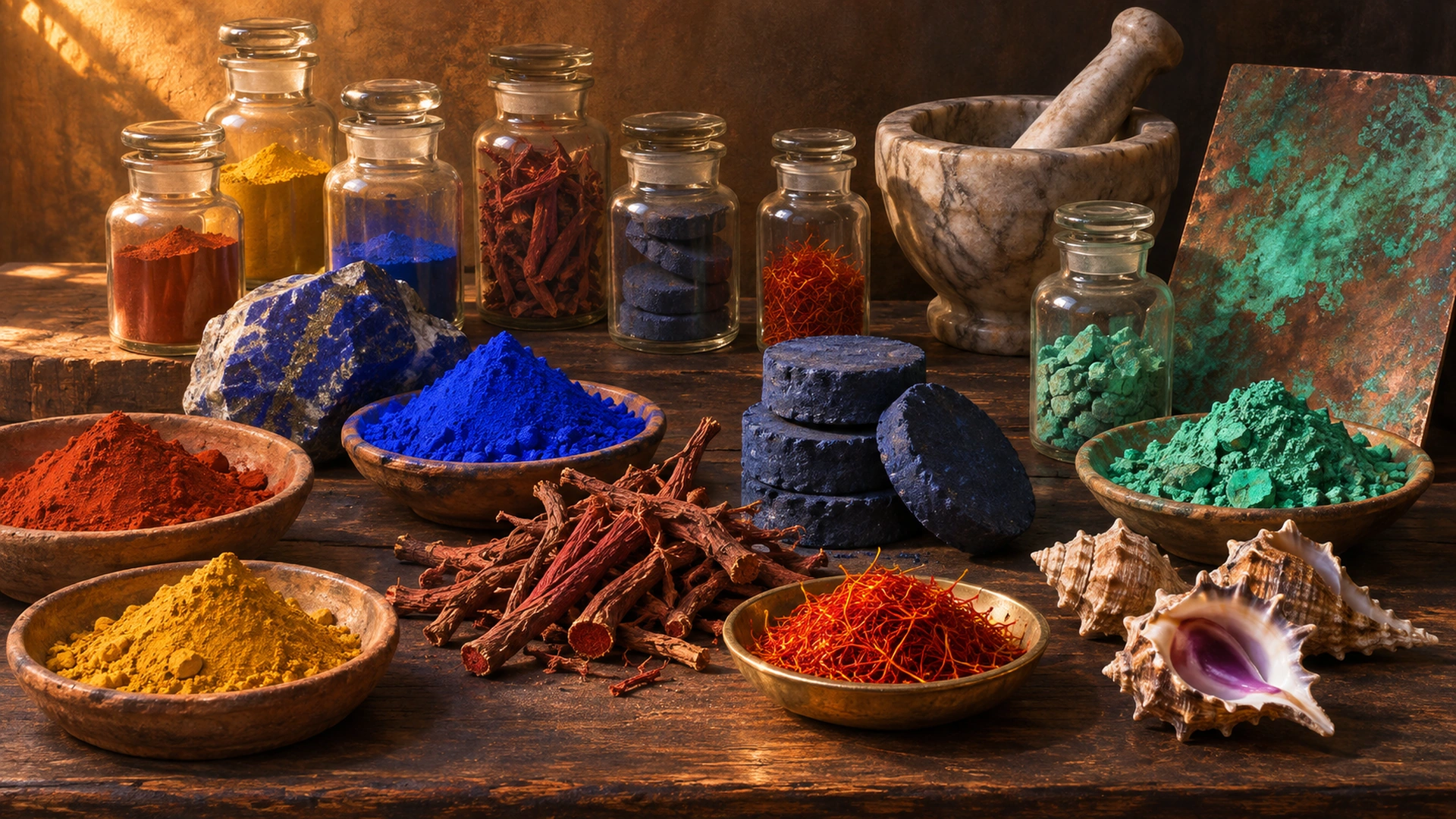
For most of history, a colour was a material you had to find, buy or make. Red ochre from the earth was used in cave paintings tens of thousands of years ago; ultramarine came from lapis lazuli mined in Badakhshan; crimson came from crushed insects. The cost and rarity of a pigment decided where it appeared in a painting, and often what it meant.
From the 18th century, chemistry changed everything. Prussian blue (1704), the first modern synthetic pigment, and William Perkin's mauve dye (1856) opened the way to the bright, cheap colours of the industrial world, and to new problems, like arsenic greens. Knowing where colours come from adds texture and history to how we describe them.
Earth and stone
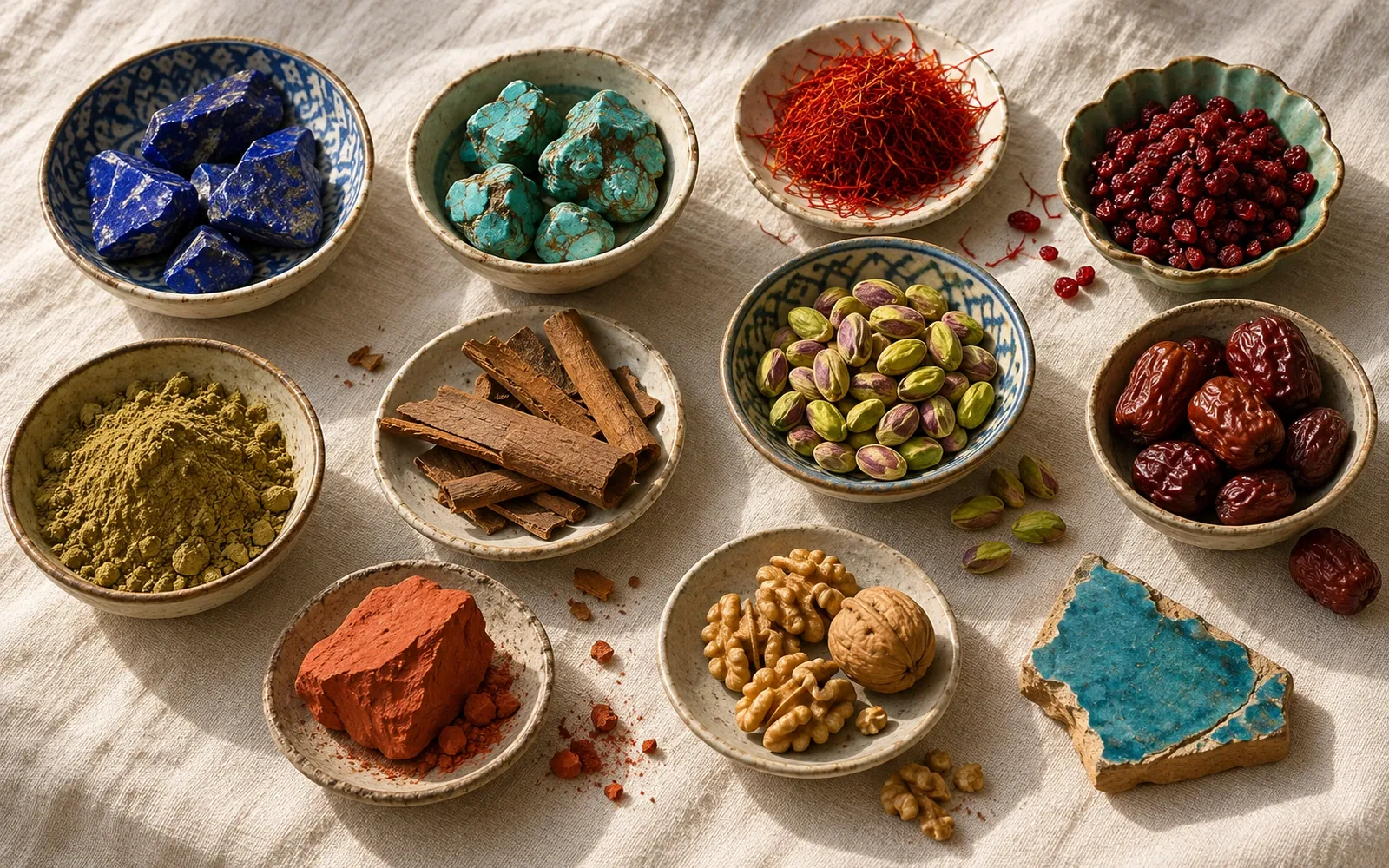
Iron-rich earth in yellows, reds and browns; humanity's oldest pigment.
Earth browns, raw or burnt (heated) for warmer tones.
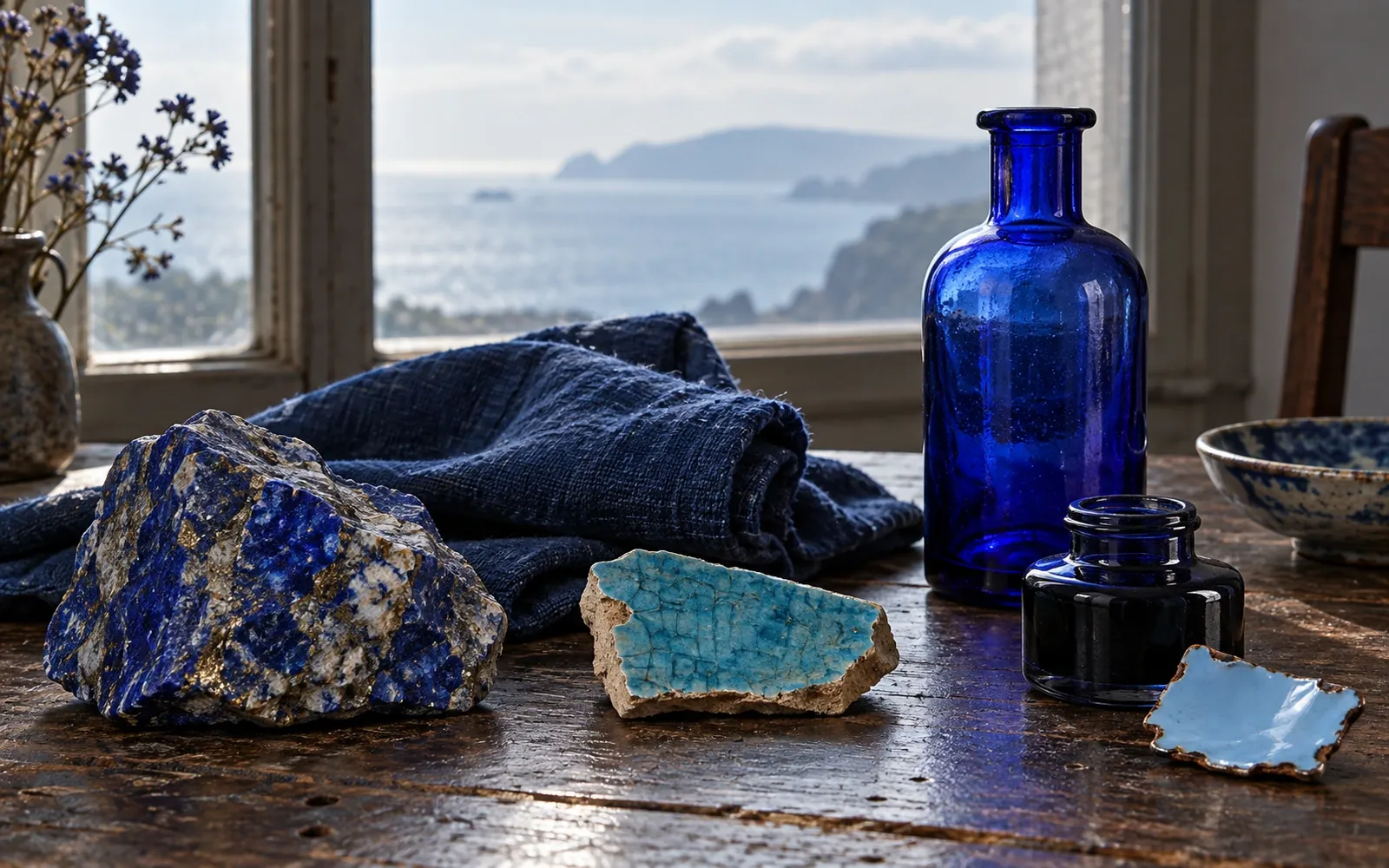
Ground lapis lazuli from Badakhshan; once more precious than gold in Europe.
Copper minerals giving greens and blues.
Bright red from cinnabar, a mercury mineral (shangarf in Persian).
For centuries the main white in oil painting; toxic.
Plants and animals
From thousands of sea snails; the purple of Roman emperors.
Reds from insects; the root of words like crimson and qermez.
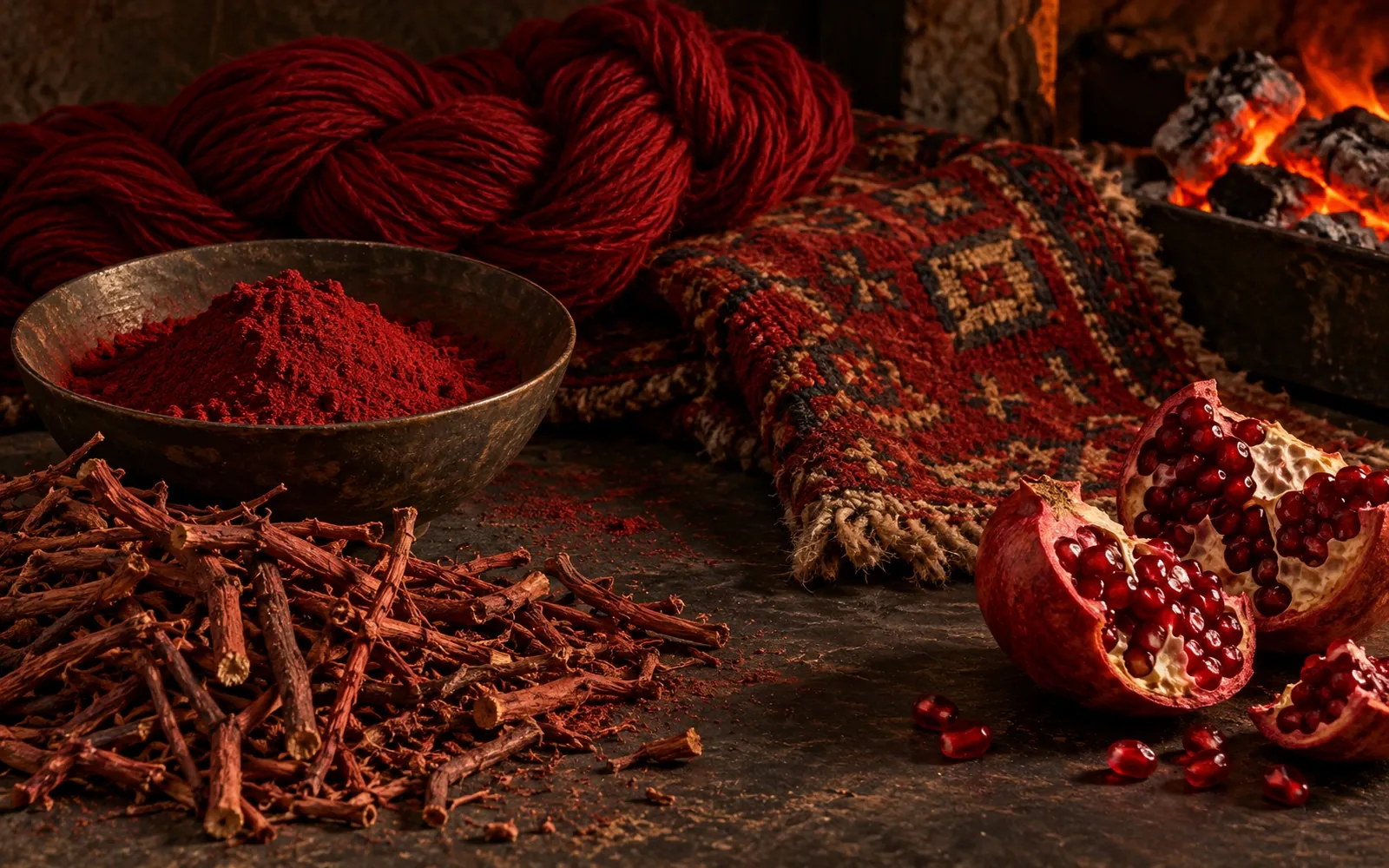
A red from the root of the madder plant (runas), used in Persian carpets.
Deep blue from fermented plant leaves (nil).
Golden yellow from crocus stigmas, also used in manuscripts.
Black from charred bones.
Chemistry
Copper green made by exposing copper to acid; it can eat into paper.
The first modern synthetic pigment, discovered by chance in Berlin.
A bright green containing arsenic, used in wallpaper and dangerous.
William Perkin's purple, the first synthetic dye, starting a colour boom.
Strong yellows, oranges and reds from the 19th century.
A new inorganic blue discovered by chance in a university lab.
Today
Coatings that absorb almost all light, making objects look like holes.
Words to describe a history of pigments
Precise words for the qualities above. Combine a few of them instead of naming the style or artist alone.
- earthy ochre tones
- jewel-like ultramarine
- imperial Tyrian purple
- insect crimson
- madder red
- indigo blue
- verdigris green
- Prussian blue
- vermilion red
- chalky lead white
'A small devotional panel: the robe in deep, jewel-like ultramarine, the background in gold leaf, warm earthy ochre for the ground, and a single accent of vermilion red in the book cover.'
How to describe a history of pigments in words
- Name the pigment when it matters to the look: ultramarine is not just 'blue'.
- Add the material quality: earthy, jewel-like, glowing, chalky.
- Mention history when it adds meaning: the cost of ultramarine, the danger of arsenic green.
Where we usually get it wrong
Old pigment names are often used loosely as colour names. 'Vermilion' or 'ultramarine' in a paint shop today may be modern substitutes. When precision matters, describe the visual quality, not only the historical name.
Questions about a history of pigments
What is a history of pigments?
Where colours came from before tubes and screens: earth, stones, insects, snails, plants and laboratories, and how each pigment changed the look of art.
How do you describe a history of pigments in words or a prompt?
Name the pigment when it matters to the look: ultramarine is not just 'blue'. Add the material quality: earthy, jewel-like, glowing, chalky. Mention history when it adds meaning: the cost of ultramarine, the danger of arsenic green.
Choose one painting you love and guess which pigments might be in it from their colour and quality. Then look up the museum's technical notes, if they exist, and compare.
Sources and further reading
- Philip Ball, Bright Earth: The Invention of Colour (2001).
- Victoria Finlay, Colour: Travels Through the Paintbox (2002).
- Kassia St Clair, The Secret Lives of Colour (2016).