Personality made visible
Character design is the craft of inventing figures for animation, comics, games, picture books and brands. It took shape in the animation studios of the 1920s and 1930s, where characters had to be drawn thousands of times by different hands and still be recognised instantly. That practical need produced the model sheet, a page showing the character from all sides with fixed proportions, and a set of principles that Disney animators Frank Thomas and Ollie Johnston later described in The Illusion of Life (1981), including 'appeal'.
Constraints have always shaped good characters. Osamu Tezuka's large-eyed figures made emotion readable on cheap paper. In the 1981 arcade game Donkey Kong, Shigeru Miyamoto gave the hero a cap, a moustache and overalls because, at a few pixels tall, hair, a mouth and moving arms were otherwise impossible to see. The lesson holds: a character works when its idea survives being reduced to a silhouette, a few colours and a handful of shapes.
Visual anatomy of character design
The filled-in outline should be recognisable and show attitude on its own.
Circles read as friendly, squares as solid and dependable, triangles as sharp or dangerous.
How many heads tall; exaggerated features that carry personality.
A small palette with one dominant colour and one accent.
Clothes, tools and wear that tell where the character has been.
A default stance and a range of faces that fit the personality.
Tools of the trade
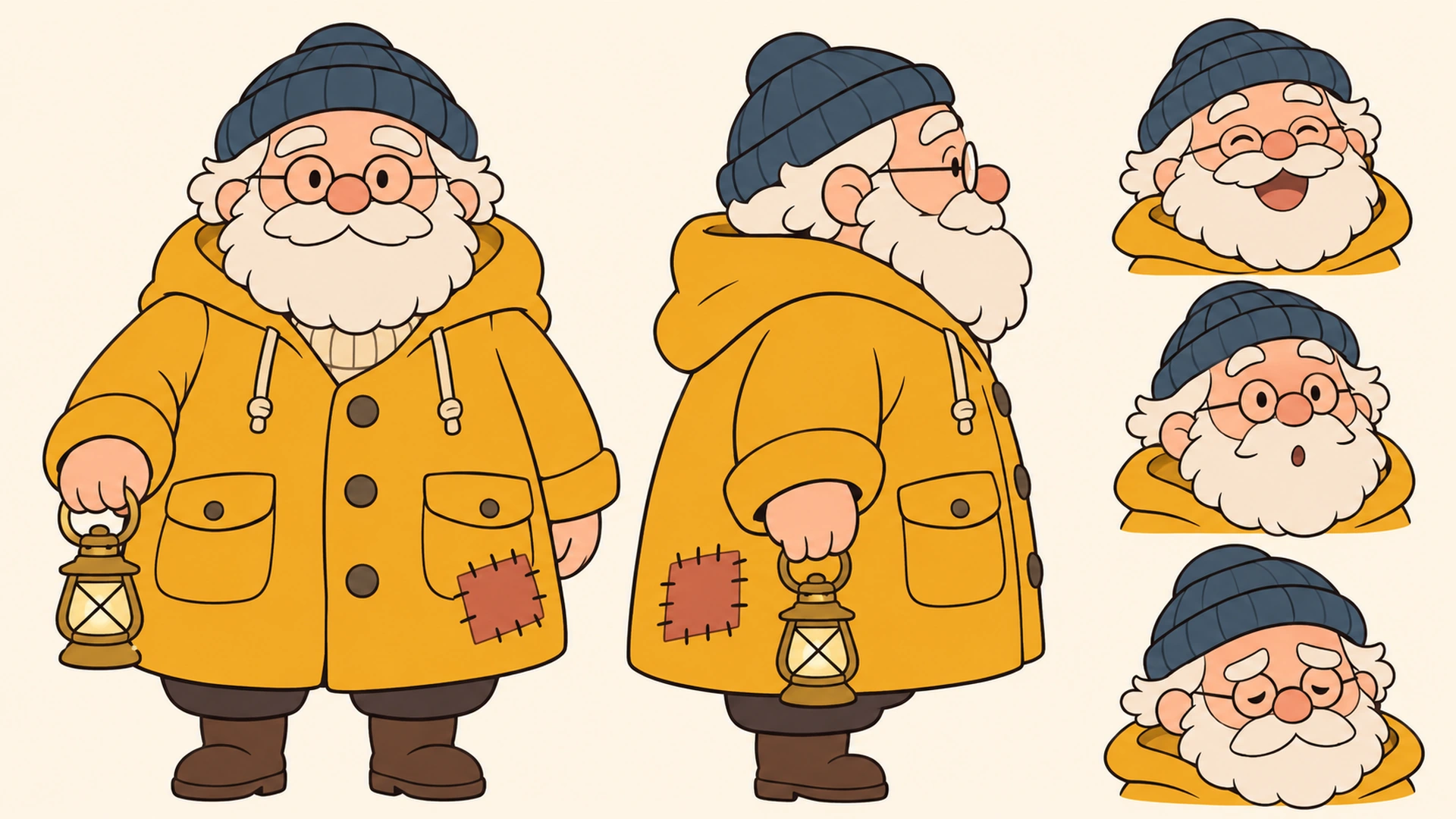
Front, side, back and three-quarter views with fixed proportions.
The character rotated in steps to guide animators or modellers.
A page of faces: joy, anger, doubt, surprise.
Fill the character in black; if it still reads, the design is clear.
Not prettiness, but a design that is pleasing and interesting to look at.
Characters side by side to check contrast in height and shape.
How to recognize character design
- A distinct outline you could recognise in shadow.
- One dominant shape repeated through the design.
- Limited, deliberate colour.
- Details that hint at a backstory.
Where people get it wrong
Starting with details instead of shape. A character covered in belts, scars and accessories but with a generic outline is forgettable. Decide the big shape and the attitude first; add detail only where it tells something. In prompts, lead with shape, proportion and personality, then costume.
Words to describe character design
Precise words for the qualities above. Combine a few of them instead of naming the style or artist alone.
- character design
- silhouette
- shape language
- model sheet
- turnaround
- expression sheet
- proportions in heads
- limited palette
- accent colour
- costume storytelling
- appeal
- line-up
An original character design sheet: an old lighthouse keeper built from round shapes, three and a half heads tall, a wide soft body and small boots, a big mustard raincoat with one mismatched patch, a tiny brass lantern, white beard and round glasses, shown in front and side view with three expressions, flat colours, clean outlines, plain background.
What to take from character design today
- Start with the big shape: round, boxy or pointed.
- Give proportions: three heads tall, long limbs, tiny feet.
- Limit the palette and name the accent colour.
- Add two or three story details: a patched coat, an old key.
Questions about character design
What is shape language in character design?
Using basic shapes to signal personality: round forms feel friendly and soft, square forms stable and strong, triangular forms sharp, fast or threatening.
What is a character model sheet?
A reference page showing a character from several angles, with fixed proportions and sometimes expressions, so different artists draw it consistently.
Invent a character from one sentence: who they are and what they want. Write five lines: dominant shape, proportions, palette, costume detail and the pose they stand in when nobody is watching.
Sources and further reading
- Frank Thomas and Ollie Johnston, The Illusion of Life: Disney Animation (1981).
- Preston Blair, Cartoon Animation (1994).
- Scott McCloud, Making Comics (2006).