The future of 1955
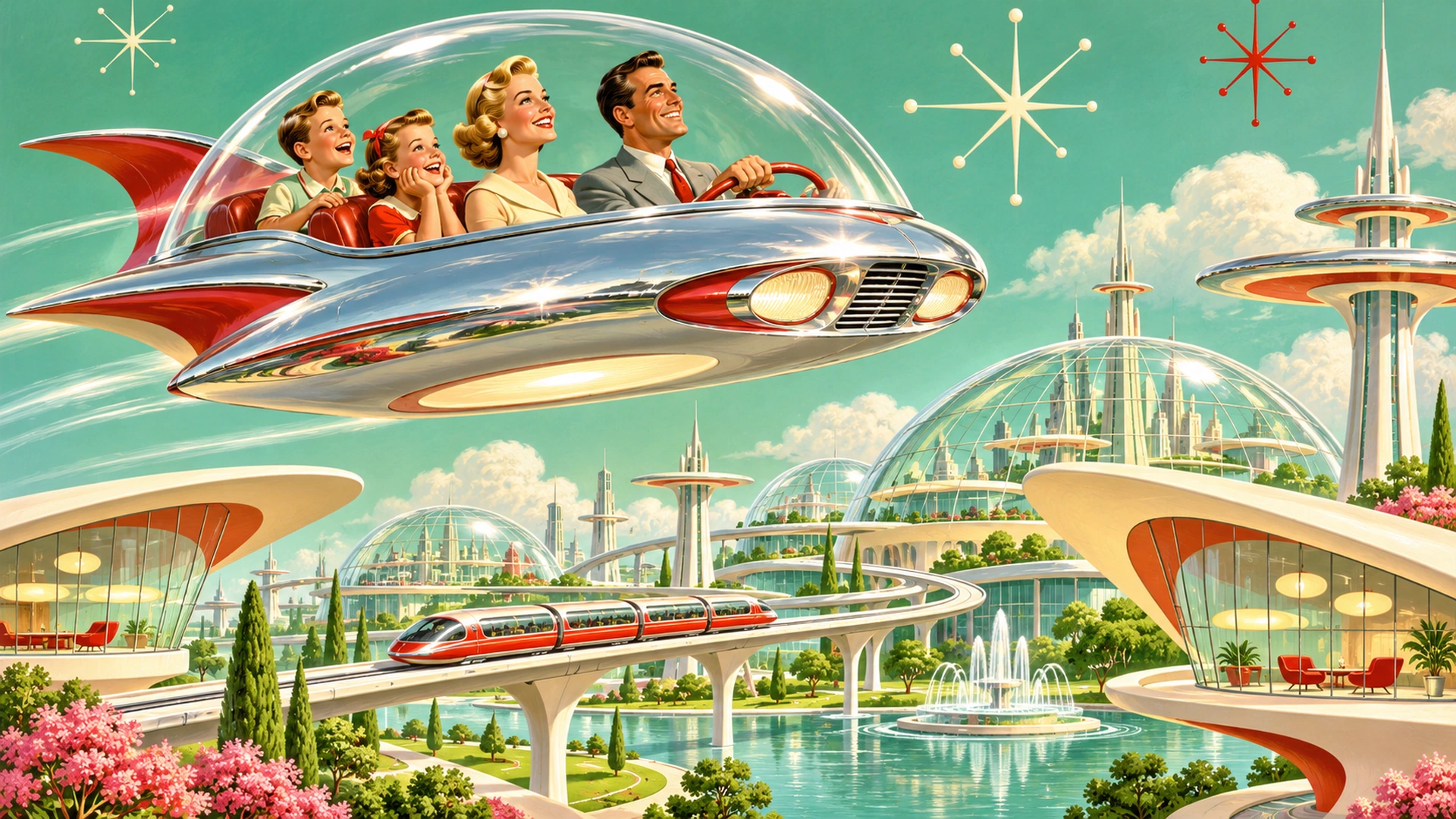
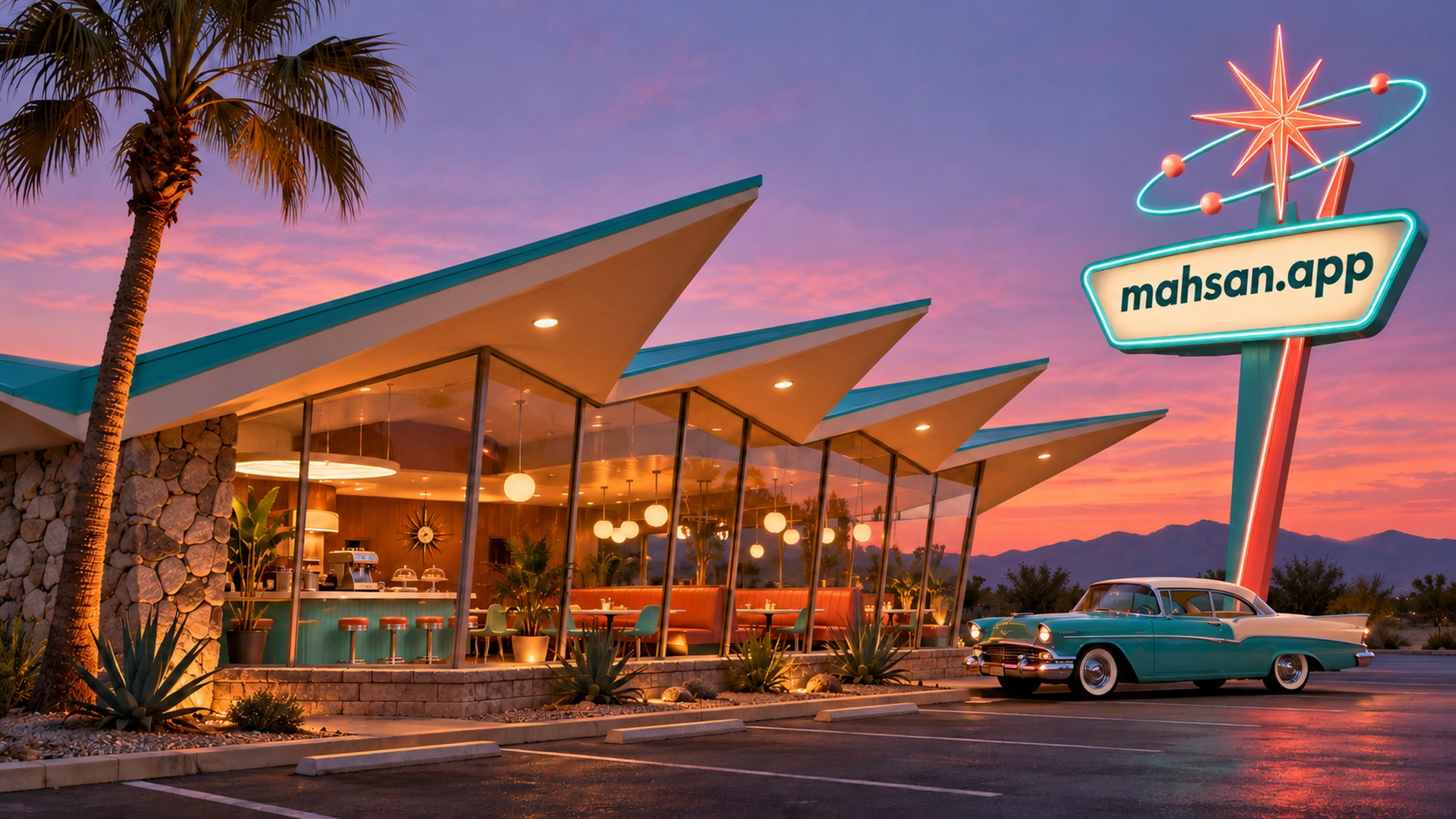
Atompunk is a name, coined in the 2000s alongside steampunk and dieselpunk, for the look and mood of the Atomic Age and early Space Age, roughly 1945 to 1965. It draws on mid-century modern design, Googie architecture, pulp science fiction magazines and films, advertising, and the visual culture of the Cold War: nuclear power promoted as clean and endless, Sputnik in 1957, and duck-and-cover drills in schools.
The aesthetic is double-edged. Its surface is optimism: kitchens of the future, flying cars, robots who serve dinner. Underneath runs the fear of nuclear war. The Fallout video games, starting in 1997, made this contrast their whole world, and animated films such as The Iron Giant (1999) borrowed the same period.
Visual anatomy of Atompunk
Starbursts, atoms with orbiting rings, boomerangs, rocket fins, ovals and parabolas.
Chrome, Formica, vinyl, fibreglass, bakelite, glass bubbles.
Atomic turquoise, coral, mustard, cream and mint, with chrome and black.
Vacuum tubes, dials, ray guns, rockets, round-headed robots.
Idealised 1950s families, scientists in lab coats, pin-up astronauts.
Cheerful on top, anxious underneath.
Words around atompunk
The period after 1945 when nuclear power shaped culture, design and fear.
The era opened by Sputnik in 1957 and the race to the Moon.
Mid-century roadside architecture with sweeping roofs and starburst signs.
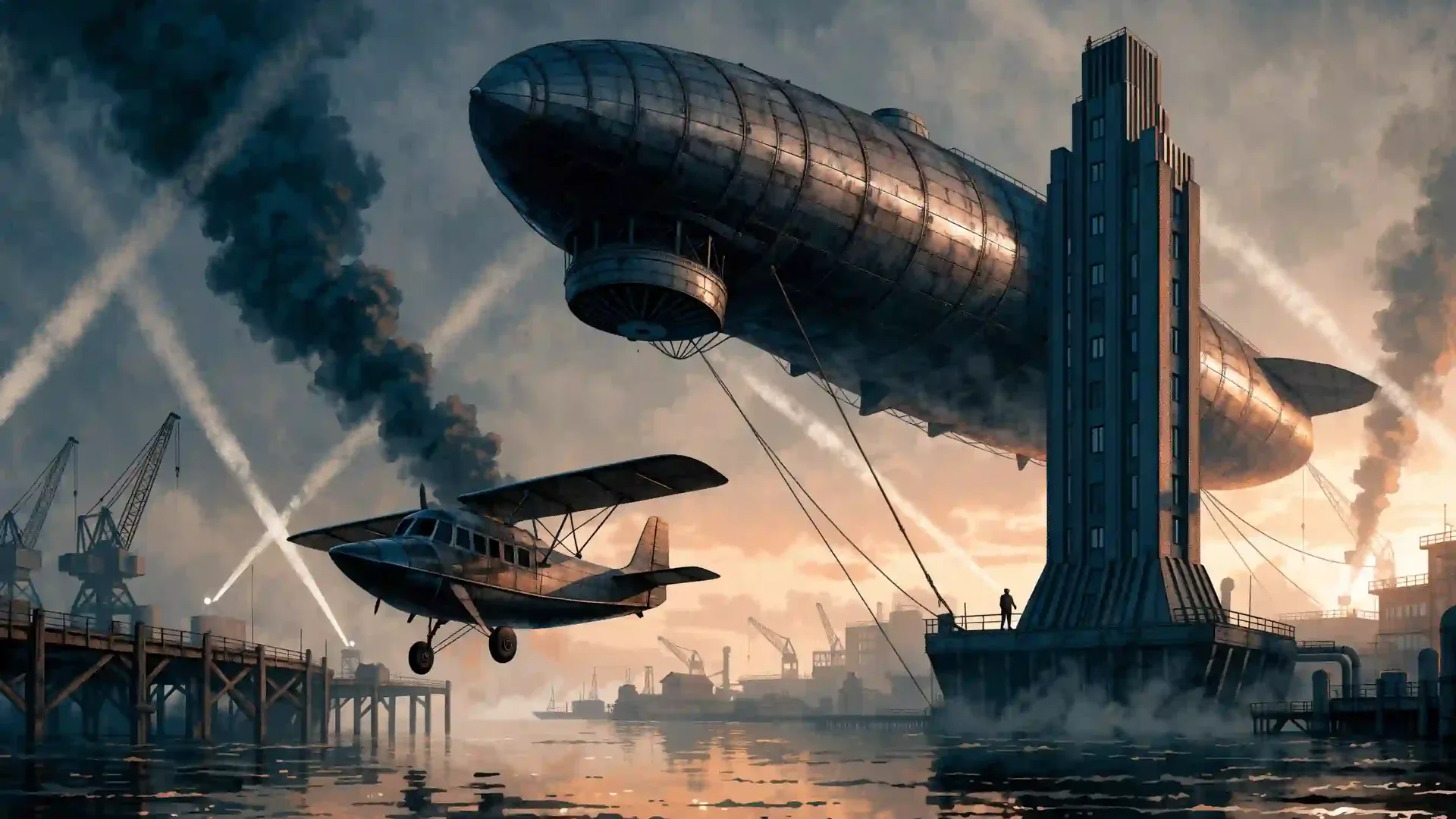
A related term for the streamlined, ray-gun future of pulp science fiction.
How to recognize Atompunk
- Starburst and atom motifs.
- Chrome and pastel together.
- Rockets, dials and round robots.
- Wholesome scenes with a hint of threat.
Where people get it wrong
Atompunk is not the same as 1980s synthwave or general vintage. Its future is pre-digital: valves not chips, dials not screens. And without the shadow of the bomb, it becomes plain nostalgia; the tension is the point.
Words to describe Atompunk
Precise words for the qualities above. Combine a few of them instead of naming the style or artist alone.
- atompunk
- Atomic Age
- Space Age
- starburst
- chrome
- boomerang
- ray gun
- vacuum tube
- fallout shelter
- atomic turquoise
An atompunk scene: a pastel 1950s kitchen with chrome trim and a starburst wall clock, a round-headed robot pouring coffee, through the window a rocket on a suburban lawn and a faint mushroom-shaped cloud far on the horizon.
What to take from Atompunk today
- Name the decade and the object: a 1958 kitchen, a 1962 rocket.
- Mix one pastel, one chrome, one black.
- Use pre-digital technology.
- Add one sign of fear in a cheerful scene.
Optimism as a genre
Atompunk shows how a culture narrates its own future: in brochures, ads and comics, the bomb became a happy atom with a face. It is a lesson in how style can tell one story while history tells another.
Questions about Atompunk
What is atompunk?
A retro-futurist aesthetic based on the Atomic Age and early Space Age, roughly 1945 to 1965: chrome, starbursts, rockets, pre-digital machines and Cold War anxiety.
What is the difference between atompunk and dieselpunk?
Dieselpunk draws on roughly 1920 to 1945: diesel engines, Art Deco and war. Atompunk starts after 1945, with nuclear power, the Space Age and mid-century modern design.
What games and films are atompunk?
The Fallout games are the best-known example; The Iron Giant and many 1950s science fiction films and comics share the look.
Find a 1950s advertisement for a household appliance. Describe the future it promises, then describe what it leaves out.
Sources and further reading
- Wikipedia: Atompunk and Atomic Age (design).
- Smithsonian National Air and Space Museum: Space Age popular culture.
- Alan Hess, Googie Redux: Ultramodern Roadside Architecture, Chronicle Books, 2004.