Yesterday's tomorrow
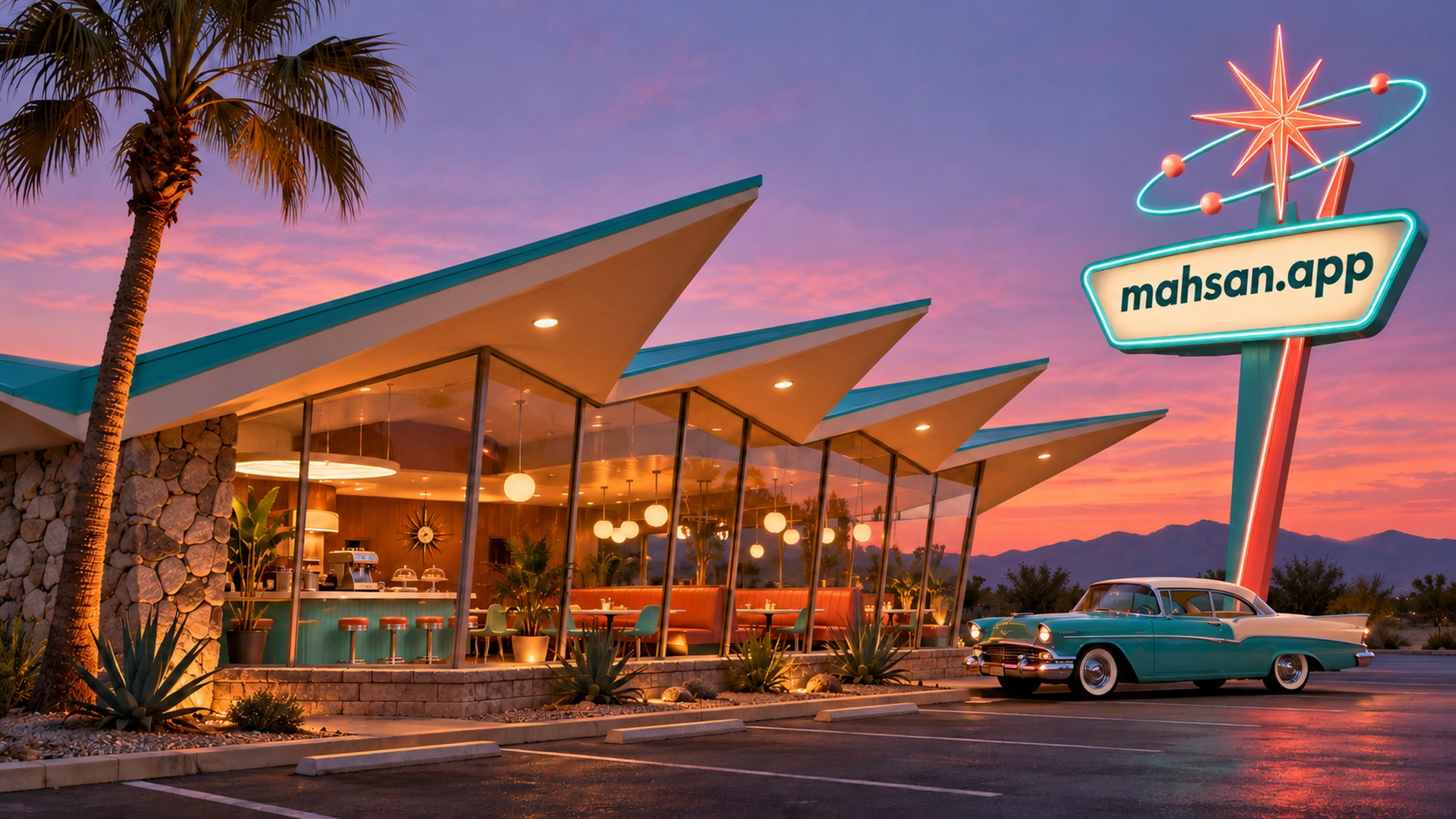
Retrofuturism is the style of the future as it was imagined in the past, especially in the 1930s to 1960s: streamlined trains, flying cars, domed cities, robot helpers and chrome kitchens. It draws on Art Deco streamlining, the 'atomic age' and 'space age' design of the 1950s and 60s, Googie architecture with its boomerang roofs, and cartoons like The Jetsons (1962).
Later artists and designers returned to these visions with affection and irony, from film and game worlds to illustration and branding. The concept artist Syd Mead's glossy industrial futures are a key reference for its more sophisticated side. Retrofuturism is optimistic on the surface, and often quietly asks what happened to that promised future.
Visual anatomy of Retrofuturism
Streamlined teardrops, fins, domes, boomerangs, starbursts and atomic orbits.
Chrome, polished aluminium, glossy enamel, glass bubbles and plastic.
Mint, turquoise, cherry red, mustard and cream, or bright space-age orange.
Rockets, ray guns, robots, monorails and giant mainframe computers with blinking lights.
Domed cities, suburban homes of the future, space stations, motels with neon signs.
Glossy airbrushed illustration with clean gradients and optimistic light.
How to recognize Retrofuturism
- Futuristic technology with a clearly mid-century look.
- Chrome, fins and streamlined curves.
- Optimistic, glossy, slightly naive mood.
Where people get it wrong
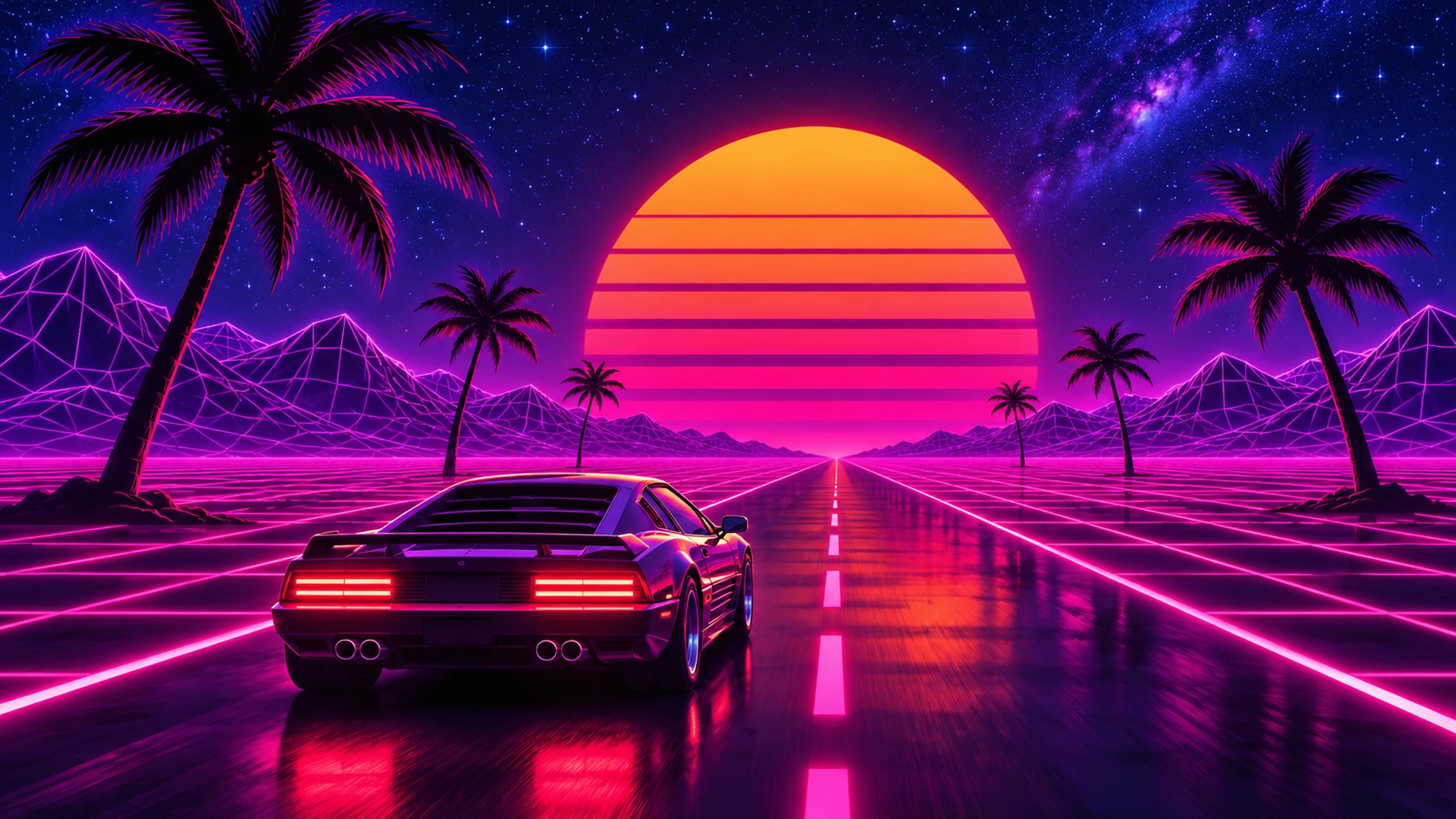
Retrofuturism is often confused with cyberpunk or synthwave. Cyberpunk is a dark, dense future of the 1980s; synthwave is 1980s neon nostalgia. Retrofuturism is mainly the bright, streamlined, mid-century idea of tomorrow.
Words to describe Retrofuturism
Precise words for the qualities above. Combine a few of them instead of naming the style or artist alone.
- retrofuturism
- 1950s space age
- atomic age starbursts
- streamlined chrome
- flying car
- domed city of tomorrow
- Googie architecture
- mint and cherry red
- glossy airbrushed illustration
- optimistic future
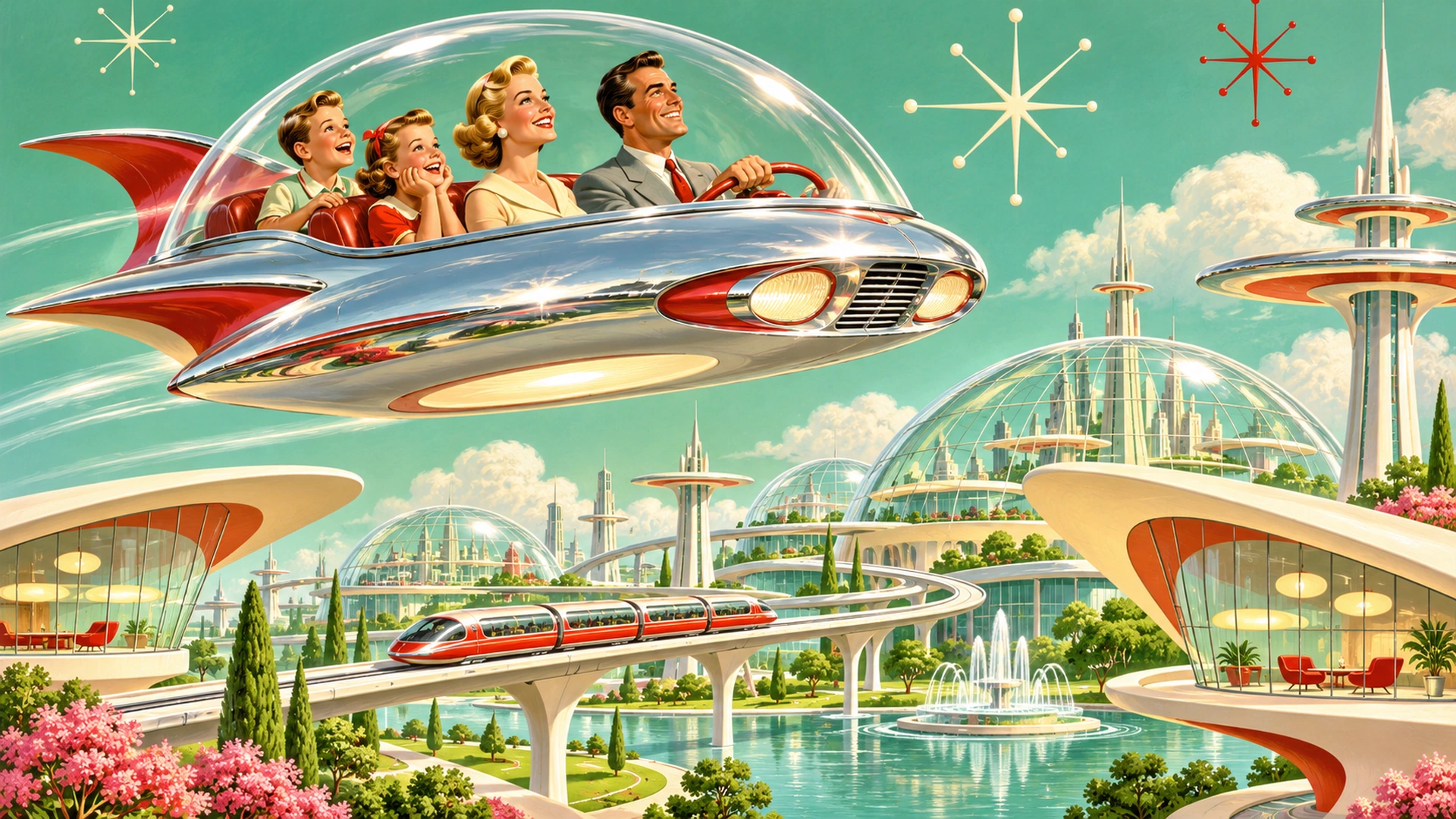
An original retrofuturist illustration: a family in a chrome flying car gliding over a domed city of tomorrow, boomerang-shaped buildings and a monorail below, atomic starburst motifs in the sky, mint, cherry red and cream colours, glossy airbrushed gradients and a bright optimistic light.
What to take from Retrofuturism today
- Name the decade whose future you mean: 1930s, 1950s, 1960s.
- Describe shapes and materials: fins, domes, chrome.
- Give the mood: naive optimism, nostalgic, ironic.
Questions about Retrofuturism
What is Retrofuturism?
The future as people once imagined it: rocket cars, chrome kitchens, atomic shapes and space-age optimism, revisited with nostalgia.
How do you recognize Retrofuturism?
Futuristic technology with a clearly mid-century look. Chrome, fins and streamlined curves. Optimistic, glossy, slightly naive mood.
How do you describe Retrofuturism in words or a prompt?
Name the decade whose future you mean: 1930s, 1950s, 1960s. Describe shapes and materials: fins, domes, chrome. Give the mood: naive optimism, nostalgic, ironic.
Choose one object you use every day, such as a kettle or a phone, and describe it as it might have been imagined in 1958: its shape, materials, colour and the advert that would sell it.