Architecture for the car and the space race
Googie takes its name from Googie's, a Los Angeles coffee shop designed by John Lautner in 1949 with a dramatic sloping roof. Through the 1950s and early 1960s, architects such as Armét & Davis and Douglas Honnold built coffee shops, diners, motels, bowling alleys and car washes across Southern California and beyond in a style meant to catch the eye of drivers at speed.
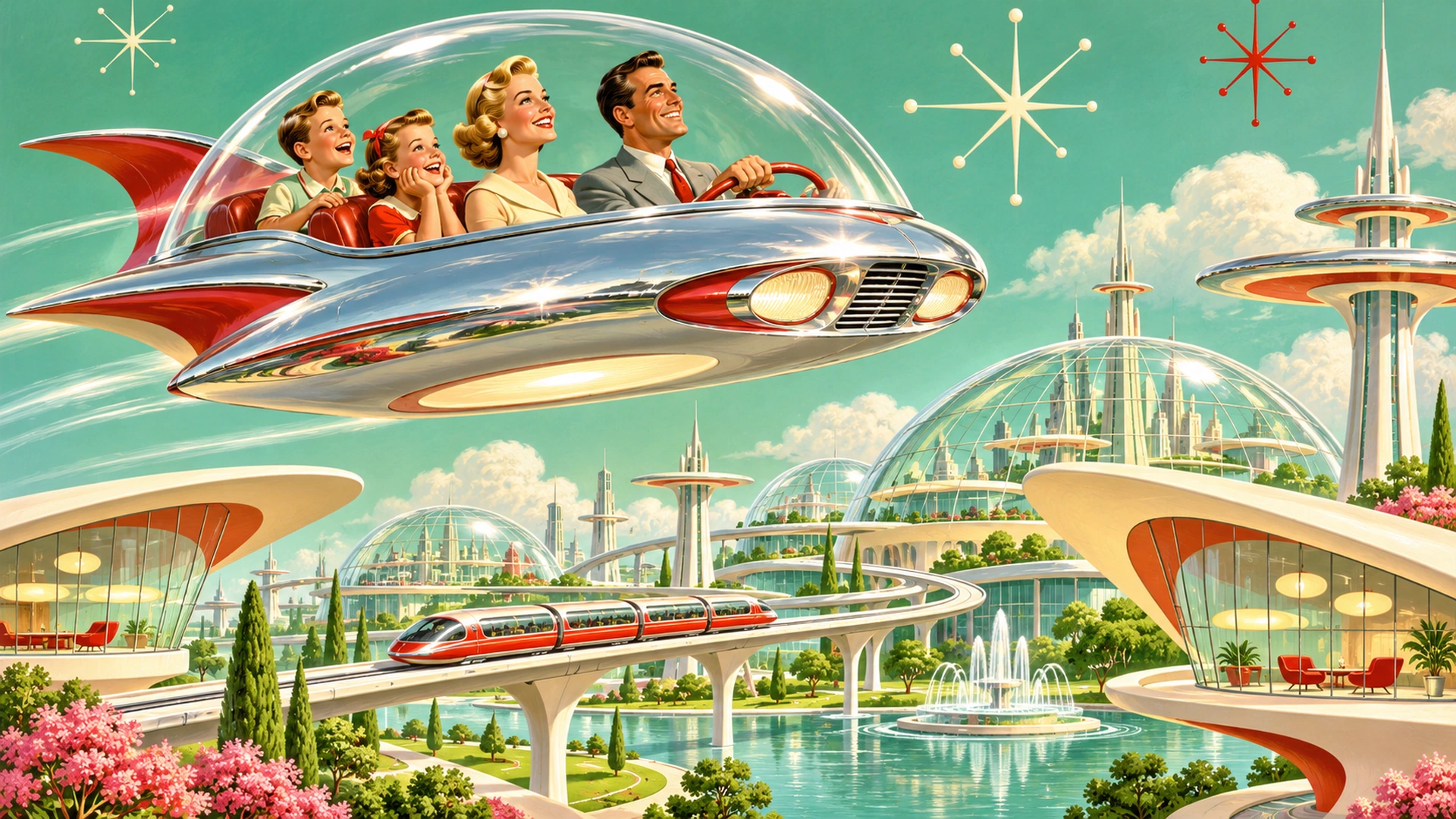
Inspired by car culture, jet aircraft and the space race, Googie used cantilevered upswept roofs, boomerang and amoeba shapes, starbursts, atomic motifs, floor-to-ceiling glass and giant neon signs. Landmarks include the Theme Building at Los Angeles airport (1961) and the Seattle Space Needle (1962). Long dismissed as kitsch, it is now preserved and has shaped retrofuturist design, animation and film.
Visual anatomy of Googie Architecture
Upswept, zigzag or cantilevered roofs that seem to take off.
Boomerangs, amoebas, parabolas, flying saucers, starbursts.
Tall neon signs with arrows, stars and atomic orbits.
Glass walls, steel, terrazzo, stone veneer, Formica interiors.
Turquoise, coral, mustard, white and chrome, glowing at night.
Optimistic, playful, futuristic, made to be seen from a car.
Key terms in Googie Architecture
A term for the flashy, popular consumer design of the 1950s.
Motifs of atoms, orbits and starbursts from post-war design.
A projecting roof or beam supported at one end, giving a floating look.
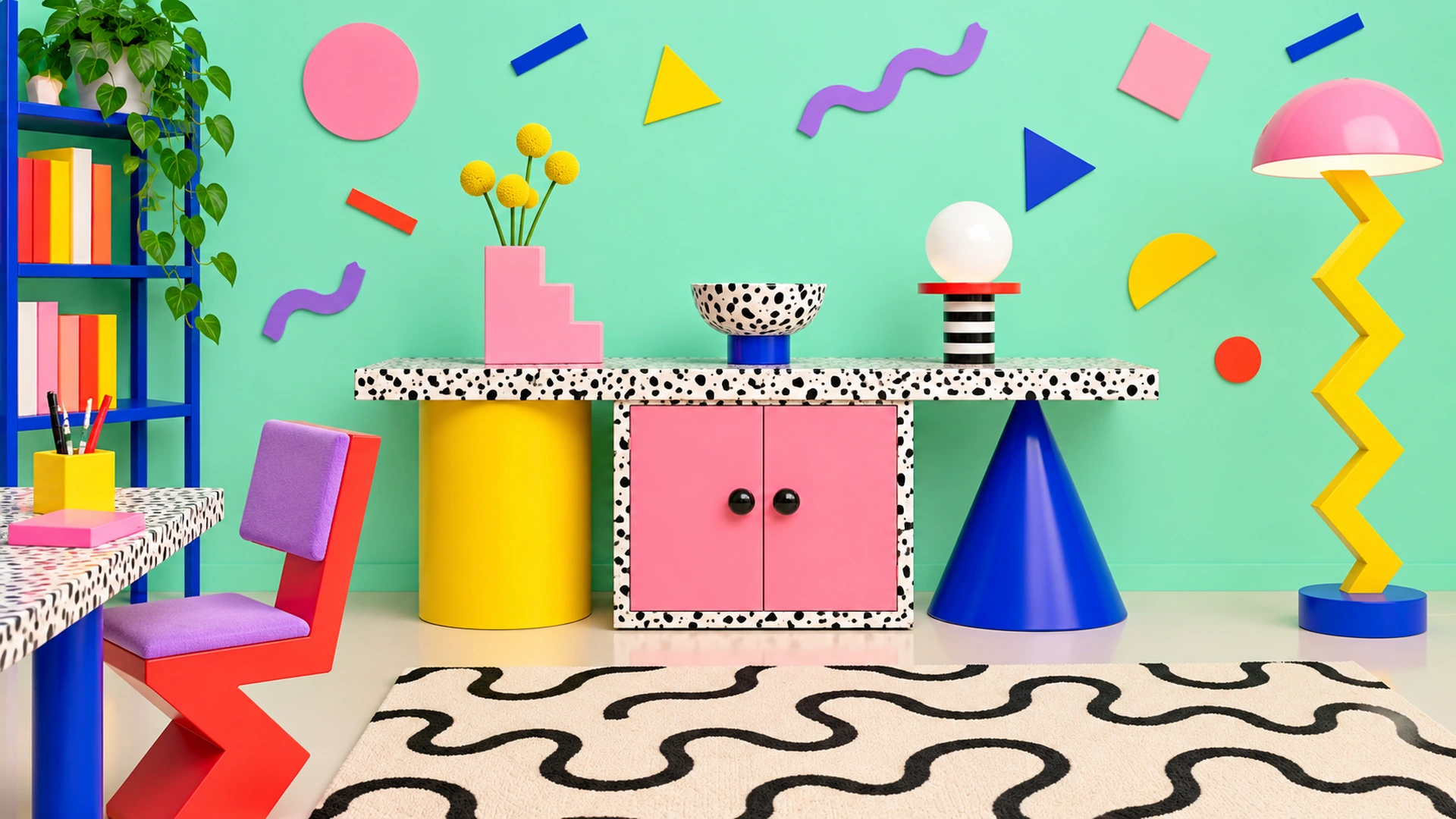
The broader design movement Googie belongs to, more restrained elsewhere.
How to recognize Googie Architecture
- Dramatic upswept roofs.
- Starbursts, boomerangs and neon signs.
- Glass walls and bright mid-century colour.
Where people get it wrong
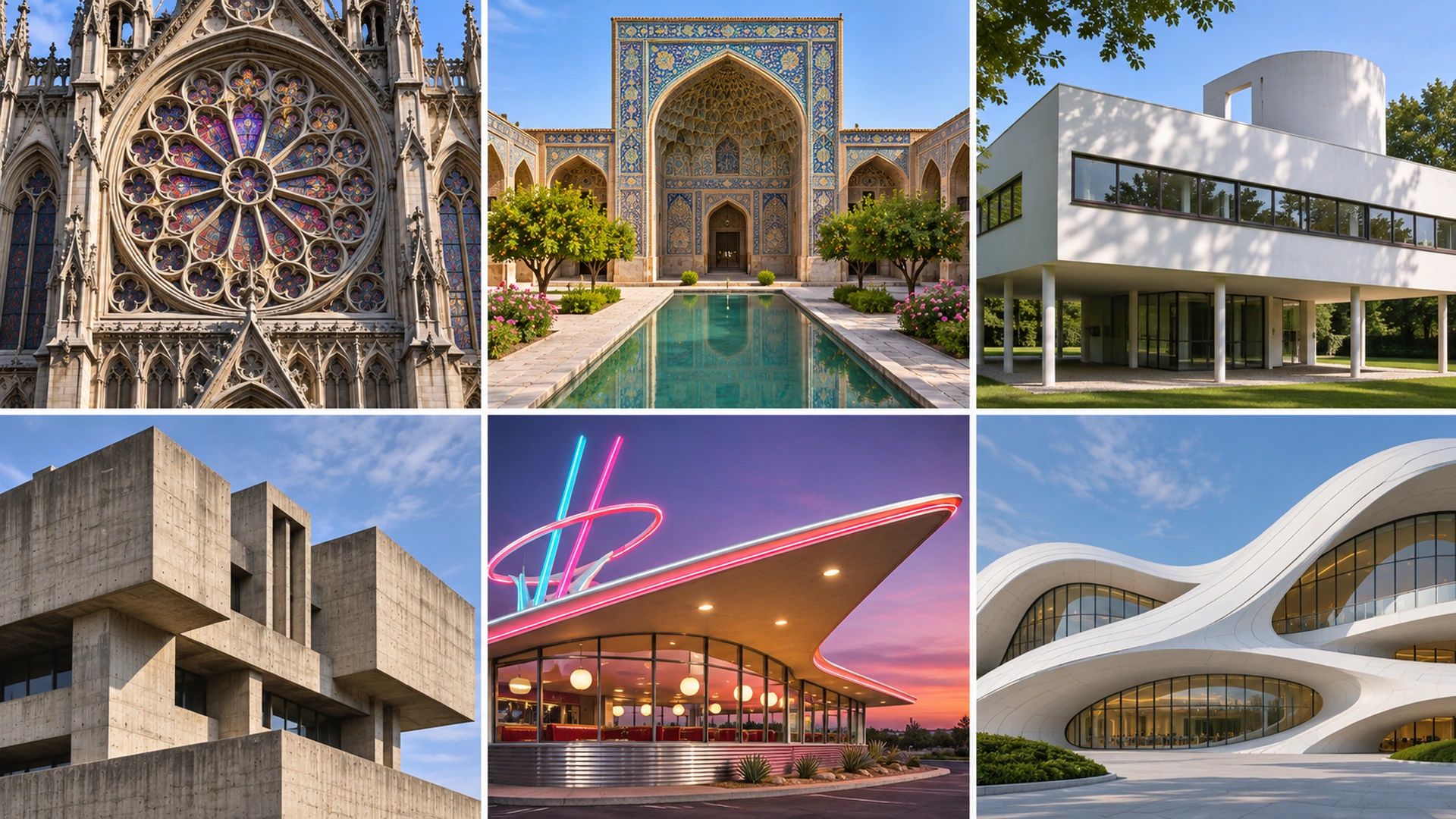
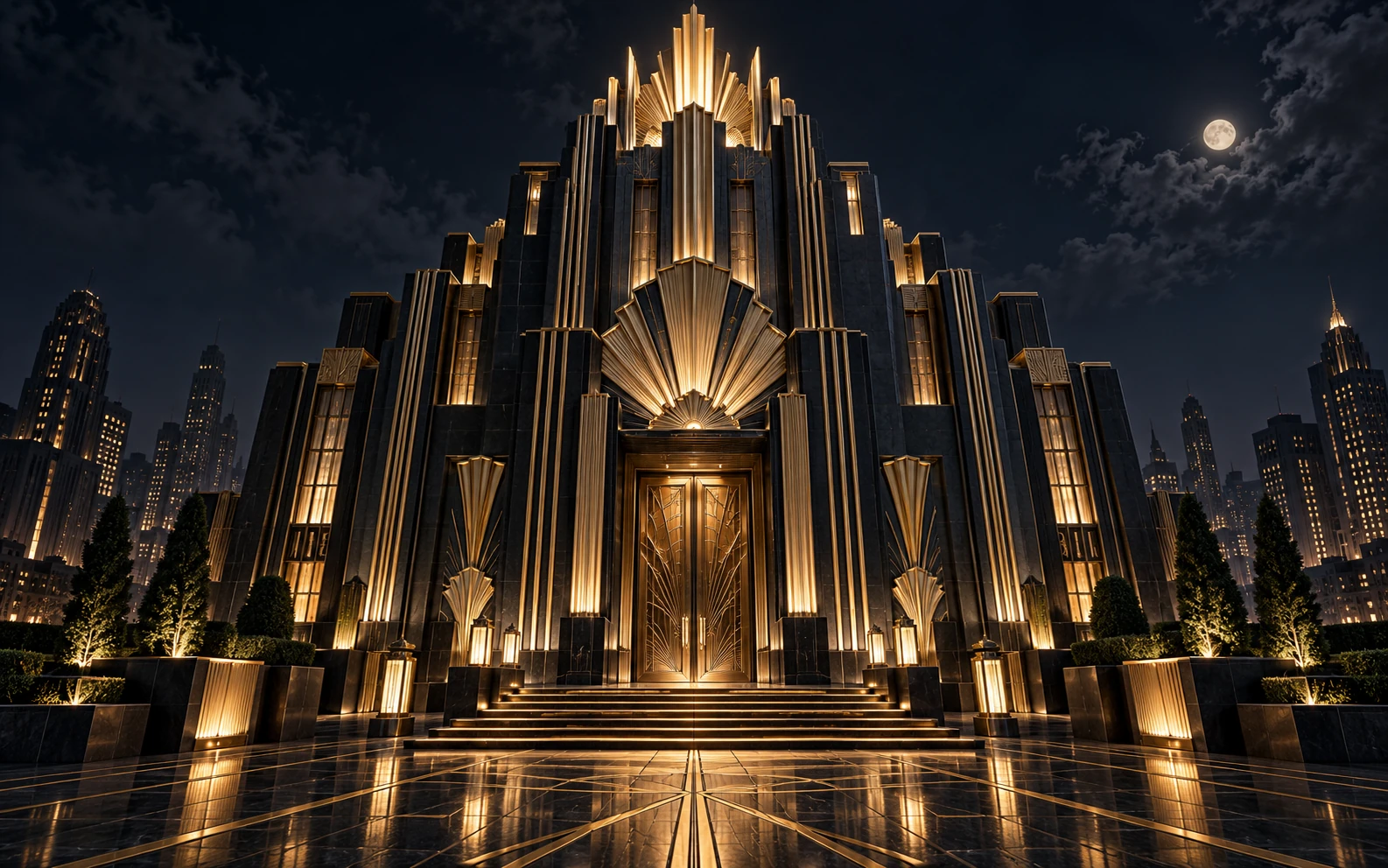
Googie is often confused with general 1950s nostalgia or Art Deco. Art Deco is vertical, stepped and stately; Googie is horizontal, swooping and jaunty, designed around the car and the space race.
Words to describe Googie Architecture
Precise words for the qualities above. Combine a few of them instead of naming the style or artist alone.
- googie architecture
- upswept cantilevered roof
- boomerang shapes
- atomic starburst sign
- tall neon sign
- floor-to-ceiling glass
- turquoise and coral
- roadside coffee shop
- space age optimism
- dusk neon glow
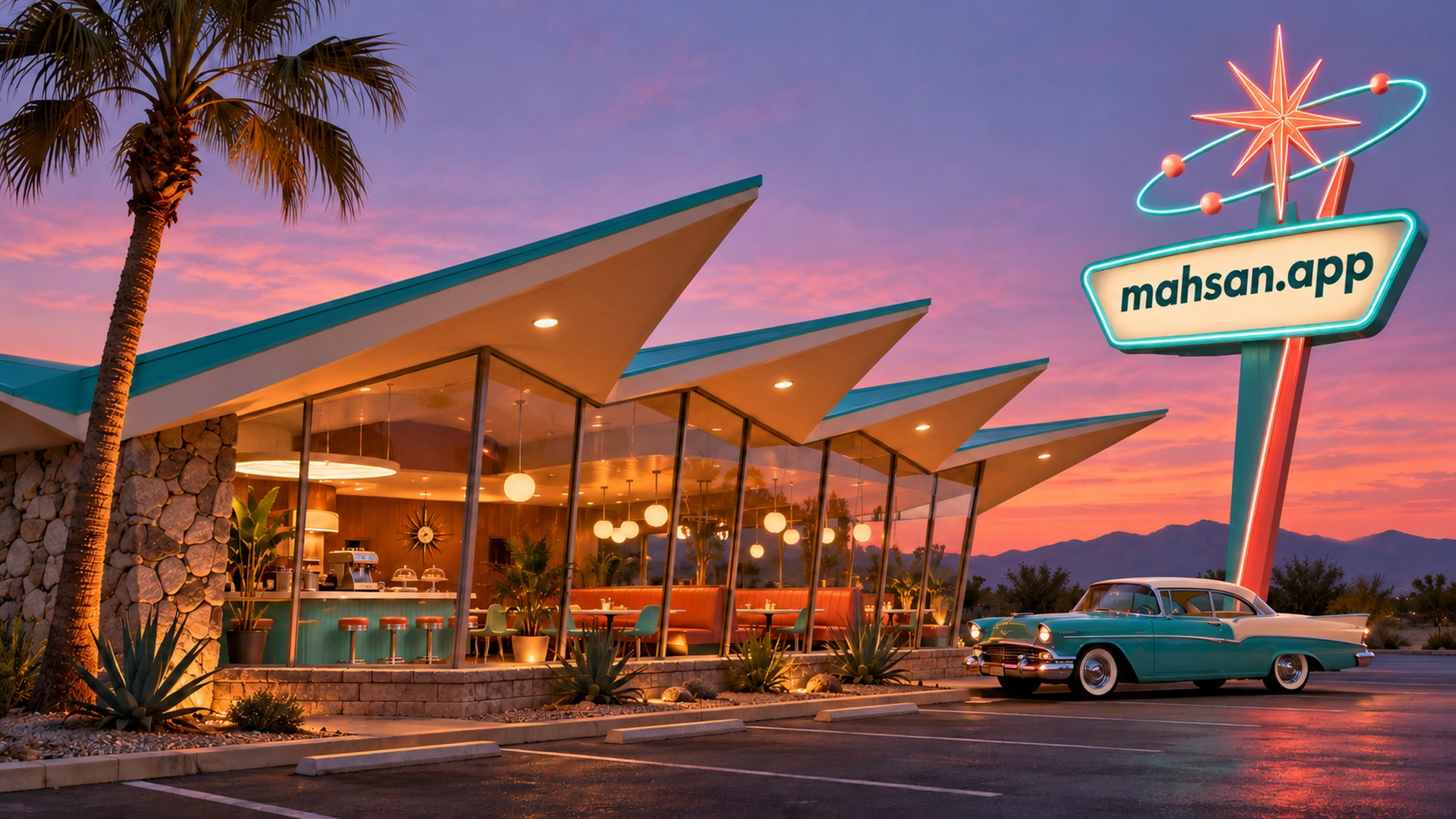
An original Googie-style architecture photograph: a roadside coffee shop with a dramatic upswept zigzag roof, floor-to-ceiling glass walls glowing warm inside, a tall sign topped with a starburst and atomic orbit in turquoise and coral neon, a palm tree and a vintage car parked in front, at dusk. No readable text.
What to take from Googie Architecture today
- Describe the roof shape first.
- Name the sign and its motifs.
- Add colour, glass and the time of day, often dusk with neon on.
Questions about Googie Architecture
What is Googie Architecture?
Space Age optimism on the roadside: coffee shops, motels and car washes with swooping roofs, boomerang shapes, starbursts and big neon signs, built for drivers.
How do you recognize Googie Architecture?
Dramatic upswept roofs. Starbursts, boomerangs and neon signs. Glass walls and bright mid-century colour.
How do you describe Googie Architecture in words or a prompt?
Describe the roof shape first. Name the sign and its motifs. Add colour, glass and the time of day, often dusk with neon on.
Describe a Googie-style laundromat or petrol station: its roof, sign, colours, materials and how it looks at dusk with the neon lit.