Back to antiquity
Neoclassicism rose in the 1760s as a reaction against the playful curves of Rococo. The excavations of Herculaneum (from 1738) and Pompeii (from 1748) put real Roman rooms, frescoes and objects in front of Europeans, and the German scholar Johann Joachim Winckelmann praised Greek art for its 'noble simplicity and quiet grandeur'. Antiquity became a model not only of beauty but of virtue.
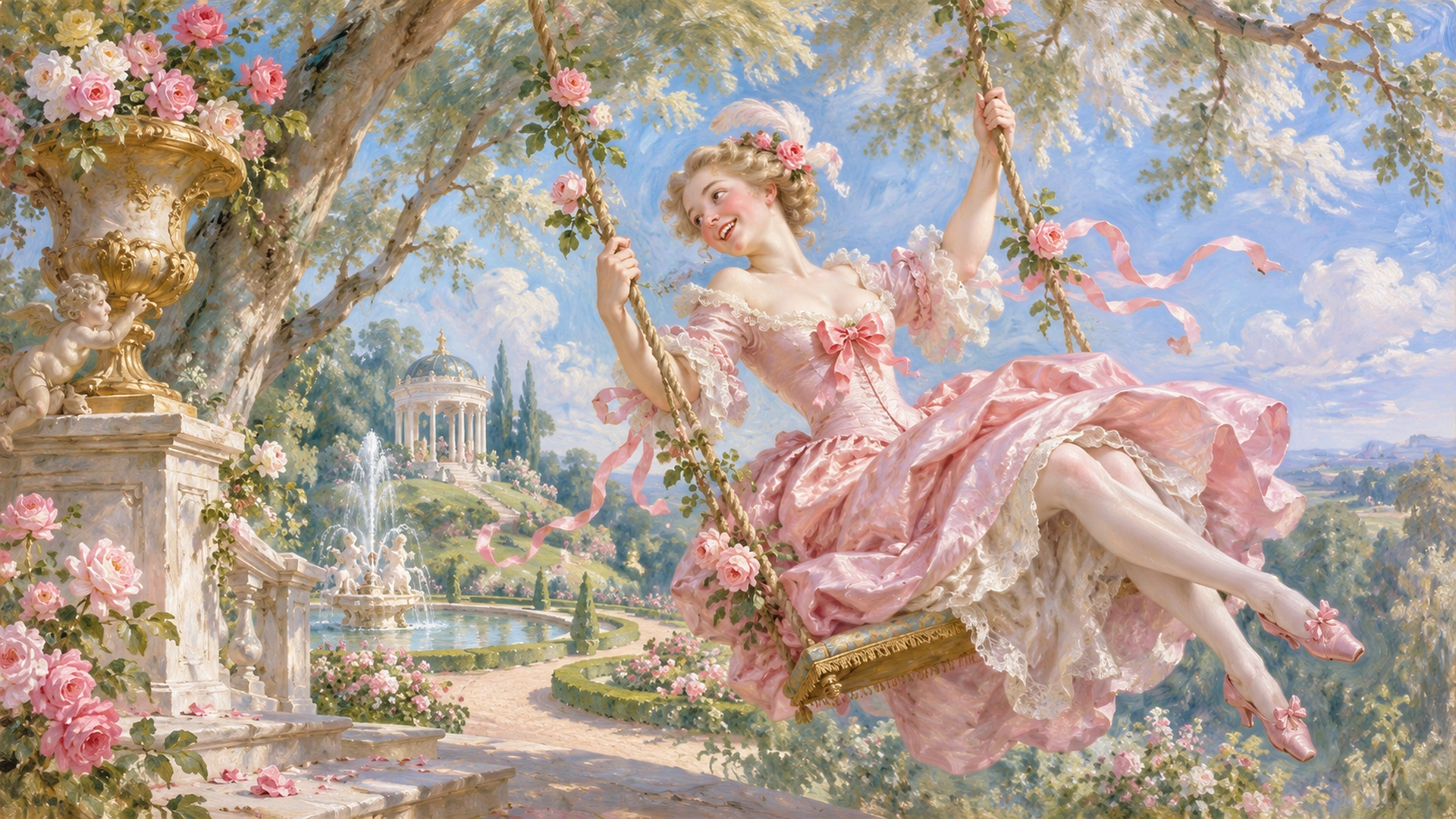
In painting, Jacques-Louis David turned that model into politics: The Oath of the Horatii (1784) and The Death of Marat (1793) are stark, frieze-like scenes of duty and sacrifice made on the eve of and during the French Revolution. Antonio Canova carved smooth, idealised marble; architects from Paris to Washington built temple fronts, domes and colonnades for museums, banks and parliaments. Within a few decades Romanticism pushed back with emotion and wild nature, and the two styles often overlapped.
Visual anatomy of Neoclassicism
Crisp, continuous outlines; drawing matters more than brushwork.
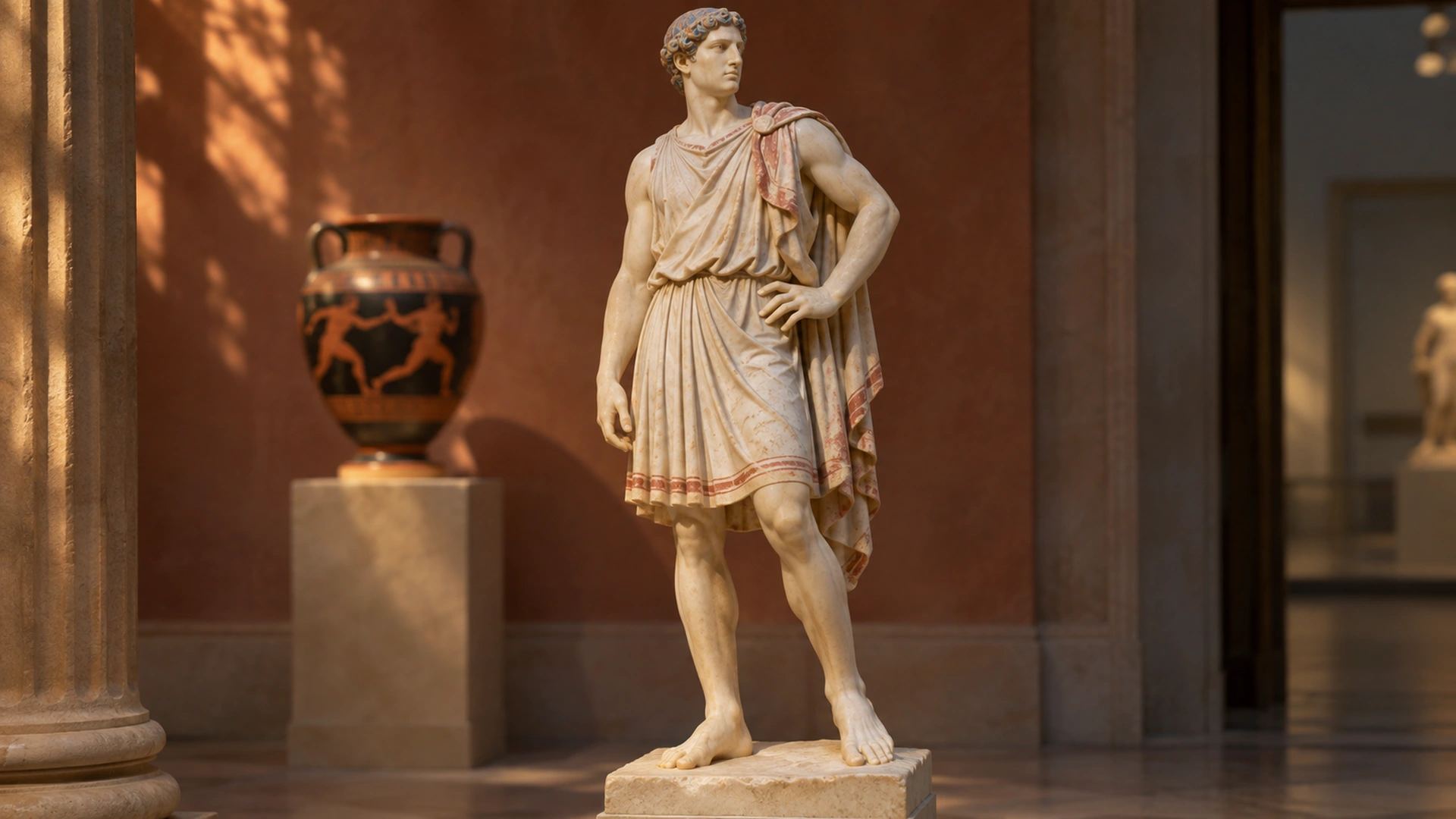
Idealised, calm, statuesque bodies in classical poses and drapery.
Shallow, stage-like, figures arranged like a relief or frieze.
Restrained, clear local colour; cool light; smooth surfaces.
Columns, pediments, domes, symmetrical facades, white stone.
History, myth and moral examples: duty, sacrifice, civic virtue.
Key works of Neoclassicism
Jacques-Louis David: three brothers swear to fight for Rome, in a severe arcaded hall.
David: the murdered revolutionary as a secular martyr, on a bare dark wall.
Antonio Canova: polished marble, an embrace in an X-shaped composition.
Jacques-Germain Soufflot: a temple front and dome for a church turned national monument.
Jean-Auguste-Dominique Ingres: smooth line taken to its elegant extreme.
How to recognize Neoclassicism
- Figures arranged across the picture like a stone relief.
- Clean outlines and smooth, almost invisible brushwork.
- Classical architecture and drapery in the scene.
- A serious moral or historical story.
Where people get it wrong
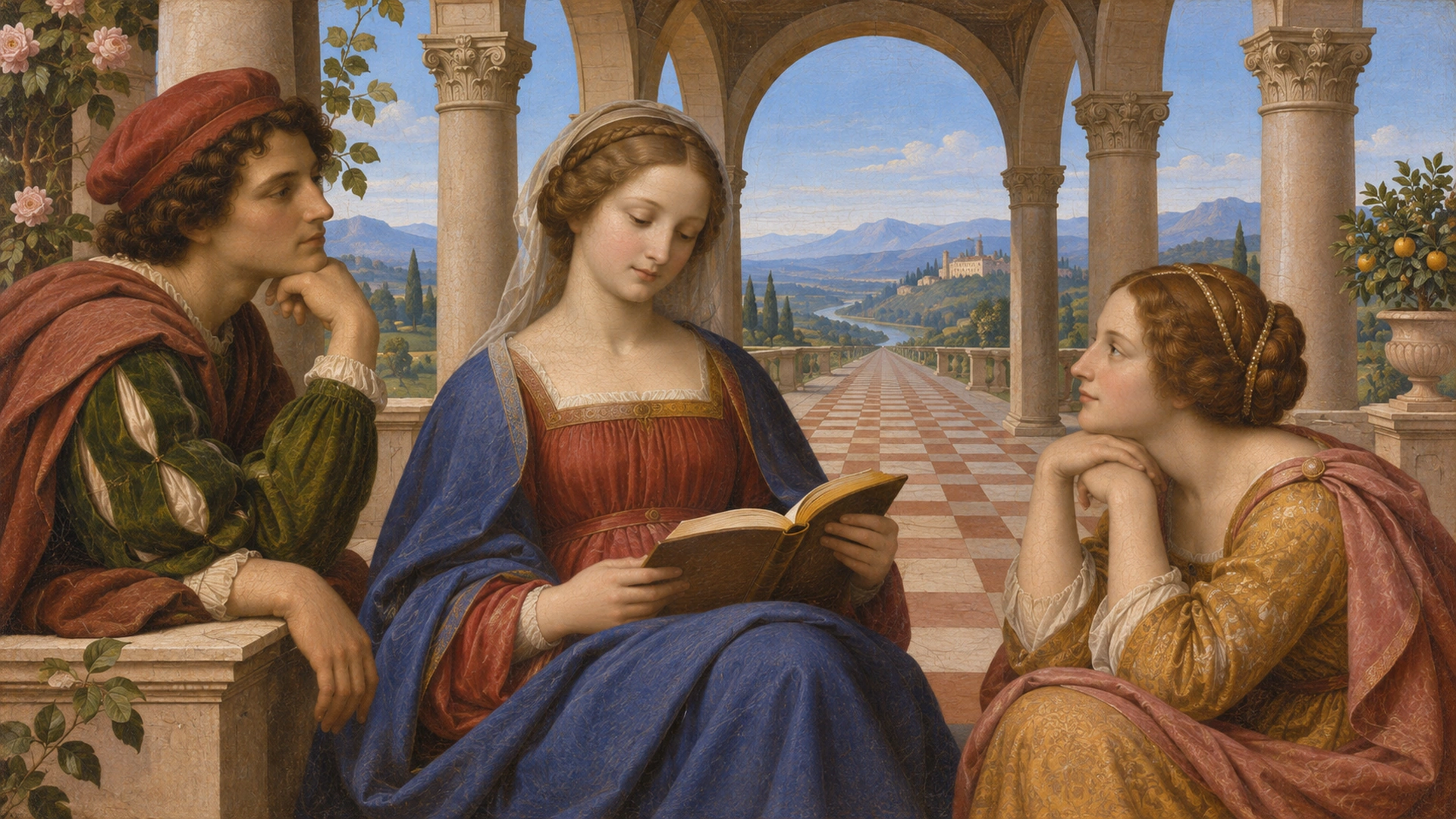
Calling every classical-looking image Renaissance. Renaissance artists rediscovered antiquity through Italian eyes in the fifteenth and sixteenth centuries; Neoclassicism, three centuries later, is cooler, more archaeological and more moral, with shallower space and harder outlines. It is also not the same as later Academic art, which kept the polish but softened the purpose.
Words to describe Neoclassicism
Precise words for the qualities above. Combine a few of them instead of naming the style or artist alone.
- neoclassicism
- frieze-like composition
- crisp outline
- idealised figures
- classical drapery
- shallow space
- Doric columns
- pediment
- white marble
- history painting
- civic virtue
- noble simplicity
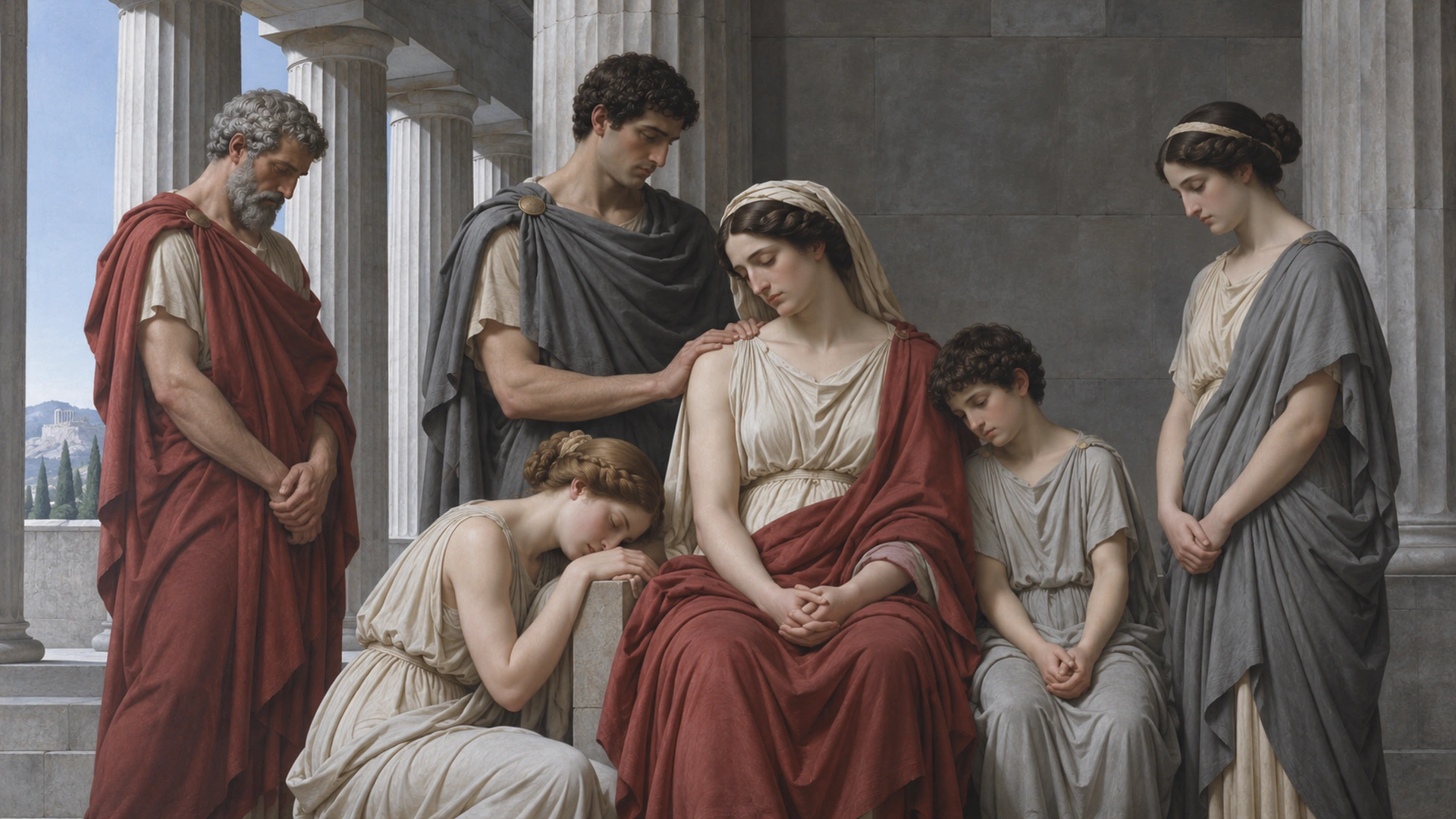
An original neoclassical painting study: three figures in classical robes taking an oath before a stone arcade, arranged in a shallow frieze, arms raised in parallel, crisp outlines and smooth finish, cool clear light, restrained reds and greys, a serious, still atmosphere. Not a copy of any existing painting.
What to take from Neoclassicism today
- Arrange figures in a shallow frieze across the frame.
- Ask for crisp outlines and smooth finish.
- Use cool, clear light and restrained colour.
- Give the scene a serious civic or mythological story.
Questions about Neoclassicism
What is the difference between Neoclassicism and Romanticism?
Neoclassicism values reason, order, clear line and civic virtue. Romanticism values emotion, the individual, colour and the sublime in nature. They overlap in time, roughly 1780–1830.
Who are the main neoclassical artists?
Jacques-Louis David, Antonio Canova, Jean-Auguste-Dominique Ingres, Angelica Kauffman and Bertel Thorvaldsen.
Find a news photograph of a public moment: a protest, a ceremony, a farewell. Describe it as a neoclassical painting would stage it: where the figures stand in a frieze, which gestures freeze, what architecture frames them, and what virtue it is meant to teach.
Sources and further reading
- Johann Joachim Winckelmann, Thoughts on the Imitation of Greek Works in Painting and Sculpture (1755).
- Hugh Honour, Neo-classicism (1968).