Baroque made light
Rococo grew in Paris in the 1720s and 1730s, after the death of Louis XIV, when aristocrats moved from the grand halls of Versailles to smaller town houses and salons. The name comes from rocaille, the curling rock and shell work used in garden grottoes, and the style began in interior decoration before it reached painting.
Antoine Watteau invented the fête galante, elegant people flirting in dreamy parks. François Boucher painted pink and blue mythologies, and Jean-Honoré Fragonard's The Swing (1767) became the emblem of the period. Rococo fell out of fashion with Neoclassicism and the Revolution, but it returns again and again: in Sofia Coppola's Marie Antoinette (2006), in pastel patisserie branding and in the 'coquette' aesthetic of ribbons and bows.
Visual anatomy of Rococo
Pastel pink, powder blue, mint, cream and ivory, with touches of gold.
S-curves and C-scrolls everywhere; asymmetry instead of strict symmetry.
Shells, leaves, flowers, ribbons and gilded frames that curl into each other.
Love, flirtation, picnics, swings, music and mythology treated playfully.
Soft, even, flattering light; no deep Baroque darkness.
Intimate rooms, small paintings, porcelain and furniture as much as canvases.
Key names
Fête galante: dreamy outdoor parties, Pilgrimage to Cythera (1717).
Pastel mythologies and portraits of Madame de Pompadour.
Quick, feathery brushwork; The Swing (1767).
A hunting lodge whose mirrored hall shows Rococo interiors at their peak.
How to recognize Rococo
- Pastel colours with gold accents.
- Curling asymmetrical ornament, shells and ribbons.
- Light, playful, romantic subjects.
Where people get it wrong
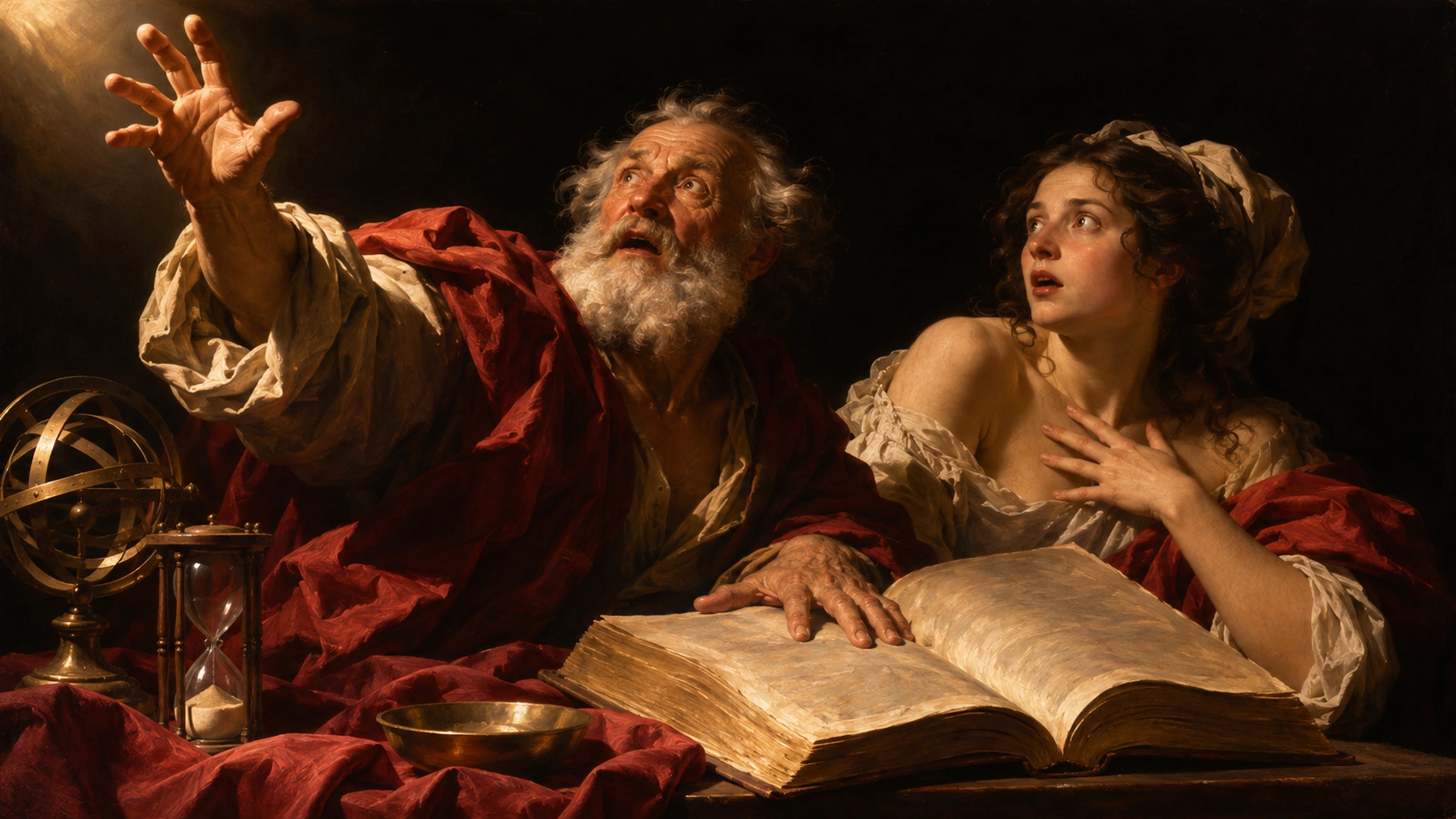
Rococo is often mixed up with Baroque. Baroque is dark, grand and dramatic, made to impress; Rococo is light, pastel and intimate, made to charm. If the image feels heavy and theatrical, it is probably Baroque.
Words to describe Rococo
Precise words for the qualities above. Combine a few of them instead of naming the style or artist alone.
- rococo pastel palette
- powder blue and blush pink
- gilded rocaille ornament
- asymmetrical C-scrolls
- fête galante garden party
- soft flattering light
- feathery brushwork
- ribbons and garlands
- porcelain and silk
- playful romantic mood
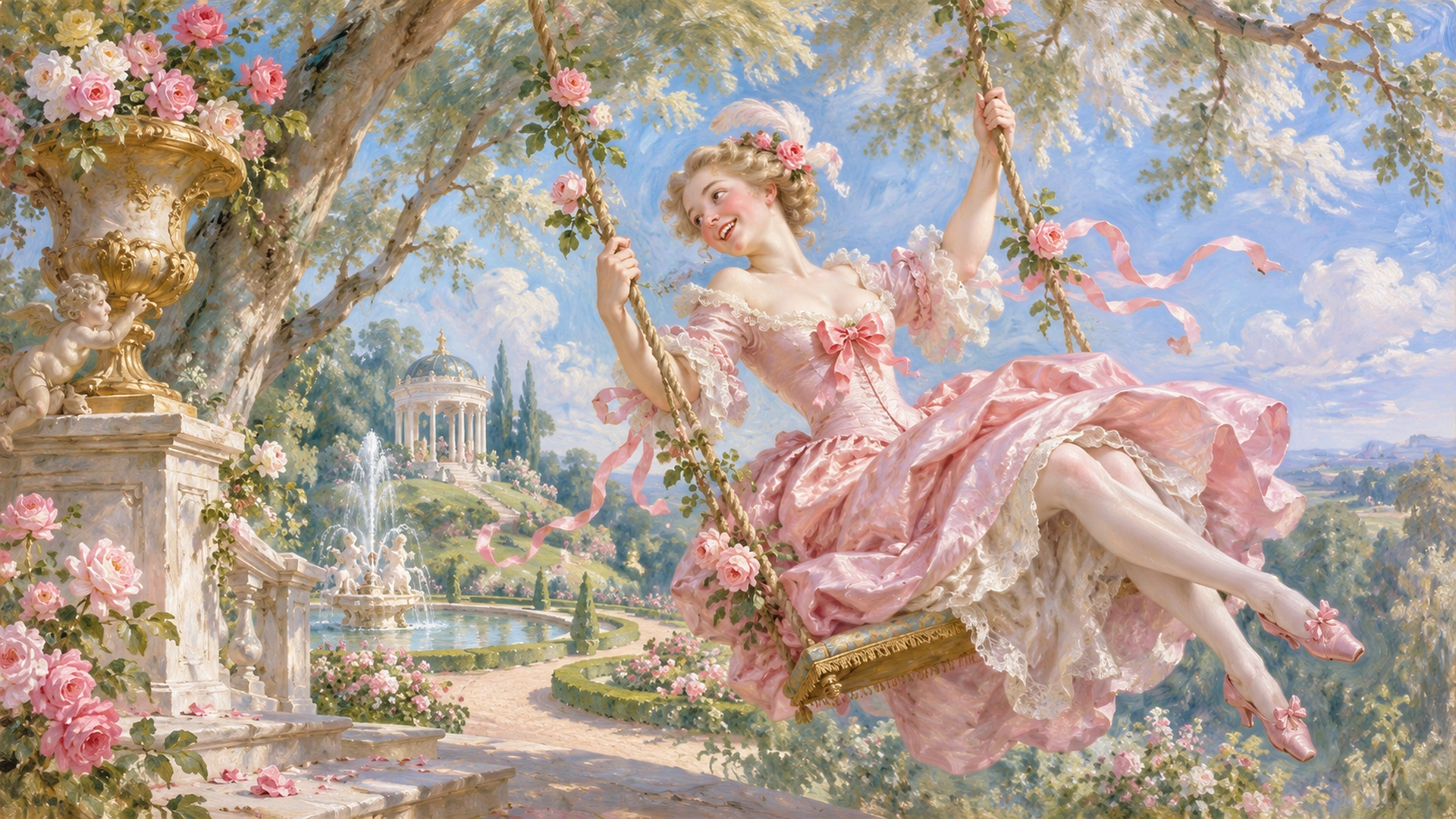
An original Rococo-style painting study: a young woman in a pale pink silk dress on a garden swing under tall feathery trees, ribbons and roses, a powder-blue sky with soft clouds, a gilded stone urn, light feathery brushwork and a playful mood. Not a copy of any existing painting.
What to take from Rococo today
- Describe the pastel palette precisely: powder blue, blush pink, cream.
- Name the ornament: scrolls, shells, garlands, ribbons.
- Give the mood: flirtatious, airy, decorative.
Questions about Rococo
What is Rococo?
The 18th-century style of pastel colour, curling ornament and playful aristocratic leisure: Baroque made light, intimate and sweet.
How do you recognize Rococo?
Pastel colours with gold accents. Curling asymmetrical ornament, shells and ribbons. Light, playful, romantic subjects.
How do you describe Rococo in words or a prompt?
Describe the pastel palette precisely: powder blue, blush pink, cream. Name the ornament: scrolls, shells, garlands, ribbons. Give the mood: flirtatious, airy, decorative.
Describe a modern café interior in Rococo style: which pastel walls, which curling mirror frame, which porcelain and which soft light. Keep it in words, no copying of any real room.