Painting as a window
The Renaissance, French for 'rebirth', began in Italy around 1400, when artists and thinkers turned back to ancient Greek and Roman ideas. In Florence, Filippo Brunelleschi demonstrated linear perspective, and Leon Battista Alberti described it in his book On Painting (1435), comparing a painting to an open window. Masaccio, Donatello and Botticelli built a new art of believable space and dignified human figures.
In the High Renaissance around 1500, Leonardo da Vinci, Michelangelo and Raphael brought it to its peak: Leonardo's sfumato, Michelangelo's Sistine Chapel ceiling (1508–12), Raphael's balanced compositions. In the north, Jan van Eyck and Albrecht Dürer developed oil painting and printmaking with astonishing detail. Its ideas of proportion and composition still shape how we frame images.
Visual anatomy of Renaissance
Lines converging to a vanishing point, creating deep, measurable space.
Idealised human bodies based on classical measures.
Stable, balanced, often triangular or pyramid-shaped groups.
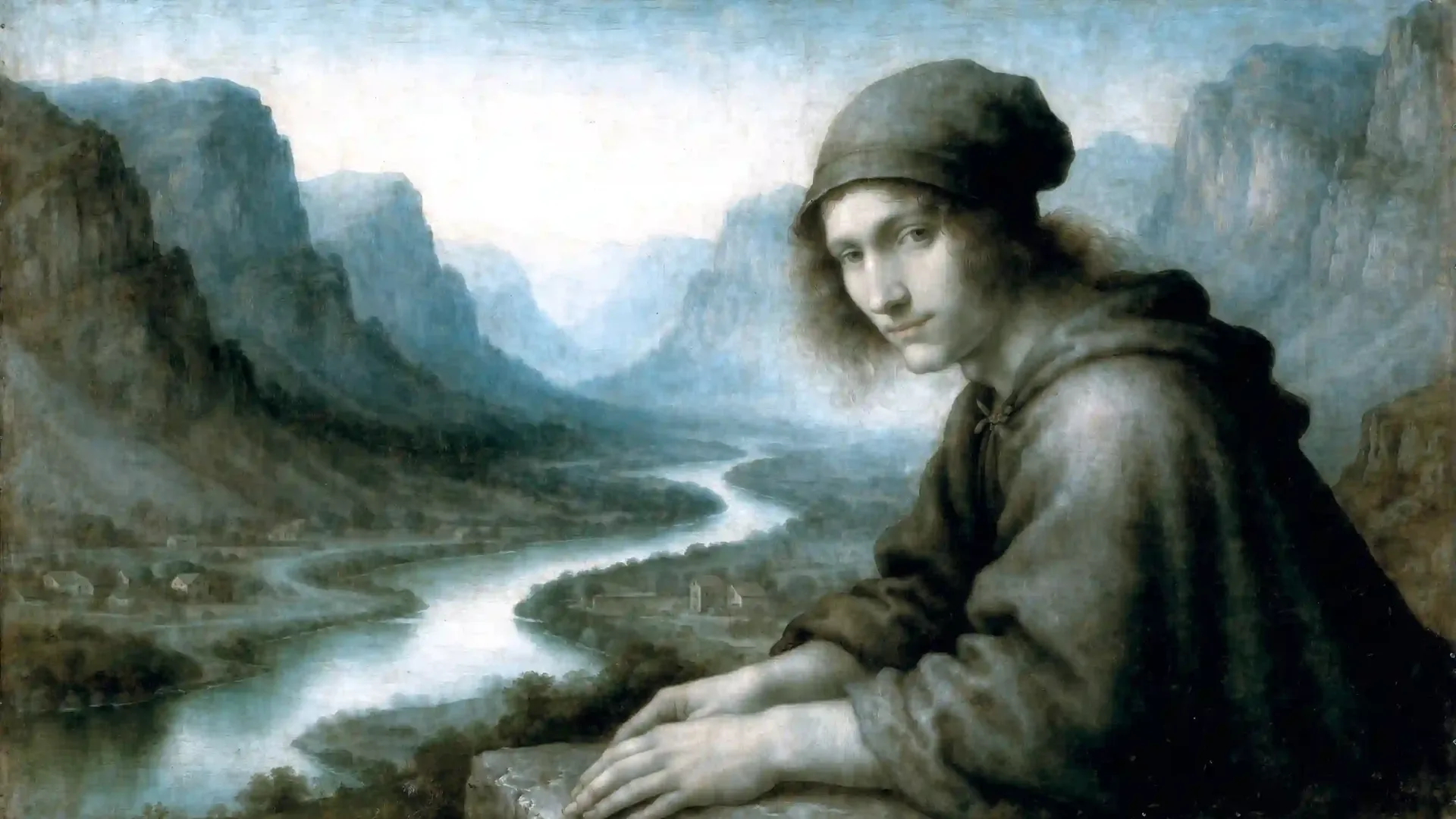
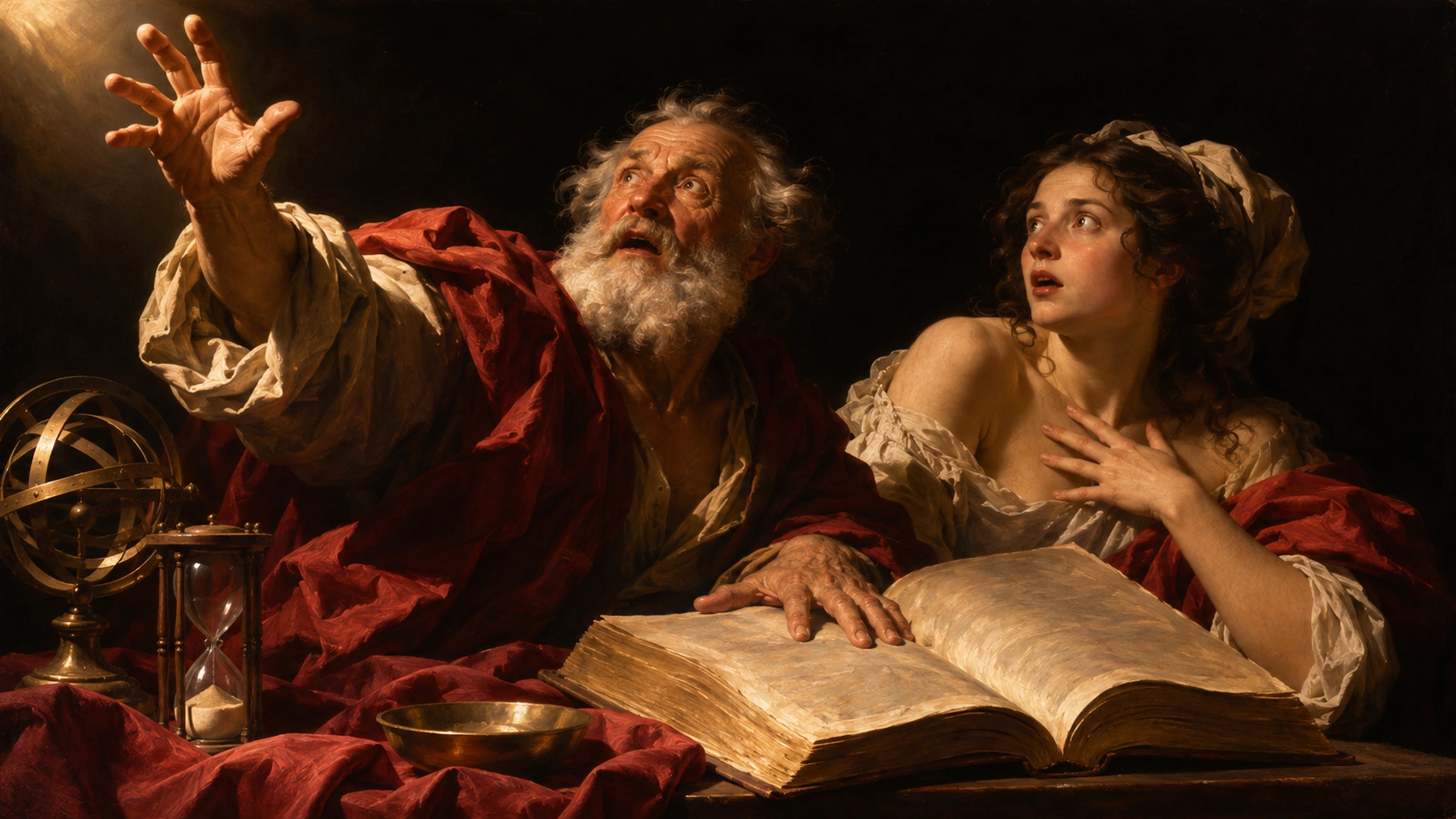
Soft, consistent light; sfumato blurs edges into shadow; chiaroscuro models form.
Fresco on walls, tempera and then oil on panel and canvas.
Religious scenes, classical myths and portraits of real people.
Key artists of Renaissance
Graceful linear figures, as in The Birth of Venus.
Sfumato, observation, the Mona Lisa and The Last Supper.
Powerful sculptural bodies, David and the Sistine Chapel.
Balanced, harmonious compositions, The School of Athens.
Northern oil painting of extraordinary detail and light.
Precise engravings and woodcuts, and self-portraits.
How to recognize Renaissance
- Deep space built with linear perspective.
- Balanced, often triangular compositions.
- Idealised figures in soft, consistent light.
Where people get it wrong
The Renaissance did not suddenly 'discover' realism after a dark Middle Ages; it built on medieval and Byzantine traditions and on rediscovered ancient texts. And 'Renaissance' is not one look: Botticelli's linear grace, Leonardo's soft haze and Michelangelo's muscular drama are very different.
Words to describe Renaissance
Precise words for the qualities above. Combine a few of them instead of naming the style or artist alone.
- linear perspective
- single vanishing point
- pyramid composition
- sfumato soft edges
- idealised proportions
- classical architecture background
- fresco
- oil glazing
- calm balanced harmony
- High Renaissance portrait
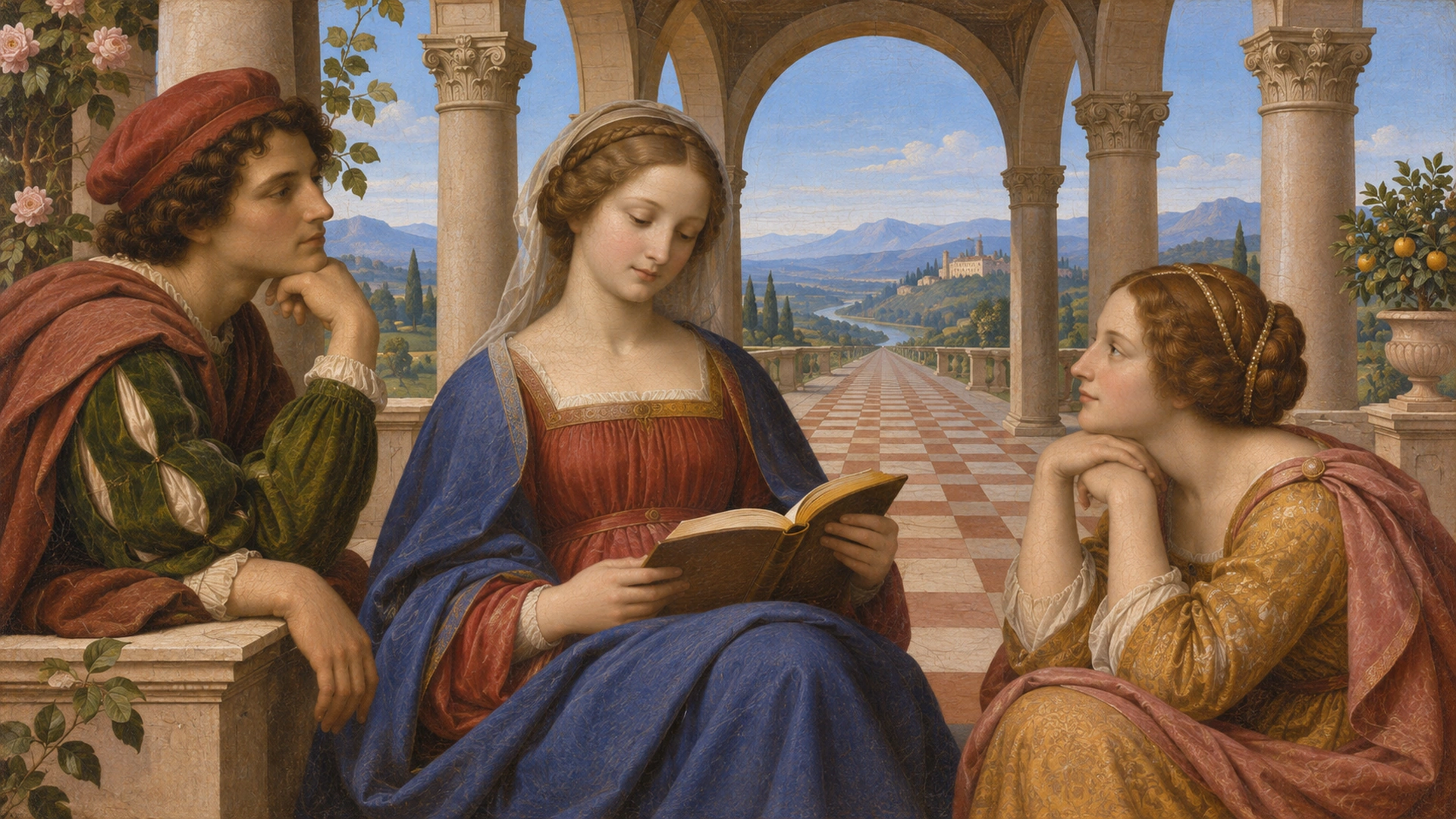
An original study in the manner of Italian Renaissance painting: three figures arranged in a calm triangle in a classical loggia, arches and a tiled floor converging to a single vanishing point, a soft blue landscape in the distance, gentle sfumato on faces, warm even light.
What to take from Renaissance today
- Describe the space and the vanishing point.
- Describe the composition shape: triangle, symmetry, arch.
- Name the light treatment: sfumato, chiaroscuro, even daylight.
Questions about Renaissance
What is Renaissance?
The rebirth of classical ideals in 15th- and 16th-century Europe: linear perspective, ideal proportion, sfumato, and painting as a window onto a believable world.
How do you recognize Renaissance?
Deep space built with linear perspective. Balanced, often triangular compositions. Idealised figures in soft, consistent light.
How do you describe Renaissance in words or a prompt?
Describe the space and the vanishing point. Describe the composition shape: triangle, symmetry, arch. Name the light treatment: sfumato, chiaroscuro, even daylight.
Take a photo of a street or corridor and find where its lines meet. Describe the image as a Renaissance painting: the vanishing point, how figures would be arranged in a triangle, and the light.