Art as instruction
In 1932 the Communist Party of the Soviet Union dissolved independent artistic groups, and in 1934, at the First Congress of Soviet Writers, Socialist Realism was defined as the official method for all the arts. Art was to show reality 'in its revolutionary development': not life as it was, but life as the Party said it was becoming.
The avant-garde of the 1910s and 1920s, Suprematism and Constructivism, was pushed aside or banned, and many artists were silenced or persecuted. Painters such as Isaak Brodsky and Aleksandr Gerasimov made official portraits and scenes of labour; Vera Mukhina's steel sculpture Worker and Kolkhoz Woman (1937) crowned the Soviet pavilion at the Paris International Exposition. The doctrine spread to Eastern Europe, China and North Korea, and shaped much of the 20th century's official imagery.
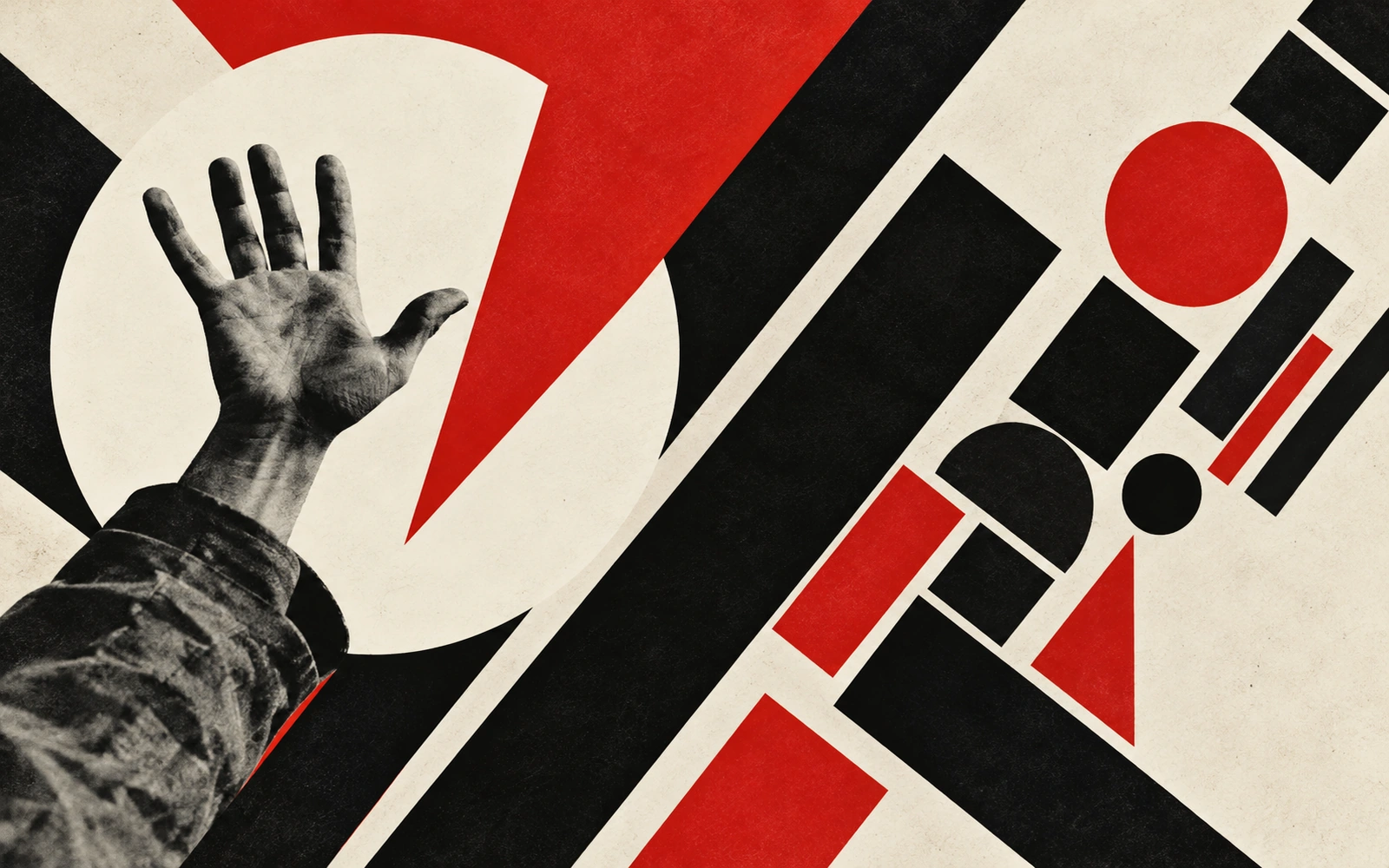
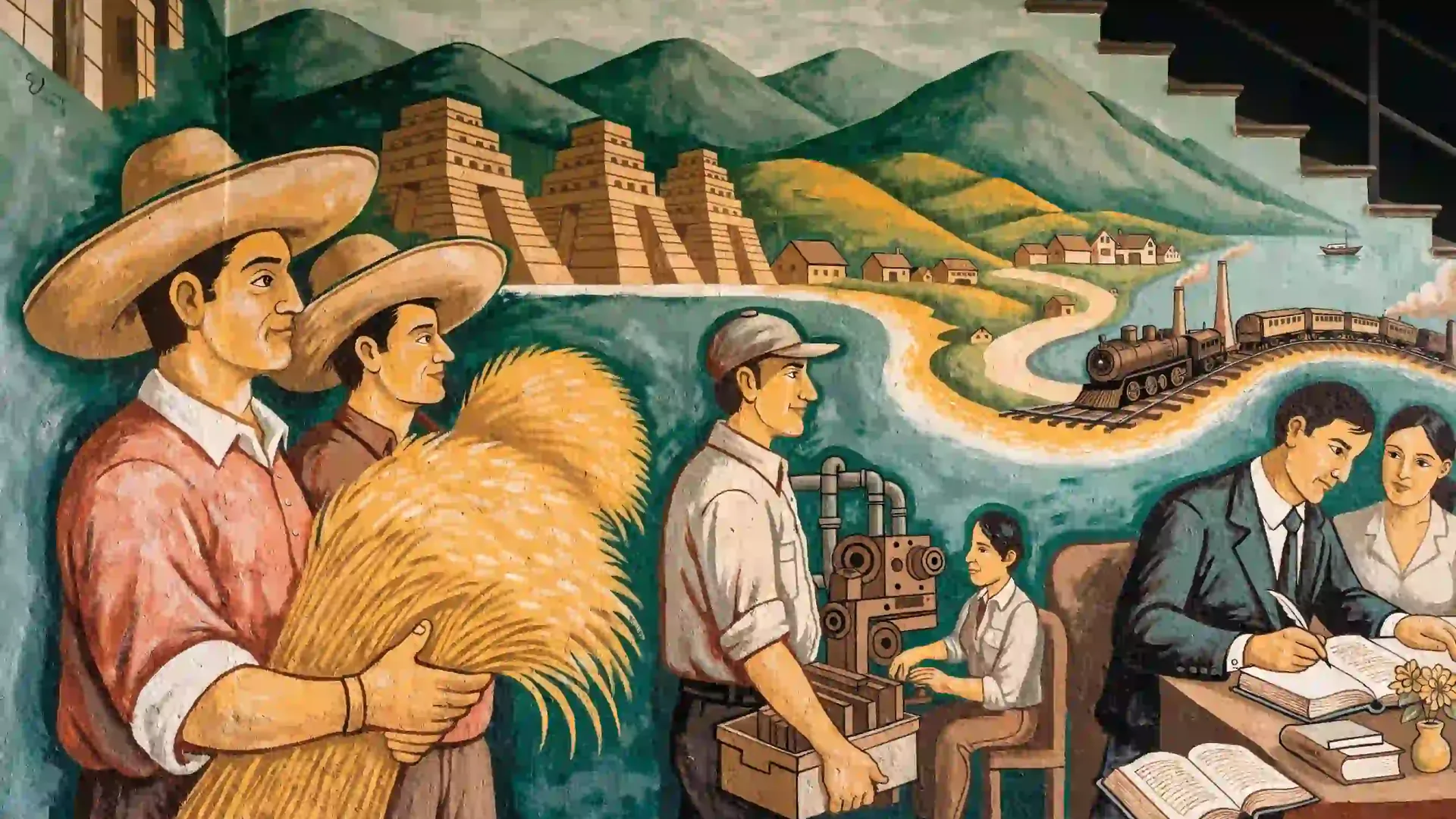
Visual anatomy of Socialist Realism
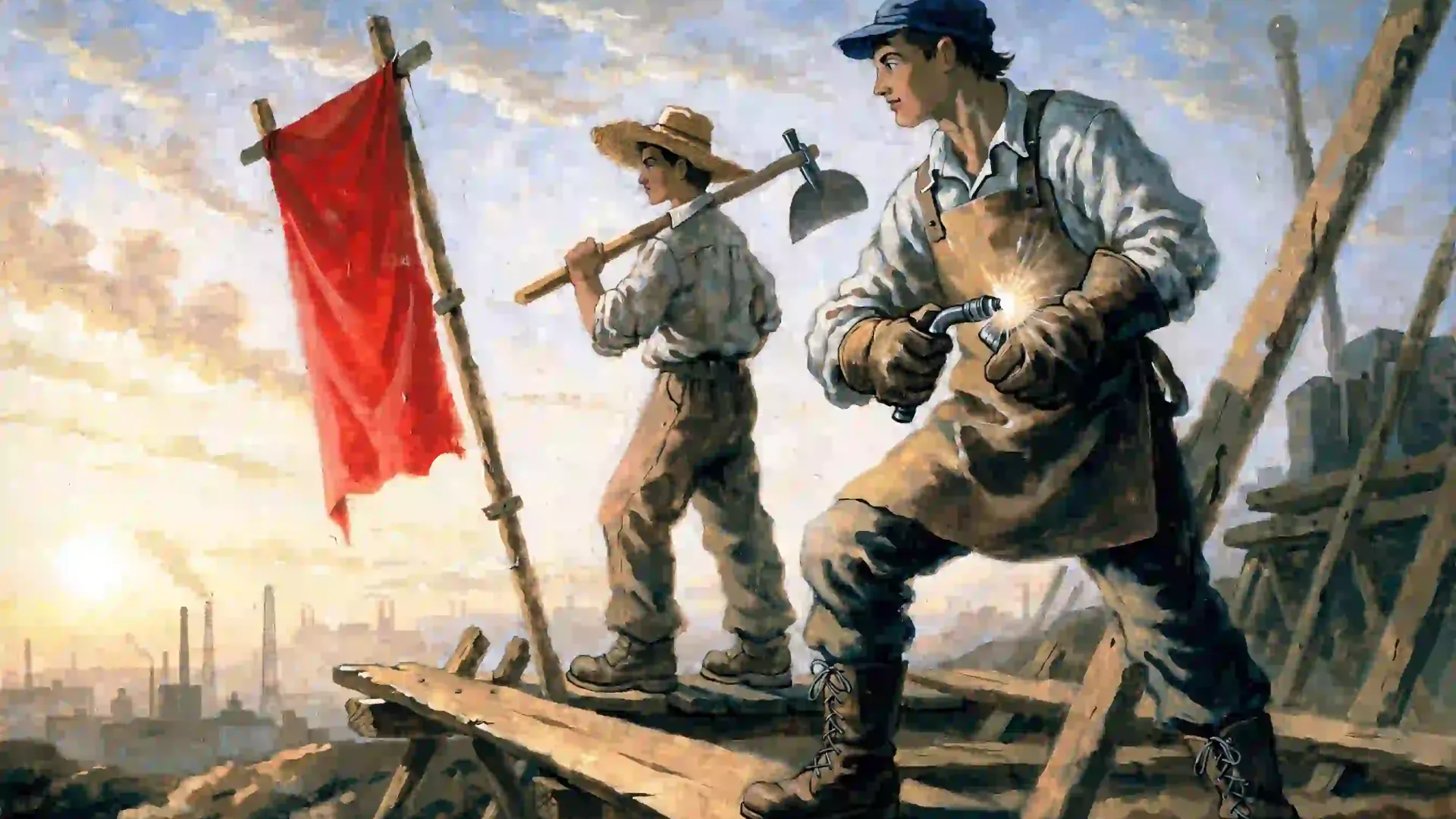
Strong, healthy workers, farmers, soldiers and leaders, often idealised and young.
Optimism, confidence, forward movement, collective purpose.
Academic realism: clear drawing, readable composition, natural light.
Bright and warm, with red as the dominant accent.
Factories, collective farms, construction sites, parades, the leader among the people.
Always clear; nothing ambiguous or private.
Words around Socialist Realism
Party-mindedness: loyalty to the Party line in art.
'People-ness': art accessible to and about ordinary people.
Showing the 'typical' ideal rather than the individual case.
Vera Mukhina's 1937 sculpture of a worker and a farm woman raising hammer and sickle.
How to recognize Socialist Realism
- Heroic, idealised workers and farmers.
- Clear academic realism.
- Optimistic light and upward movement.
- Red flags, banners and symbols of industry.
- A single, unambiguous message.
Where people get it wrong
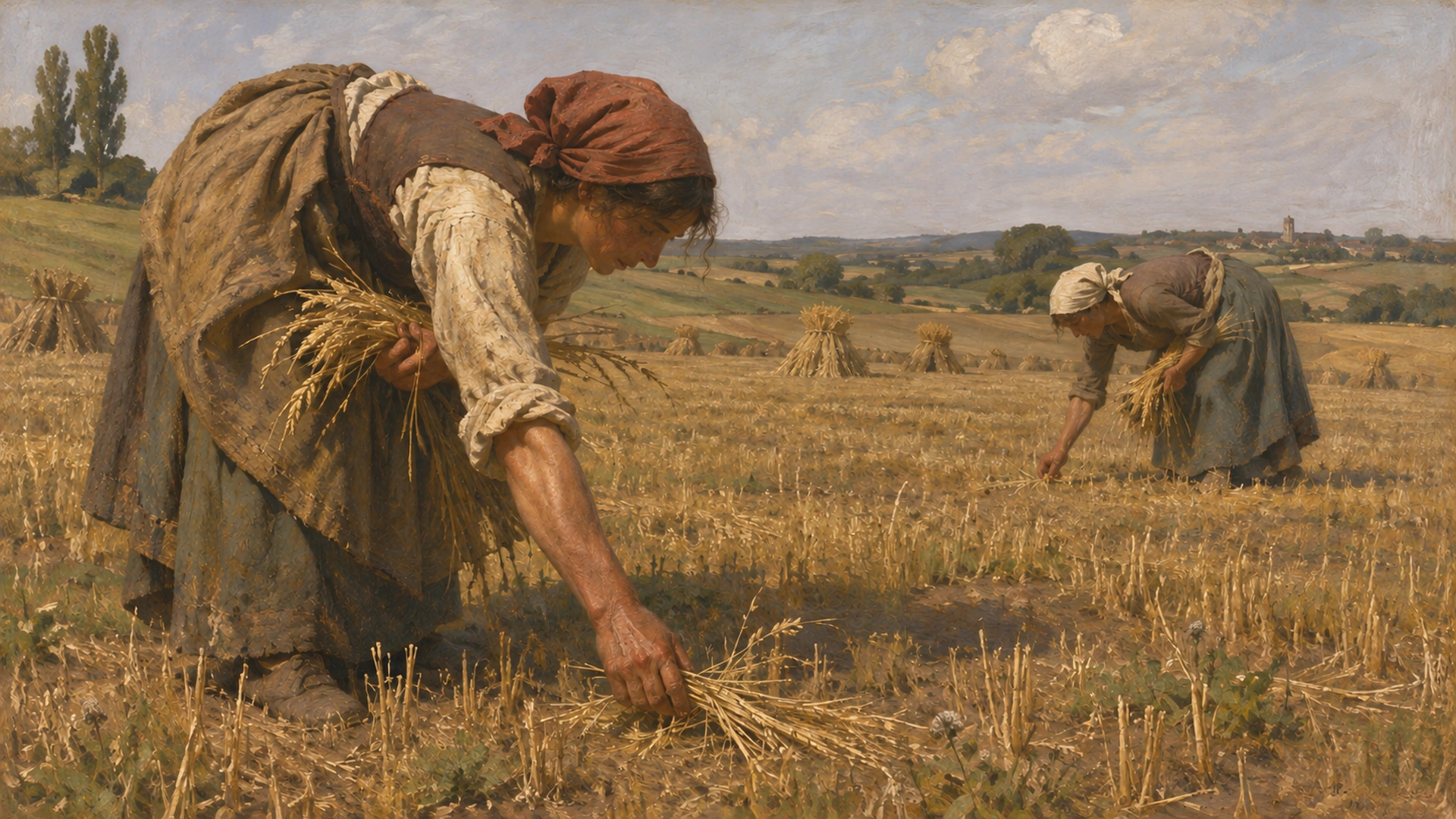
Socialist Realism is sometimes mistaken for simple realism, or for the Russian avant-garde. It is neither: it borrowed realist technique to deliver an idealised political message, and it replaced the avant-garde rather than continuing it. Describing it without its context, censorship and propaganda, misreads it.
Words to describe Socialist Realism
Precise words for the qualities above. Combine a few of them instead of naming the style or artist alone.
- Socialist Realism
- propaganda
- idealisation
- academic realism
- partiinost
- narodnost
- typicality
- heroic worker
- collective farm
- state art
A study of the Socialist Realist look, for analysis: a young welder and a farm worker on a scaffold at sunrise, broad shoulders, faces lifted toward a distant factory skyline, a red banner catching the light, sharp academic drawing.
What to take from Socialist Realism today
- Describe the figures as idealised and heroic.
- Keep the drawing academic and the light optimistic.
- Name the setting of labour or celebration.
- Say what the image is meant to persuade the viewer of.
When the story is ordered
Narrative therapy studies how dominant stories shape lives. Socialist Realism is a dominant story painted at state scale: one approved version of reality, repeated until it looks natural. Reading these images well means asking what was not allowed to be shown, and whose stories were left out of the frame.
Questions about Socialist Realism
What is Socialist Realism?
The officially approved style of art in the Soviet Union from the early 1930s, and later in other communist states, which required realistic, optimistic art that glorified workers, the Party and socialist progress.
What are the characteristics of Socialist Realism?
Idealised heroic figures, clear academic realism, bright optimistic colour, scenes of labour and celebration, and a single political message.
How is Socialist Realism different from Constructivism?
Constructivism was an experimental, abstract avant-garde of the 1910s and 1920s. Socialist Realism replaced it from the 1930s with a required realist style controlled by the state.
Find Vera Mukhina's Worker and Kolkhoz Woman in a museum or archive photograph. Describe it twice: once as its makers intended, and once noting everything the sculpture leaves out.
Sources and further reading
- Matthew Cullerne Bown, Socialist Realist Painting, Yale University Press, 1998.
- Boris Groys, The Total Art of Stalinism, Princeton University Press, 1992.
- State Tretyakov Gallery, Moscow: Soviet art collections.
- Tate: Art term 'socialist realism'.