Beauty for everyday life
Scandinavian design grew in Denmark, Sweden, Finland, Norway and Iceland from the 1930s, shaped by long dark winters, scarce resources and social-democratic ideals. Its guiding belief was that well-made, beautiful things should belong to everyone, not only the rich. Designers kept the clean function of modernism but replaced steel tube with wood, and cold geometry with soft organic curves.
Alvar Aalto bent birch plywood into chairs in Finland; in Denmark Hans Wegner, Arne Jacobsen and Finn Juhl made furniture that became known as Danish modern, and Poul Henningsen designed layered lamps that hide the bulb and spread a warm glow. The exhibition Design in Scandinavia toured North America from 1954 to 1957 and gave the movement its international name. Marimekko brought bold printed fabrics from 1951, and IKEA, founded in 1943, carried the idea of democratic design worldwide. Words such as the Danish hygge and the Swedish lagom travelled with it.
Visual anatomy of Scandinavian Design
Pale woods (birch, ash, beech, pine, oak), wool, linen, leather, ceramic.
White and soft neutrals with a few muted or one bold accent.
Simple, functional shapes with gentle organic curves.
As much daylight as possible; many small warm lamps, candles.
Uncluttered, airy, practical; bare floors with a rug.
Visible joinery and honest materials; made to last.
Key names and objects
Paimio chair (1932) and the wavy Savoy vase (1936).
PH lamps from 1926: layered shades that give glare-free light.
The Wishbone chair (1949) and hundreds of other chairs.
Series 7 (1955), the Egg and the Swan (1958).
Finnish textile house; Maija Isola's Unikko poppy print (1964).
Danish cosiness and Swedish 'just the right amount'.
How to recognize Scandinavian Design
- Pale wood furniture with simple curved forms.
- White walls and lots of natural light.
- Few objects, each useful and well made.
- Warm textiles and several low lamps.
Where people get it wrong
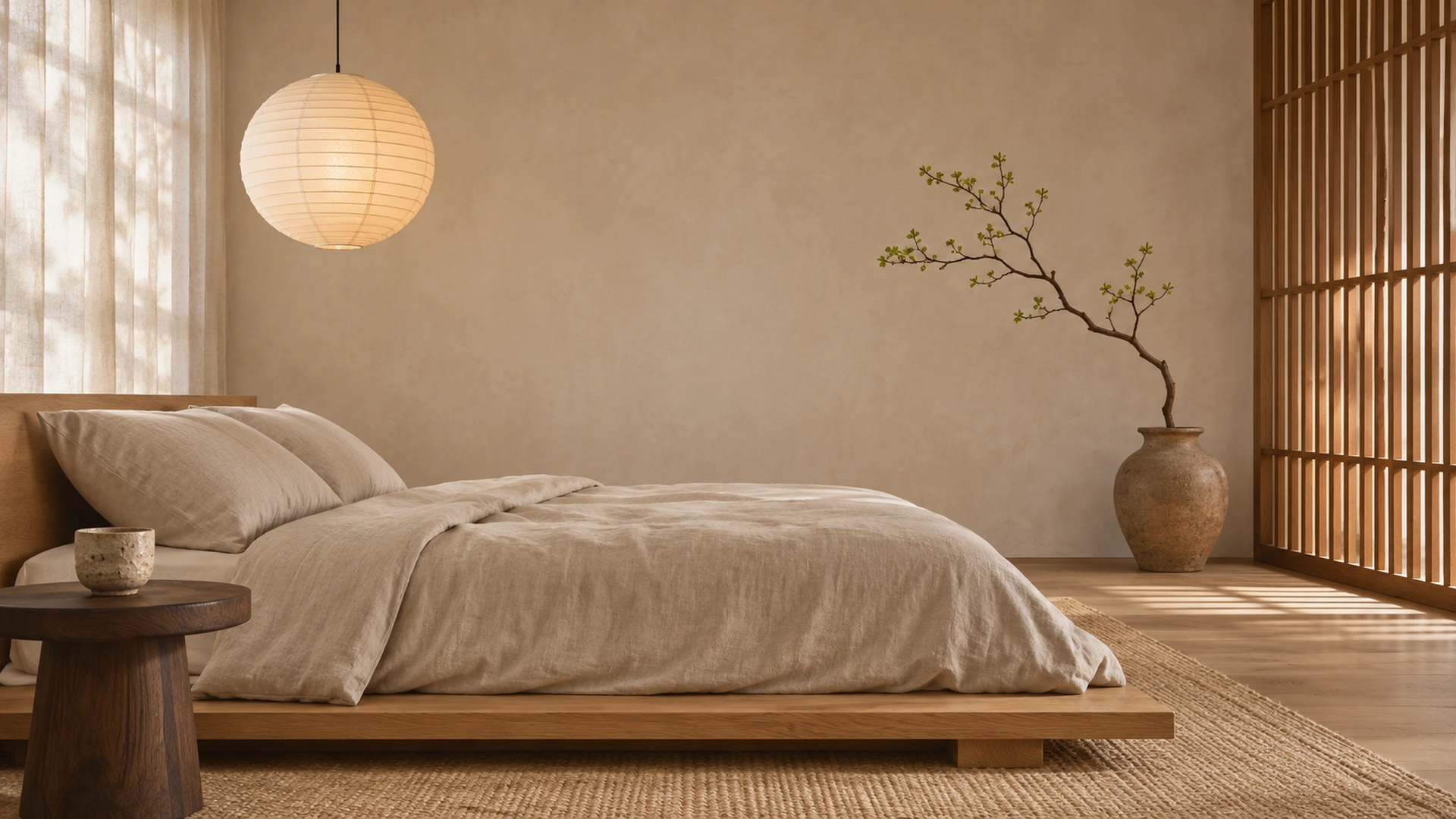
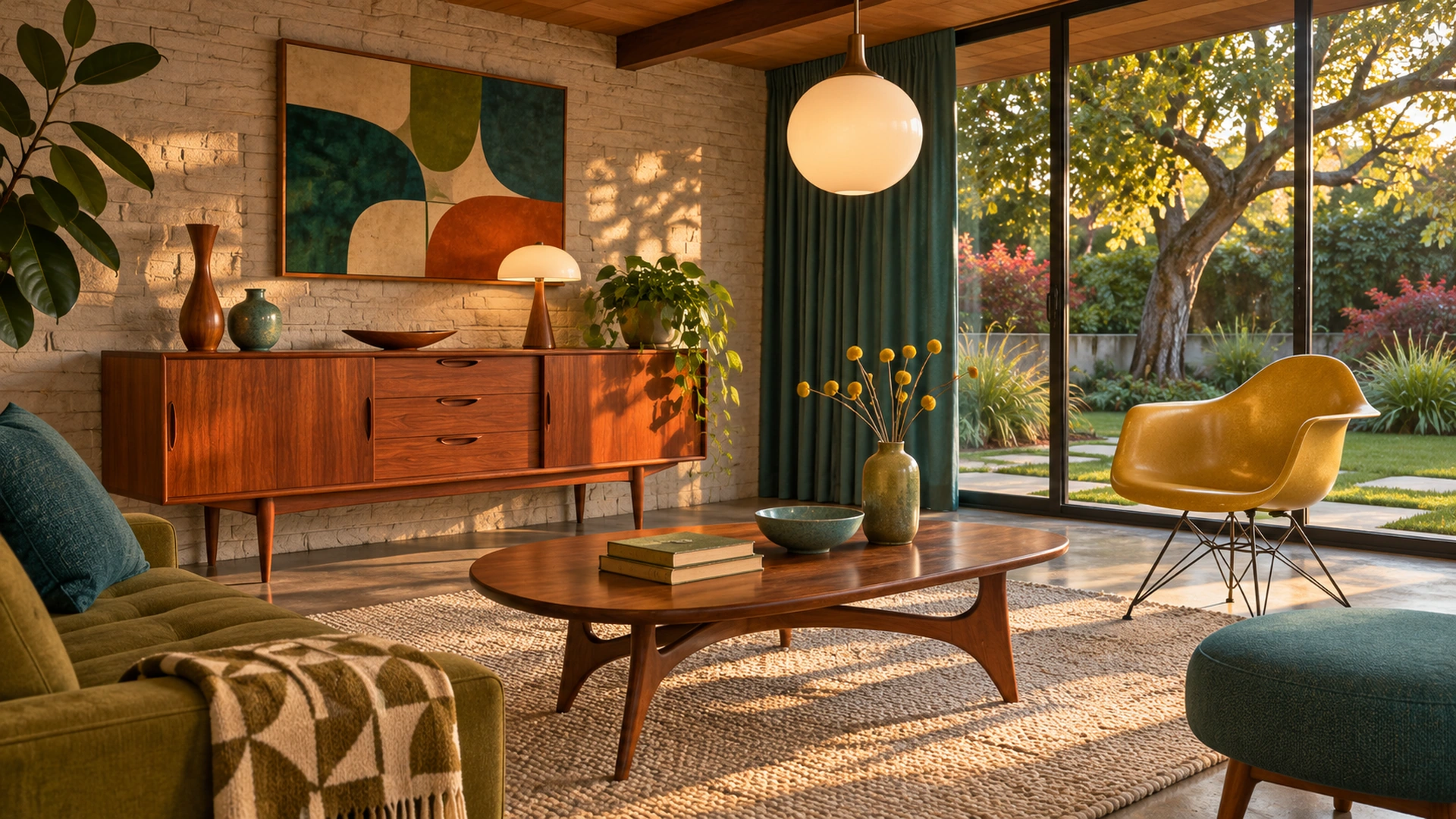
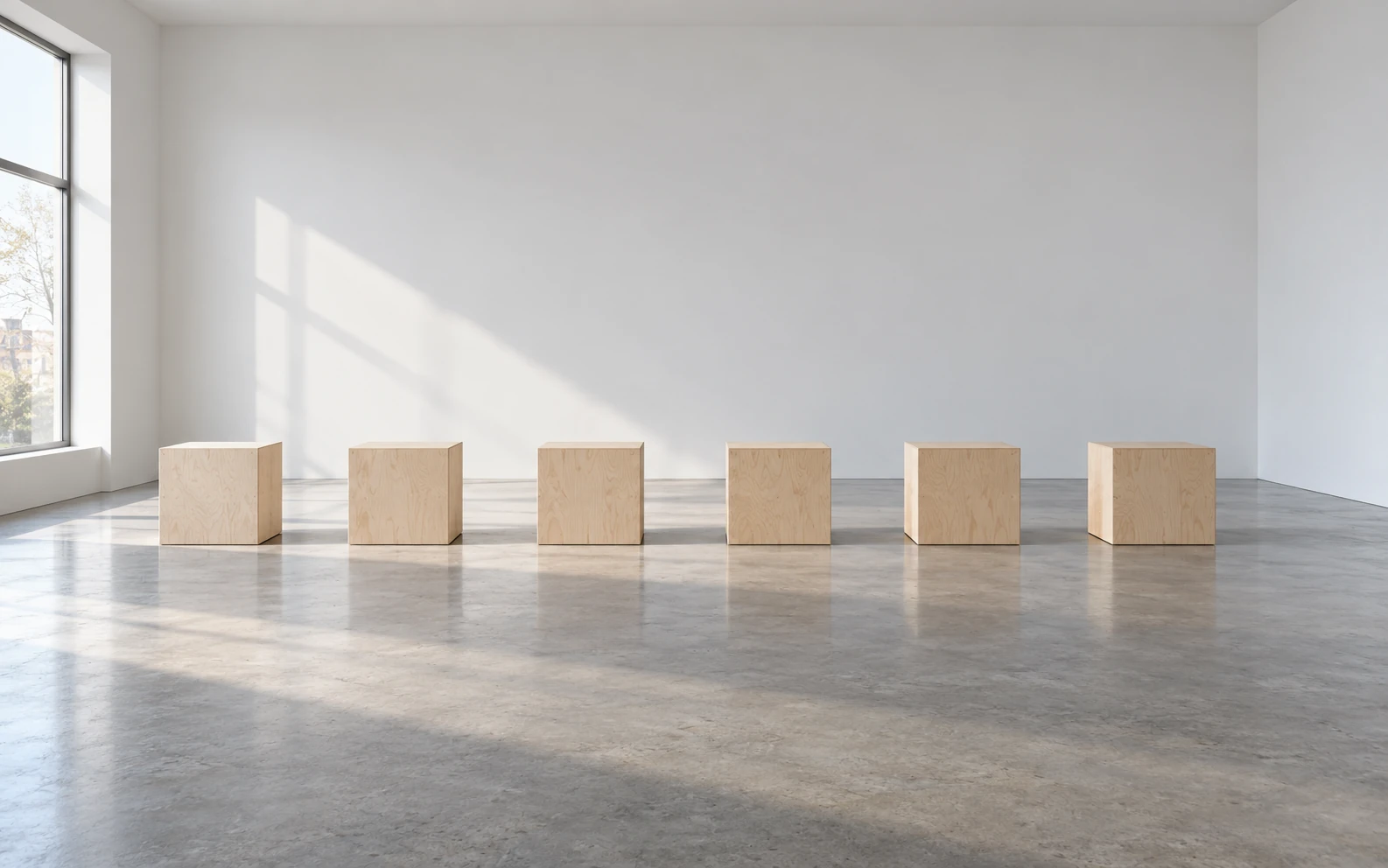
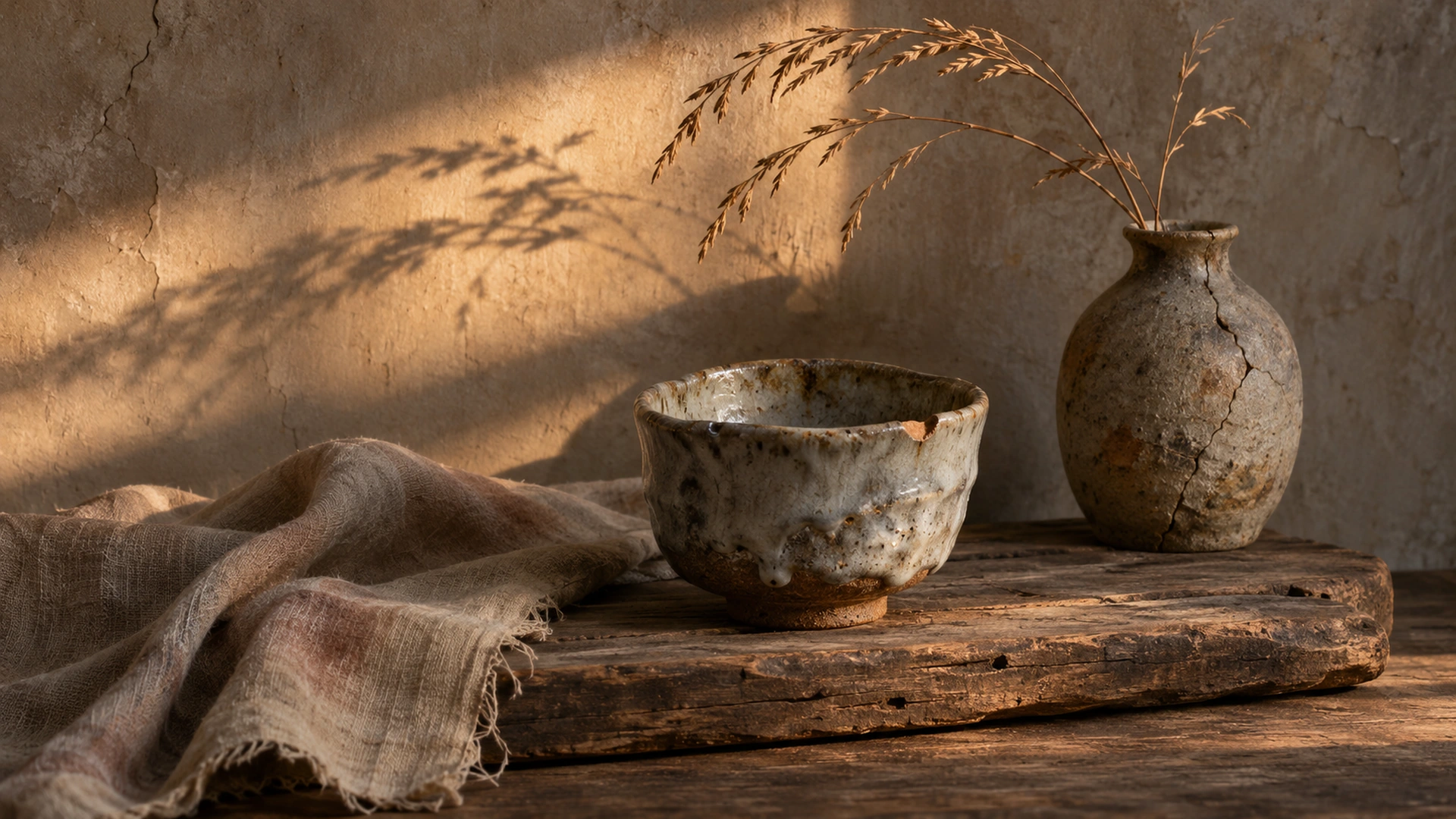
Confusing Scandinavian with minimalism. Both are simple, but Scandinavian rooms are warm and lived in: wood, wool, candles, a blanket on the chair. Strict minimalism can be cold and nearly empty. It also differs from mid-century modern in general, which uses darker woods like teak and walnut and stronger colours, and from Japandi, a recent blend with Japanese wabi-sabi.
Words to describe Scandinavian Design
Precise words for the qualities above. Combine a few of them instead of naming the style or artist alone.
- Scandinavian design
- pale birch wood
- light oak floor
- white walls
- soft daylight
- organic curves
- wool throw
- sheepskin
- pendant lamp
- hygge
- lagom
- functional simplicity
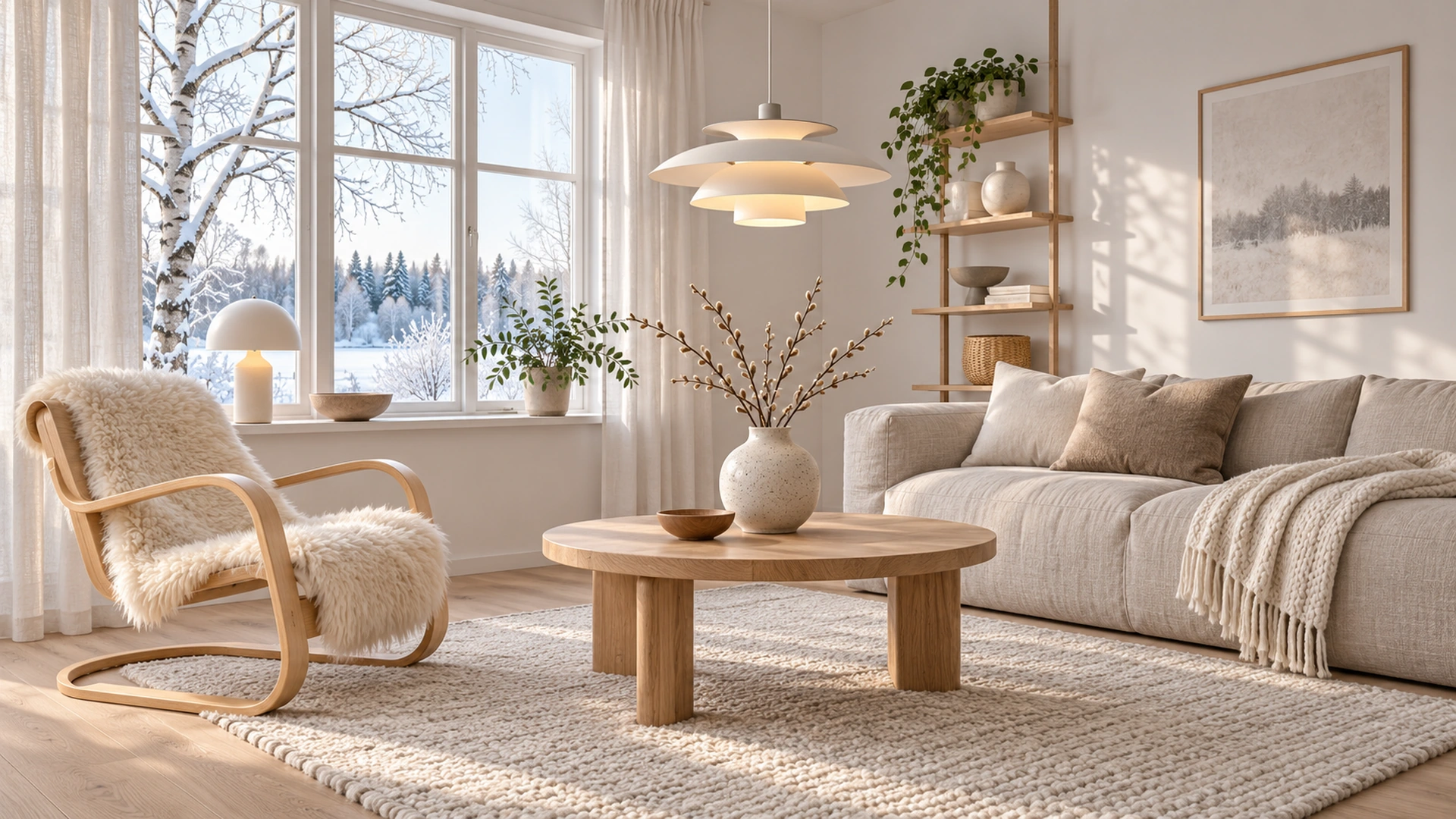
An original Scandinavian interior study: a bright living room with white walls and a pale oak floor, a curved birch armchair with a sheepskin, a low linen sofa, a round wooden table with a ceramic vase and branches, a layered pendant lamp, a wool rug, soft winter daylight from a large window, calm and warm.
What to take from Scandinavian Design today
- Name the wood: pale birch, ash or light oak.
- Describe the light: white walls, large window, soft daylight, warm low lamps.
- Add warm textiles: wool throw, sheepskin, linen.
- Keep objects few and functional.
Questions about Scandinavian Design
What is Scandinavian design?
A Nordic design tradition from the 1930s onward that combines simplicity, function, natural materials and warmth, aimed at everyday life.
What is the difference between Scandinavian and minimalist design?
Minimalism reduces to the essential and can feel austere. Scandinavian design is also simple but emphasises warmth, natural materials and comfort.
Describe a Scandinavian corner in five lines: one chair and its wood, one lamp and its light, one textile, the wall and floor, and what the window shows.
Sources and further reading
- Charlotte and Peter Fiell, Scandinavian Design (2002).
- Kjetil Fallan (ed.), Scandinavian Design: Alternative Histories (2012).