The hour between
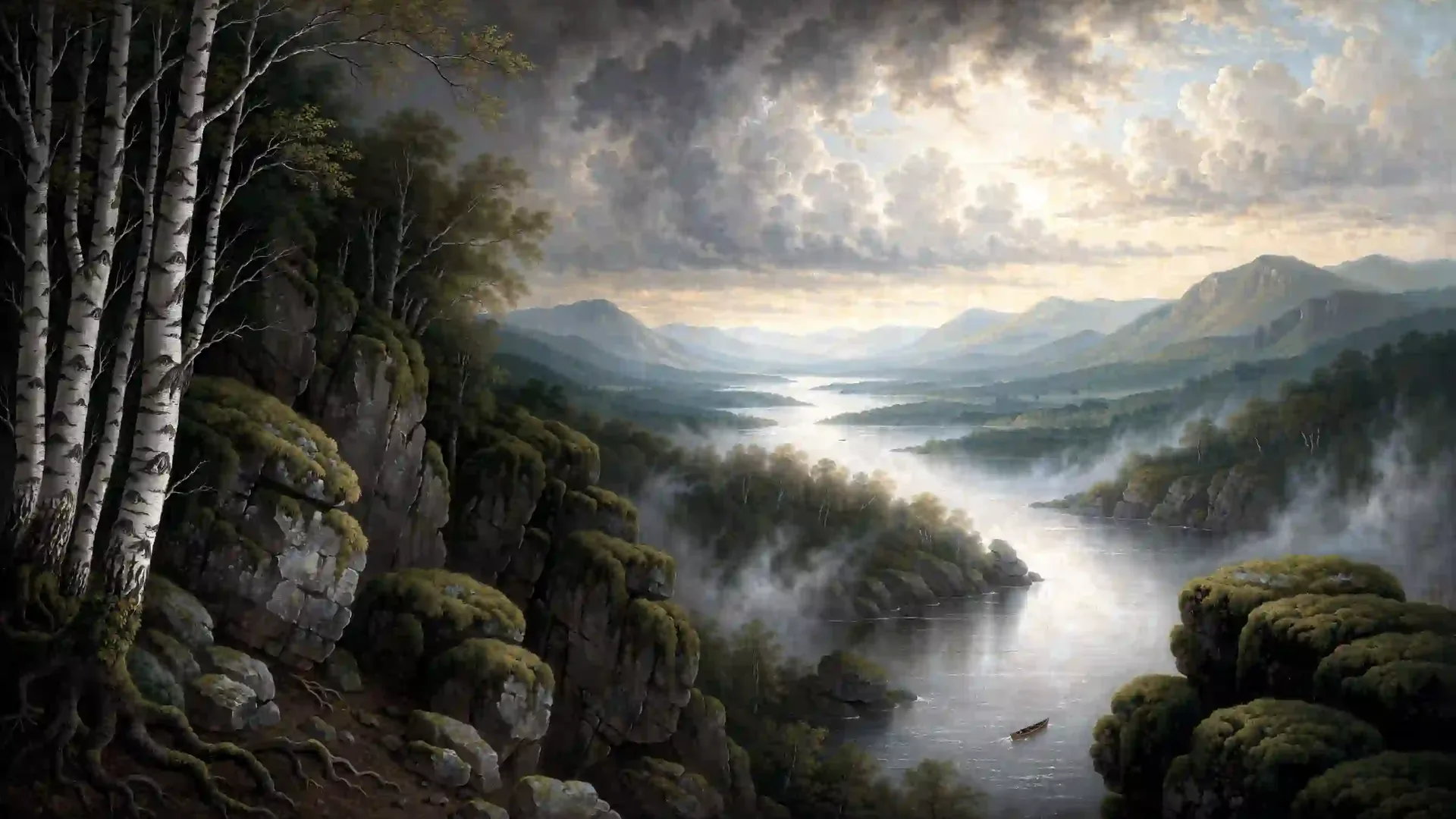
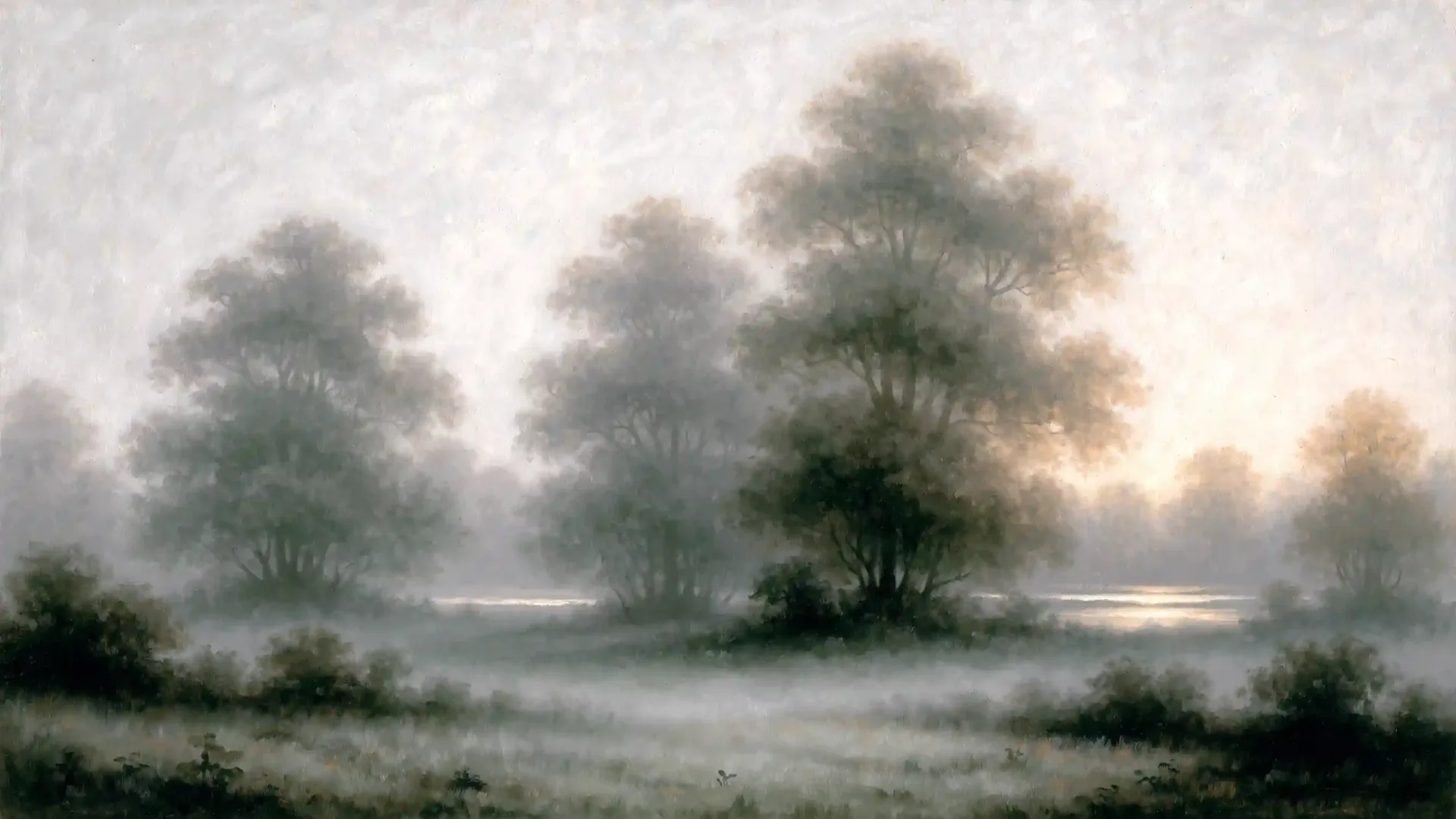
Tonalism was a quiet style of American landscape painting from about 1880 to 1915. After the bright, detailed panoramas of the Hudson River School, painters such as George Inness, Dwight William Tryon, John Henry Twachtman and Alexander Wyant turned to small, intimate scenes in a narrow range of colour, often at twilight, at dawn or in mist.
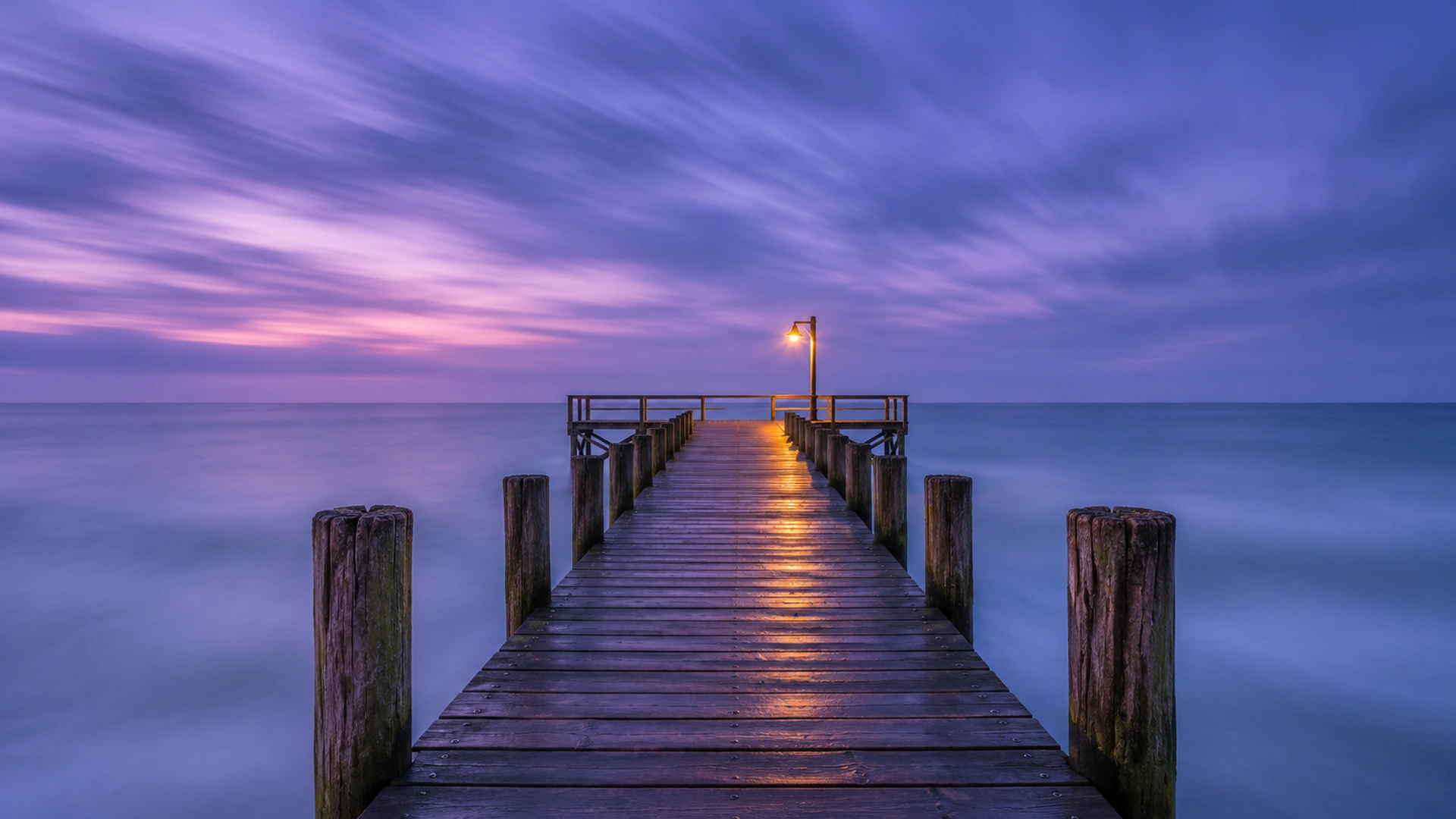
James McNeill Whistler's Nocturnes of the 1870s, river views at night titled like pieces of music, were a key influence. One of them, Nocturne in Black and Gold: The Falling Rocket (1875), led to the famous 1878 libel trial after John Ruskin accused Whistler of 'flinging a pot of paint in the public's face'. Pictorialist photographers such as Edward Steichen, in The Pond—Moonlight (1904), brought the same mood to the camera.
Visual anatomy of Tonalism
One dominant colour family: grey-green, brown, blue-violet or gold.
Twilight, dawn, moonlight, fog; low, diffused and soft.
Blurred and dissolving; forms melt into the atmosphere.
Simple: a horizon, a few trees, water, a field.
Thin glazes and layered veils of colour.
Quiet, contemplative, melancholy, spiritual.
Words around Tonalism
Whistler's word for his night pictures, borrowed from music.
A photographic movement that made soft-focus, painterly photographs.
A thin transparent layer of paint that shifts the colour beneath.
Lightness or darkness; Tonalist pictures stay within a narrow range.
How to recognize Tonalism
- A single dominant colour family.
- Soft, dissolving edges.
- Twilight, mist or moonlight.
- Simple, quiet compositions with few elements.
- A contemplative, almost musical mood.
Where people get it wrong
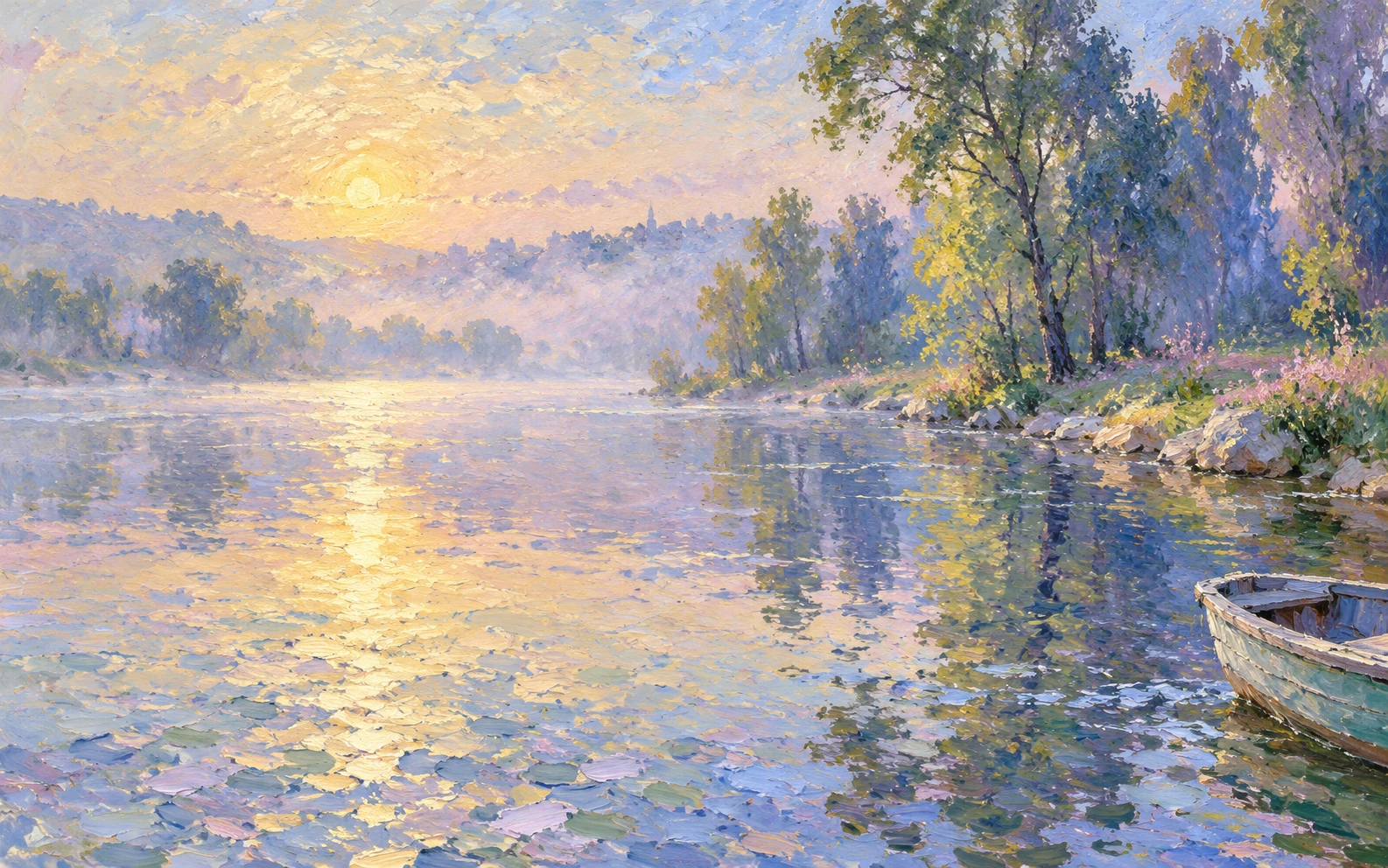
Tonalism is often confused with Impressionism. Both are interested in light, but Impressionism is bright, broken colour in daylight, while Tonalism is muted, unified tone in dim light. It is also sometimes dismissed as merely 'blurry'; the softness is carefully built from layers.
Words to describe Tonalism
Precise words for the qualities above. Combine a few of them instead of naming the style or artist alone.
- Tonalism
- nocturne
- twilight
- mist
- glaze
- value
- atmosphere
- soft edge
- pictorialism
- harmony
A Tonalist landscape study: a meadow at dusk in grey-green and soft gold, three trees dissolving into mist, a thin line of water reflecting the last light, edges melting, no figures.
What to take from Tonalism today
- Choose one dominant tone and name it precisely.
- Set the hour: dusk, dawn, moonlight, fog.
- Let the edges dissolve.
- Keep the scene simple and the mood still.
Saying less, at low light
Tonalism is the art of the unsaid in landscape: it removes detail until only the feeling remains. Whistler named his paintings like music to insist that they were arrangements, not records. When you describe an image in this mood, choose one colour word and one hour, and let the rest stay unspoken.
Questions about Tonalism
What is Tonalism?
An American art style from about 1880 to 1915 that painted soft, atmospheric landscapes in one dominant tone, usually at dusk, dawn, in moonlight or fog.
Who were the main Tonalist painters?
George Inness, James McNeill Whistler, Dwight William Tryon, John Henry Twachtman, Alexander Wyant and Thomas Dewing, with photographers such as Edward Steichen.
What is the difference between Tonalism and Impressionism?
Impressionism uses bright, broken colour to capture daylight. Tonalism uses a narrow range of muted colour and soft edges to create a quiet mood in dim light.
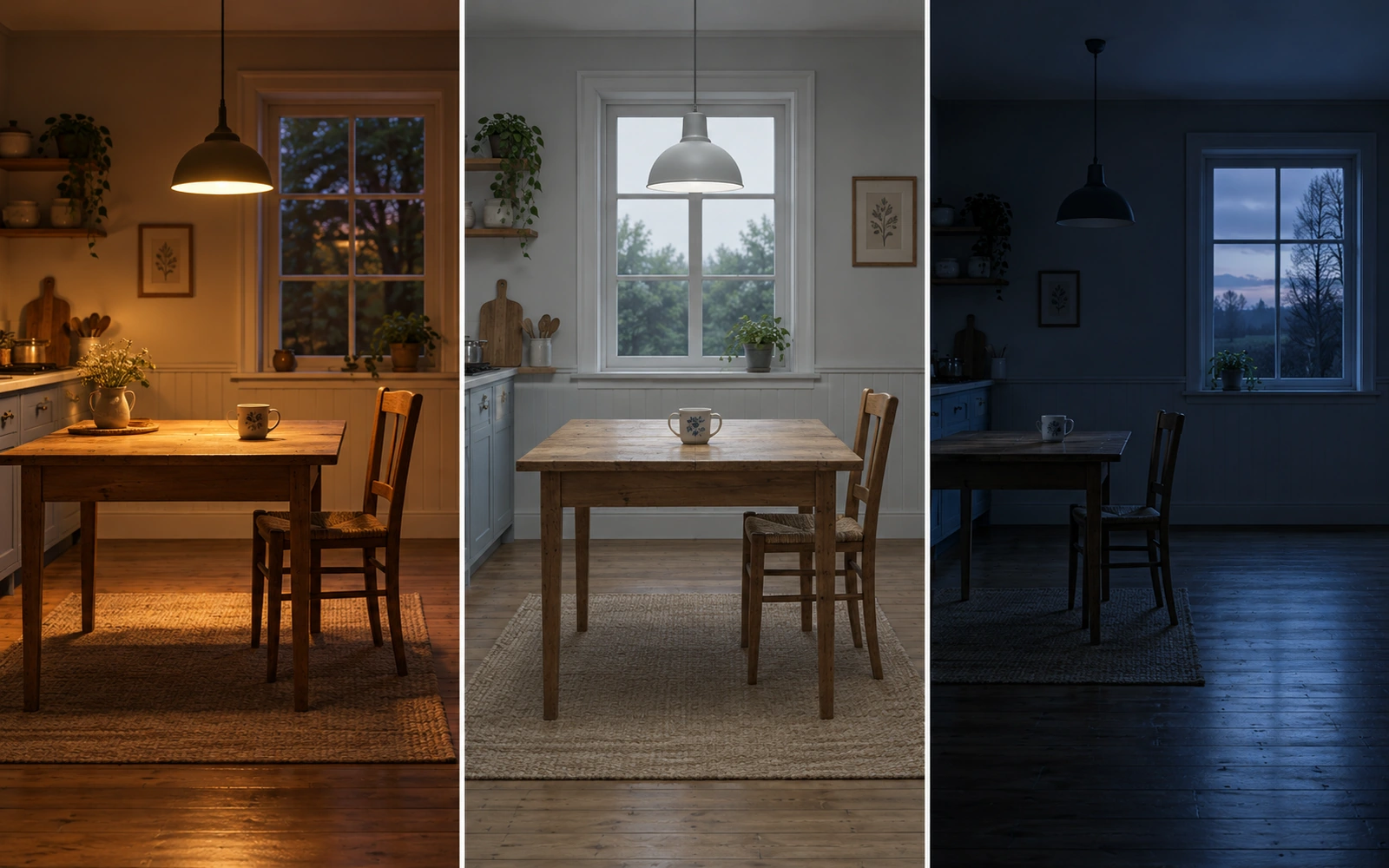
Look out of a window at dusk. Describe what you see using only one colour family and words for softness and distance. Then compare it with a description you would write at noon.
Sources and further reading
- Wanda M. Corn, The Color of Mood: American Tonalism, 1880–1910, M. H. de Young Memorial Museum, 1972.
- Detroit Institute of Arts: James McNeill Whistler, Nocturne in Black and Gold: The Falling Rocket.
- Metropolitan Museum of Art: Edward Steichen, The Pond—Moonlight.
- Smithsonian American Art Museum: Tonalism collection notes.