Tone from dots
Printing presses can lay ink or leave paper bare, but cannot print grey. Halftone solves this by breaking an image into a grid of dots: large dots read as dark, small dots as light. In the 1880s Frederic Ives and others developed practical halftone screens, and newspapers and magazines could finally print photographs alongside text.
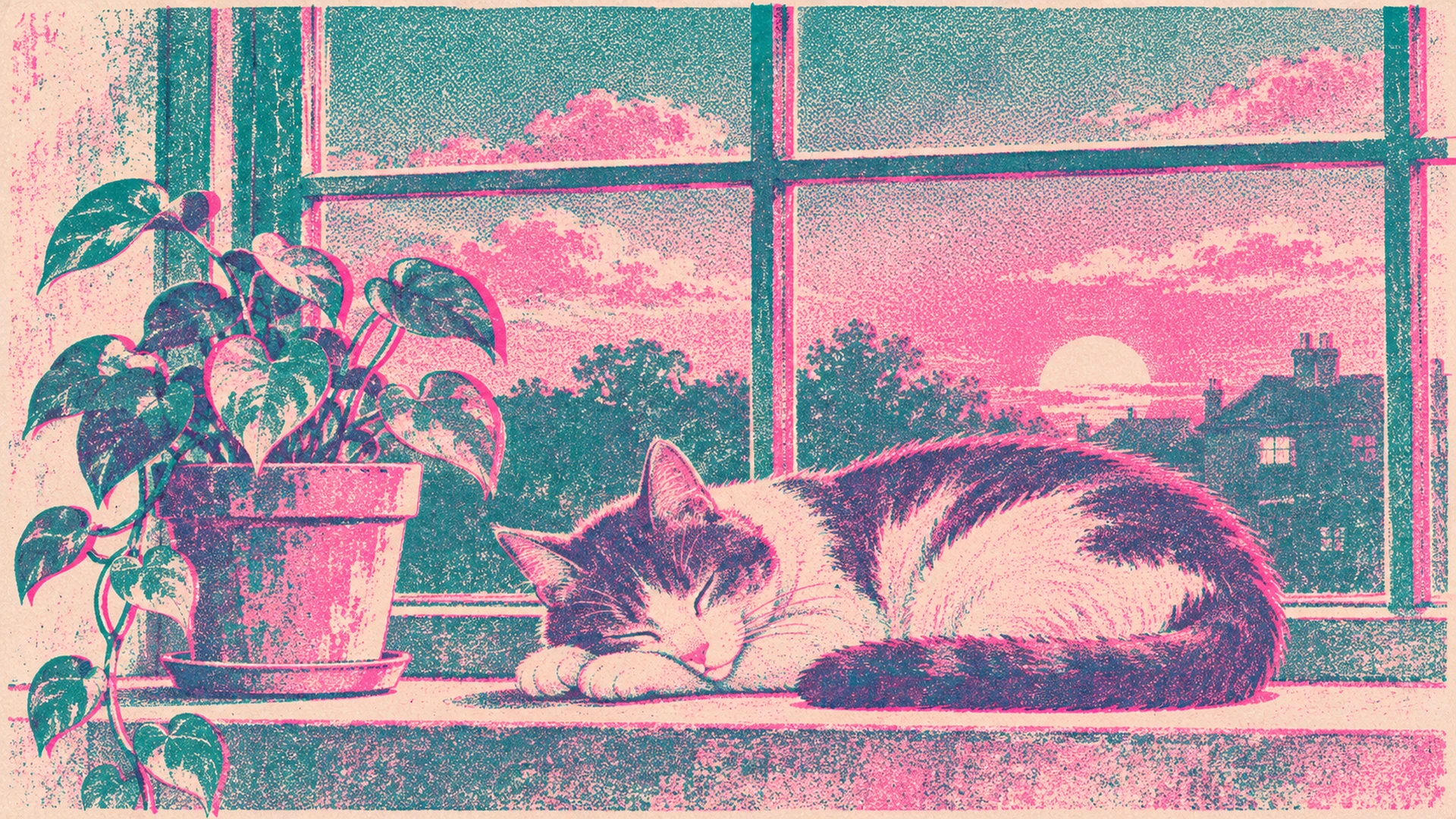
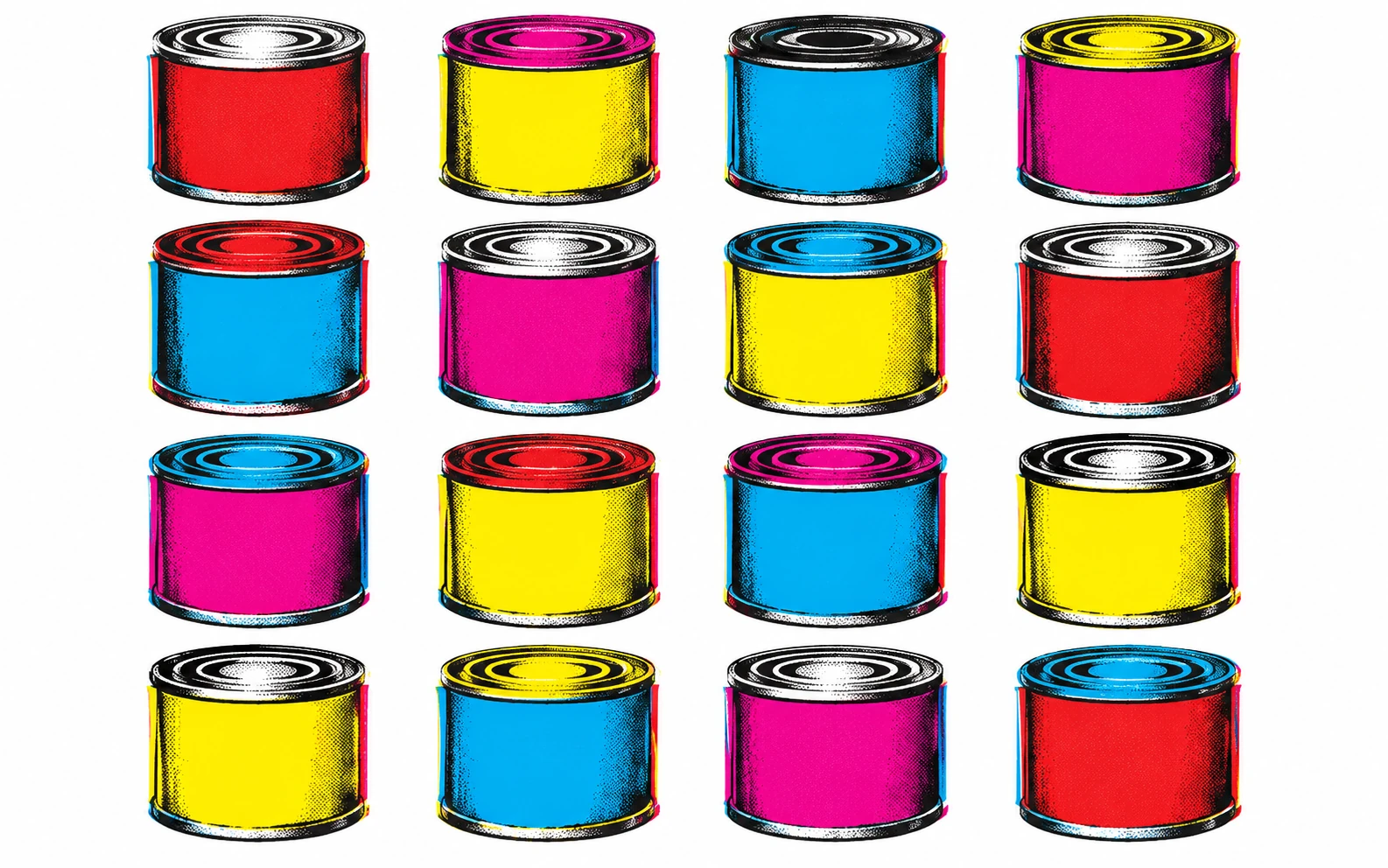
Colour printing uses four halftone screens, cyan, magenta, yellow and black, set at different angles; up close their dots form tiny rosettes. When screens clash you get moiré patterns. Artists and designers have long used the visible dot as a style in its own right, from Pop Art and comics to punk zines, risograph prints and digital halftone filters.
Visual anatomy of halftone
Round, square or line patterns whose size changes with tone.
A regular grid; coarse screens show large visible dots, fine ones look smooth.
Each colour screen at its own angle, usually 15°, 75°, 0° and 45°.
Small flower-like clusters where colour dots overlap.
Wavy interference patterns when screens or patterns clash.
Newsprint, uncoated poster paper, often with ink spread and misregistration.
Related terms
Even dots of one size used for flat tints in comics; different from tonal halftone.
Cyan, magenta, yellow and black, the four inks of process printing.
How fine the screen is; newspapers are coarse, art books fine.
An image printed with two inks, often black and one colour, using halftone.
How to recognize halftone
- Visible dots that change size with tone.
- Rosettes or moiré in colour areas.
- Newsprint or poster texture with ink spread.
Where people get it wrong
Halftone is often confused with Ben-Day dots. Halftone dots change size to create tone, like a photograph; Ben-Day dots are evenly sized and fill flat areas, as in Lichtenstein's paintings. Naming the difference gives very different images.
Words to describe halftone
Precise words for the qualities above. Combine a few of them instead of naming the style or artist alone.
- halftone dot pattern
- coarse visible dots
- CMYK rosettes
- moiré pattern
- newsprint texture
- duotone halftone
- misregistered ink
- dots shrinking into highlights
- screen-printed poster
- pop art print texture
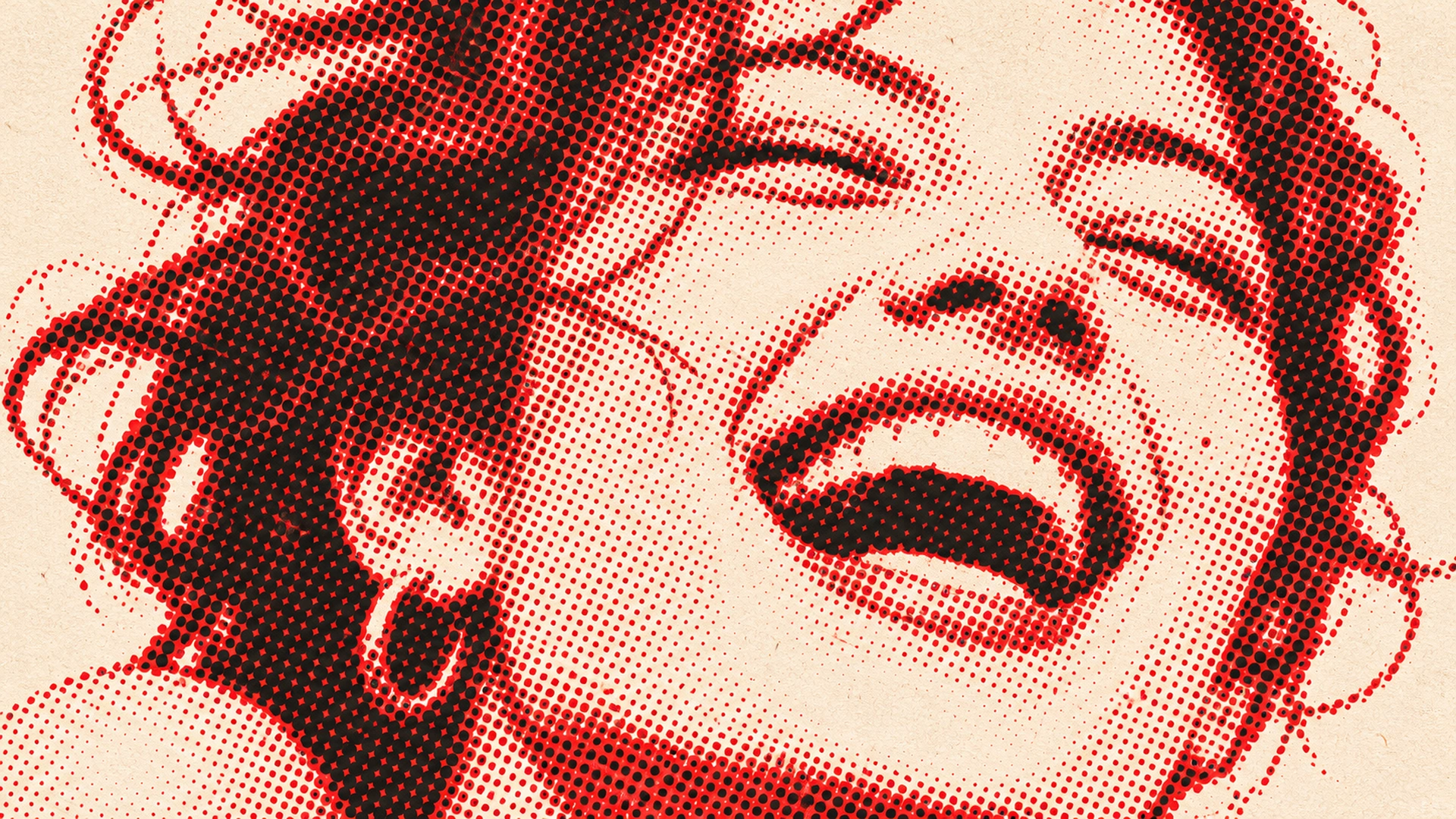
An original halftone poster study: a close-up of a woman's face laughing, printed as a coarse two-colour halftone in black and bright red on off-white uncoated paper, large dots in the shadows shrinking to nothing in the highlights, slight misregistration between the inks. Not a copy of any existing image. No text.
What to take from halftone today
- Say whether dots vary with tone or stay even.
- Name the screen size: coarse and visible, or fine.
- Mention colours, angles, rosettes or misregistration.
Halftone as proof of print
Under a magnifying glass, a printed photograph becomes a field of dots. For a century that was simply how pictures reached newspapers and comics; now, beside endlessly smooth screens, visible halftone has become a texture designers use on purpose to say 'this was printed'. Like every anti-slop texture, it means most when it is real, scanned from paper, or when the work underneath is as particular as the dots.
Questions about halftone
What is halftone?
A printing technique that turns continuous tones into patterns of dots of different sizes or spacing, so that a photograph can be printed with one ink. From a distance the dots blend into greys and colours.
What is the difference between halftone and Ben-Day dots?
Halftone dots vary in size to create tones. Ben-Day dots, used in comics and by Roy Lichtenstein, are evenly sized and spaced dots used to create flat tints.
Take a photo of a face and describe it as a coarse two-colour halftone poster: which inks, how big the dots, where they merge into solid colour and where they disappear.