Weather as a subject
Utagawa Hiroshige was born in Edo (today's Tokyo) in 1797. He began with prints of actors and women but found his voice in landscape: his series The Fifty-three Stations of the Tōkaidō (1833–34), showing the stops on the road between Edo and Kyoto, was a huge success and made travel and weather the true subjects of ukiyo-e.
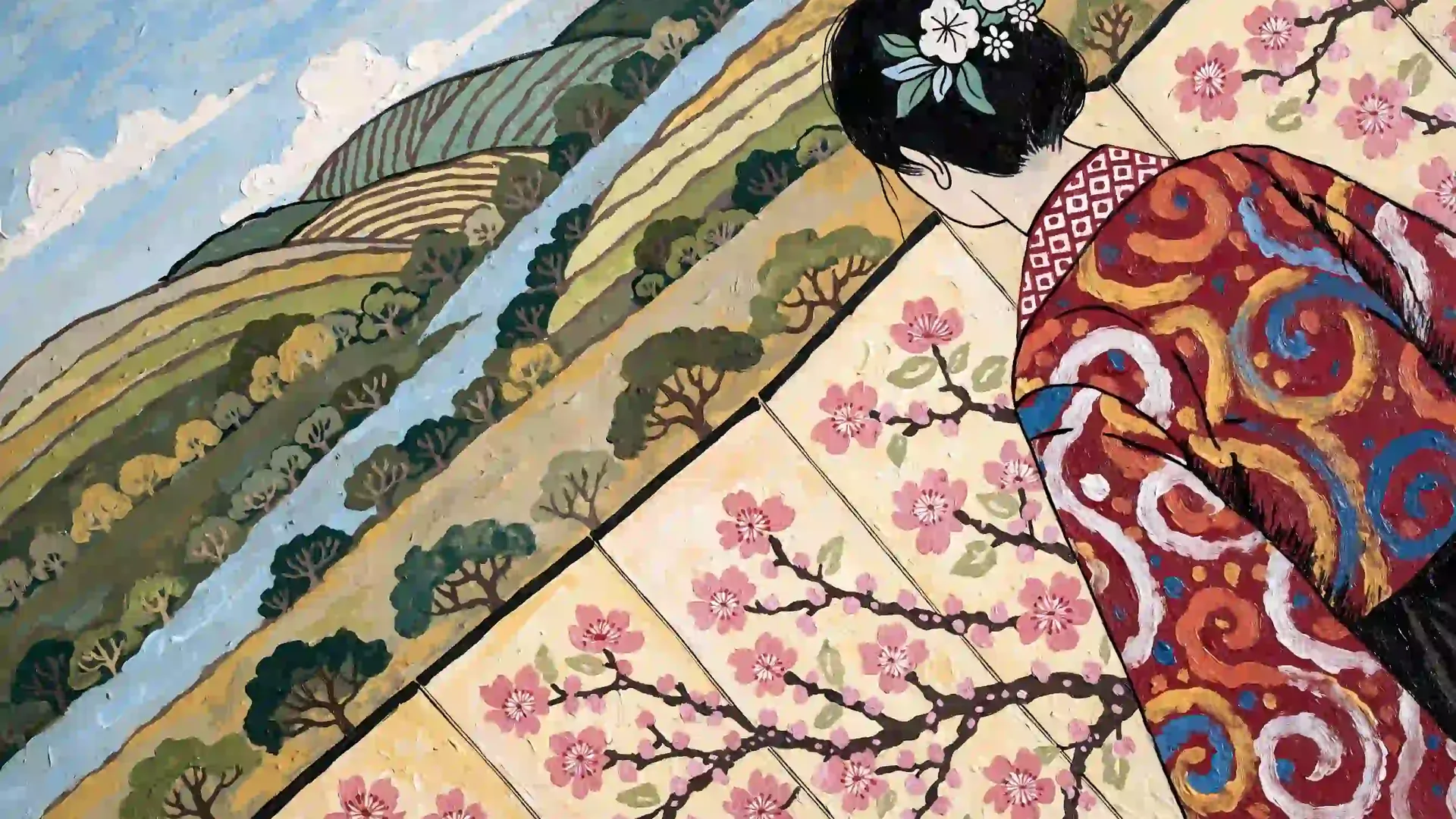
His last great series, One Hundred Famous Views of Edo (1856–58), used tall vertical formats, extreme foregrounds and daring crops, such as a plum branch filling the front of the picture. Van Gogh painted copies of two of these prints, and Hiroshige's deep 'Hiroshige blue', made with imported Prussian blue, became one of the signatures of Japanese prints in Europe.
Visual anatomy of Utagawa Hiroshige
Slanting rain, falling snow, mist and moonlight as the main subject.
Unusual angles: high above, through branches, or with a huge foreground object.
Deep Prussian blues, soft bokashi gradients in skies and water, touches of red.
Small travellers, porters and boatmen, often seen from behind, part of the landscape.
Horizontal series of road stations and tall vertical views of the city.
Quiet, lyrical, a little melancholic; the feeling of being on the road.
How to recognize Utagawa Hiroshige's work
- Landscapes where weather and season are the subject.
- Deep blue gradients in sky and water.
- Small figures and a bold foreground or crop.
Where people get it wrong
Hiroshige is often confused with Hokusai. Hokusai's landscapes are dramatic and energetic, full of movement; Hiroshige's are quieter and more atmospheric, closer to a poem about a place and its weather.
Words to describe Utagawa Hiroshige
Words for what you see and feel in this work. They are for describing and understanding, not a recipe for copying an artist.
- ukiyo-e landscape print
- slanting rain lines
- falling snow on a quiet road
- Prussian blue bokashi sky
- bold foreground branch
- small travellers from behind
- tall vertical view
- mist over the river
- moonlit night scene
- quiet lyrical mood
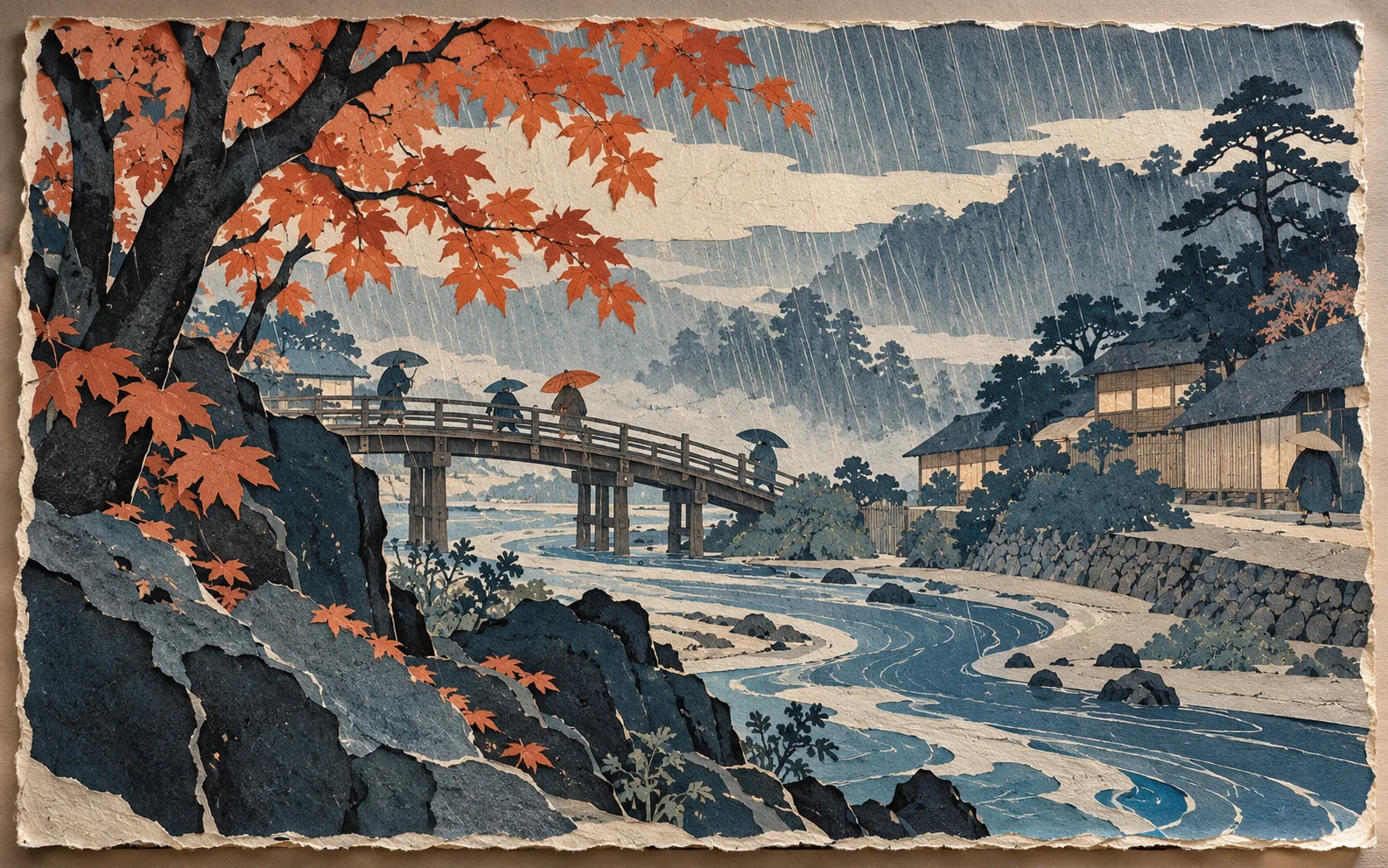
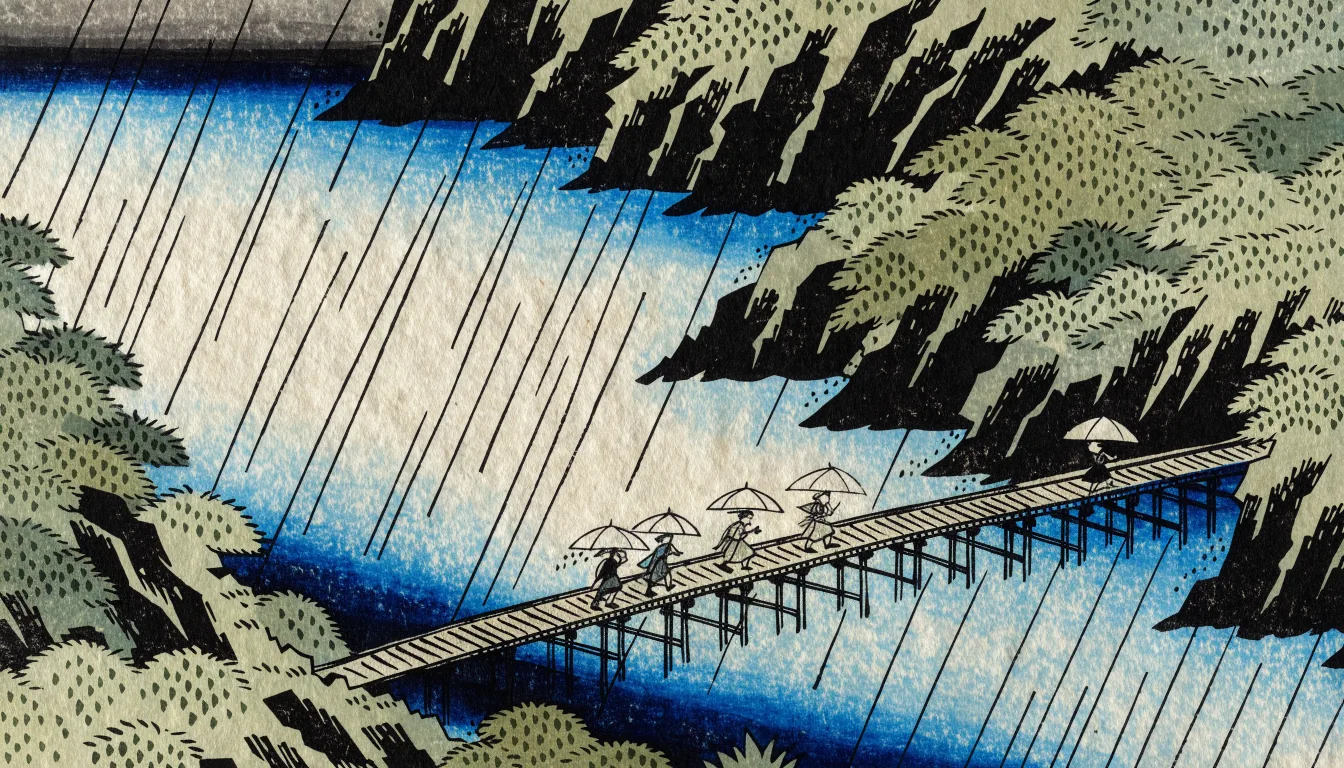
An original woodblock print study: a wooden bridge in sudden heavy rain seen from above, slanting fine black rain lines over everything, small figures hurrying under straw hats and umbrellas, a dark grey band of sky fading into the river, deep blue water gradient, flat colour and crisp outlines.
What to learn from Utagawa Hiroshige
- Start with the weather and the season.
- Describe the viewpoint and the foreground.
- Name the blues and where the gradient falls.
Questions about Utagawa Hiroshige
Who was Utagawa Hiroshige?
Japanese ukiyo-e master of poetic landscape prints: rain, snow, moonlight and travellers on the road, in deep blues and bold diagonal views.
How do you recognize Utagawa Hiroshige's work?
Landscapes where weather and season are the subject. Deep blue gradients in sky and water. Small figures and a bold foreground or crop.
How do you describe Utagawa Hiroshige in words or a prompt?
Start with the weather and the season. Describe the viewpoint and the foreground. Name the blues and where the gradient falls.
Look out of a window on a rainy or snowy day and describe the scene as a Hiroshige print: one bold foreground object, small figures, the direction of the rain or snow, and the gradient of the sky.