Painting as feeling
Vincent van Gogh was born in the Netherlands in 1853 and only became a painter in his late twenties. In about ten years he made around 2,100 artworks, including some 860 oil paintings, while selling very few. His letters to his brother Theo are one of the richest records of how an artist thinks about colour and seeing.
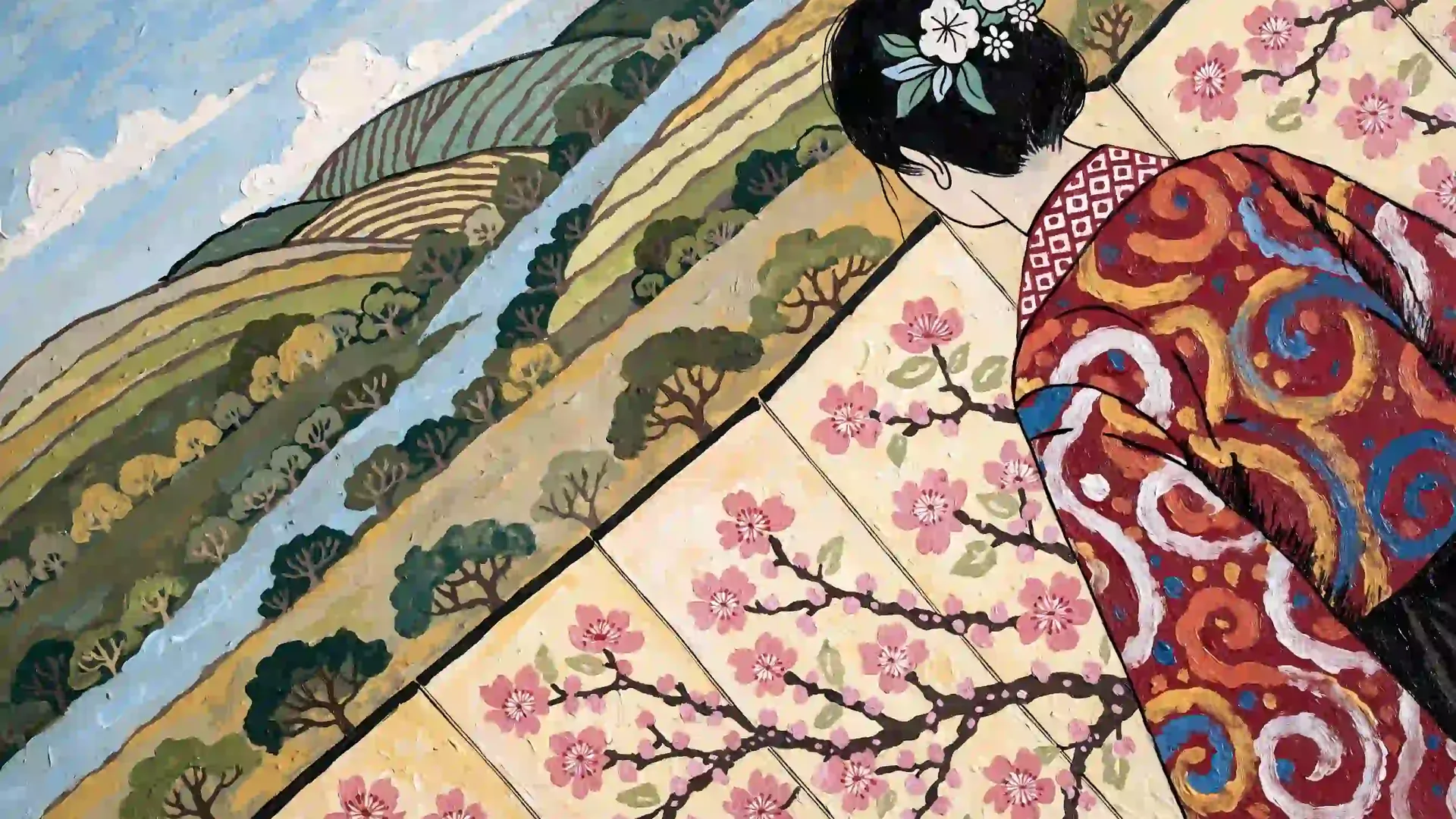
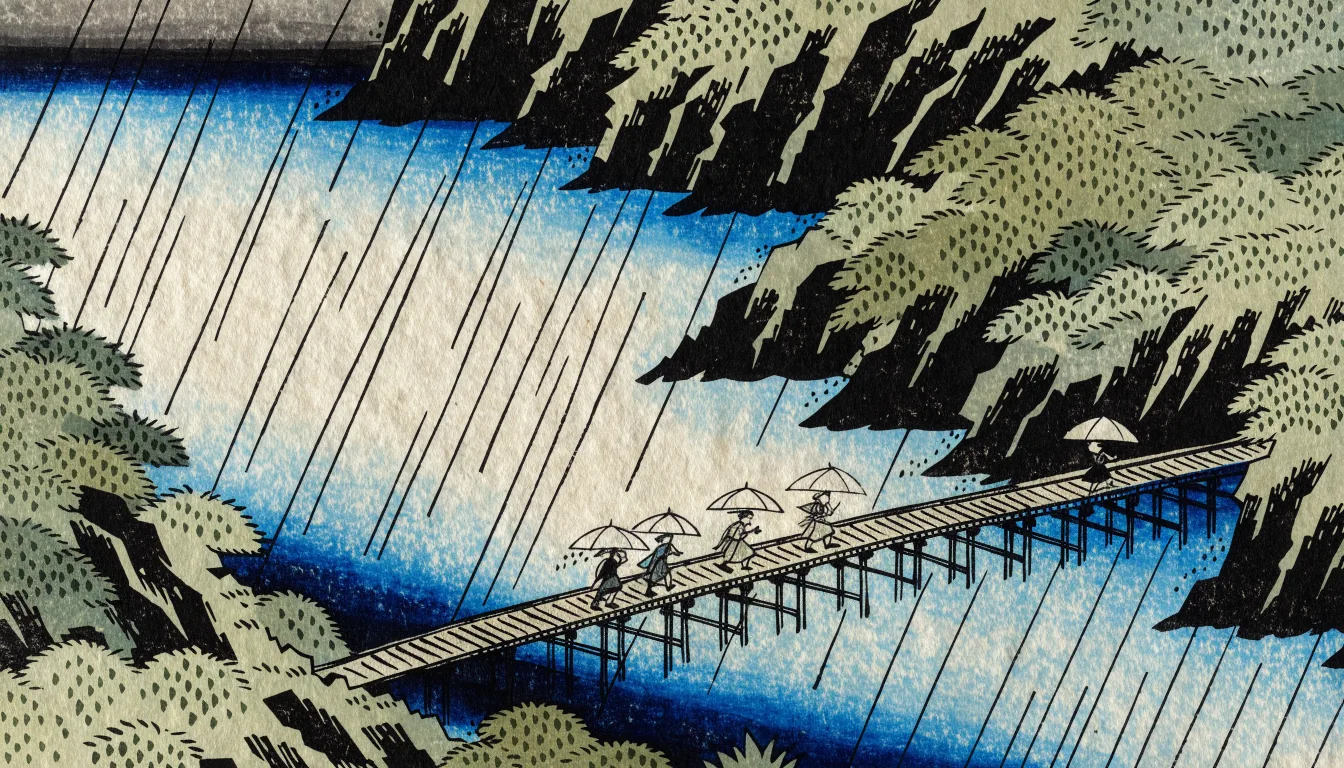
In Paris he met Impressionism and Japanese prints, and copied two of Hiroshige's. In Arles in 1888 he painted sunflowers, his yellow house and café terraces at night in pure, contrasting colour. In the asylum at Saint-Rémy he painted The Starry Night (1889), where the sky swirls like a living force. He died in 1890 at 37, and became one of the most loved painters in the world.
Visual anatomy of Vincent van Gogh
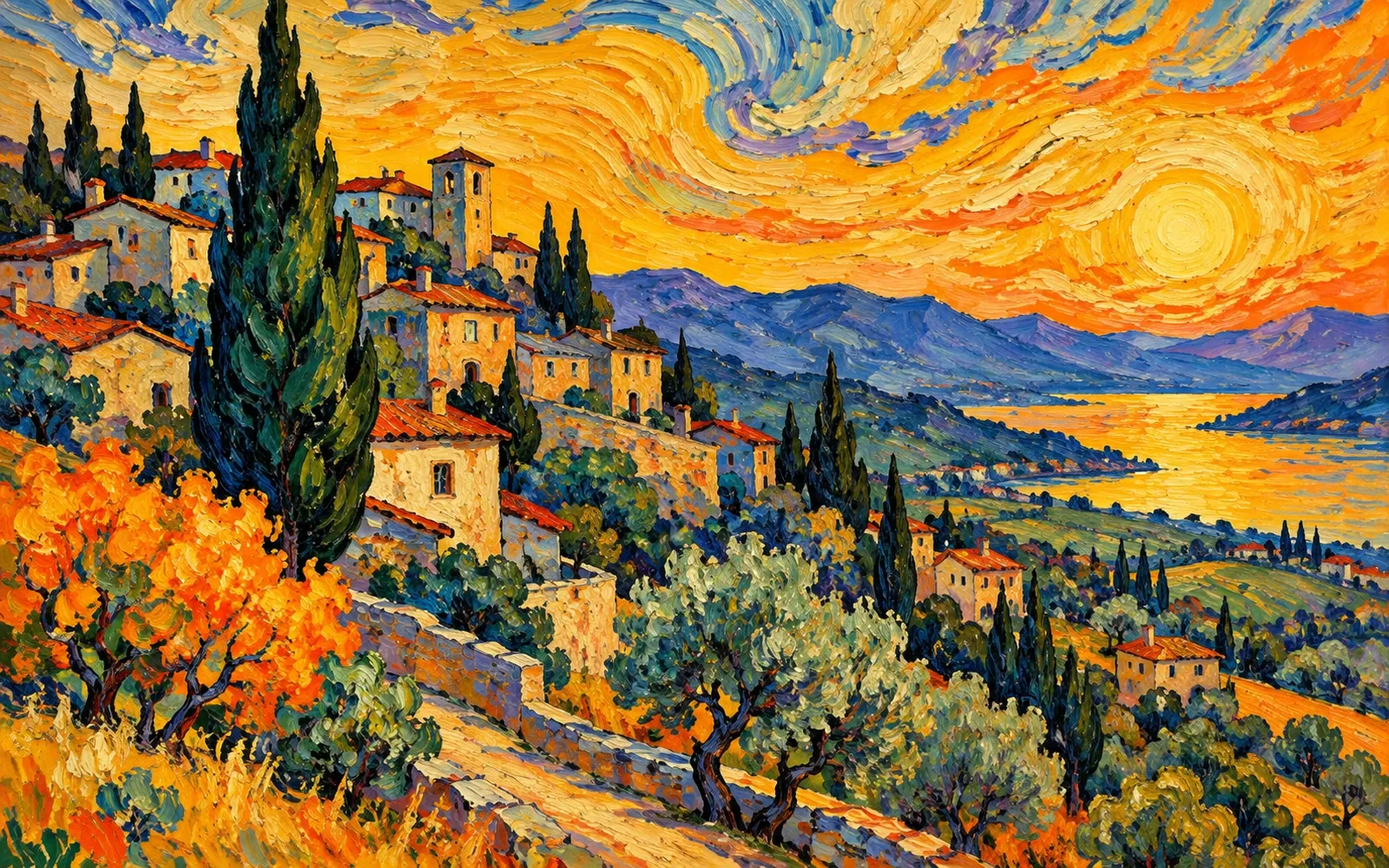
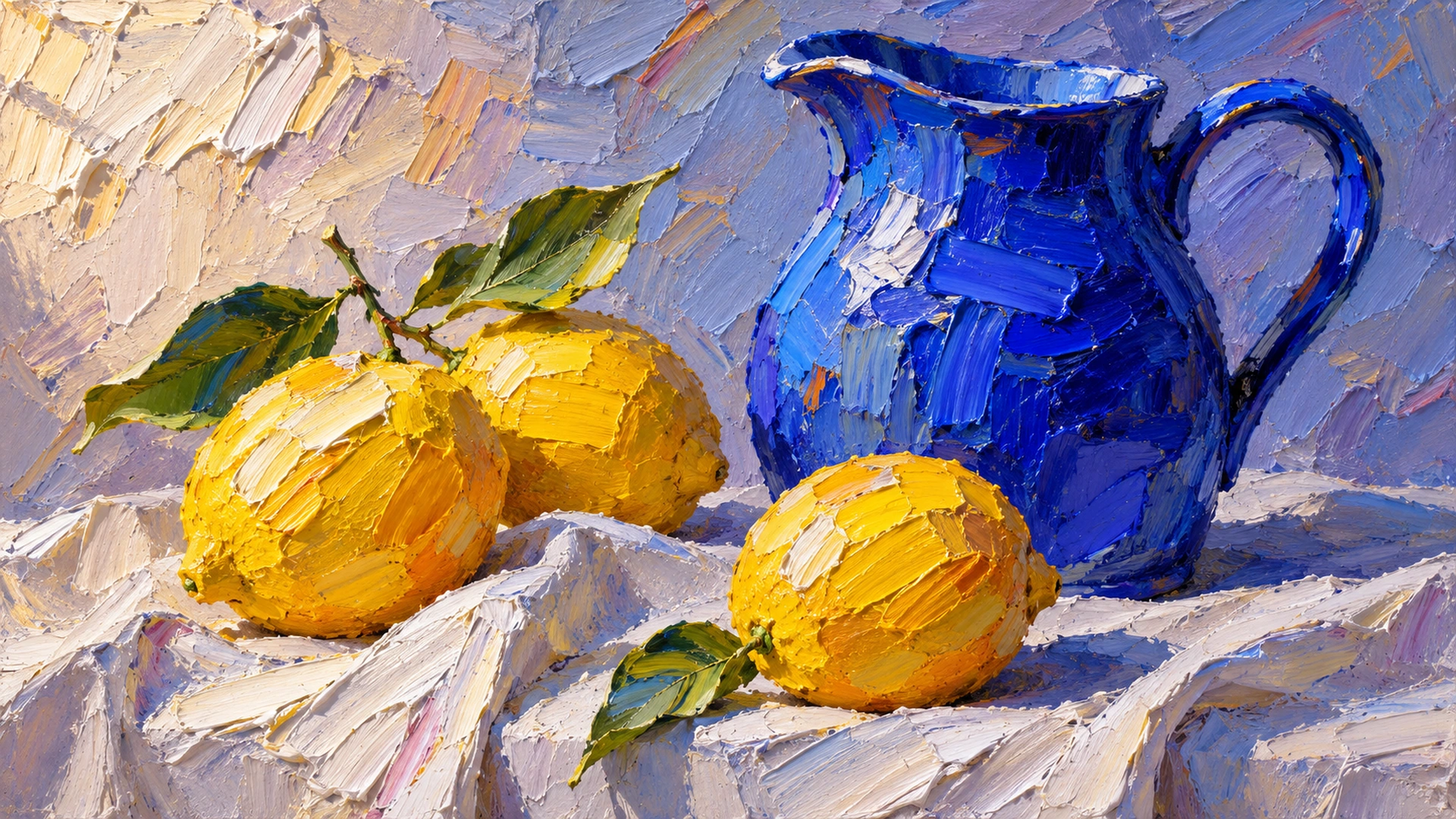
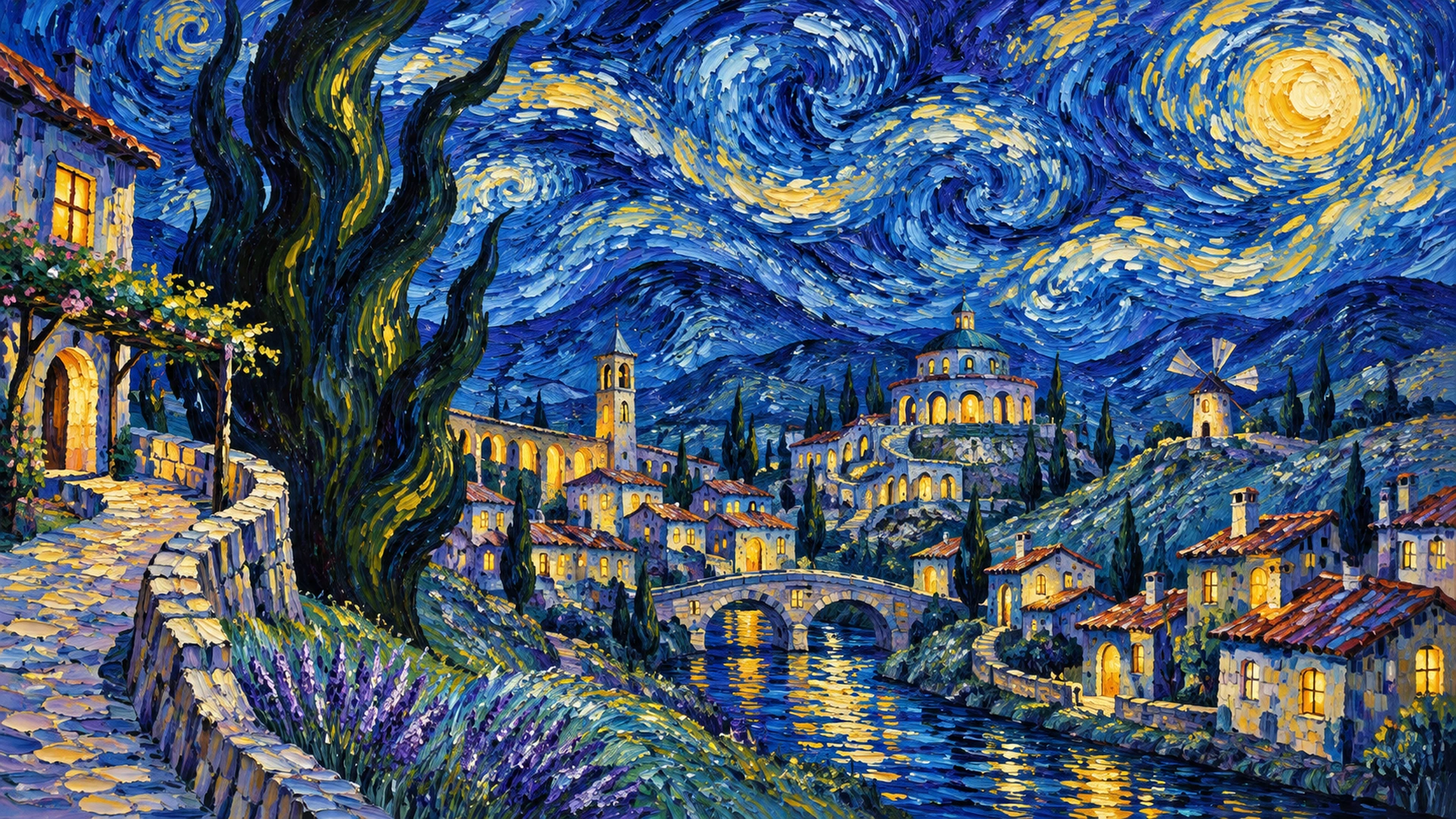
Thick impasto in short, directional, often swirling strokes that follow forms.
Intense complementary contrasts: yellow and violet, orange and blue, red and green.
Dark blue contours around forms, learned partly from Japanese prints.
Skies, fields and trees that seem to move and vibrate.
Sunflowers, wheat fields, cypresses, night skies, rooms, portraits and self-portraits.
Colour and line used to express feeling more than to describe.
How to recognize Vincent van Gogh's work
- Thick, visible, swirling brushstrokes.
- Strong complementary colours like yellow and blue.
- Dark outlines and vibrating skies and fields.
Where people get it wrong
The 'Van Gogh filter' turns any image into swirls, which misses the point. His strokes follow the structure of each thing, a cypress, a wheat field, a face, and his colour choices are carefully built. The myth of the mad genius also hides how much he studied and planned.
Words to describe Vincent van Gogh
Words for what you see and feel in this work. They are for describing and understanding, not a recipe for copying an artist.
- thick impasto brushstrokes
- swirling night sky
- yellow and violet complements
- cobalt blue outlines
- flame-like cypress
- sunflowers in a vase
- wheat field under a turbulent sky
- vibrating colour
- expressive post-impressionism
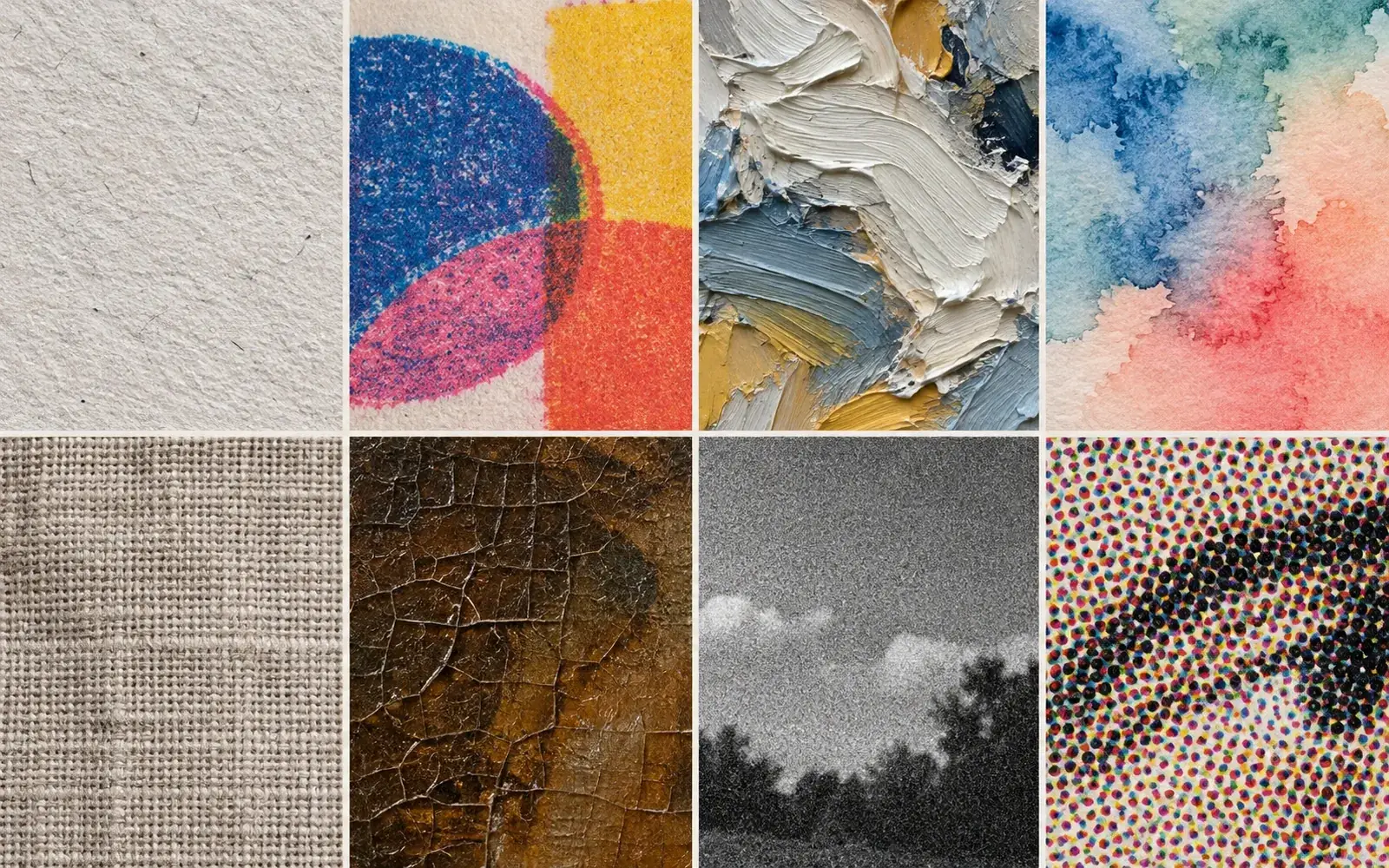
- visible paint texture
An original post-impressionist painting study: a small village under a swirling night sky, thick impasto strokes of cobalt blue and yellow around a glowing moon, a dark flame-like cypress in the foreground, warm lit windows, dark blue outlines, vibrating texture. Not a copy of any existing painting.
What to learn from Vincent van Gogh
- Describe the direction of the brushstrokes in each area.
- Name the complementary colour pair.
- Say what feeling the movement gives.
Questions about Vincent van Gogh
Who was Vincent van Gogh?
Dutch Post-Impressionist whose thick, swirling brushstrokes and intense colour, from sunflowers to The Starry Night, made emotion visible in paint.
How do you recognize Vincent van Gogh's work?
Thick, visible, swirling brushstrokes. Strong complementary colours like yellow and blue. Dark outlines and vibrating skies and fields.
How do you describe Vincent van Gogh in words or a prompt?
Describe the direction of the brushstrokes in each area. Name the complementary colour pair. Say what feeling the movement gives.
Look at a tree on a windy day. Describe it as a Van Gogh painting: the direction of every stroke, the colour of the sky around it, and the outline that holds it.