The smallest contract
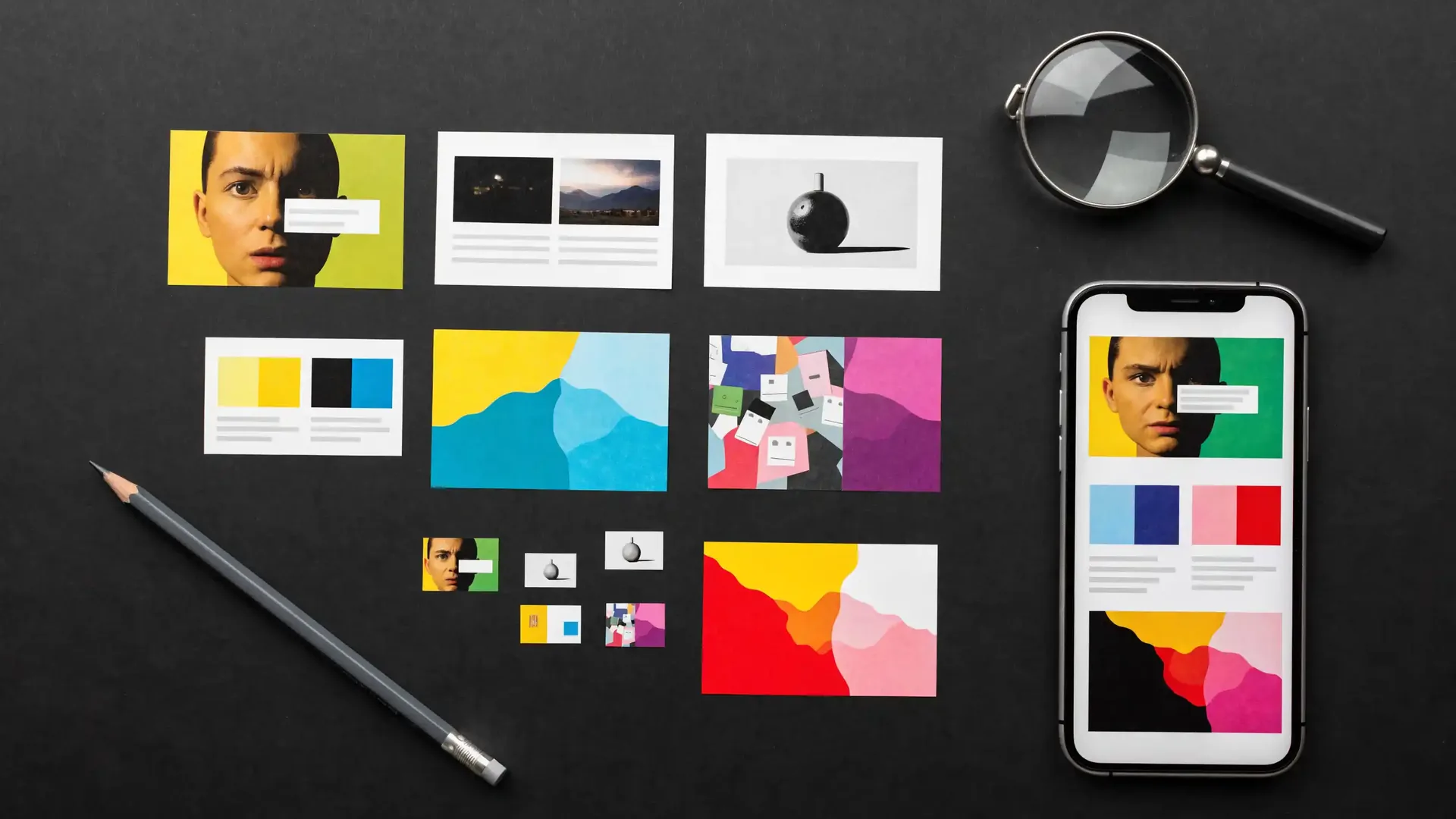
A thumbnail is the smallest contract most people will ever sign. Someone sees a picture the size of a stamp, decides in less than a second, and gives you minutes of their attention in return. Nothing is written down, but both sides know what was agreed: the picture said something, and the video now owes it.
This is why the language of thumbnail advice can feel slightly off. It talks about winning, beating, hacking, triggering. Those are words for an opponent. The person on the other side of the screen is not an opponent. They are someone deciding whether to trust you with a little of their time.
What first lines know
Literature has thought about this moment for a long time. A first line has the same job as a thumbnail: to make a stranger keep going. 'Happy families are all alike.' 'It was a bright cold day in April, and the clocks were striking thirteen.' Neither line explains the book. Each makes one precise promise, of tone, of strangeness, of stakes, and the book keeps it.
The great first lines are not loud. They are exact. They choose one detail, thirteen strikes of a clock, and let it carry the whole unease of a world. In this library we call that the punctum line, after Roland Barthes's word for the detail in a photograph that pierces. A thumbnail with one true punctum rarely needs an arrow.
Curiosity is not a trick
There is nothing dishonest about curiosity. Every story runs on a question the reader wants answered. The dishonesty begins when the question has no answer, or the wrong one: when the thumbnail shows a moment that never happens, a reaction no one felt, a danger that was not there.
The difference can be put simply. Honest curiosity leaves a gap that the video fills. Clickbait leaves a gap that the video ignores. The first builds a relationship; the second spends one. Platforms have slowly learned to tell them apart, by measuring whether people stay, but long before any algorithm, viewers could already feel it.
The stories we tell about the viewer
Narrative therapy pays attention to the stories that are told about people, and how those stories quietly become the ones they tell about themselves. Thumbnails tell small stories too, and not only about the video. Many of the most clicked ones tell a story about the viewer: you are behind, you are doing it wrong, everyone else already knows.
Those stories are effective because they recruit fear and shame. But they leave something behind each time they are told. It is possible to make someone curious without making them smaller: to invite them into a question about the world rather than a verdict about themselves.
A small code for the click
- Show what is there: no moment, object or result the content does not contain.
- Let feelings be real: no performed shock, no borrowed grief.
- Keep the question answerable: the gap should close by the end.
- Do not make the viewer the problem.
- Be clear when an image is generated or altered and could be taken for something that really happened.
- Choose the exact detail over the loud one.
Making the sentence true
In a feed where everyone shouts, a quiet, exact image is not a sacrifice. It is a different promise, and to the right viewer a more attractive one. The work is the same work as writing: knowing what you mean, choosing the word or the detail that carries it, and then keeping your word.
Questions about A Thumbnail Is a Promise
Is clickbait always dishonest?
Not always. A strong question in a thumbnail is fine; it becomes dishonest when the video does not answer it, or answers a different one. The test is simple: does the viewer feel the promise was kept?
Can honest thumbnails still get views?
Yes. Platforms increasingly reward viewers who stay and are satisfied, not only clicks. An honest, exact thumbnail can lose a little curiosity and gain a lot of trust, which pays back over a whole channel.
Write the promise of your next thumbnail as one sentence beginning 'This will be worth it because…'. Then watch the first thirty seconds of the video and check whether that sentence is already starting to come true.
Sources and further reading
- Roland Barthes, Camera Lucida, 1980 (punctum).
- Leo Tolstoy, Anna Karenina, 1878; George Orwell, Nineteen Eighty-Four, 1949 (first lines).
- Michael White and David Epston, Narrative Means to Therapeutic Ends, Norton, 1990.
- George Loewenstein, 'The psychology of curiosity', Psychological Bulletin, 1994.
- YouTube Help: Test & compare thumbnails (watch-time share).
- YouTube Help: Disclosing altered or synthetic content.
Words to describe A Thumbnail Is a Promise
Precise words for the qualities above. Combine a few of them instead of naming the style or artist alone.
- promise
- contract with the viewer
- first line
- punctum line
- honest curiosity
- clickbait
- trust
- exact detail
- the viewer's story
- integrity
- keeping your word
- qualified curiosity
An honest thumbnail for a video about a grandmother's recipe book: her real handwriting on a stained page, a thumb holding it open, warm kitchen light, no text, no face, a promise of tenderness the video can keep.