Left out, then rediscovered
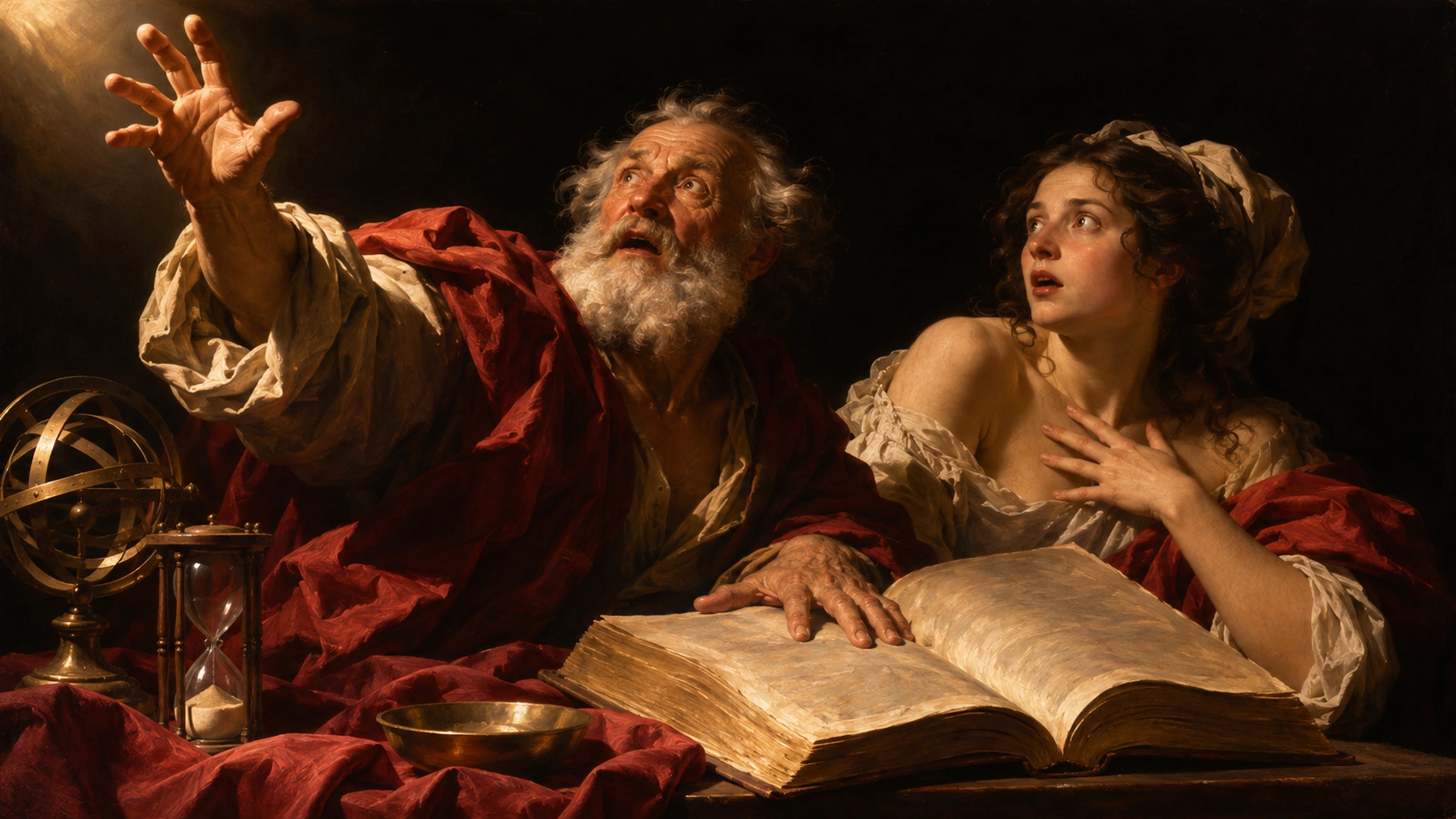
For most of art history, women were kept out of academies, life drawing classes and the big commissions, so far fewer could become professional artists, and many who did were later left out of the books. Some, like the Baroque painter Artemisia Gentileschi or the portraitist Élisabeth Vigée Le Brun, were famous in their lifetime and then forgotten.
In 1971 the art historian Linda Nochlin published the essay 'Why Have There Been No Great Women Artists?', arguing that the answer lies in institutions, not talent. From 1985 the anonymous Guerrilla Girls used posters and statistics to show how few women were in museums. Since then, artists like Hilma af Klint have been rediscovered, and many are now seen as central to how modern images look.
In this library: painters
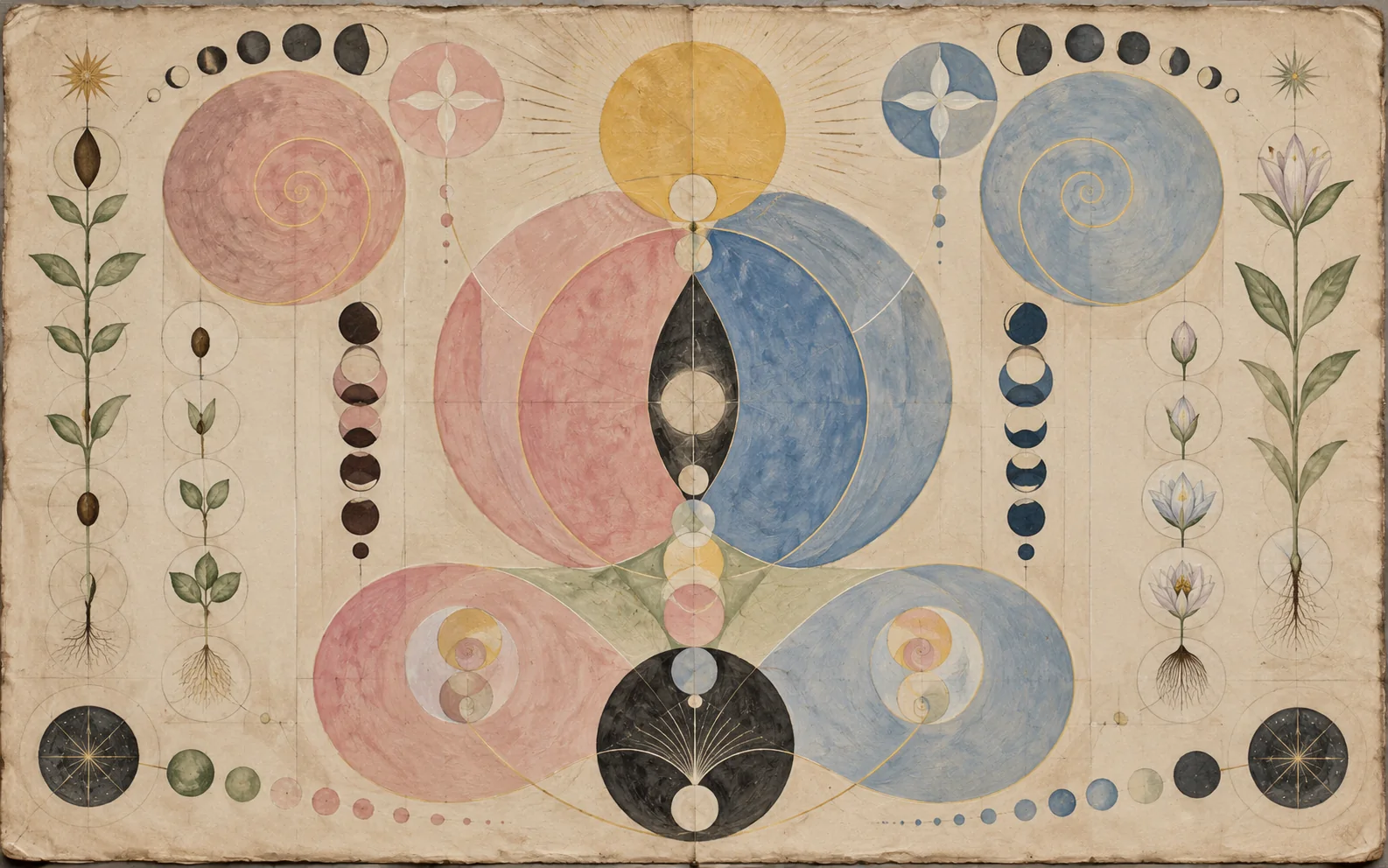
Spiritual abstract paintings years before Kandinsky.
Self-portraits of pain, identity and Mexican folk art.
Enlarged flowers, bones and desert light.
Rhythmic circles of colour in painting, fashion and textiles.
Fine, dreamlike scenes of travellers and strange machines.
Surreal worlds of hybrid creatures, ritual and myth.
In this library: image-makers and designers
A pioneer of photomontage in Berlin Dada.
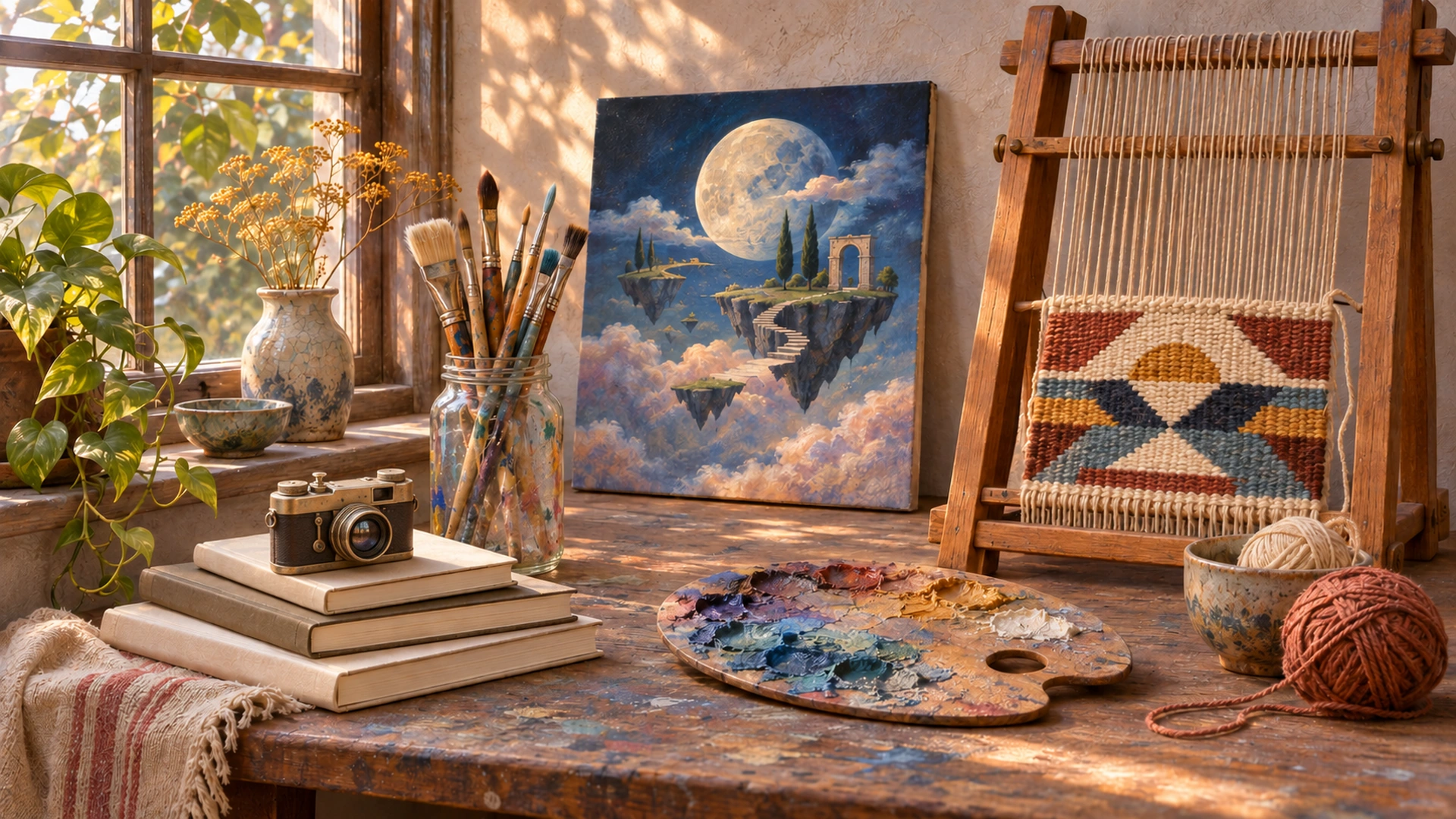
Weaving turned into modern art at the Bauhaus.
Loud, expressive typography and identities.
Dots, nets and infinity mirror rooms.
Photographs with Persian calligraphy and poetic video installations.
More to know
Baroque painter of dramatic, powerful scenes in Caravaggio's light.
A Realist painter of animals and rural work, famous in her lifetime.
Impressionists of light, intimacy and everyday life.
Central to Abstract Expressionism: gesture and soak-stain colour.
Sculpture about memory, the body and family, including giant spiders.
Op Art paintings of vibrating lines and colour.
Staged photographs in which she plays every role.
Iranian mirror mosaics joining Persian geometry and modern abstraction.
Using them as references
- Learn the principle, not the signature: Albers's colour logic, Kusama's repetition, O'Keeffe's scale.
- Describe what each one changes about seeing: where the eye goes, what becomes important.
- Credit influences by name when you describe a direction, and don't copy specific works.
Where we usually get it wrong
Lists of 'female artists' often treat them as a separate category, as if their work were mainly about being women. They are painters, photographers and designers first, working in every style in this library.
Choose one artist from this page you didn't know. Look at five of her works and write one sentence about what she taught you to notice: a colour, a way of framing, a material, a feeling.
Sources and further reading
- Linda Nochlin, 'Why Have There Been No Great Women Artists?' (1971).
- Whitney Chadwick, Women, Art, and Society (1990, later editions).
- Katy Hessel, The Story of Art Without Men (2022).
- Guerrilla Girls, The Guerrilla Girls' Bedside Companion to the History of Western Art (1998).