The culture of cute
Kawaii means 'cute' or 'lovable' in Japanese. As a culture it took off in the 1970s, when teenage girls developed a rounded, childlike handwriting decorated with hearts and faces, and companies began selling small cute goods. Sanrio introduced Hello Kitty in 1974, and character merchandise spread to stationery, appliances, banks, airlines and public safety signs.
Cuteness works on instinct. The zoologist Konrad Lorenz described the 'baby schema' in 1943: a large head, big low-set eyes, round cheeks and a small nose and chin trigger care and affection. Kawaii design exaggerates exactly these proportions. It has many branches, from the pastel dreaminess of yume kawaii to the creepy-cute of guro kawaii and kimo-kawaii, and it shaped global character design, emoji and streetwear.
Visual anatomy of Kawaii
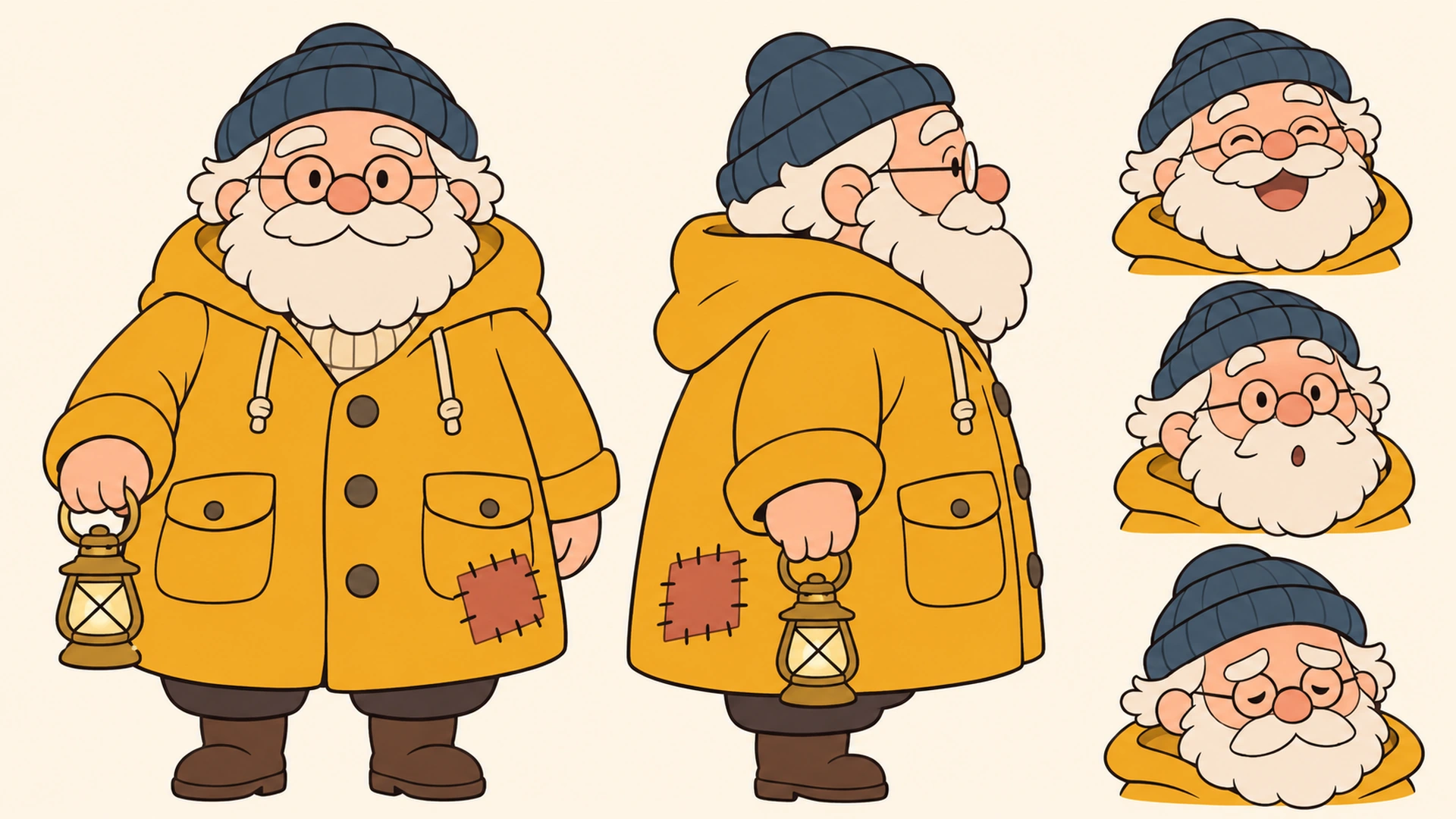
Big head, small body; often two or three heads tall (chibi).
Dot or large shiny eyes set low, tiny mouth, blush ovals on the cheeks.
Rounded, soft, squishy forms; no sharp corners.
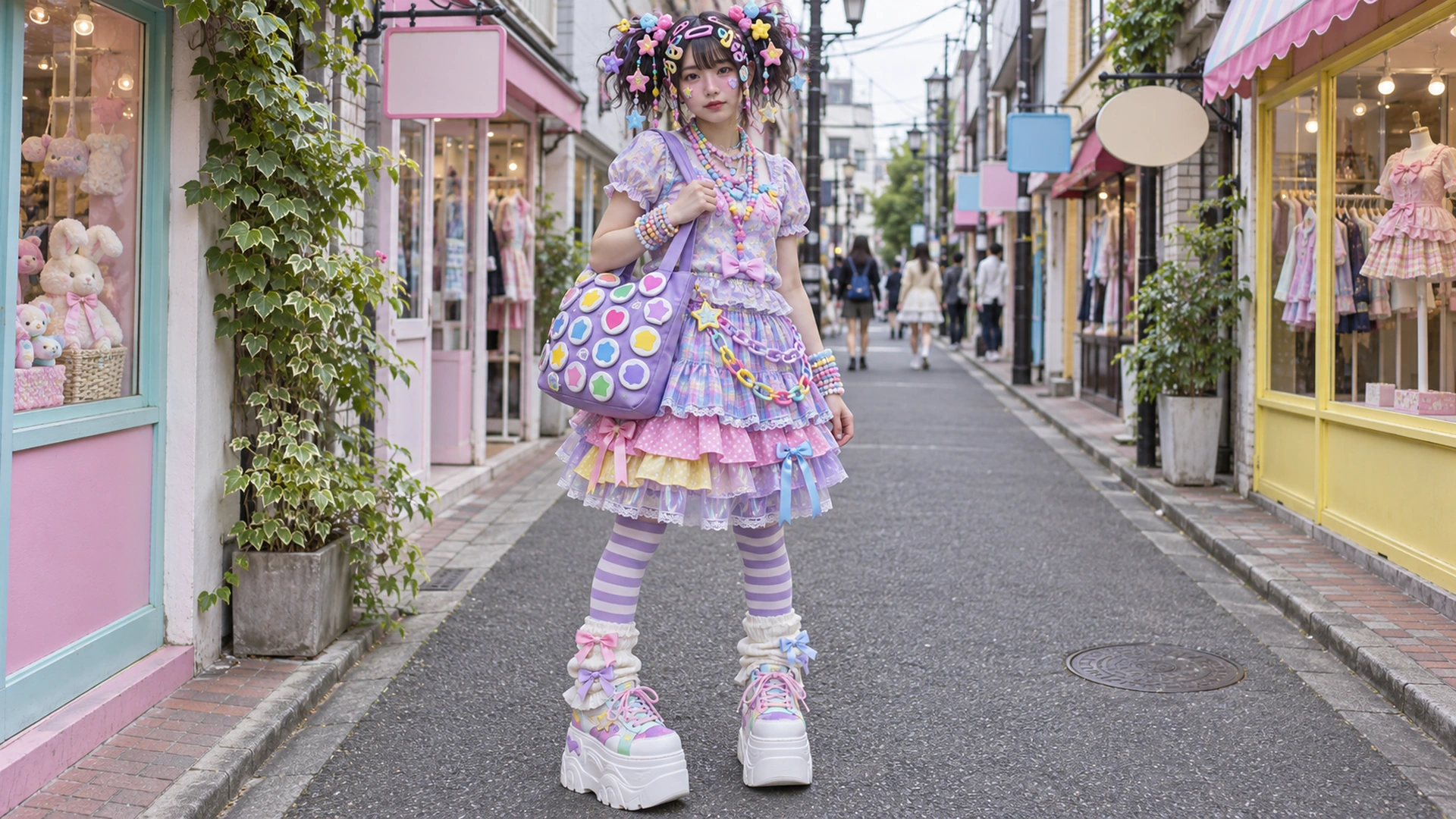
Pastels: baby pink, mint, lavender, butter yellow, sky blue.
Smooth, even, often thick rounded outlines.
Food, clouds and objects given faces and feelings.
Key ideas
Konrad Lorenz's set of infant features that trigger care, 1943.
Sanrio's mouthless cat, the icon of kawaii merchandise.
Super-deformed characters with tiny bodies and big heads.
Dreamy pastel cute, and cute mixed with the grotesque.
How to recognize Kawaii
- Oversized heads and tiny features.
- Blush marks and simple dot eyes.
- Pastel palette and rounded shapes.
- Objects and food with faces.
Where people get it wrong
Thinking kawaii is just 'pink and cute'. Its power comes from proportion: the baby schema. A pink character with adult proportions is not kawaii; a grey rock with big low eyes, a tiny mouth and round cheeks is. Name the proportions, not only the colours.
Words to describe Kawaii
Precise words for the qualities above. Combine a few of them instead of naming the style or artist alone.
- kawaii
- baby schema
- chibi proportions
- big round head
- dot eyes
- tiny mouth
- blush marks
- pastel palette
- rounded soft shapes
- thick smooth outlines
- personified objects
- yume kawaii
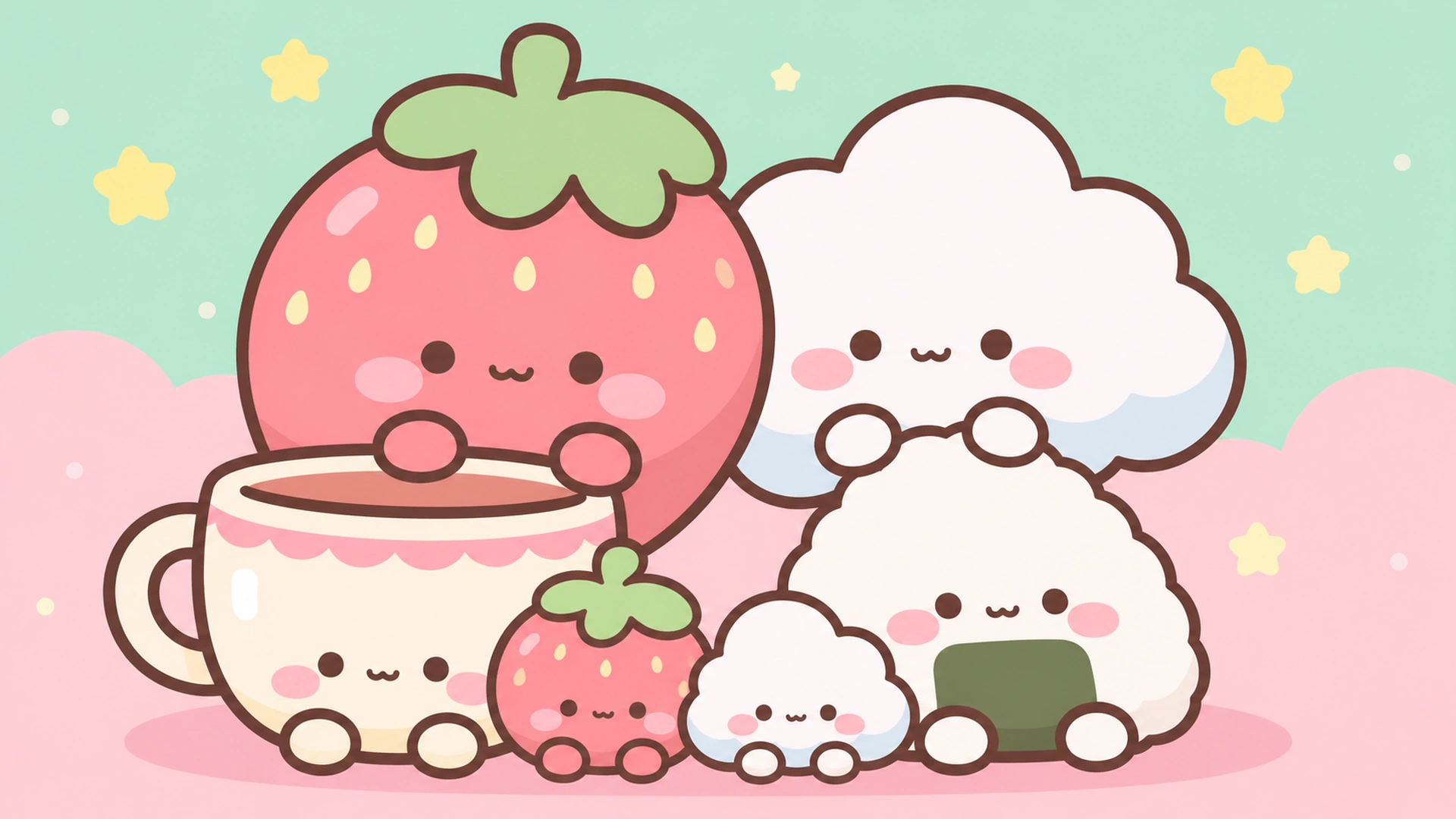
An original kawaii illustration study: a family of round pastel characters, a strawberry, a cloud, a teacup and a rice ball, each with dot eyes set low, a tiny mouth and pink blush ovals, thick smooth outlines, soft mint and pink background with small stars, cheerful and gentle.
What to take from Kawaii today
- State the proportions: big round head, small body, eyes set low.
- Simplify the face: dot eyes, tiny mouth, blush ovals.
- Use soft rounded shapes and thick smooth outlines.
- Choose a pastel palette.
Questions about Kawaii
What does kawaii mean?
Cute or lovable in Japanese; also the culture of cuteness in Japanese design, fashion and characters.
Why do kawaii characters look cute?
They exaggerate the baby schema: large head, big low eyes, round cheeks and small features, which trigger an instinct to care.
Pick an everyday object on your desk and turn it into a kawaii character in four lines: its proportions, its face, its colour and one small action that shows its personality.
Sources and further reading
- Sharon Kinsella, 'Cuties in Japan', in Women, Media and Consumption in Japan (1995).
- Konrad Lorenz, 'Die angeborenen Formen möglicher Erfahrung' (1943).