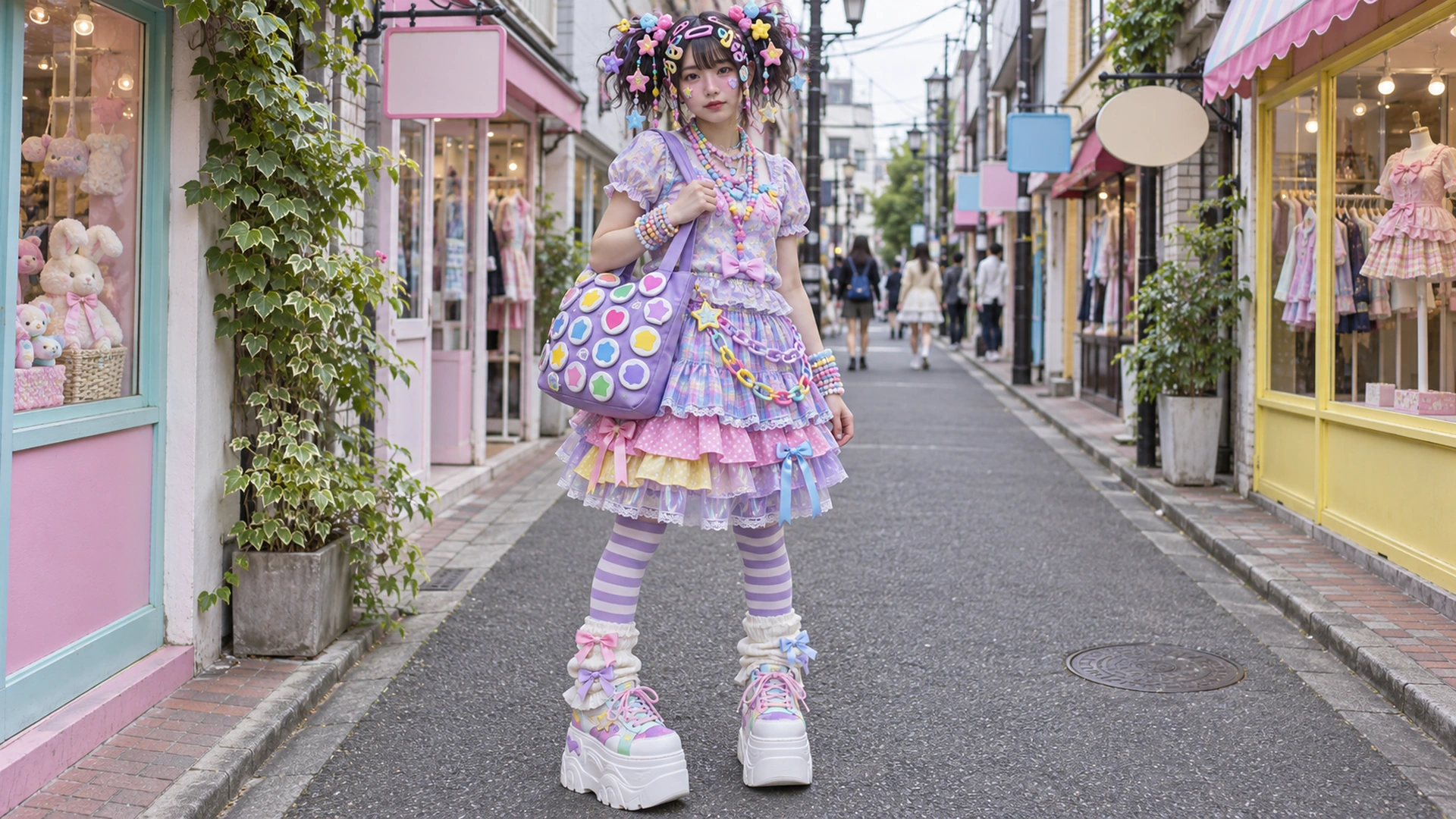
A street as a stage
Harajuku is a district in Tokyo between Harajuku Station, Takeshita Street and Omotesando. From the 1980s, and especially in the 1990s when the main avenue was closed to traffic on Sundays, young people gathered there in outfits they assembled themselves from second-hand clothes, designer pieces and handmade accessories. The photographer Shoichi Aoki documented them monthly in FRUiTS magazine from 1997 to 2017.
Harajuku was never a single style but an ecosystem of tribes: Decora, buried in colourful clips and toys; Lolita, with Victorian-inspired frilled dresses; Visual kei, from rock bands' dark glam; Fairy kei and Gyaru among others. Its influence reached global fashion, music videos and illustration, though its use as a costume by Western pop acts was criticised as shallow. The spirit that matters for images is personal invention: every outfit is a self-portrait.
Visual anatomy of harajuku fashion
Many pieces worn together: skirts over trousers, multiple tops, socks over tights.
Hair clips, plastic toys, badges, bags and jewellery in quantity.
From candy pastels to all-black, often pushed to extremes within one look.
Volume: petticoats, platform shoes, oversized pieces.
Customised, handmade and second-hand pieces mixed with designer labels.
Narrow shopping streets, crosswalks, shop fronts, crowds.
Key styles
Dozens of colourful hair clips, stickers and plastic accessories.
Victorian- and Rococo-inspired dresses with petticoats, lace and bows.
Androgynous dark glam from Japanese rock bands.
Pastel 1980s cartoon nostalgia in soft pinks and lilacs.
How to recognize harajuku fashion
- Many layers and many accessories.
- A coherent but extreme colour logic.
- Platform shoes and volume, photographed in the street.
Where people get it wrong
Harajuku is often reduced to 'cute Japanese girls in colourful clothes'. The point is individual invention within a tribe: each outfit has its own rules and references. A generic 'kawaii' prompt flattens it into a costume.
Words to describe harajuku fashion
Precise words for the qualities above. Combine a few of them instead of naming the style or artist alone.
- harajuku street fashion
- decora hair clips
- layered colourful outfit
- lolita dress with petticoat
- visual kei dark glam
- platform shoes
- handmade accessories
- street style portrait
- pastel fairy kei
- tokyo shopping street backdrop
An original street fashion photograph: a young person in a Decora-inspired outfit with dozens of colourful plastic hair clips, layered pastel skirts over striped tights, platform sneakers and a bag covered in badges, standing on a narrow shopping street, soft overcast daylight, full-length portrait. No readable signs or text.
What to take from harajuku fashion today
- Name the specific style: Decora, Lolita, Visual kei.
- List the layers and accessories precisely.
- Set it in a real street context with natural light.
Questions about harajuku fashion
What is harajuku fashion?
The street style of a Tokyo neighbourhood: layered, hand-customised, fearless looks, from candy-bright Decora to frilled Lolita and dark Visual kei.
How do you recognize harajuku fashion?
Many layers and many accessories. A coherent but extreme colour logic. Platform shoes and volume, photographed in the street.
How do you describe harajuku fashion in words or a prompt?
Name the specific style: Decora, Lolita, Visual kei. List the layers and accessories precisely. Set it in a real street context with natural light.
Design an outfit in words for one Harajuku tribe: the base layer, three accessories, the colour logic, shoes, and the street where it would be photographed.