Two traditions that already agreed
Japandi is a recent name, joined from 'Japan' and 'Scandi' and widely used from the late 2010s, for interiors that mix Japanese and Scandinavian design. The mix is older than the word. When Japan opened to trade in the 1850s and 1860s, Danish and other Nordic designers were drawn to its woodwork, ceramics and restraint, and that influence runs through twentieth-century Scandinavian furniture.
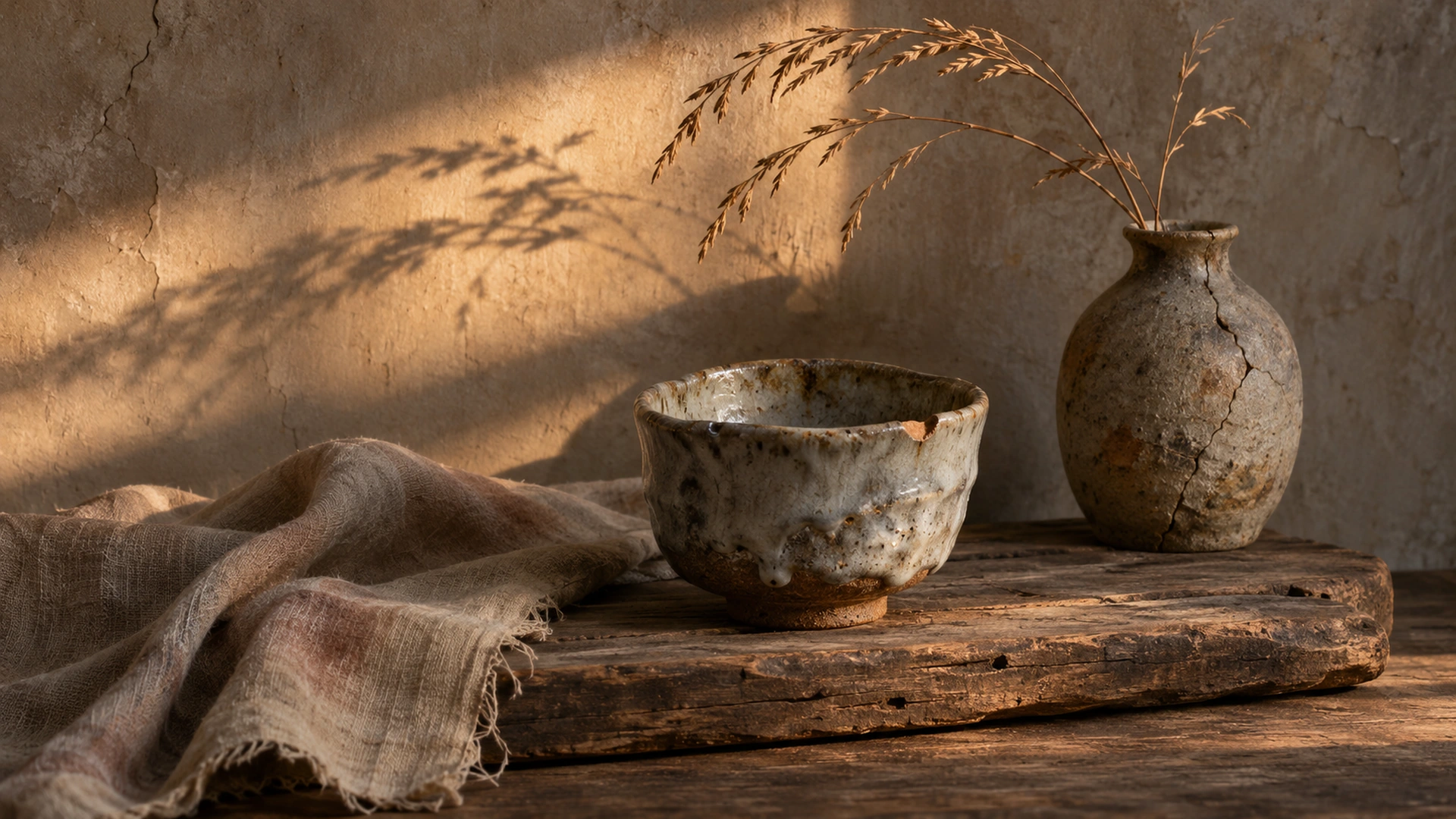
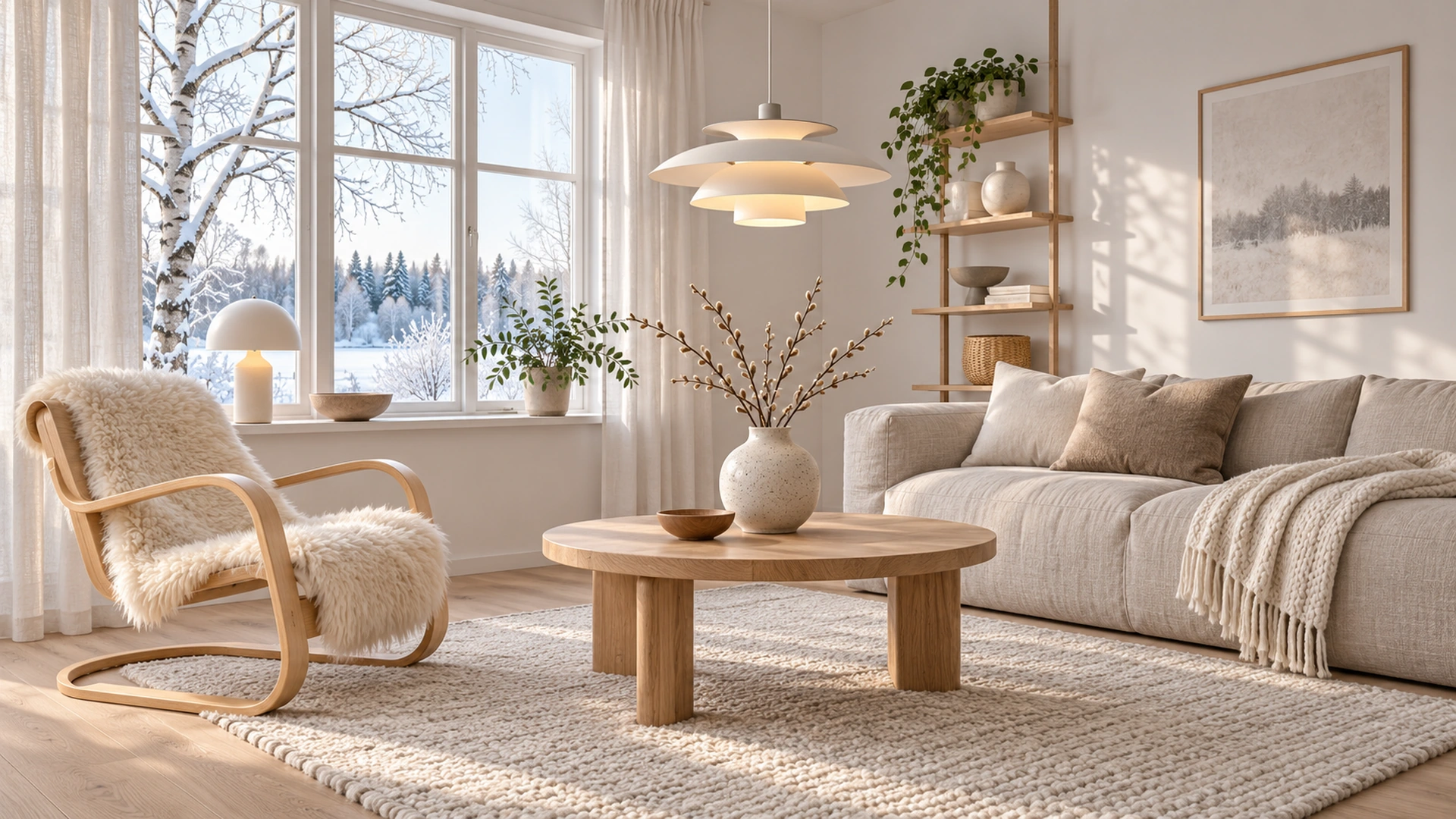
The two traditions share a respect for craft, natural materials and usefulness. Japandi takes the warmth and comfort of Scandinavian rooms and the calm, low, asymmetrical quality of Japanese ones, with the wabi-sabi acceptance of imperfection. Compared with pure Scandinavian style it is darker, lower and quieter; compared with a traditional Japanese room it is softer and more furnished. Isamu Noguchi's Akari paper lamps, designed from 1951, are almost an emblem of the style.
Visual anatomy of Japandi
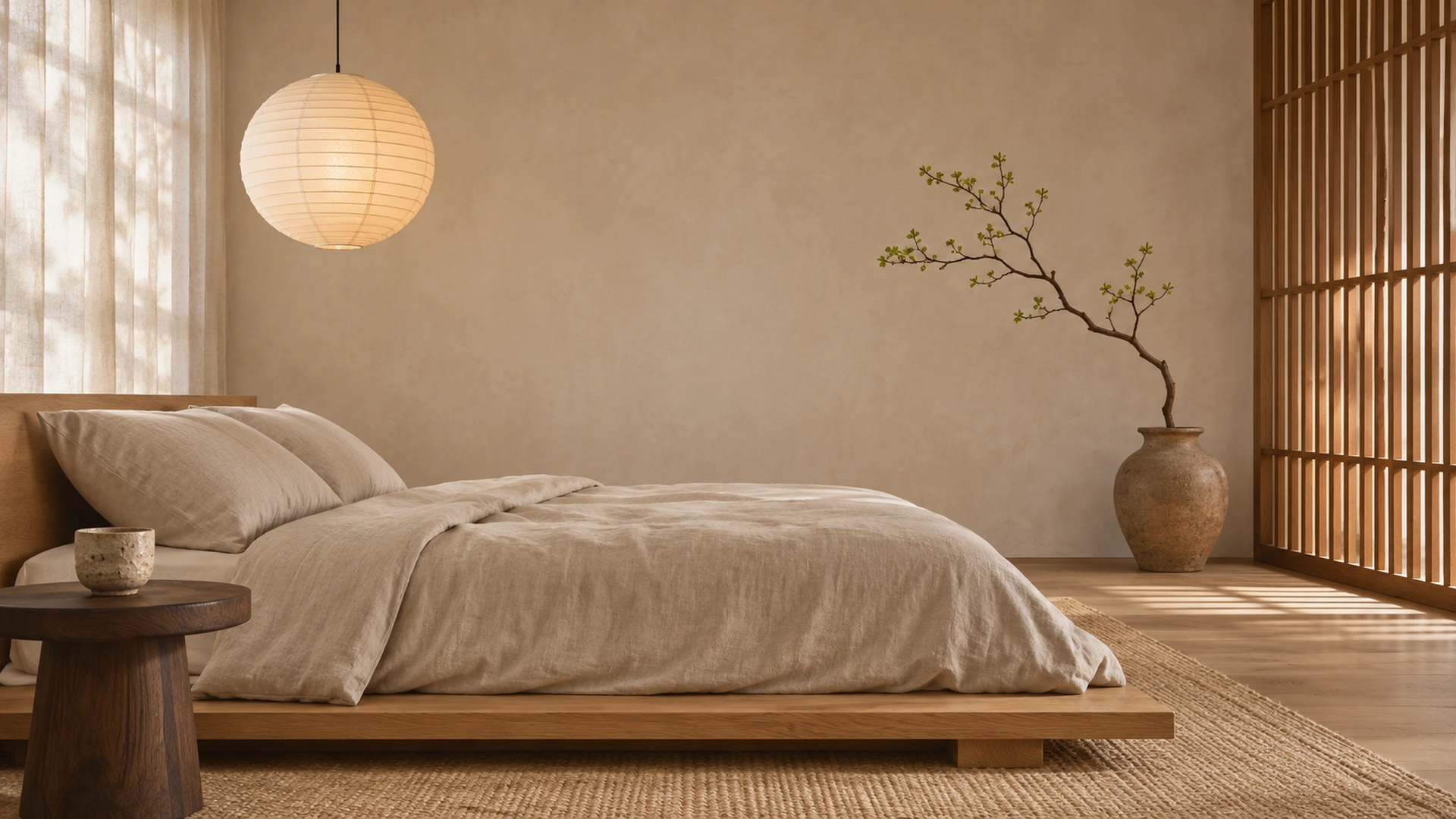
Low, simple, with clean lines and visible joinery; platform beds, low tables.
Light and dark woods together, bamboo, rattan, linen, paper, stone, clay.
Muted neutrals: oatmeal, sand, clay, sage, with charcoal or black accents.
Few, handmade and imperfect: ceramics, a branch in a vase, a paper lantern.
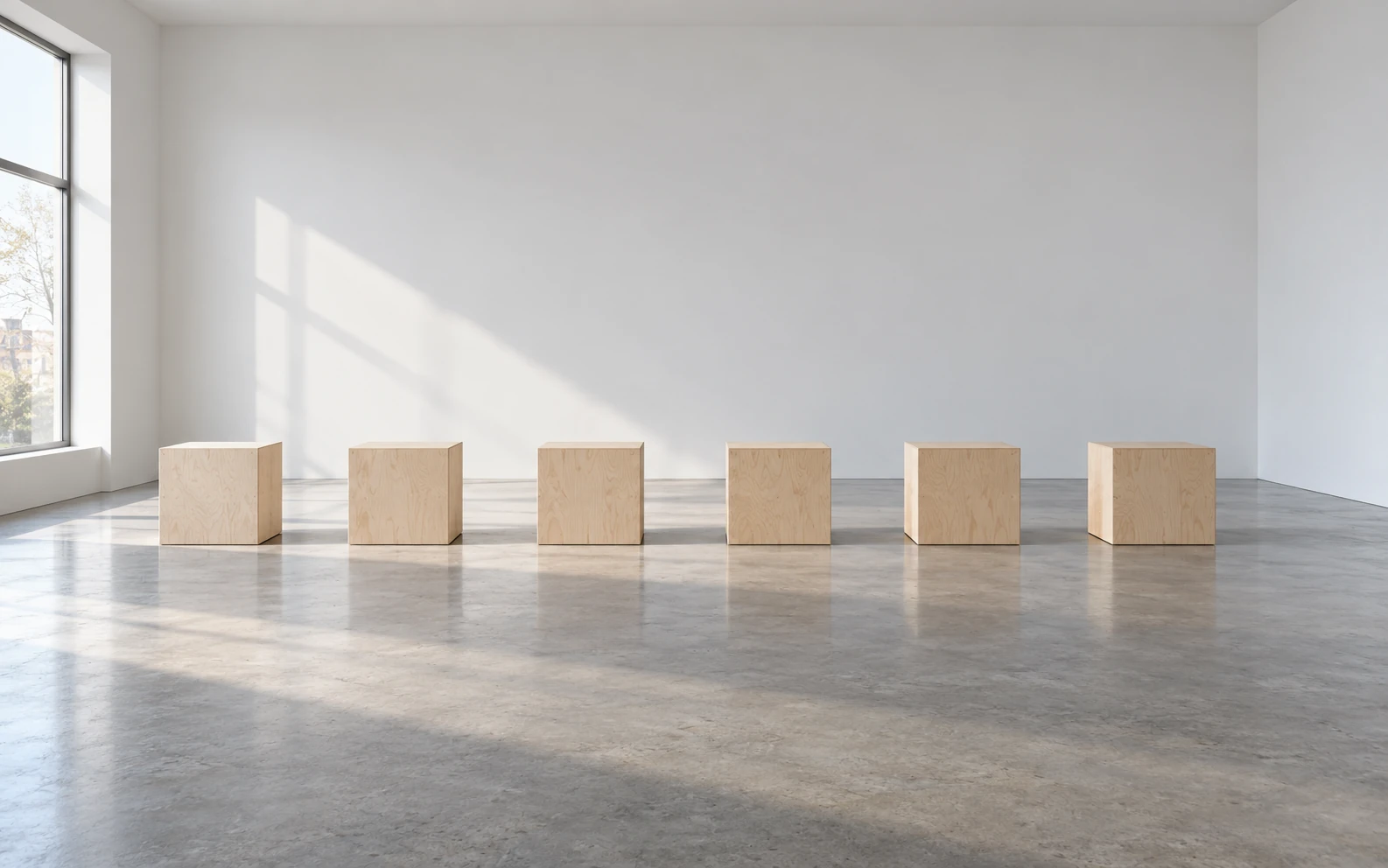
Empty space treated as part of the design; low visual horizon.
Soft diffused daylight; paper shades and warm low lamps.
Key ideas
Beauty in imperfection and age, from the Japanese side.
Warmth and cosy comfort, from the Danish side.
The Japanese sense of meaningful empty space between things.
Isamu Noguchi's washi paper and bamboo light sculptures, from 1951.
Sliding screens of translucent paper on a wooden lattice.
How to recognize Japandi
- Low furniture and a low visual horizon.
- Light and dark wood used together.
- A muted earthy palette with black accents.
- Very few objects, each handmade or natural.
Where people get it wrong
Treating Japandi as Scandinavian with a bonsai added. The difference is in proportion and mood: lower furniture, darker accents, more empty space and an acceptance of irregular, handmade things. It is also not strict minimalism, which removes warmth; Japandi keeps texture and comfort.
Words to describe Japandi
Precise words for the qualities above. Combine a few of them instead of naming the style or artist alone.
- Japandi
- low platform bed
- light oak and dark walnut
- paper lantern
- handmade ceramics
- muted earth tones
- charcoal accents
- linen bedding
- negative space
- shoji-style screen
- wabi-sabi
- hygge
An original Japandi interior study: a calm bedroom with a low oak platform bed, linen bedding in oatmeal, a dark wooden side table with a rough ceramic cup, a round paper lantern, a single branch in a clay vase, a slatted wooden screen, pale plaster walls with empty space, soft diffused morning light.
What to take from Japandi today
- Set furniture low and keep the horizon low.
- Combine pale oak or ash with dark stained wood or black.
- Name handmade objects: a rough ceramic bowl, a paper lantern.
- Leave empty wall and floor, and say so.
Questions about Japandi
What is Japandi style?
An interior style that blends Japanese and Scandinavian design: simple low furniture, natural materials, muted colours and calm, uncluttered space.
What is the difference between Japandi and Scandinavian style?
Japandi is darker, lower and sparser, with black accents and wabi-sabi imperfection. Scandinavian style is lighter, brighter and cosier.
Describe a Japandi bedroom in five lines: the height of the bed, the two woods, the one handmade object, the light source and the empty space.
Sources and further reading
- Leonard Koren, Wabi-Sabi for Artists, Designers, Poets & Philosophers (1994).
- Mirjam Gelfer-Jørgensen, Influences from Japan in Danish Art and Design, 1870–2010 (2013).