An age of revivals and machines
The Victorian era runs from 1837 to 1901, the reign of Queen Victoria. Britain was the first industrial nation, and factories could suddenly produce ornament cheaply: printed wallpapers, cast-iron railings, moulded plaster and machine-carved furniture. Taste favoured abundance. A respectable parlour was crowded with patterned textiles, potted ferns, framed photographs, stuffed birds under glass domes and heavy curtains.
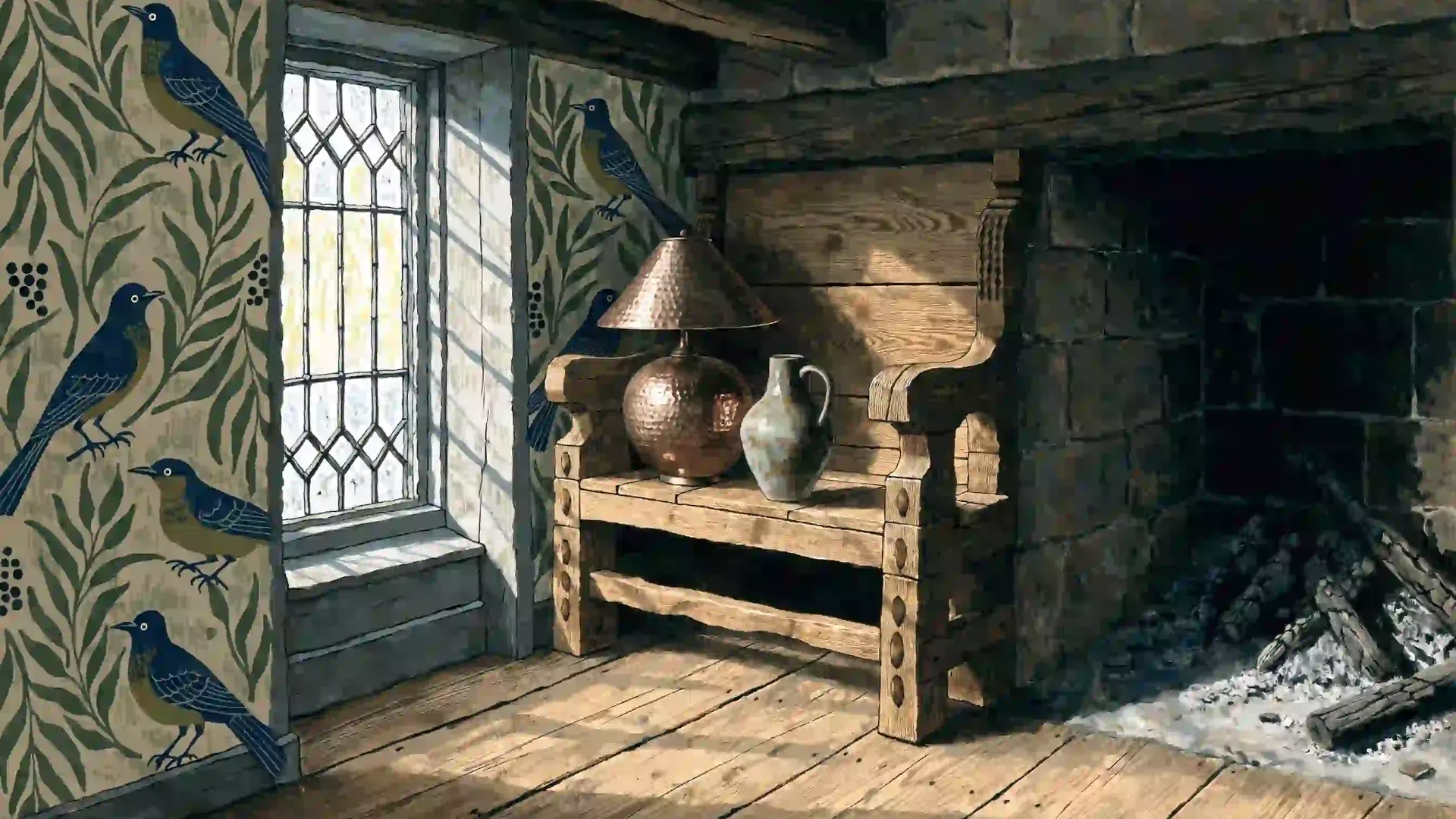
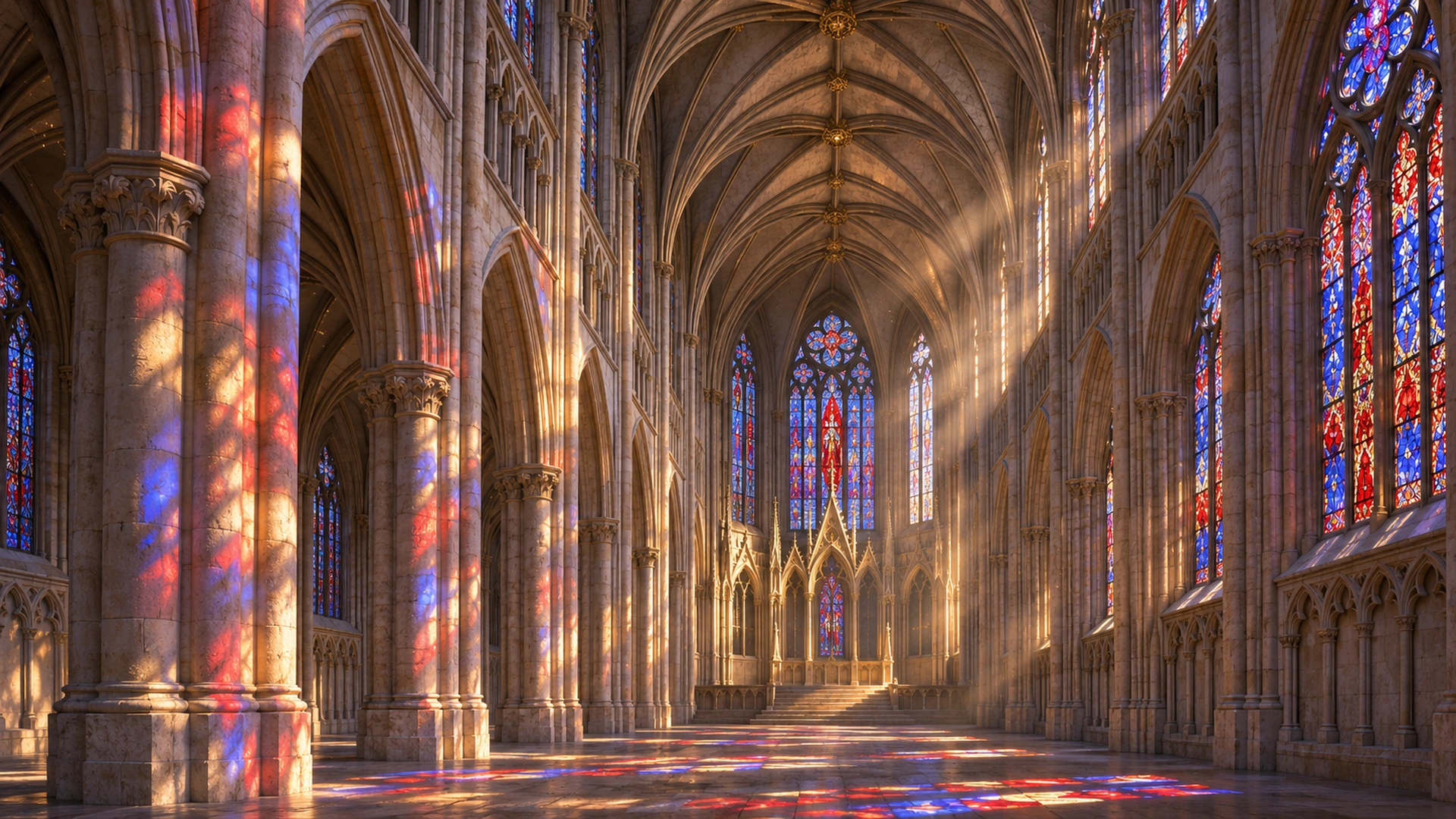
Victorian design is not one style but many revivals: Gothic Revival, led by A. W. N. Pugin and visible in the Houses of Parliament, Italianate villas, Queen Anne houses and more. The Great Exhibition of 1851, in Joseph Paxton's Crystal Palace, showed both the age's industrial power and its taste for ornament, and Owen Jones's Grammar of Ornament (1856) catalogued patterns from around the world. In reaction, William Morris and the Arts and Crafts movement called for honest handmade work, and their wallpapers became the style's best-known face.
Visual anatomy of Victorian Style
Gothic Revival arches and spires, bay windows, decorative brick, cast iron and stained glass.
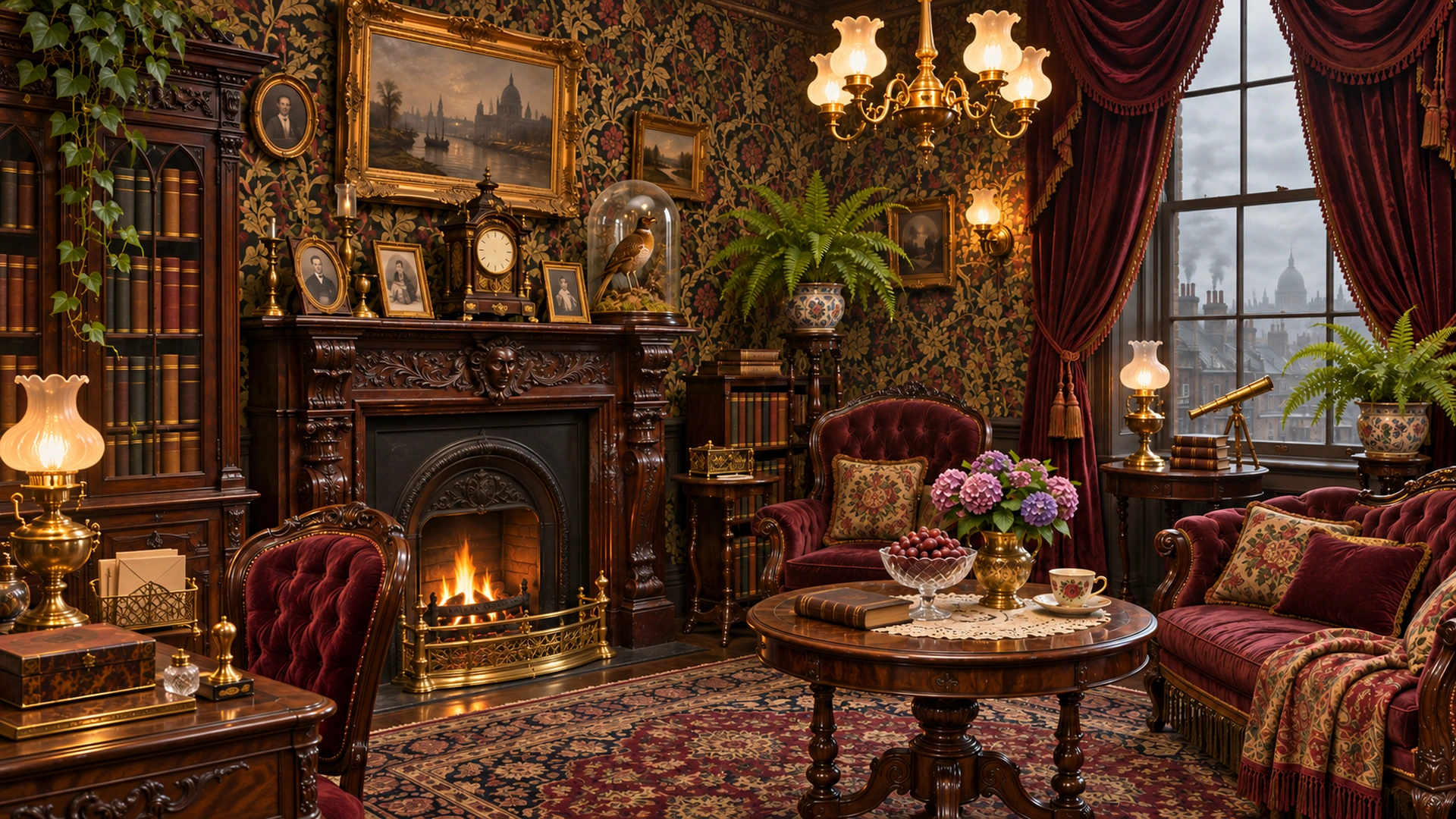
Dark carved wood, patterned wallpaper, heavy drapes, fringed lamps, crowded surfaces.
Dense florals, damask, William Morris vines and birds, encaustic floor tiles.
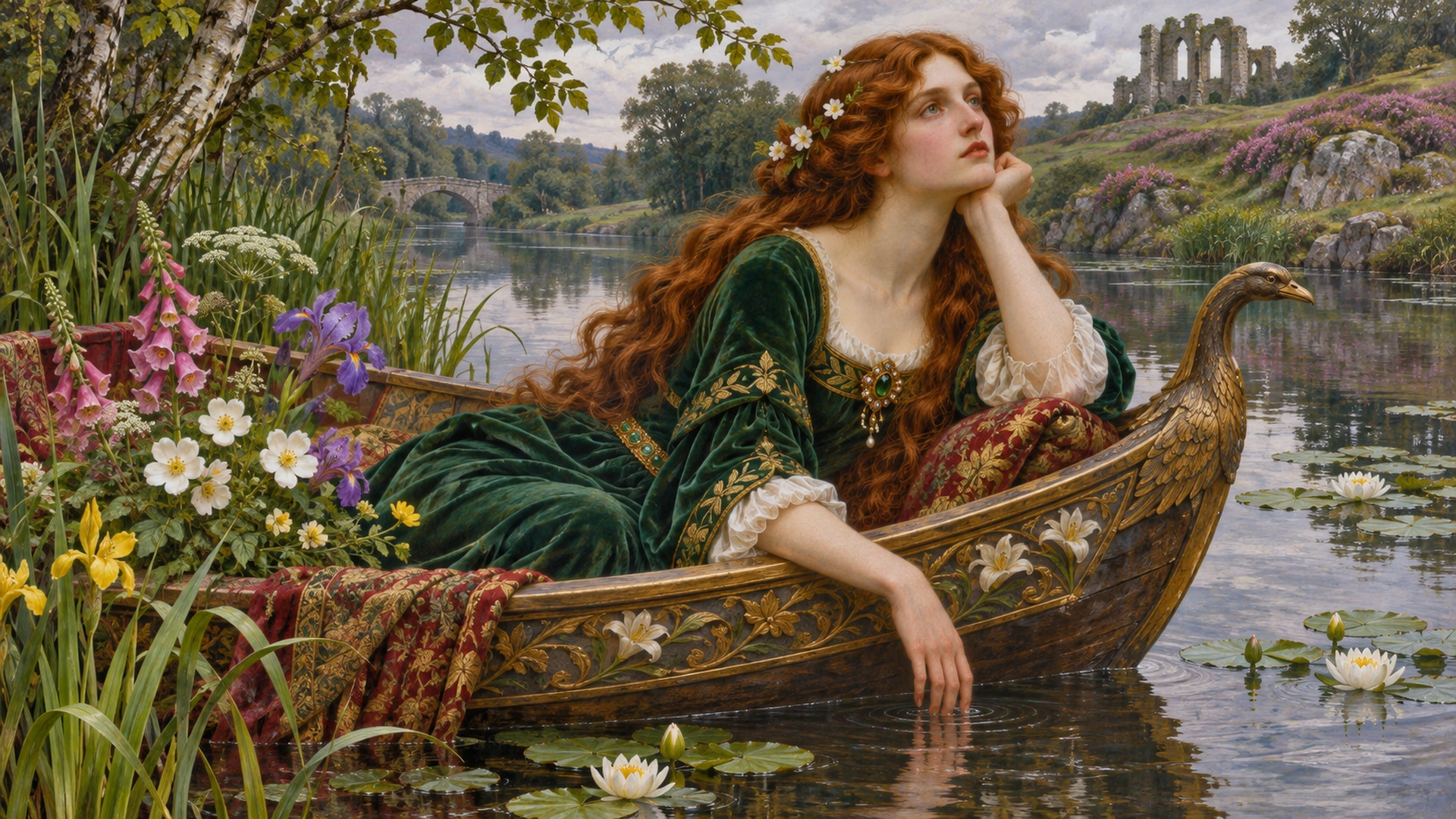
Deep jewel tones: burgundy, bottle green, navy, plum, gold, dark wood.
Curiosities, ferns, taxidermy under glass, photographs, clocks, books.
Ornate wood-type posters and playbills mixing many typefaces.
Key names and works
Champion of Gothic Revival; interiors of the Palace of Westminster.
Joseph Paxton's iron-and-glass hall for the Great Exhibition.
The Grammar of Ornament (1856), a world catalogue of pattern.
Arts and Crafts designer; wallpapers such as Strawberry Thief (1883).
How to recognize Victorian Style
- Rooms crowded with pattern and objects.
- Dark wood and deep, rich colour.
- Gothic or ornate architectural details.
- Gaslight, heavy fabrics and curiosities.
Where people get it wrong
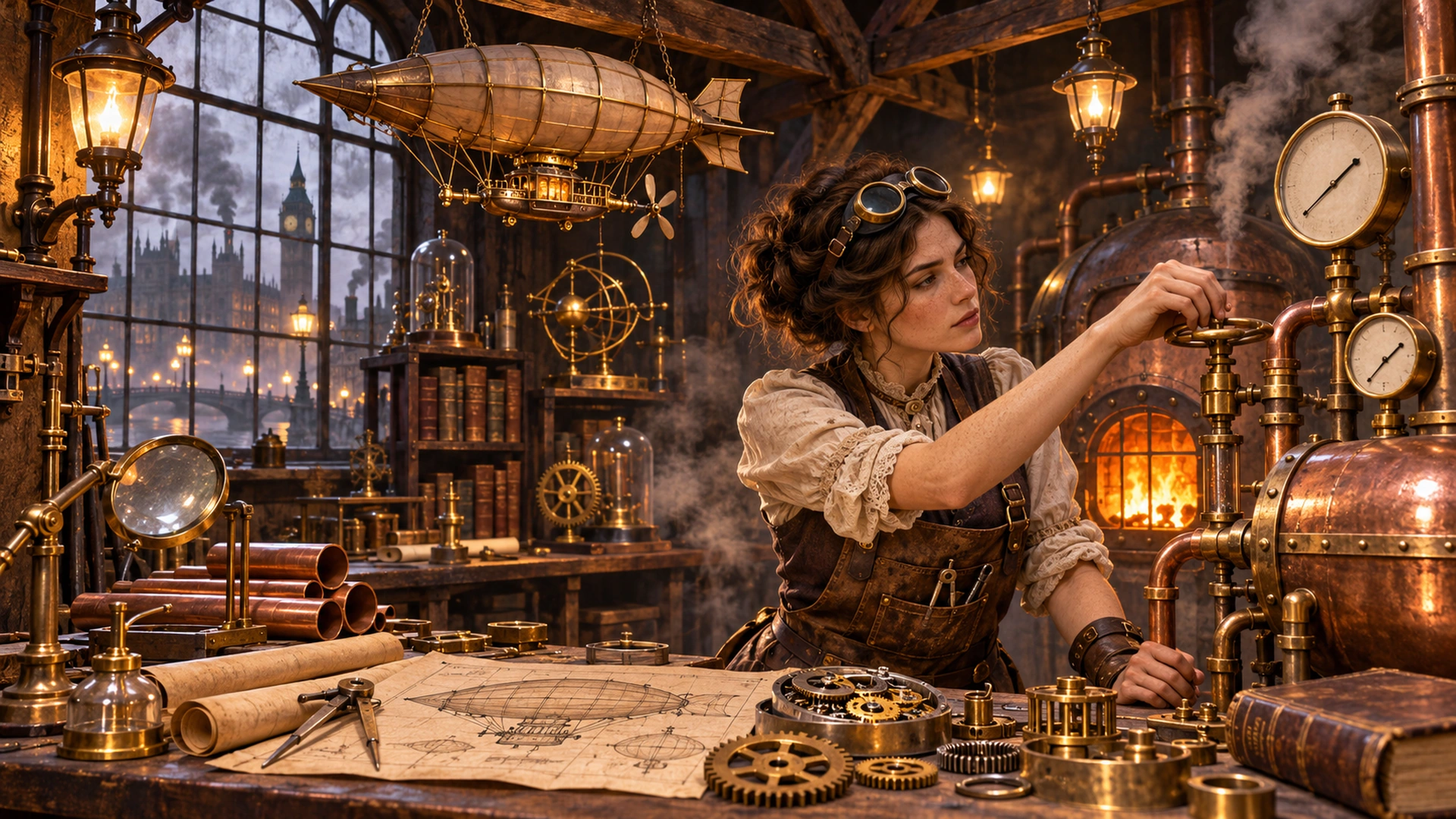
Treating Victorian as one look. A Gothic Revival church, a seaside terrace with iron lace and a William Morris drawing room are all Victorian. In prompts, name which: Gothic Revival, high Victorian parlour, Arts and Crafts. Also don't confuse it with Steampunk, which is a modern fantasy that borrows Victorian dress and adds imaginary machines.
Words to describe Victorian Style
Precise words for the qualities above. Combine a few of them instead of naming the style or artist alone.
- Victorian
- Gothic Revival
- high Victorian parlour
- dark carved mahogany
- damask wallpaper
- William Morris pattern
- heavy velvet drapes
- curiosities under glass domes
- encaustic tiles
- gaslight
- jewel tones
- ornate wood type
An original Victorian interior study: a crowded parlour in 1880s London, dark carved mahogany furniture, dense William Morris-style vine wallpaper, heavy burgundy velvet drapes, a mantelpiece of clocks, photographs and a stuffed bird under a glass dome, potted ferns, a patterned rug, warm gaslight and a grey window.
What to take from Victorian Style today
- Name the Victorian strand: Gothic Revival, high Victorian parlour, Arts and Crafts.
- List the dense layers: wallpaper, drapes, rug, objects.
- Use deep jewel tones and dark wood.
- Light it with gaslight, oil lamps or a grey window.
Questions about Victorian Style
What are the features of Victorian architecture?
Revival styles such as Gothic Revival and Italianate, steep roofs, bay windows, decorative brick and ironwork, stained glass and ornate trim.
What is the difference between Victorian and Edwardian style?
Edwardian (1901–1910) is lighter, simpler and more airy, with paler colours and less clutter than high Victorian interiors.
Describe a Victorian parlour in six lines, from floor to ceiling: the tiles or rug, the furniture, the wallpaper, the objects on the mantelpiece, the curtains and the light.
Sources and further reading
- Owen Jones, The Grammar of Ornament (1856).
- Judith Flanders, The Victorian House (2003).