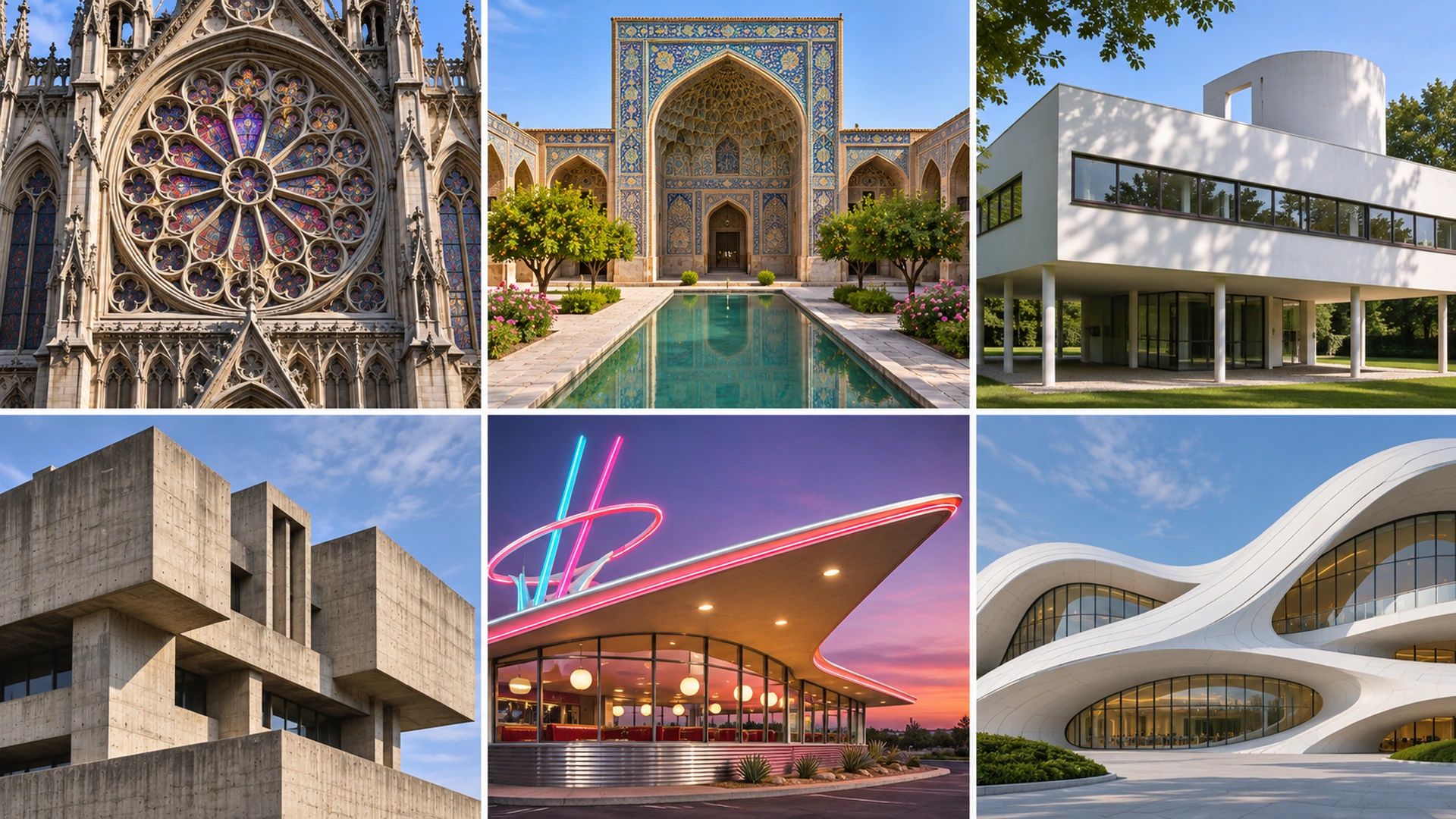
Stone reaching for light
Gothic architecture began around 1140 with the rebuilding of the Abbey of Saint-Denis near Paris under Abbot Suger, and spread across Europe for three centuries. Its engineers combined pointed arches, ribbed vaults and external flying buttresses so that walls no longer had to carry the whole weight of the roof. The result was height, thin walls and huge windows: Chartres, Notre-Dame de Paris, Amiens, Cologne, Salisbury.
The name 'Gothic' was originally an insult from Renaissance writers who saw the style as barbaric. In the 19th century a Gothic Revival brought it back for churches, universities, railway stations and parliaments, including London's Houses of Parliament. Today Gothic forms shape fantasy film sets, dark academia imagery and much of what people picture as 'old' and 'mysterious'.
Visual anatomy of Gothic Architecture
Pointed arches everywhere: doors, windows, vaults.
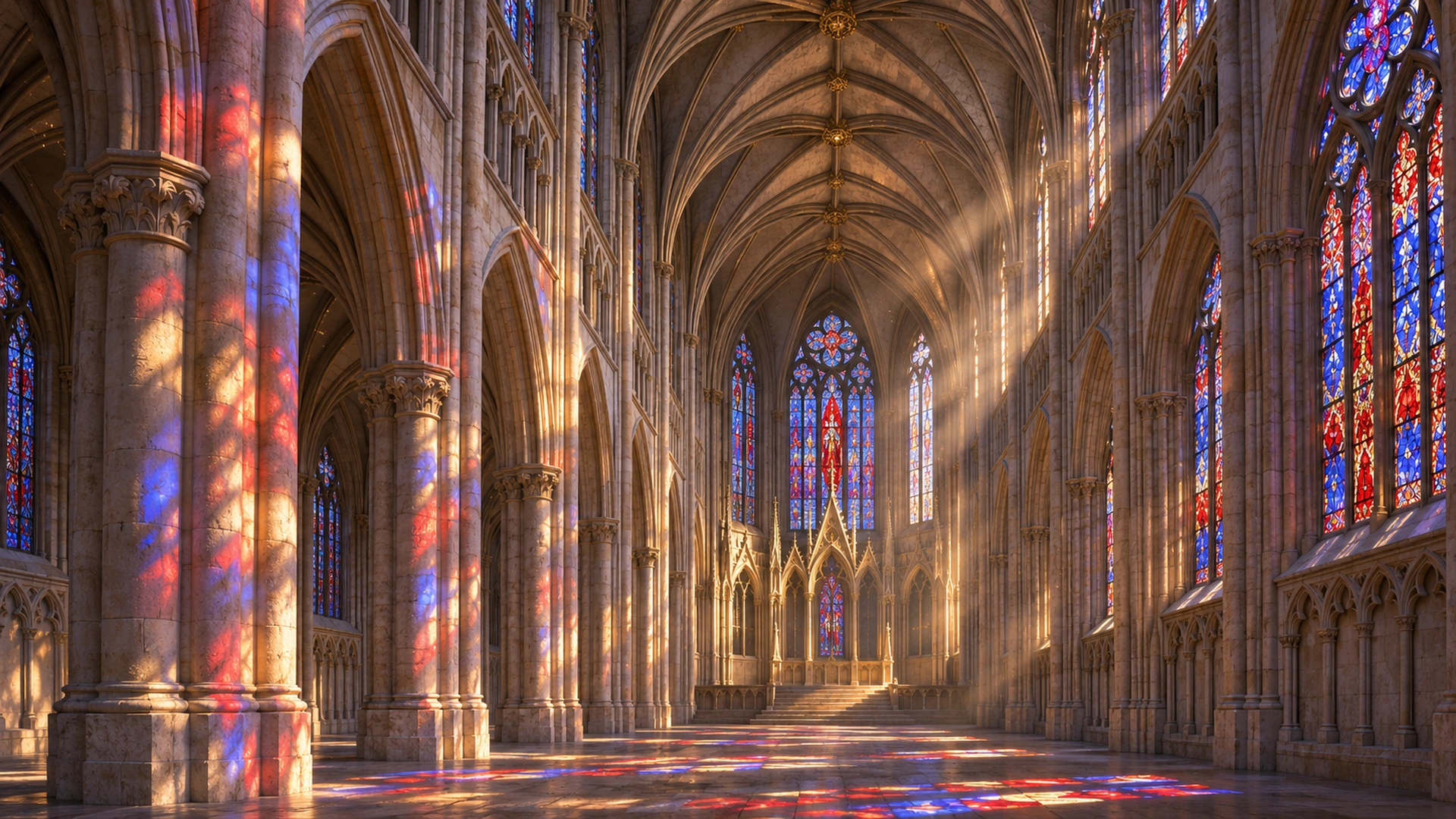
Ribbed stone ceilings with lines meeting at bosses high above.
Flying buttresses outside, arches of stone holding up the walls.
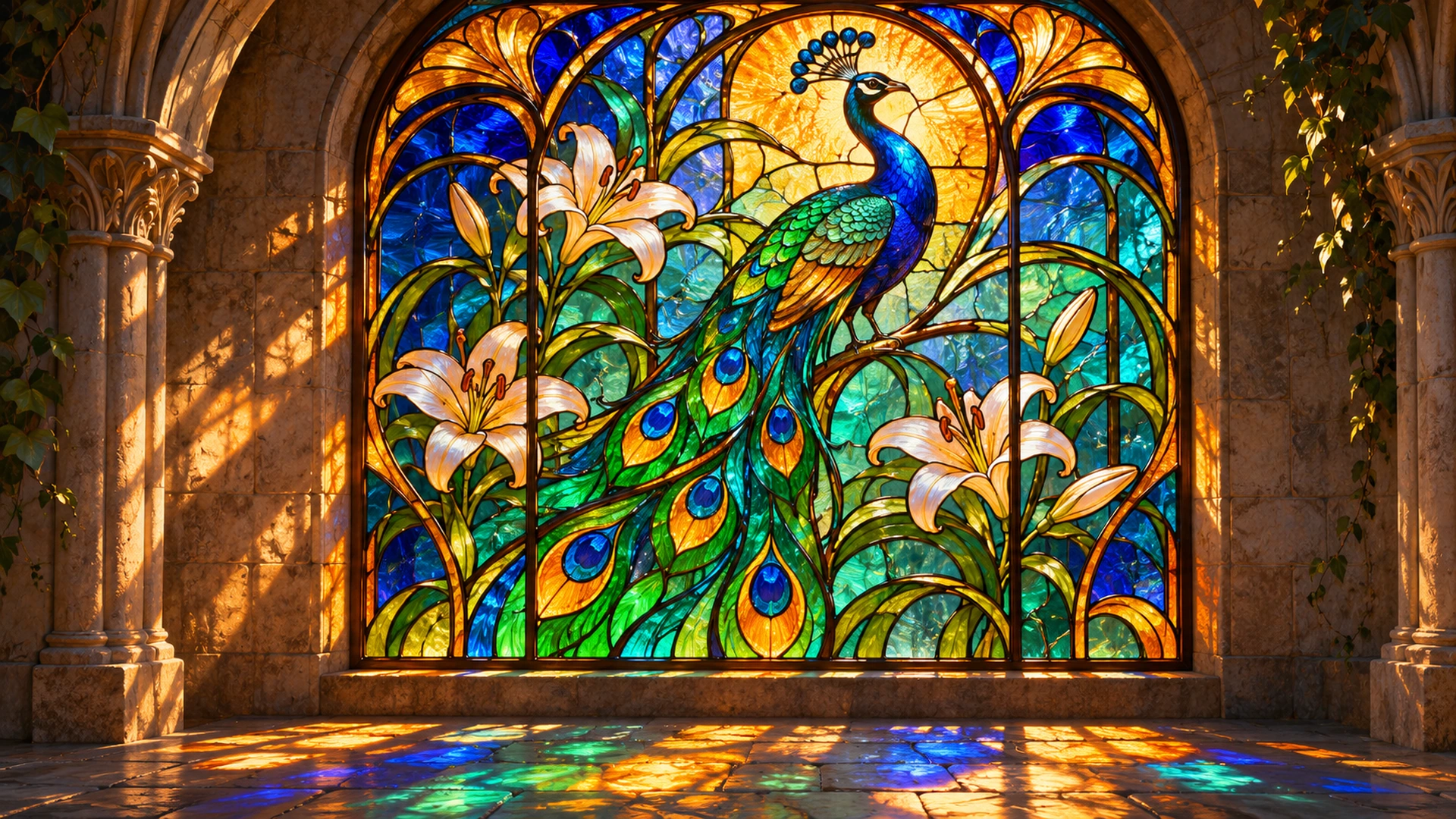
Tall lancet windows and round rose windows filled with stained glass.
Pinnacles, spires, tracery, gargoyles and sculpted portals.
Coloured light from stained glass falling across stone floors and columns.
Key terms in Gothic Architecture
An external arch that transfers the roof's thrust to a pier away from the wall.
A ceiling built on a framework of crossing stone ribs.
A large round window with radiating tracery.
The 19th-century return of Gothic forms in many building types.
How to recognize Gothic Architecture
- Pointed arches and tall proportions.
- Flying buttresses and spires outside.
- Stained glass casting coloured light inside.
Where people get it wrong
Gothic is often confused with 'gothic' as a dark, spooky mood. The architecture is about light and height; its interiors were filled with colour. Describing it only as dark and gloomy loses the stained glass and soaring space that define it.
Words to describe Gothic Architecture
Precise words for the qualities above. Combine a few of them instead of naming the style or artist alone.
- gothic cathedral interior
- pointed arches
- ribbed stone vault
- flying buttresses
- rose window
- stained glass light on stone
- tall lancet windows
- gargoyles and pinnacles
- gothic revival
- soaring vertical space
An original Gothic cathedral interior study: a tall nave of pale limestone with pointed arches and a ribbed vault high above, late afternoon sun streaming through tall stained-glass windows in deep blue and red, coloured patches of light on the columns and floor, dust in the air, no people. Not a copy of any existing building. No text.
What to take from Gothic Architecture today
- Name the arch, vault and window forms.
- Describe the light: colour, direction, dust in the air.
- Say whether it's medieval or a Gothic Revival building.
Periods of Gothic
Saint-Denis, Sens, the early work at Notre-Dame de Paris: pointed arches and rib vaults, still with thick walls and four-storey interiors.
Chartres, Reims, Amiens: flying buttresses allow three-storey interiors, huge clerestory windows and great height.
'Radiating': walls almost entirely glass, delicate tracery, the Sainte-Chapelle in Paris (consecrated 1248).
'Flame-like' curving tracery, rich ornament, late French and Spanish churches.
Its own phases: Early English (Salisbury), Decorated (Exeter) and Perpendicular, with strong vertical lines and fan vaults (King's College Chapel, Cambridge).
Cologne Cathedral, begun 1248 and finished only in 1880; Milan Cathedral, begun 1386; Gothic town halls across the Low Countries.
Famous Gothic buildings
- Basilica of Saint-Denis, near Paris: where Gothic began, under Abbot Suger in the 1140s.
- Notre-Dame de Paris: begun 1163, restored after the 2019 fire and reopened in December 2024.
- Chartres Cathedral: rebuilt after a fire in 1194, famous for its medieval stained glass.
- Sainte-Chapelle, Paris: a royal chapel that is almost all window.
- Cologne Cathedral: the tallest twin spires of the Gothic world, finished in the 19th century.
- Westminster Abbey, London: rebuilt in Gothic style from 1245.
- Milan Cathedral: a forest of marble pinnacles.
- Palace of Westminster, London: a Gothic Revival building by Charles Barry and A. W. N. Pugin, rebuilt after the fire of 1834.
Gothic and Romanesque
The style before Gothic, Romanesque, used round arches, thick walls, small windows and heavy barrel vaults; its churches feel solid and dark. Gothic's pointed arch spreads weight more efficiently, and flying buttresses carry it outside, so the walls can open into glass. If the arches are round and the walls feel like a fortress, it is Romanesque; if they are pointed and the walls are mostly light, it is Gothic.
A building that was written to be read
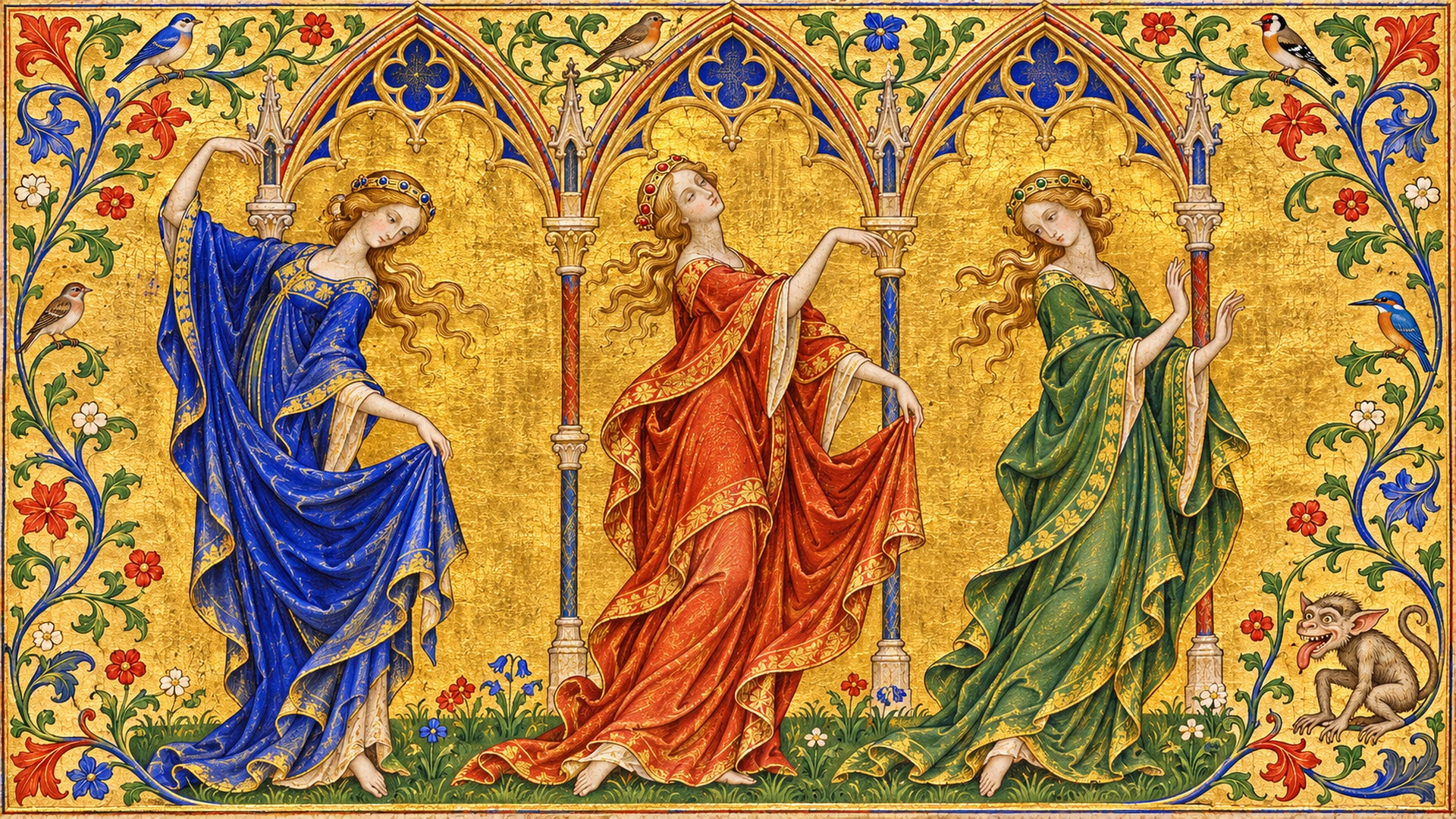
Medieval cathedrals were read as much as seen: portals of sculpted stories, windows of colour arranged as sermons for people who could not read words. The Gothic is a reminder that an image can be a text, built for a slow, close reading over a lifetime.
Questions about Gothic Architecture
What are the main characteristics of Gothic architecture?
Pointed arches, ribbed vaults, flying buttresses, tall proportions, large stained-glass windows including rose windows, and rich sculpted ornament such as tracery, pinnacles and gargoyles.
When was the Gothic period in architecture?
From about 1140, with the rebuilding of Saint-Denis near Paris, until around 1500 in most of Europe, and later in some regions. It returned as Gothic Revival in the 18th and 19th centuries.
What is the most famous Gothic building?
Notre-Dame de Paris is probably the best known; Chartres, Cologne Cathedral, the Sainte-Chapelle and Westminster Abbey are also famous examples.
Why is it called Gothic?
Renaissance writers used the name as an insult, linking the style to the Goths, whom they saw as barbarians. The builders themselves called it the 'French work' (opus francigenum).
Describe a train station designed in Gothic style: its arches, vaults, windows, the colour of light falling on the platforms and one detail of ornament.
Sources and further reading
- Paul Frankl, Gothic Architecture, revised by Paul Crossley, Yale University Press, 2000.
- Christopher Wilson, The Gothic Cathedral, Thames & Hudson, 1990.
- Erwin Panofsky, Abbot Suger on the Abbey Church of St.-Denis and Its Art Treasures, Princeton University Press, 1946.
- Smarthistory: Gothic architecture, an introduction.