A future built from steam
Steampunk takes the nineteenth century, the age of steam engines, railways and the British Empire, and imagines that its machines kept evolving instead of being replaced by electricity and electronics. Its roots are in the scientific romances of Jules Verne and H. G. Wells, with their submarines, time machines and journeys to the moon.
The name was coined as a joke in 1987 by the writer K. W. Jeter, in a letter to the magazine Locus, to describe Victorian fantasies he and his friends were writing, a play on 'cyberpunk'. William Gibson and Bruce Sterling's novel The Difference Engine (1990) gave it a serious literary form. From the 2000s it became a whole subculture of costume, craft, music and design, with its own conventions and makers.
Visual anatomy of Steampunk
Brass, copper, polished wood, leather, riveted iron, glass gauges.
Exposed gears, pistons, valves, clockwork, steam vents, pressure dials.
Airships, dirigibles, steam locomotives, ornithopters, submarines.
Corsets, waistcoats, top hats, long coats, goggles pushed up on the forehead.
Warm metallics, sepia, oxblood, bottle green, soot and smoke.
Victorian filigree and engraving on functional machines.
Key names and works
Twenty Thousand Leagues Under the Seas (1870): the Nautilus as the movement's archetypal machine.
The Time Machine (1895), a Victorian machine for travelling through time.
Coined 'steampunk' in 1987.
Gibson and Sterling, 1990: Babbage's computer built in brass.
How to recognize Steampunk
- Visible mechanism: gears and pistons on the outside.
- Victorian clothing mixed with goggles and gadgets.
- Warm brass and copper rather than chrome or plastic.
- Airships and steam in the sky.
Where people get it wrong
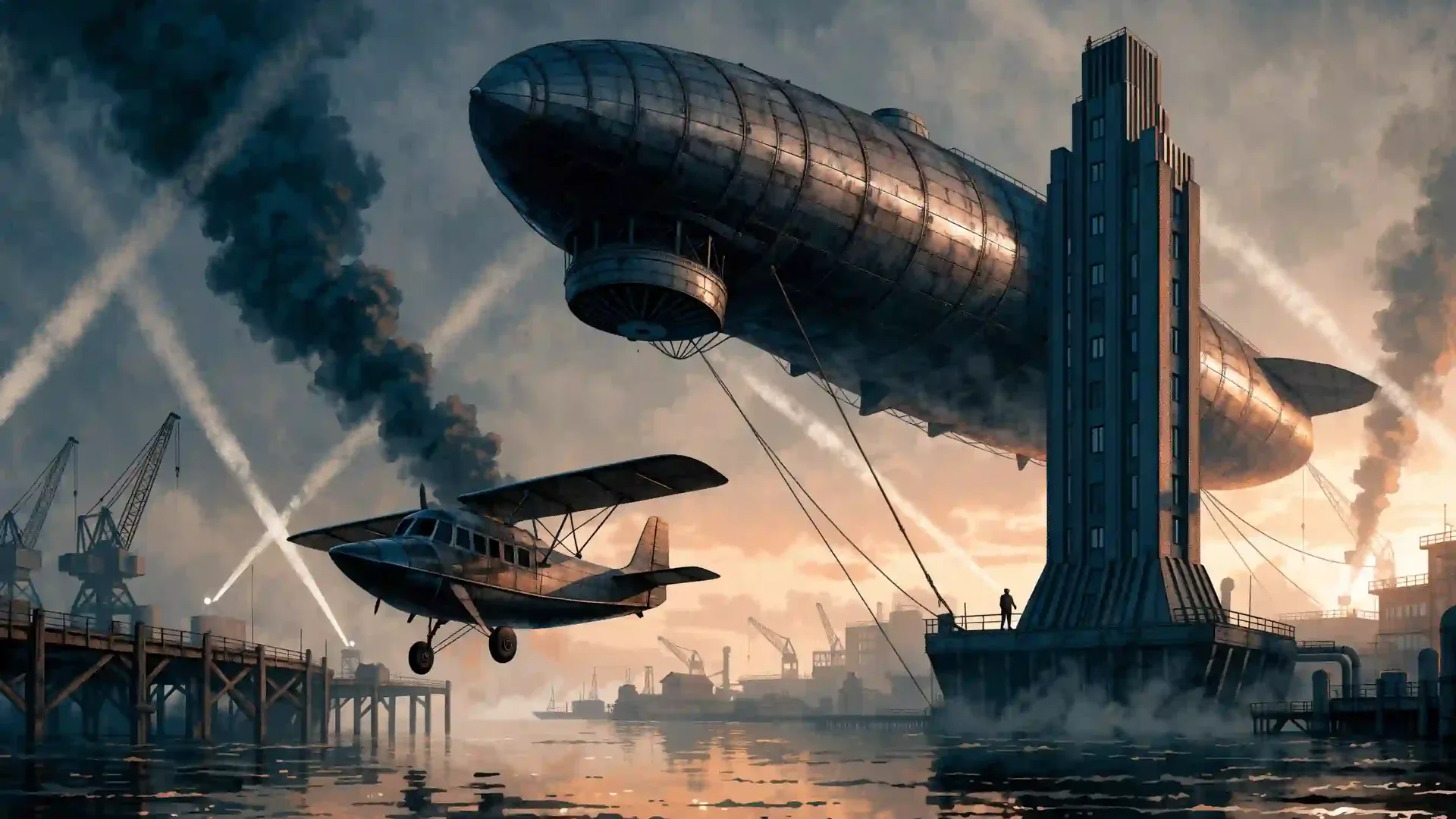
Gluing gears onto anything. Gears with no function are decoration; steampunk at its best imagines how a machine would actually work with steam and clockwork. It is also confused with dieselpunk, which belongs to the 1920s–1940s: oil, rivets, art deco and war machines rather than Victorian brass.
Words to describe Steampunk
Precise words for the qualities above. Combine a few of them instead of naming the style or artist alone.
- steampunk
- brass and copper
- exposed gears
- clockwork mechanism
- riveted iron
- pressure gauges
- airship
- goggles
- Victorian corset and waistcoat
- gaslight
- sepia and smoke
- neo-Victorian
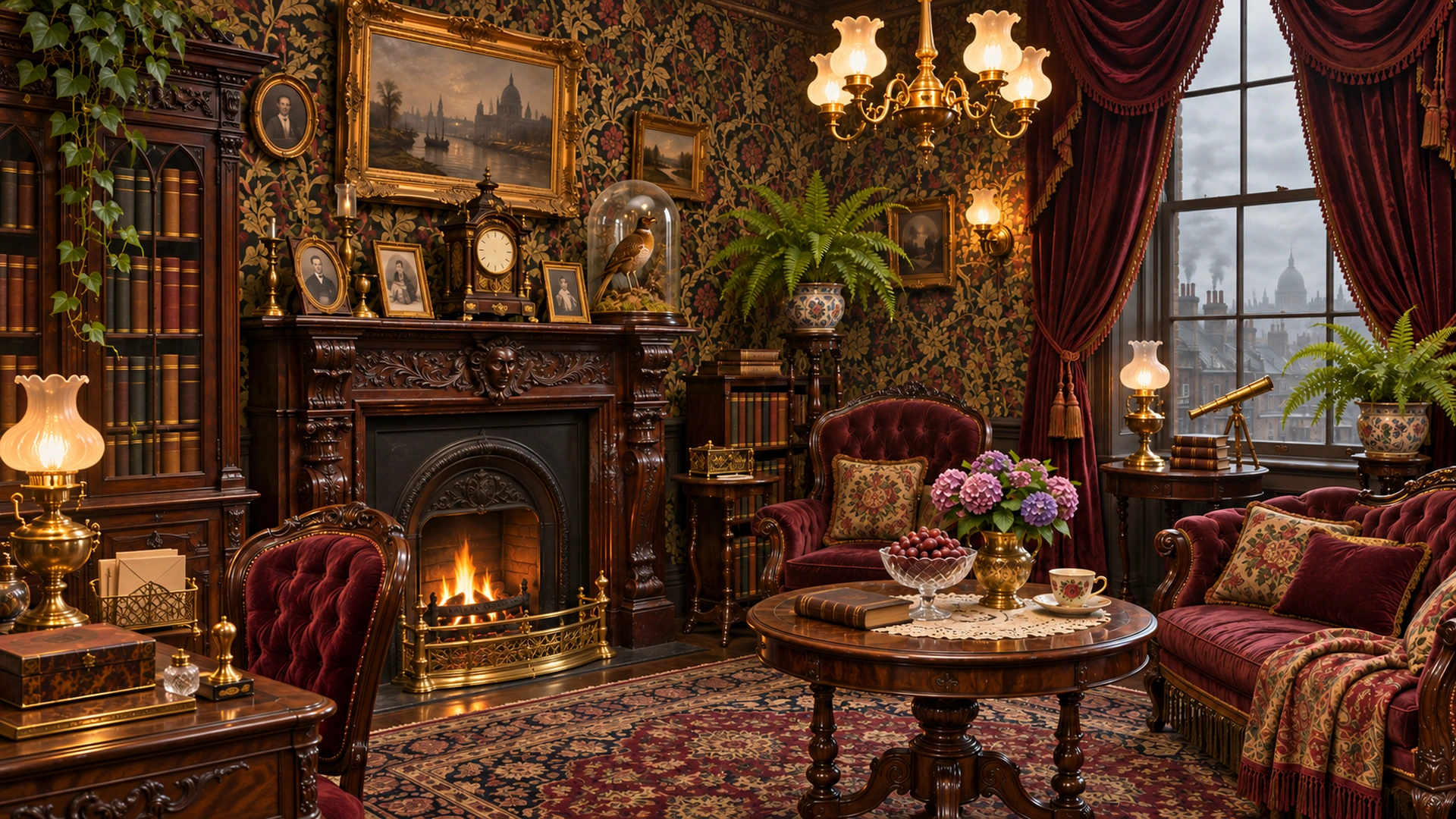
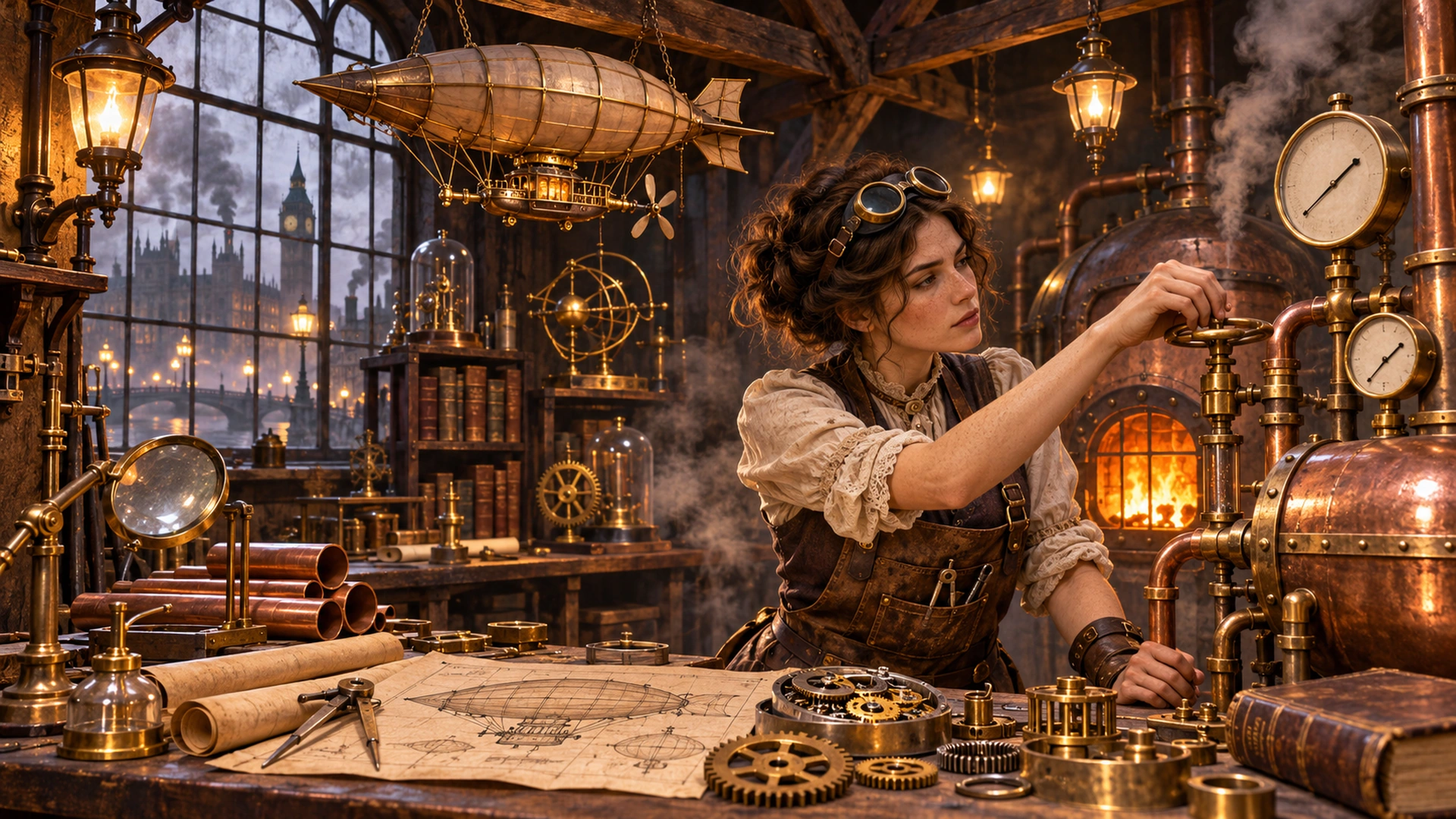
An original steampunk study: an inventor's workshop in 1880s London, a brass airship model hanging from the beams, a workbench of copper tubes, clockwork parts and pressure gauges, a woman in a leather apron and goggles adjusting a valve, warm furnace glow and gaslight through smoke.
What to take from Steampunk today
- Name the material: brass, copper, riveted iron, mahogany.
- Say what the machine does and how: steam-powered, clockwork-driven.
- Set the era: Victorian, 1880s, gaslight.
- Use light from the age: gas lamps, furnace glow, smoky daylight.
Questions about Steampunk
What is the difference between steampunk and dieselpunk?
Steampunk is Victorian and Edwardian: steam, brass and clockwork. Dieselpunk moves to the 1920s–1940s: oil, combustion engines, art deco and wartime machinery.
Who invented steampunk?
The word came from K. W. Jeter in 1987, but the imagery draws on Jules Verne and H. G. Wells from the 1860s–1890s.
Describe an ordinary modern object, a phone or a laptop, as if it were built in 1885. What powers it? What is it made of? Where are the dials? Write it in four lines without the word 'steampunk'.
Sources and further reading
- K. W. Jeter, letter to Locus (April 1987).
- Jeff VanderMeer, The Steampunk Bible (2011).