A century of joining things
In 1912 Pablo Picasso glued a piece of printed oilcloth into his painting Still Life with Chair Caning and framed it with rope, and Georges Braque began pasting paper into his drawings. From then on, a painting could be made of more than paint. Kurt Schwitters built his 'Merz' pictures from tickets, wrappers and scraps from about 1919; Joseph Cornell made boxes of found objects; Hannah Höch cut photographs into photomontage.
Robert Rauschenberg's 'Combines' of 1954–64 joined painting and sculpture, most famously Monogram (1955–59), with a stuffed angora goat and a tyre. Romare Bearden's collages, such as The Block (1971), built Harlem from paper and paint. Today mixed media includes digital layers: scans, prints and Gen AI images painted over, cut up and photographed again.
Visual anatomy of mixed media
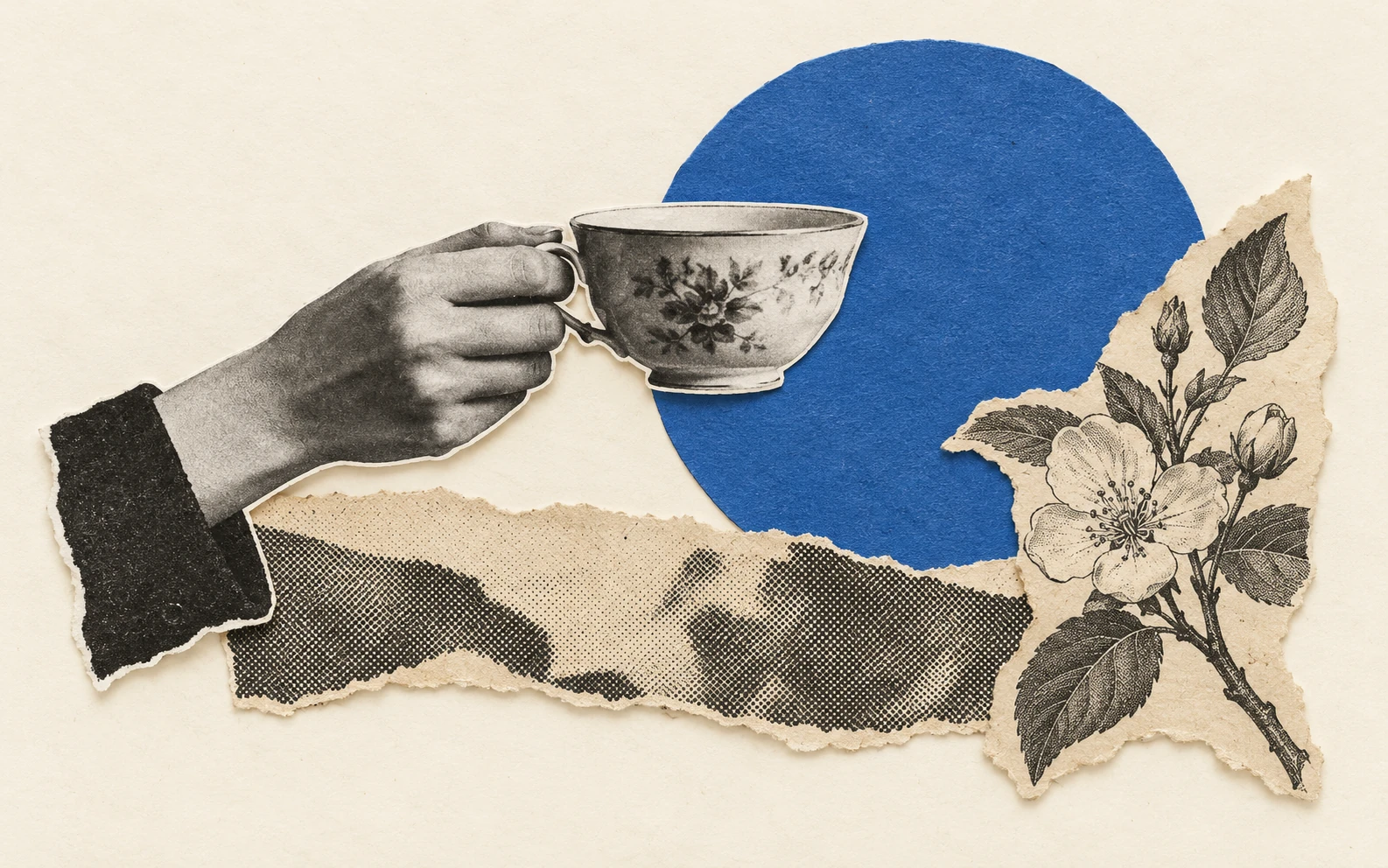
Paint, paper, photographs, print, fabric, objects, stacked or side by side.
Visible edges where materials meet: a torn border, a glue line, a stitch.
Contrasts of surface: glossy print against matte paint, flat against raised.
Hand marks over mechanical images: pencil, brush, scratch.
Tickets, maps, letters, pages, receipts that bring their own history.
Personal, layered, archival, alive with process.
Words around mixed media
Flat materials glued onto a surface.
Three-dimensional objects combined into a work.
'Pasted paper', Braque and Picasso's term for collage with cut paper.
Rauschenberg's word for his painting-sculpture hybrids.
How to recognize mixed media
- More than one material visible in one work.
- Edges and seams where materials meet.
- Hand marks over printed or photographic images.
- Found objects or papers with their own history.
Where people get it wrong
Mixed media is often used to mean 'lots of stuff'. The strongest mixed-media works choose why each material is there: the map because of a journey, the letter because of a person. Another mistake, now common, is to call a single generated image with a collage look 'mixed media'; mixed media is made of different materials, not a picture of them.
Words to describe mixed media
Precise words for the qualities above. Combine a few of them instead of naming the style or artist alone.
- mixed media
- collage
- assemblage
- papier collé
- found object
- combine
- layer
- seam
- photomontage
- transfer
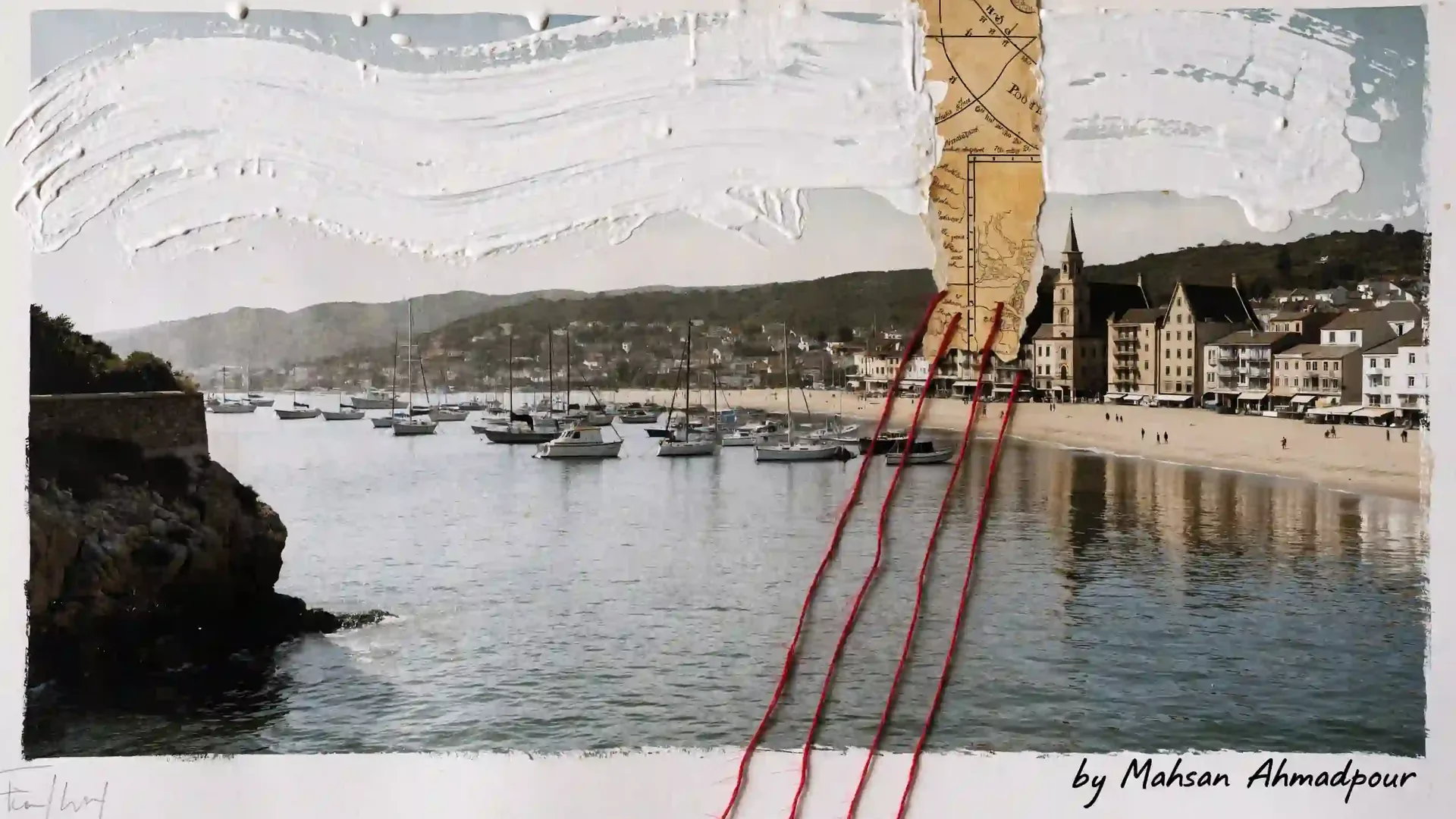
A mixed-media study: a printed photograph of a seaside town with white gouache painted over the sky, a strip of an old map glued along the shoreline, three red stitches through the harbour, pencil notes in the margin, photographed flat in daylight.
What to take from mixed media today
- List each material and what it carries.
- Describe the seams: torn, glued, stitched, painted over.
- Say which marks are by hand and which are printed.
- Name the found objects and their history.
Where one hand meets another
For anyone working with Gen AI, mixed media is the most honest bridge: print the generated image, then paint, cut, write and photograph it again. The seam becomes visible authorship. It also reads as a sentence with two voices, and the art is in the conjunction between them.
Questions about mixed media
What is mixed media art?
Art that combines more than one medium or material in a single work, such as paint with paper, photographs, fabric, found objects, print or digital images.
What is the difference between mixed media and collage?
Collage is one kind of mixed media: flat materials glued to a surface. Mixed media is broader and can include paint, drawing, objects, stitching and digital layers.
Can you combine AI images with mixed media?
Yes. Many artists print generated or digital images and then paint over them, cut them up, add handwriting or real materials, and re-photograph or scan the result. Saying how the work was made keeps it honest.
Print one of your digital or generated images. Add three real materials to it, such as paint, a torn page and thread, each for a reason you can write in one sentence. Photograph the result in daylight.
Sources and further reading
- Museum of Modern Art, New York: collage and Robert Rauschenberg collection notes.
- Musée national Picasso-Paris: Still Life with Chair Caning (1912).
- Metropolitan Museum of Art: Romare Bearden, The Block (1971).
- Tate: Art terms 'mixed media' and 'assemblage'.