The oldest way to repeat
Printing from carved blocks is ancient: woodblock printing on cloth and paper was used in China by the first millennium, and stamped seals are older still. In India, hand block printing on cotton remains a living craft in towns such as Sanganer and Bagru in Rajasthan, where printers carve teak blocks and press natural dyes in repeating patterns.
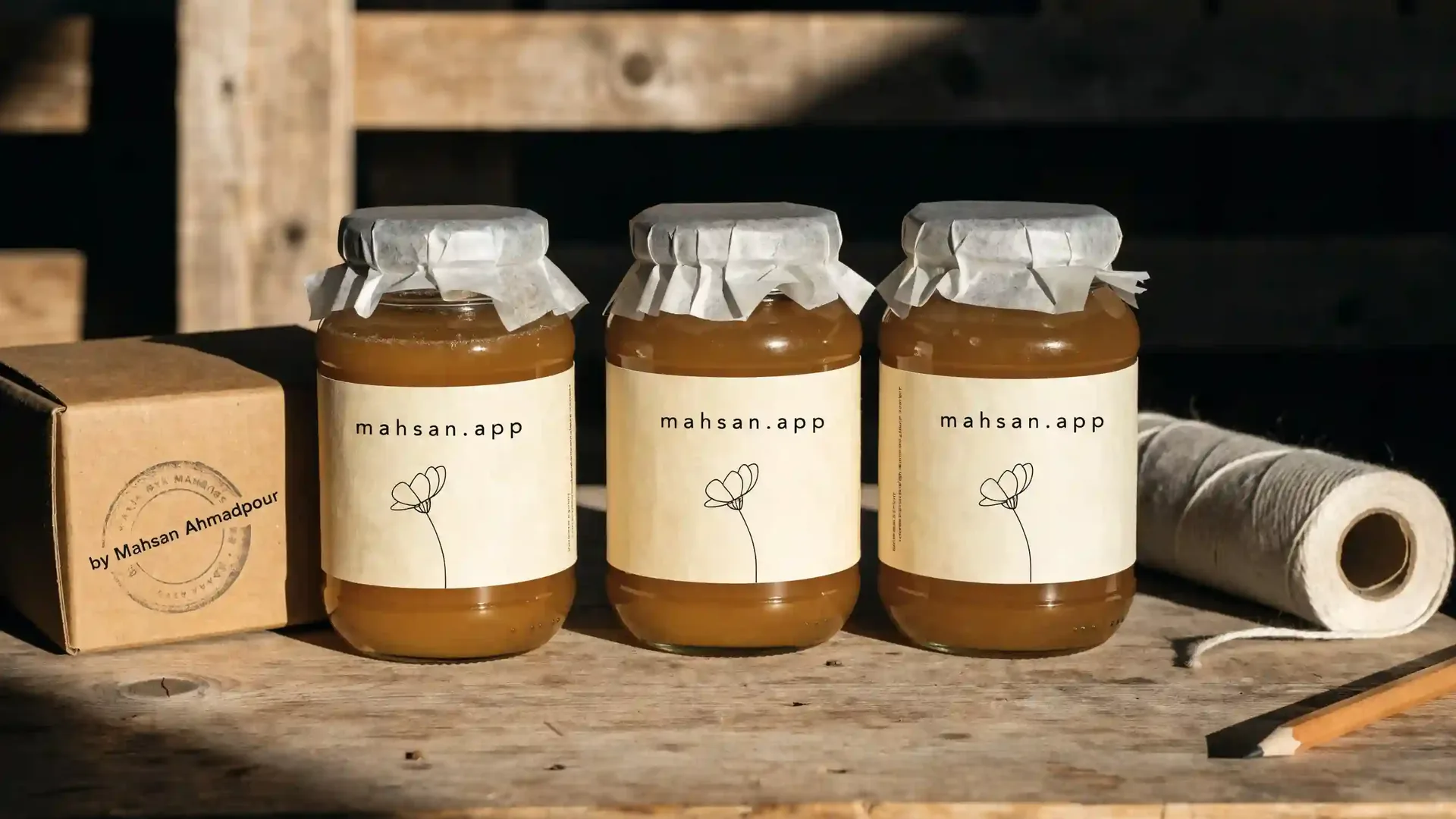
Rubber stamps became common from the late 19th century, after vulcanised rubber made them durable, and they moved from offices into art: mail artists, zine makers and small brands still use them. Today hand-carved stamps, often cut from soft rubber or erasers, are a cheap way for designers and small businesses to give packaging and print a visible human mark.
Visual anatomy of stamp and block printing
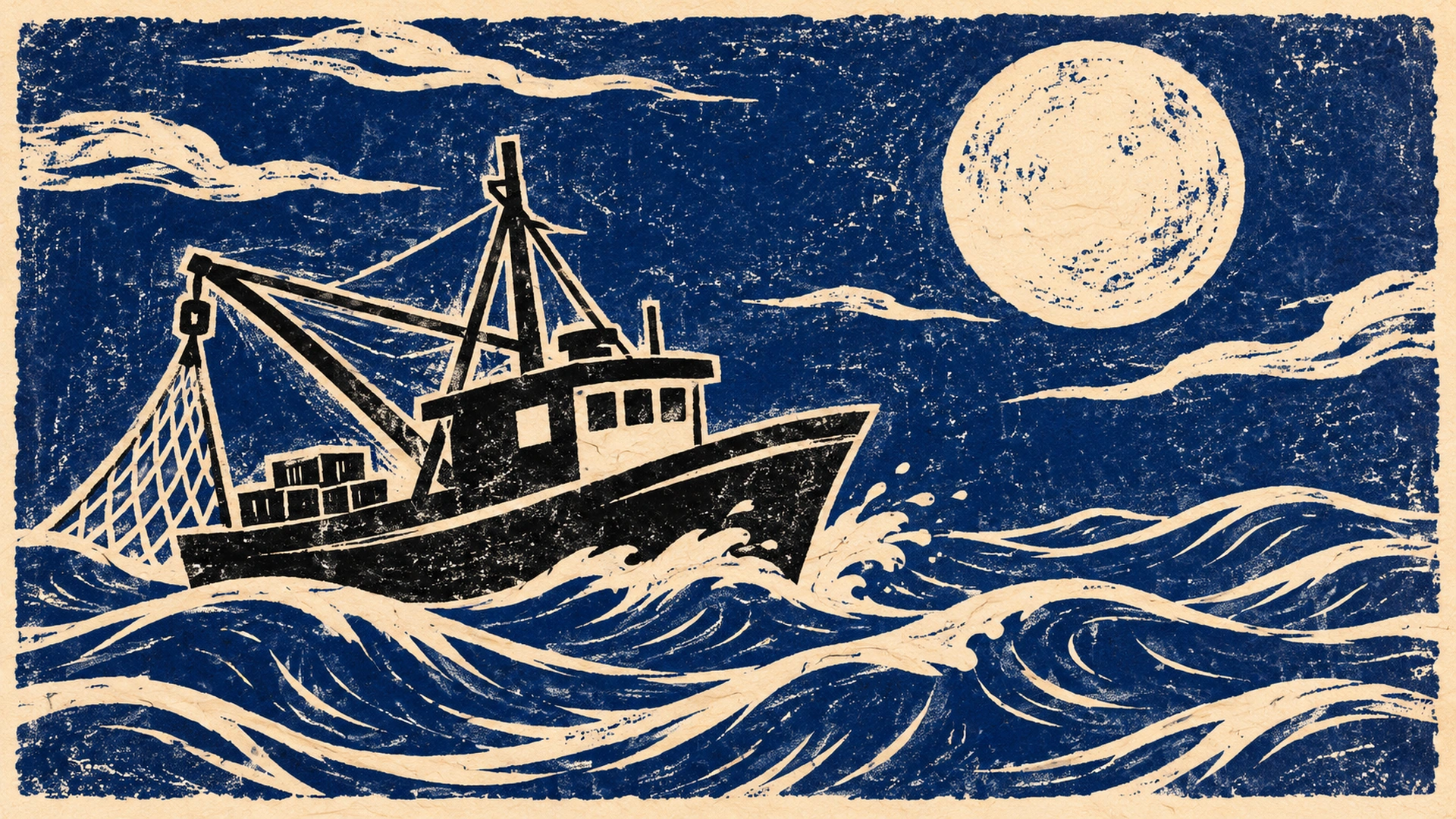
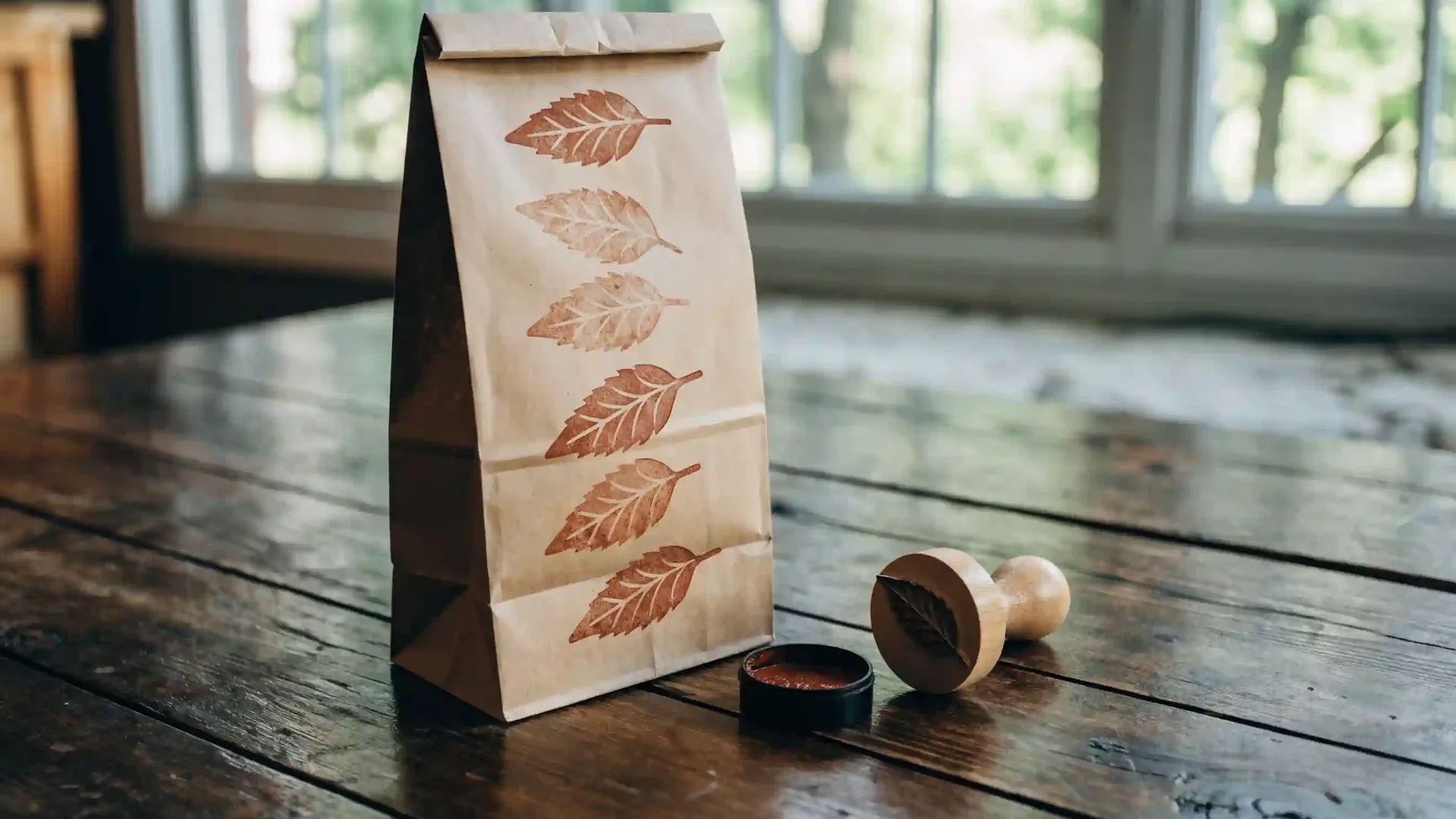
Uneven coverage: speckled, lighter at the edges, darker where pressure was strong.
Patterns that almost line up, with small shifts between prints.
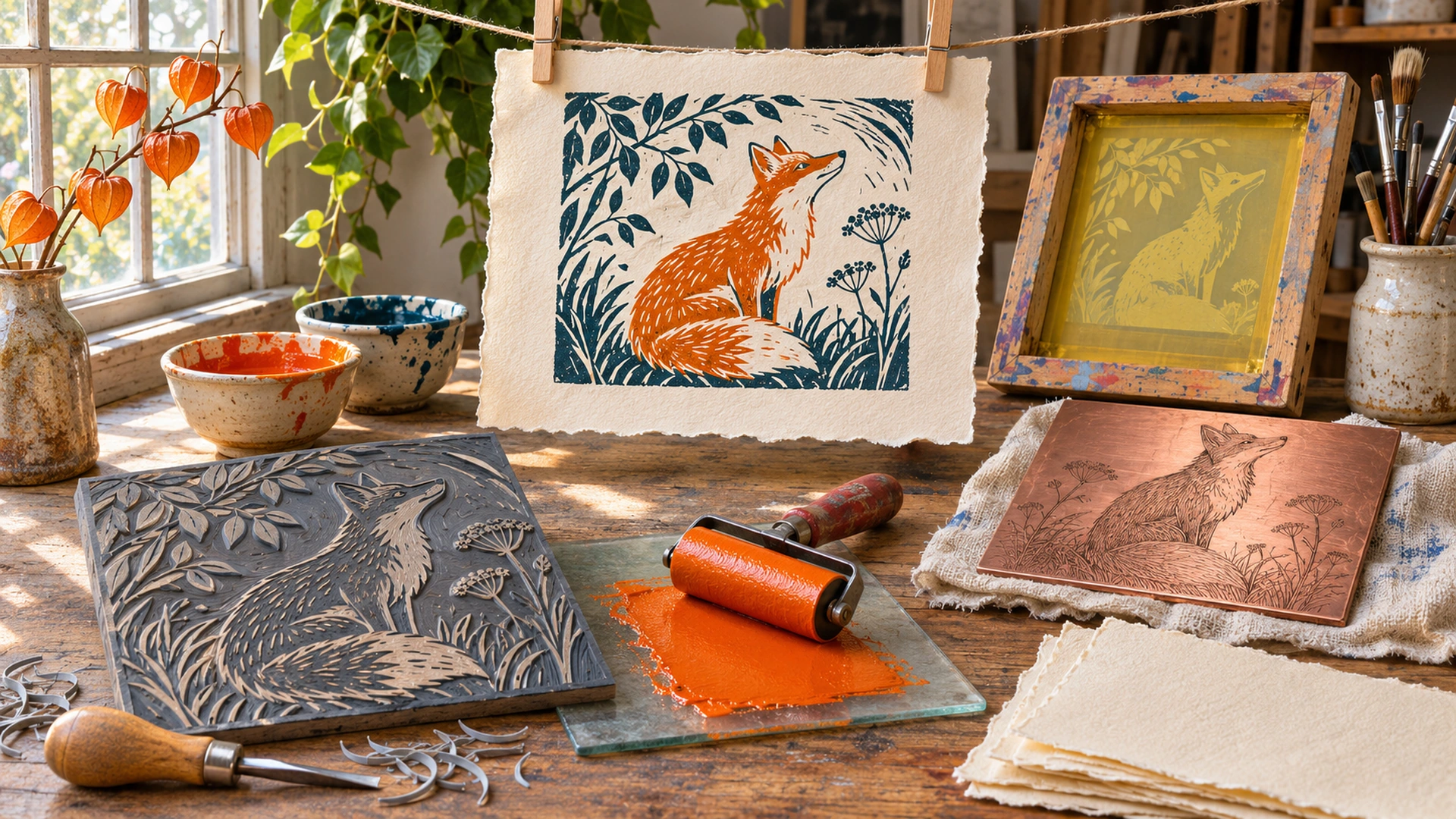
Carved lines with slight wobbles and gouge marks.
One colour per stamp, layered to build more.
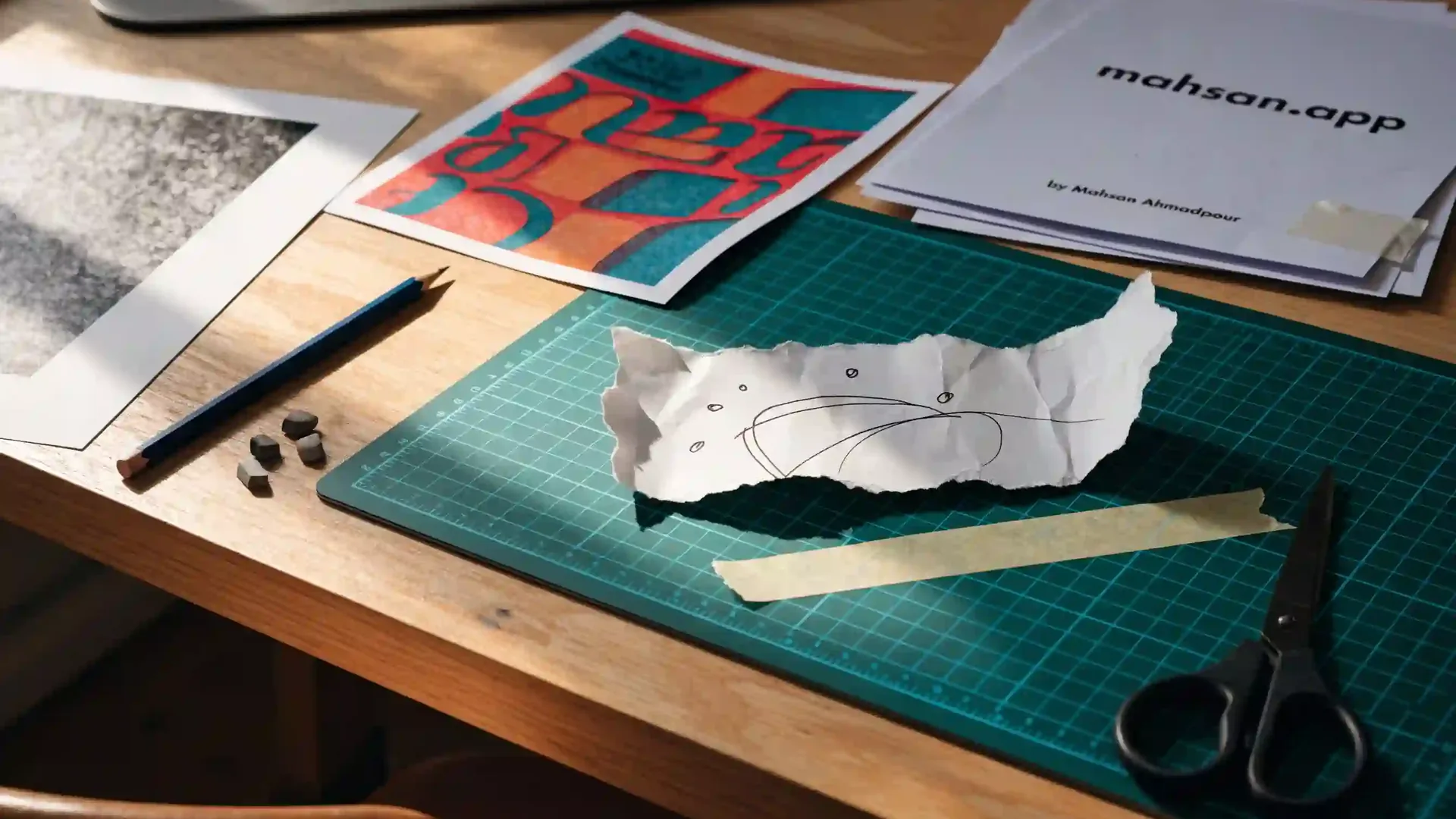
Paper, kraft board, cotton, linen; texture shows through the ink.
Handmade, rhythmic, warm, practical.
Words around stamp printing
A carved piece of wood, rubber or linoleum used to print.
A design printed over and over to cover a surface.
Aligning prints or colours; hand stamping is rarely perfect.
Art sent through the post, often using stamps and seals.
How to recognize stamp and block printing
- Repeated motifs with small variations.
- Speckled, uneven ink.
- Slight double prints or shifts.
- One flat colour per layer.
Where people get it wrong
Stamp textures are often faked with perfectly identical digital repeats. Real block printing varies from print to print, and that variation is the point. Another mistake is to forget the craft traditions behind textile block printing; naming the place and method is part of describing it properly.
Words to describe stamp and block printing
Precise words for the qualities above. Combine a few of them instead of naming the style or artist alone.
- block printing
- stamp
- rubber stamp
- carving
- repeat pattern
- registration
- kraft paper
- natural dye
- mail art
- gouge
A stamp printing study: a kraft paper bag stamped with a hand-carved leaf in rust ink six times, each print a little lighter.
What to take from stamp and block printing today
- Name the block: wood, rubber, eraser.
- Describe the ink: speckled, faded, doubled.
- Say how the repeat drifts.
- Name the surface: kraft, cotton, linen.
Repetition with difference
Each stamp print repeats the same image and is never the same. That small difference is a good definition of a human mark. In a world of perfect copies, the slightly faded second print is the one that feels alive.
Questions about stamp and block printing
What is block printing?
Printing by carving a design into a block of wood, rubber or linoleum, inking it and pressing it onto paper or fabric, often repeatedly to make a pattern.
What is Indian block printing?
A traditional craft of printing patterns on cotton with hand-carved wooden blocks and natural dyes, practised in places such as Sanganer and Bagru in Rajasthan.
How do you make a stamp at home?
Draw a simple design on a soft rubber or eraser block, carve away the background with a lino cutter, ink it with a stamp pad or roller and press firmly.
Carve a simple stamp from an eraser: one leaf or one letter. Print it ten times in a row without re-inking after the first. Describe how the prints change.
Sources and further reading
- Victoria and Albert Museum: Indian block-printed textiles.
- Anokhi Museum of Hand Printing, Amber, Rajasthan.
- British Museum: early woodblock printing collections.