Watercolour that covers
Gouache is water-based paint like watercolour, bound with gum arabic, but made with more pigment and often a white filler, so it is opaque. Instead of glowing through layers, it sits on top of them, drying to a flat, chalky, velvety matte surface. Light colours can be painted over dark ones, and mistakes can be covered.
Opaque water-based colour, sometimes called body colour, has been used for centuries in manuscripts, fan painting and miniatures. In the twentieth century gouache became the paint of commercial artists: poster designers, animation background painters and illustrators valued its flat colour and speed. Henri Matisse painted sheets of paper with gouache for his late cut-outs, and mid-century illustrators such as Mary Blair built whole worlds with it. Today it is loved by picture-book and editorial illustrators, and its flat, slightly textured look is easy to recognise.
Visual anatomy of gouache
Each layer covers the one beneath; light over dark is possible.
Flat, matte, slightly chalky and velvety; no gloss.
Clean, flat areas of colour with crisp or softly dragged edges.
Visible dry-brush strokes and paper grain at the edges of shapes.
Bright but soft; pastel tints from added white; strong flat darks.
Values shift as it dries: darks often dry lighter, lights slightly darker.
Techniques
Even, opaque areas laid down quickly in one tone.
Painting lights and details on top of dry darker layers.
Little water for broken, scratchy texture.
Dry gouache softens when wet again, so layers can blend or lift.
A modern version that dries permanent and does not reactivate.
How to recognize gouache
- Flat, matte, opaque colour areas.
- Light details painted on top of dark areas.
- No transparency or glowing white paper.
- Slight brush texture at shape edges.
Where people get it wrong
Calling any soft, painterly illustration 'watercolour' when it is gouache, or the reverse. Watercolour is transparent and uses the paper for light; gouache is opaque and paints the light on. If the highlights are painted, the darks are flat and the surface looks velvety, it is gouache.
Words to describe gouache
Precise words for the qualities above. Combine a few of them instead of naming the style or artist alone.
- gouache
- opaque watercolour
- matte velvety finish
- flat colour shapes
- light over dark
- dry-brush texture
- limited palette
- pastel tints
- picture-book illustration
- mid-century poster
- body colour
- acrylic gouache
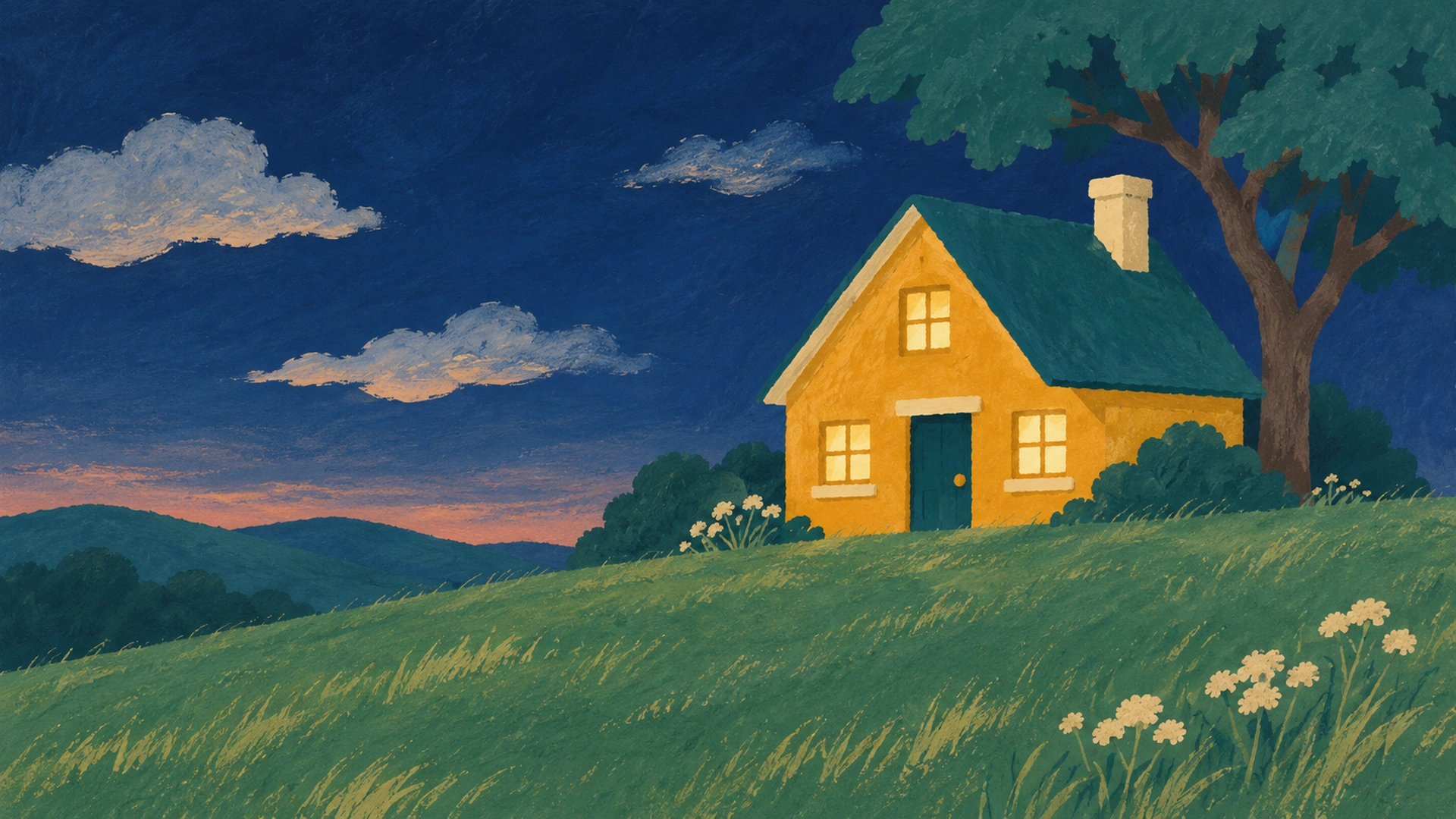
An original gouache illustration study: a small yellow house on a green hill at dusk, flat opaque shapes of colour, light windows painted over a deep blue sky, dry-brush texture on the grass, a limited palette of ochre, teal, cream and navy, matte velvety finish, picture-book feel.
What to take from gouache today
- Ask for flat, opaque, matte colour.
- Say light details are painted over dark areas.
- Mention visible dry-brush texture at the edges.
- Use a limited palette with soft tints and one strong dark.
Questions about gouache
Is gouache the same as watercolor?
No. Both are water-based, but gouache is opaque and matte, while watercolor is transparent and luminous.
What is gouache used for?
Illustration, posters, picture books, animation backgrounds, design comps and plein-air sketching, wherever flat, quick, opaque colour helps.
Find a picture-book illustration you like. Describe it as a painter would: which shapes are flat, where light was painted over dark, where the brush dragged dry, and which three or four colours carry it.
Sources and further reading
- Marjorie B. Cohn, Wash and Gouache: A Study of the Development of the Materials of Watercolor (1977).
- John Canemaker, The Art and Flair of Mary Blair (2003).