Carved and printed
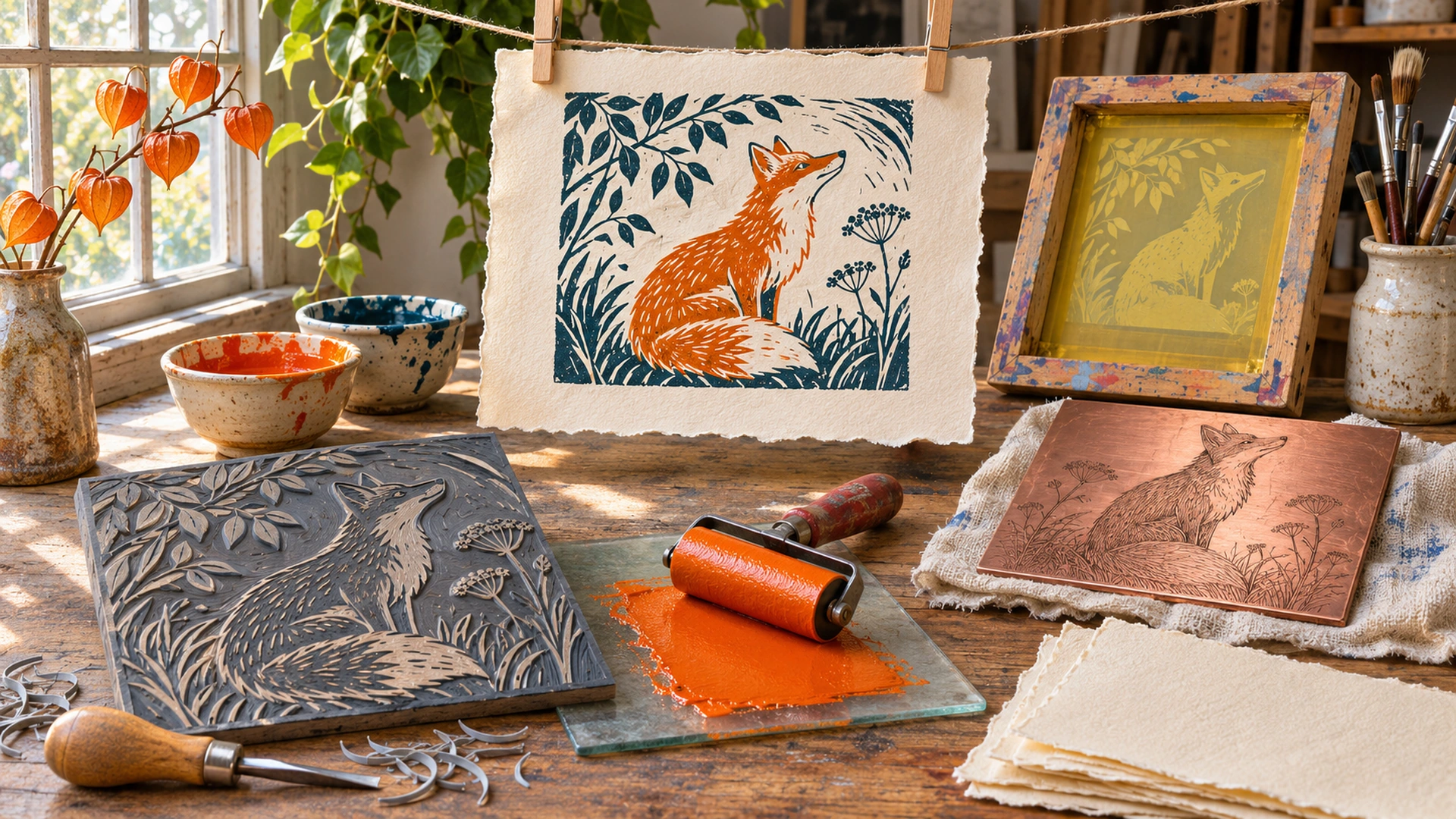
Linoleum, a floor covering invented in the 1860s, turned out to be a soft, even material for relief printing. The artist carves away everything that should stay white; the raised surface is inked with a roller and pressed onto paper, by hand with a spoon or baren or with a press. Linocut spread in the early 20th century among artists and in schools because it is cheap and easy to cut.
It became a political and popular medium: the Taller de Gráfica Popular in Mexico, founded in 1937, made linocut posters for social causes. Matisse made bold white-line linocuts, and from the late 1950s Picasso developed the reduction method, cutting and printing one block repeatedly in several colours. Today linocut is everywhere in posters, book covers, packaging and illustration that wants a handmade, graphic voice.
Visual anatomy of linocut
Bold, simplified forms with strong black and white contrast.
Visible gouge lines, V and U cuts, used as texture and shading.
Slightly uneven coverage, speckles where the paper didn't take ink.
Lines either cut away as white or left standing as black.
Often one or two colours; multi-colour by several blocks or reduction.
Graphic, direct, handmade, often folk or political in tone.
Key terms in linocut
Printing from the raised surface; carved areas stay white.
The V- or U-shaped tool that carves the block.
One block cut and printed repeatedly, each layer a new colour.
A flat disc used to rub paper onto the inked block by hand.
How to recognize linocut
- Bold black shapes with white carved lines.
- Visible gouge marks as texture.
- Slightly uneven, hand-pressed ink.
Where people get it wrong
Linocut is often imitated with clean vector graphics. The look depends on the cut: lines that taper where the gouge entered and left, rough edges, and ink that isn't perfectly even. Without those, it's flat illustration, not linocut.
Words to describe linocut
Precise words for the qualities above. Combine a few of them instead of naming the style or artist alone.
- linocut print
- bold black and white
- white gouge marks
- carved texture lines
- hand-pressed uneven ink
- two-colour reduction print
- rough cut edges
- folk graphic style
- relief print on rice paper
- poster linocut
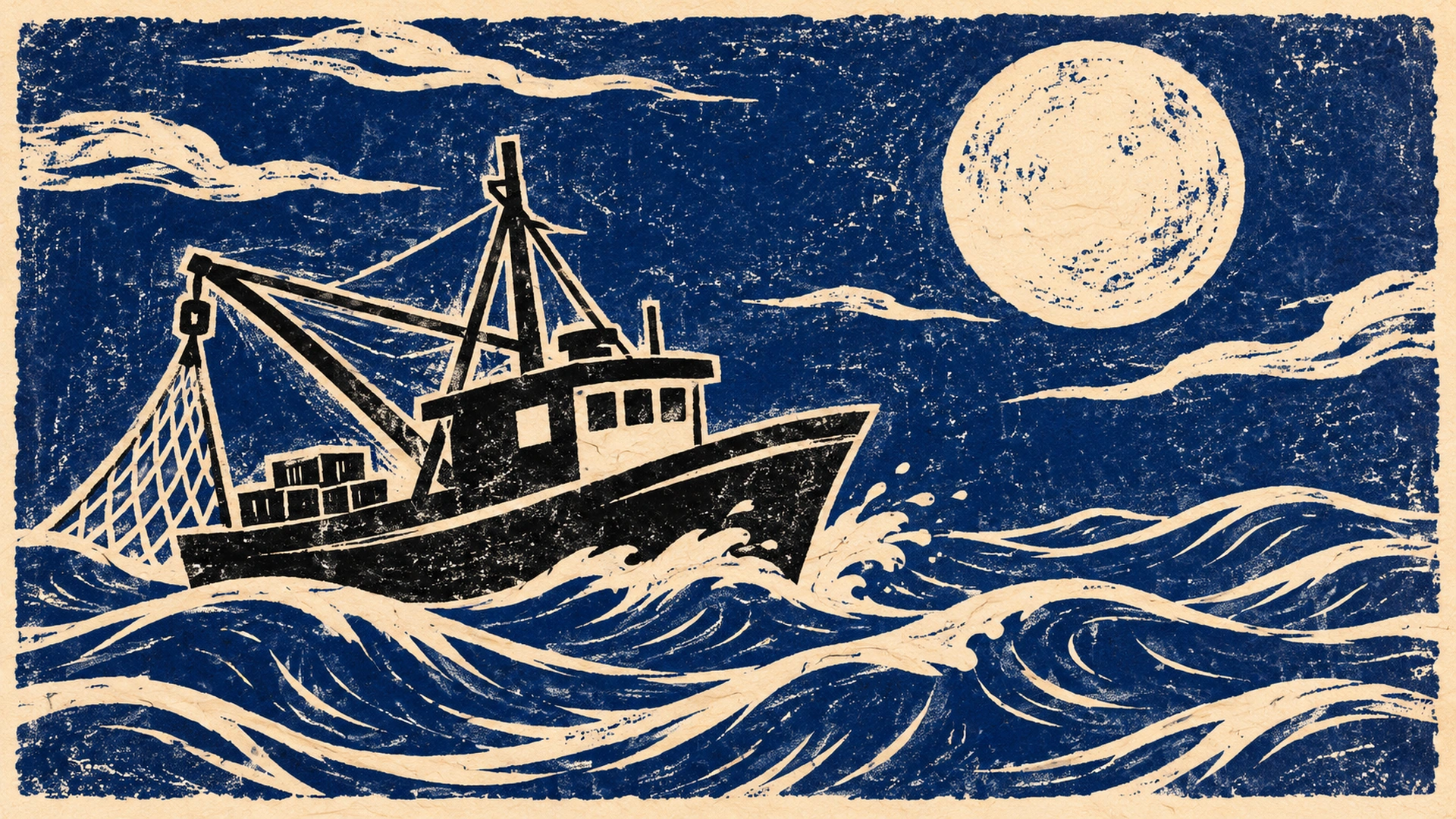
An original linocut print study: a fishing boat on a choppy sea under a big moon, printed in black and deep blue on cream rice paper, waves described by curving white gouge marks, bold simplified shapes, slightly uneven hand-pressed ink. Not a copy of any existing print. No text.
What to take from linocut today
- Describe the main shapes and how bold they are.
- Name the gouge marks and how they shade.
- Mention the ink colours and the paper.
Questions about linocut
What is linocut?
Carving an image into linoleum and printing it: bold black shapes, white cut lines and the slightly uneven ink of a hand-pulled print.
How do you recognize linocut?
Bold black shapes with white carved lines. Visible gouge marks as texture. Slightly uneven, hand-pressed ink.
How do you describe linocut in words or a prompt?
Describe the main shapes and how bold they are. Name the gouge marks and how they shade. Mention the ink colours and the paper.
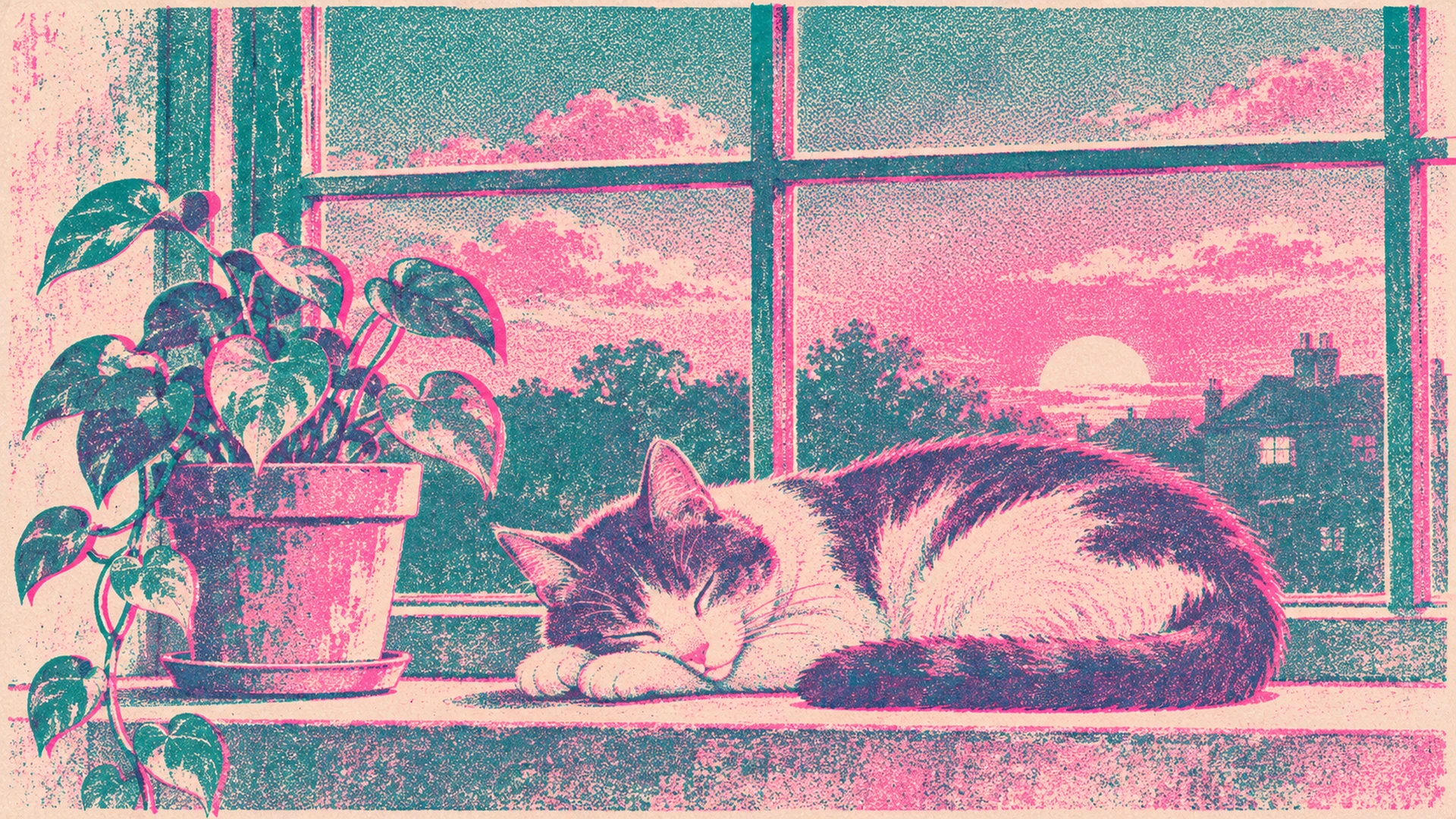
Plan a two-colour linocut of a cat on a windowsill: which shapes are black, which areas are cut away, how the gouge marks describe fur and light, and which second colour goes underneath.