Every process leaves a mark
A print is an image transferred from a prepared surface, such as a block, a plate, a stone or a screen, onto paper, usually so it can be repeated. Each process leaves its own fingerprint: the bold gouges of a woodcut, the fine lines of an engraving, the velvety blacks of a mezzotint, the flat layers of a screen print.
Printmaking has shaped how images look for centuries, from Dürer's woodcuts and Rembrandt's etchings to Japanese ukiyo-e, Goya's aquatints and Warhol's screen prints. Its textures are now imitated everywhere in digital illustration, so knowing the real processes helps you describe them precisely.
Relief: cut away what stays white
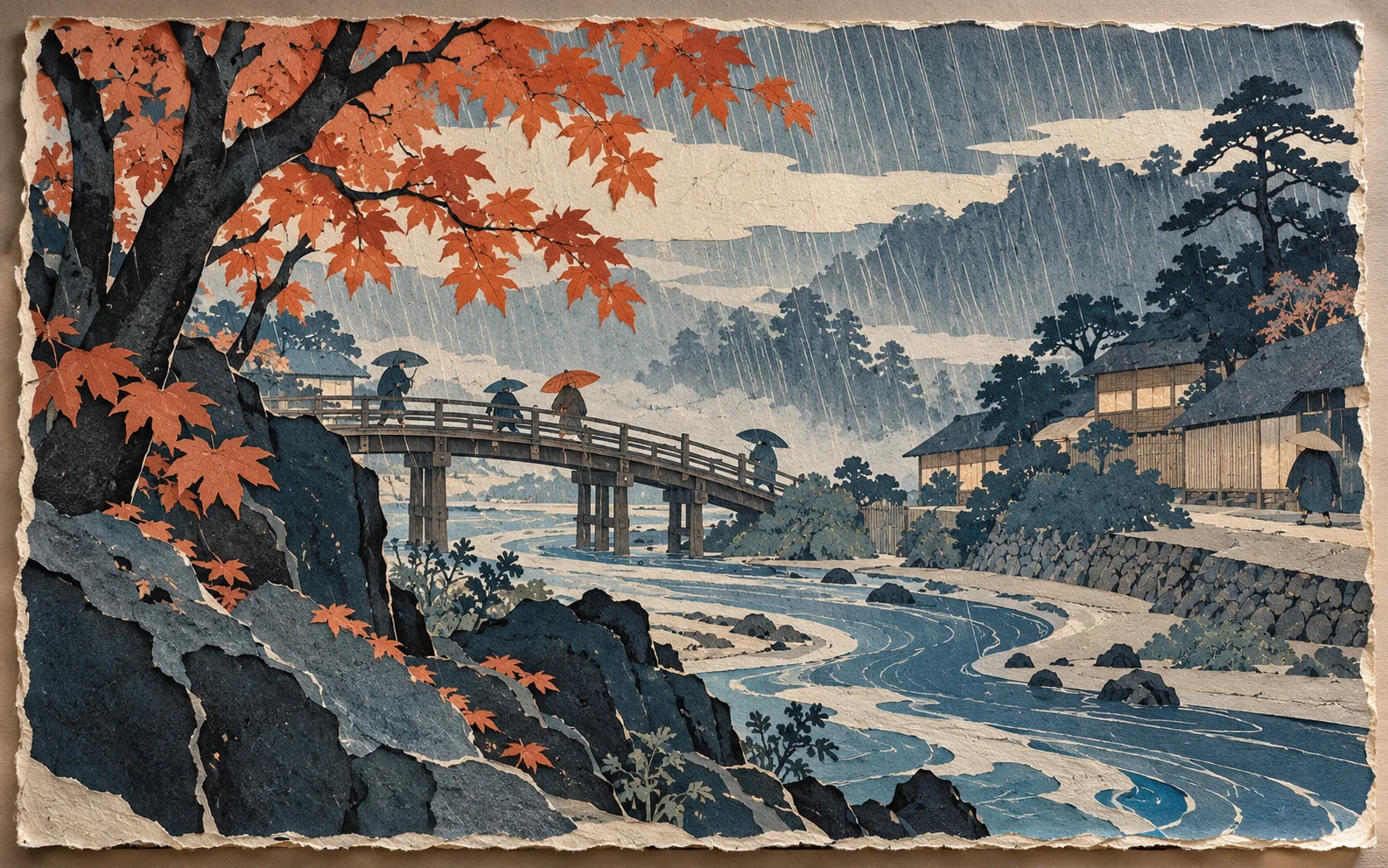
Carved along the grain of a wooden block: bold lines, rough edges, visible wood grain.
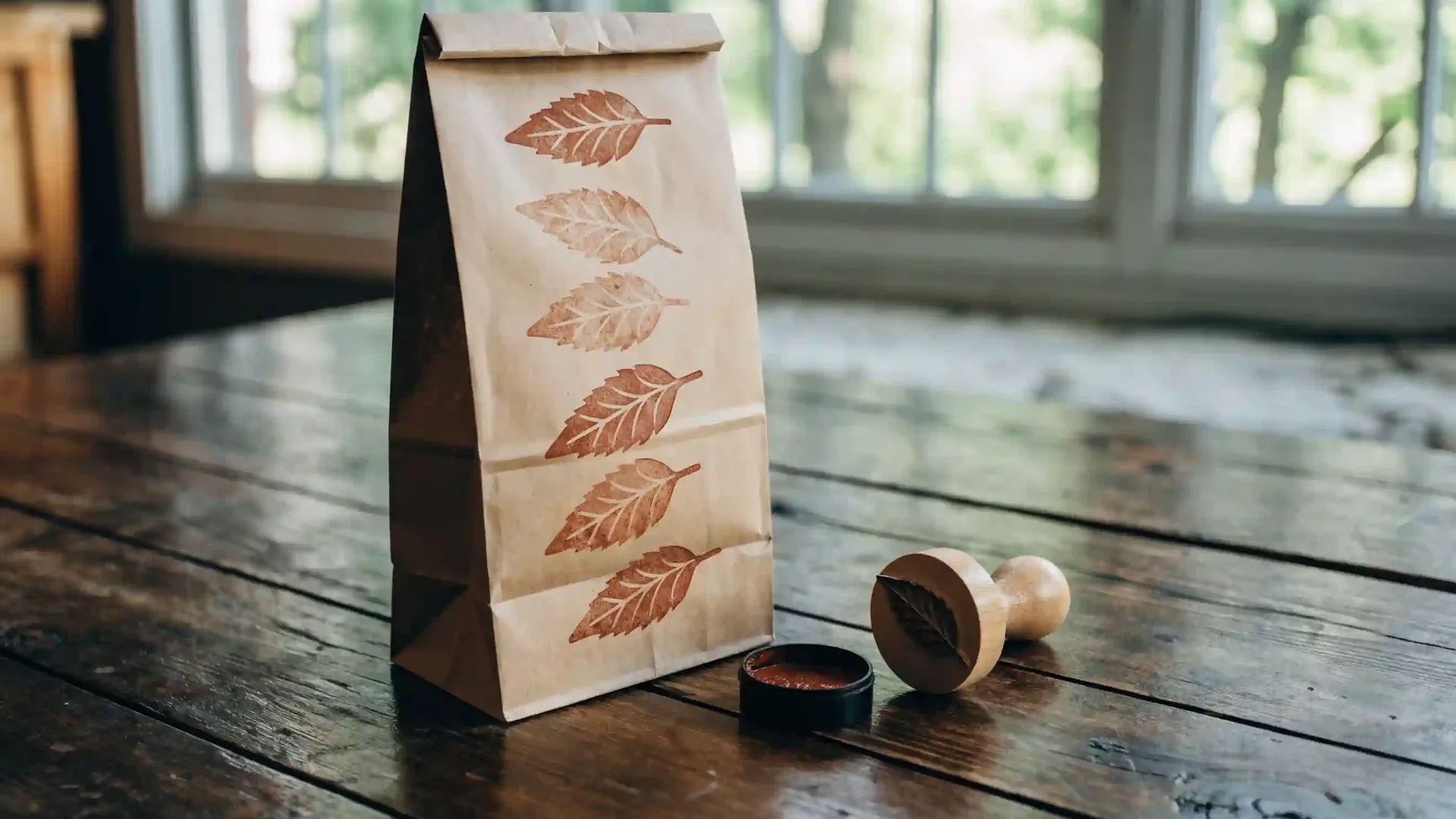
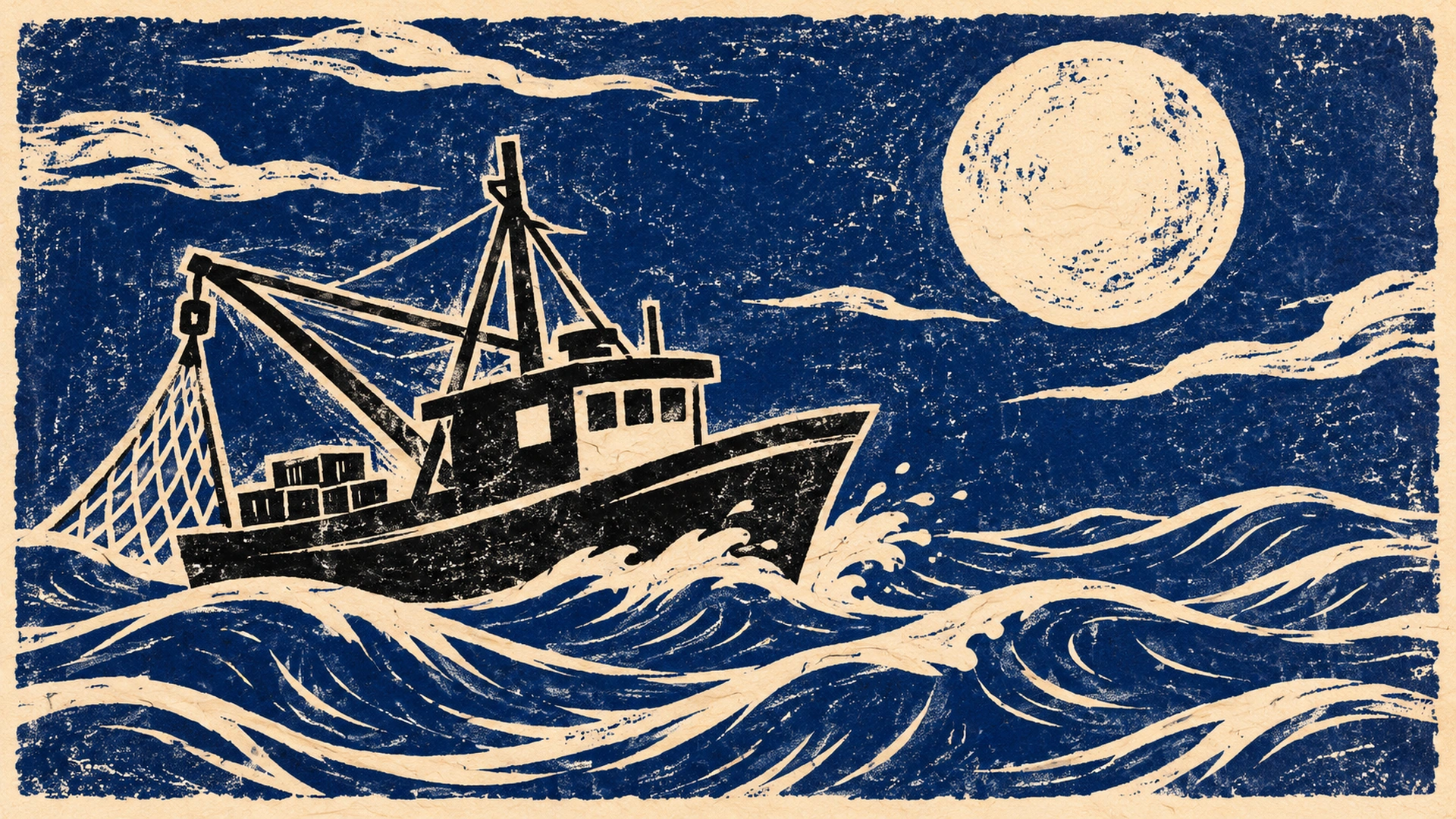
Carved in linoleum: smooth bold shapes, clean gouge marks, flat ink.
Cut into the hard end grain of wood: very fine white lines on black.
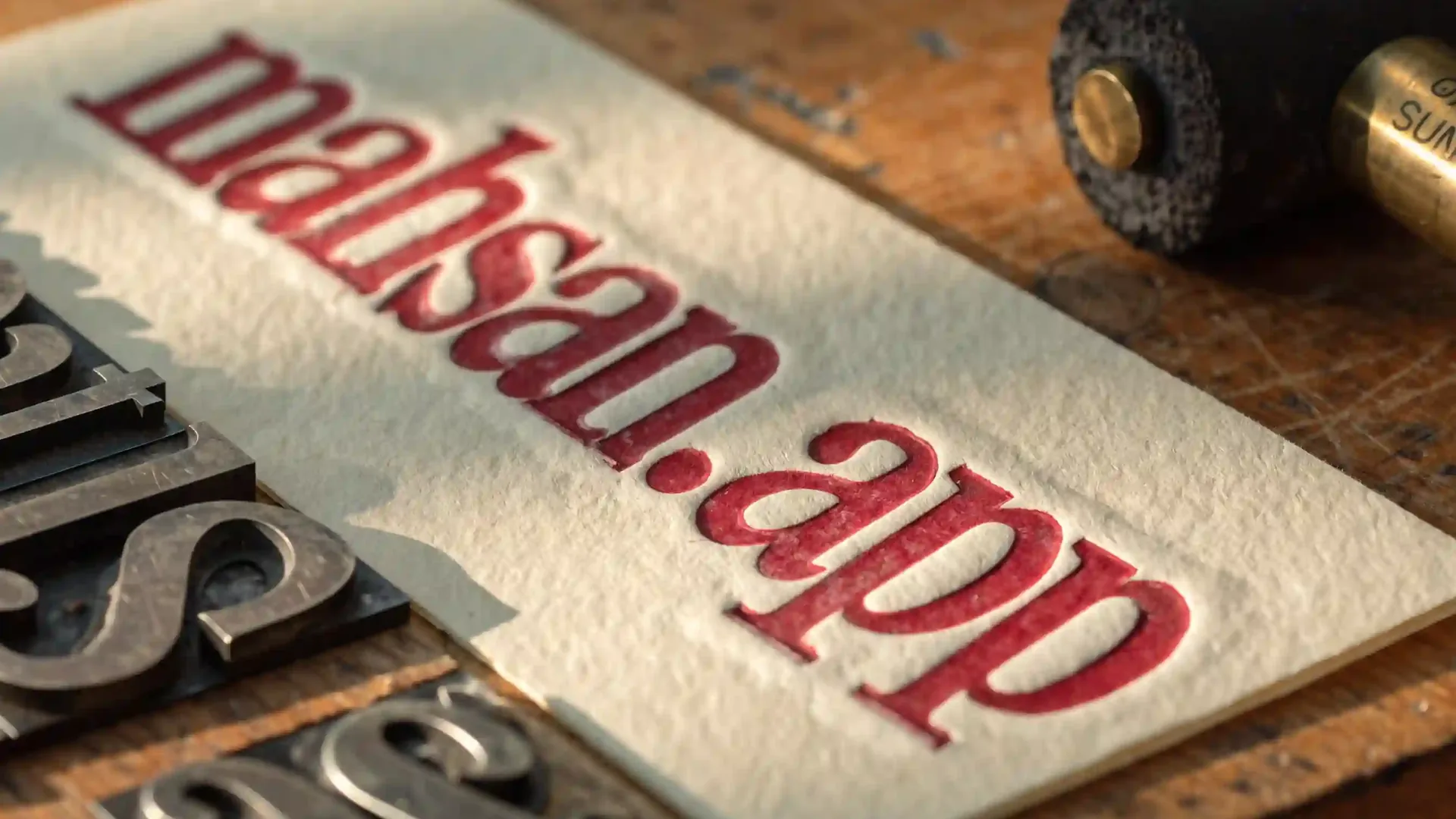
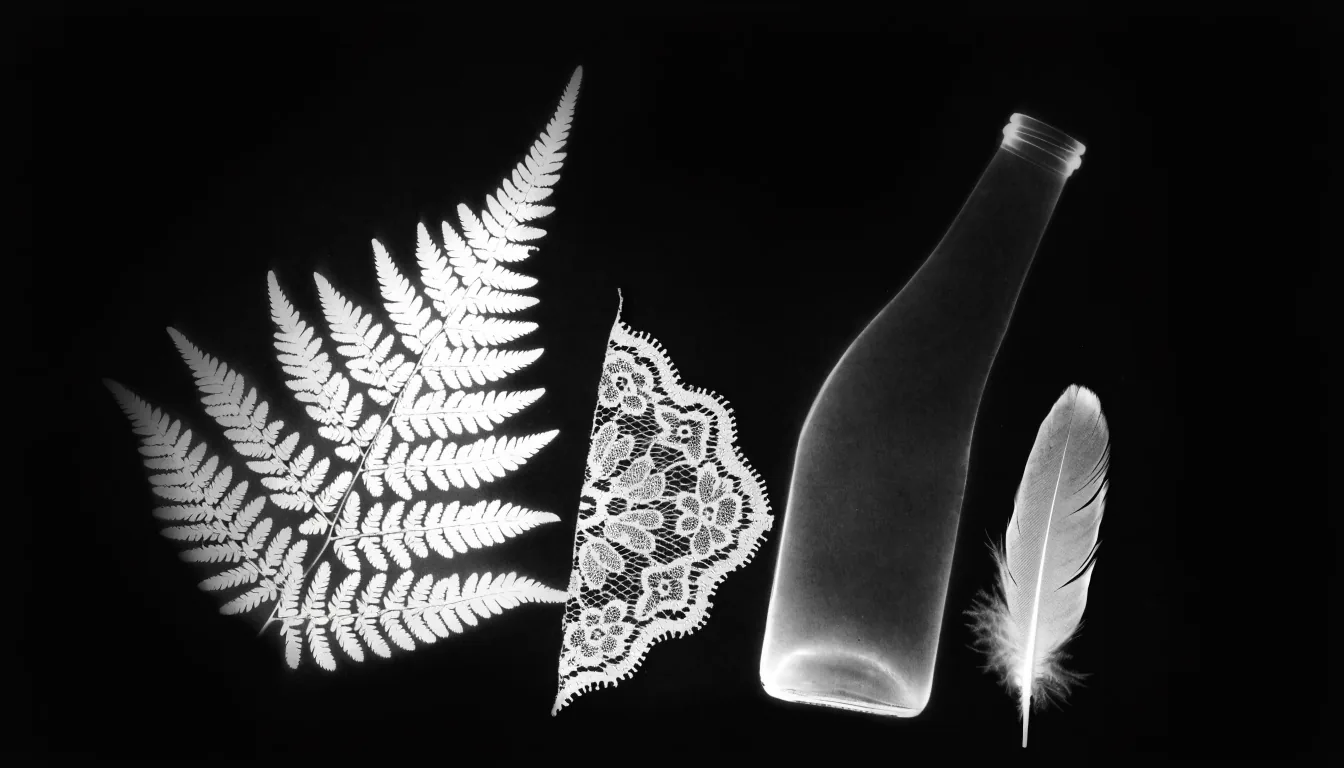
Raised type or blocks pressed into paper, leaving a slight bite.
Intaglio: ink held in lines cut into metal
Lines cut into a copper plate with a burin: precise, swelling, very fine.
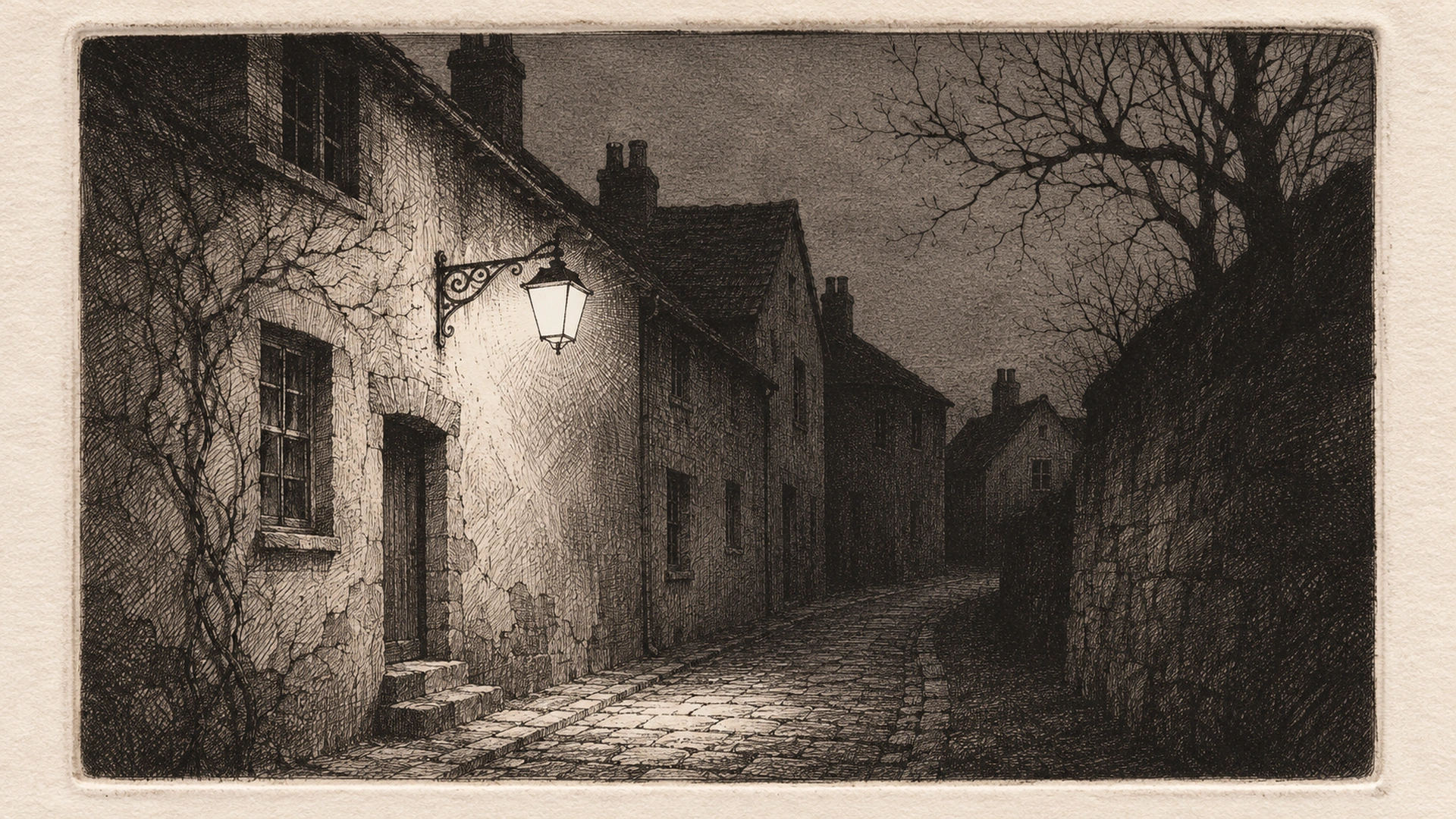
Lines drawn through a wax ground and bitten by acid: freer, more sketch-like.
Lines scratched directly into the plate, with a soft, fuzzy burr.
Resin grains bitten by acid to make tonal areas, like a wash.
A roughened plate scraped back to light: deep velvety blacks and soft glows.
Planographic and stencil
Drawing with grease on stone or plate; ink sticks only to the drawing. Invented by Alois Senefelder in 1796.
Colour lithography with many stones, used for 19th-century posters and labels.
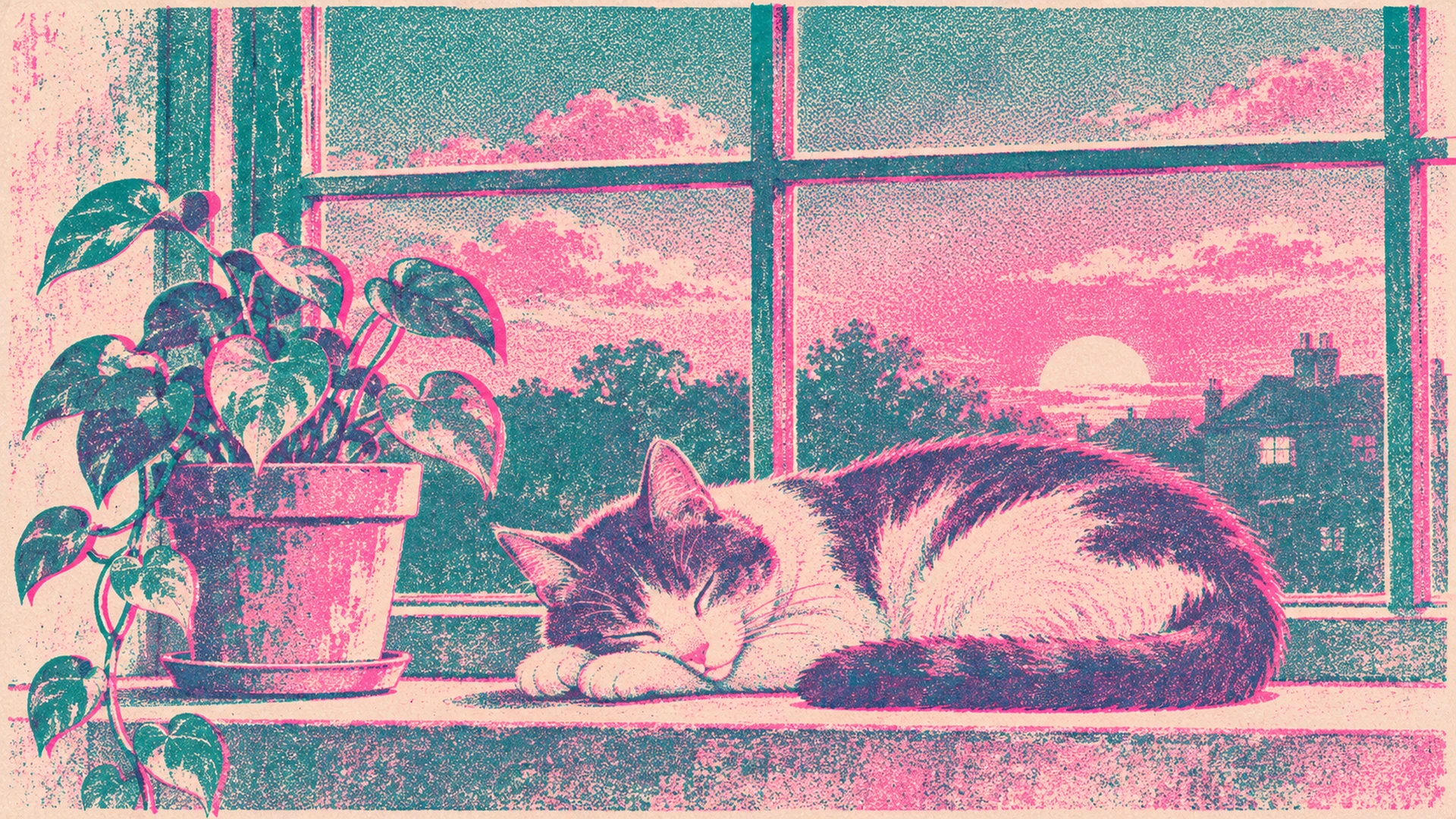
Ink pushed through a mesh stencil: flat, bold, opaque layers.
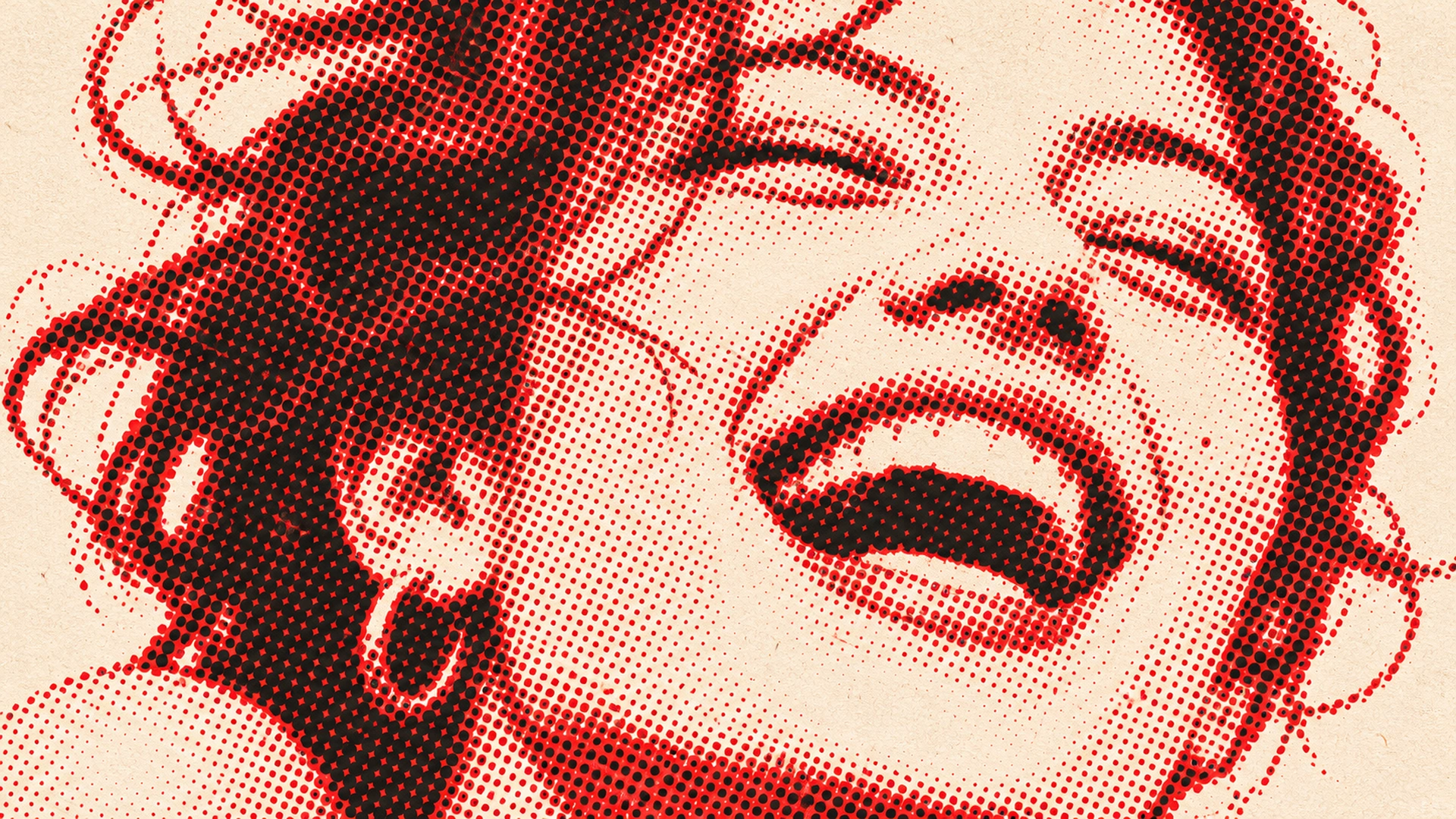
A stencil duplicator with bright spot inks and grainy, shifted layers.
Other
A one-off print from a painted plate; painterly and unrepeatable.
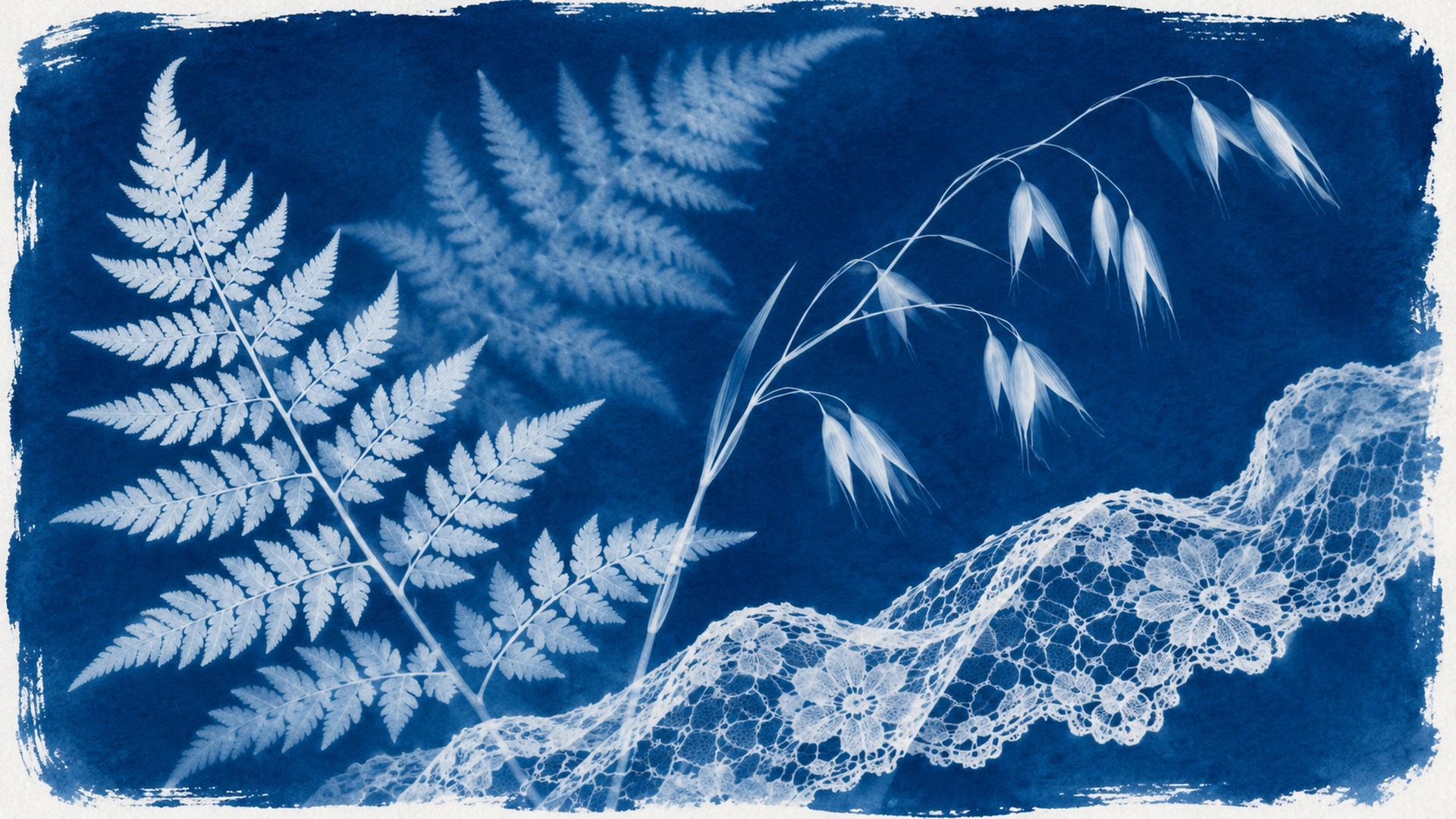
Sun-printing with iron salts: white images on Prussian blue.
A plate built from glued textures such as fabric, leaves and card.
Words to describe printmaking techniques
Precise words for the qualities above. Combine a few of them instead of naming the style or artist alone.
- bold black-and-white woodcut
- visible wood grain
- linocut gouge marks
- fine copperplate engraving lines
- sketchy etched line
- velvety mezzotint blacks
- aquatint tonal wash
- flat layered screen print
- 19th-century chromolithograph
- cyanotype Prussian blue
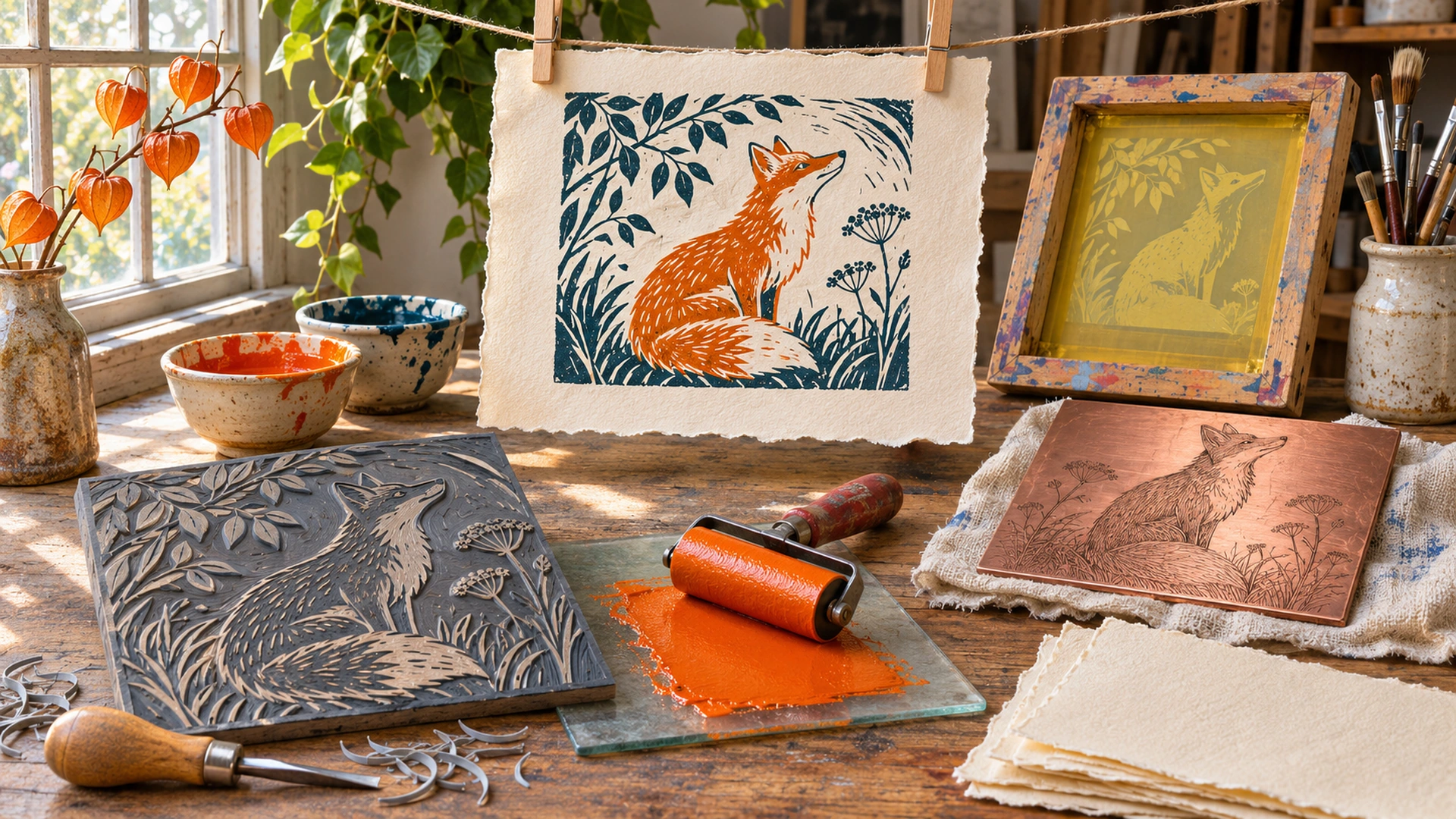
A two-colour linocut print of a fox in tall grass: bold carved shapes in black and burnt orange, visible gouge marks in the sky, small uneven areas where the ink didn't fully cover, printed on cream handmade paper with soft deckled edges.
How to describe printmaking techniques in words
- Name the process, then its marks: gouges, fine lines, velvety tone, flat layers.
- Say how many colours and on what paper.
- Mention edition feel: crisp and repeated, or unique and painterly.
Where we usually get it wrong
'Woodcut style' is often used for anything with thick black lines. Woodcut, linocut and wood engraving look different: woodcut has grain and rough edges, linocut has smooth curves, wood engraving has delicate white lines. And 'etching' is often used loosely for any fine-line print.
Questions about printmaking techniques
What is printmaking techniques?
Woodcut, linocut, etching, mezzotint, lithography, screen print: how each kind of print is made, and the marks and textures that let you recognise it.
How do you describe printmaking techniques in words or a prompt?
Name the process, then its marks: gouges, fine lines, velvety tone, flat layers. Say how many colours and on what paper. Mention edition feel: crisp and repeated, or unique and painterly.
Describe one simple image, a bird on a branch, as a woodcut, an etching and a two-colour screen print. Write only about marks, tone and colour.