Painting with stone and glass
A mosaic is an image made of small pieces, called tesserae, pressed into mortar or adhesive. The earliest known examples, in Mesopotamia around the third millennium BCE, used cones of clay pressed into walls. The Greeks made pebble floors, and the Romans turned mosaic into an industry, covering villas and baths across the empire with scenes of hunting, the sea and the gods, many still visible at Pompeii and in North Africa.
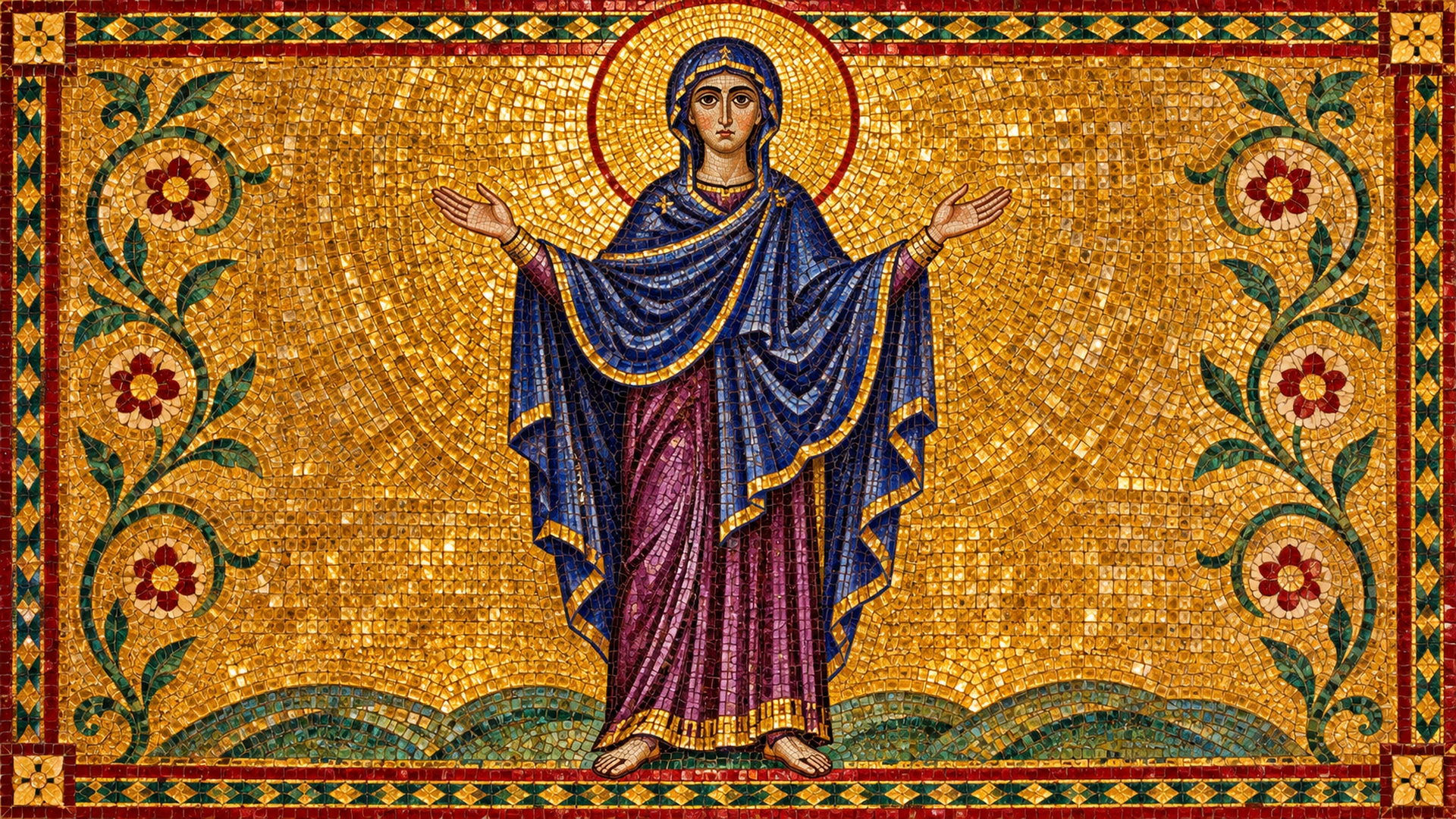
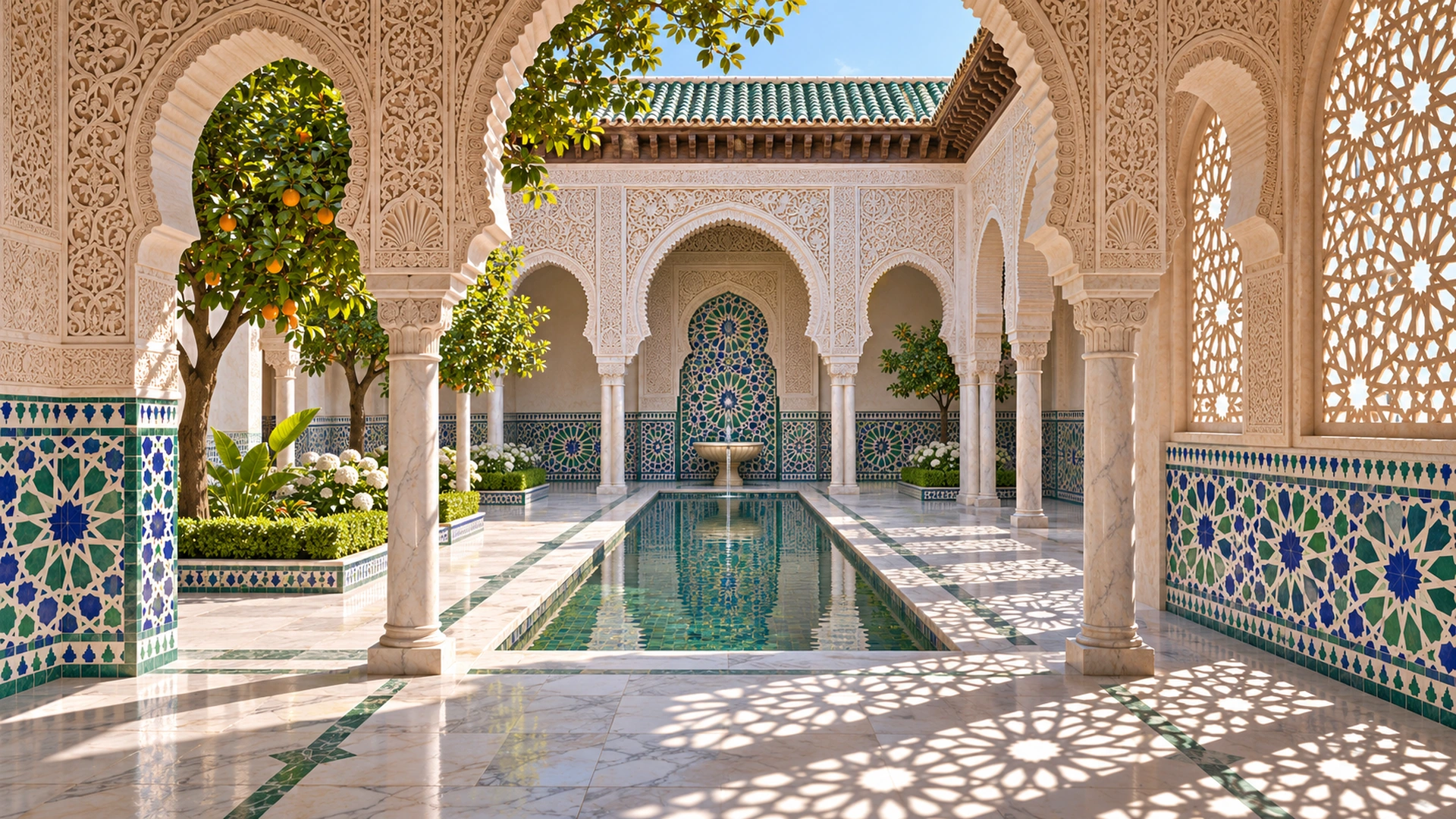
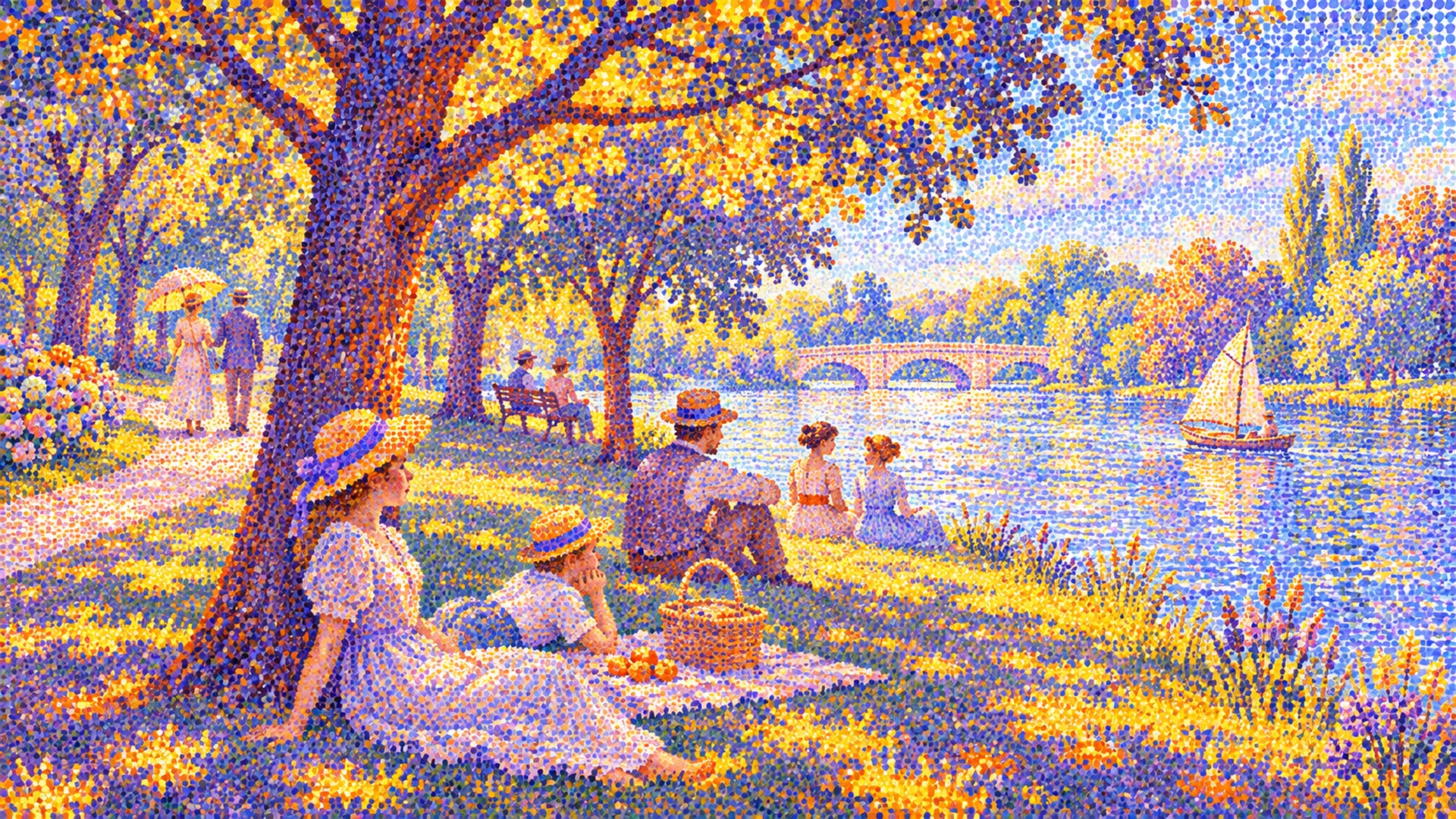
Byzantine artists moved mosaic from the floor to the wall and ceiling, using glass tesserae backed with gold leaf so whole domes glowed with light, as in Ravenna's sixth-century churches and Hagia Sophia. Islamic architecture developed zellige, geometric patterns of hand-cut glazed tile. In the twentieth century Antoni Gaudí and Josep Maria Jujol covered Barcelona's Park Güell with trencadís, a mosaic of broken tile and crockery. Because a mosaic is built from discrete units, it is also an ancestor of halftone printing and pixel art.
Visual anatomy of mosaic
Small cut pieces of stone, glass, ceramic or smalti.
The flow of rows of tesserae; good mosaics follow the contours of forms.
Laying patterns: tessellatum (grid), vermiculatum (flowing), sectile (shaped pieces).
The lines between pieces, which set the rhythm and the colour of the whole.
Slightly uneven, set at angles so light breaks and glitters.
Mixed optically from small units; gold and coloured glass for glow.
Kinds and terms
Stone tesserae in naturalistic or geometric scenes.
Glass and gold smalti on walls and domes, figures on gold ground.
Moroccan and Andalusian geometric tilework of hand-cut glazed pieces.
Gaudí's mosaic of broken tiles and crockery.
Thick, opaque coloured glass made for mosaic.
Larger shaped pieces cut to fit, like stone inlay.
How to recognize mosaic
- An image made of many small visible pieces.
- Lines of grout between them.
- Rows of pieces that follow shapes.
- Glints where light catches angled glass or gold.
Where people get it wrong
Treating mosaic as a grid filter. A photograph cut into equal squares looks like pixels, not a mosaic. Real mosaic has andamento: pieces of different sizes, cut to follow the outline of a face or a wave, set at slight angles. Describe the flow of the rows, not just the squares.
Words to describe mosaic
Precise words for the qualities above. Combine a few of them instead of naming the style or artist alone.
- mosaic
- tesserae
- smalti
- andamento
- opus tessellatum
- opus vermiculatum
- gold glass ground
- grout lines
- zellige
- trencadís
- optical colour mixing
- glittering surface
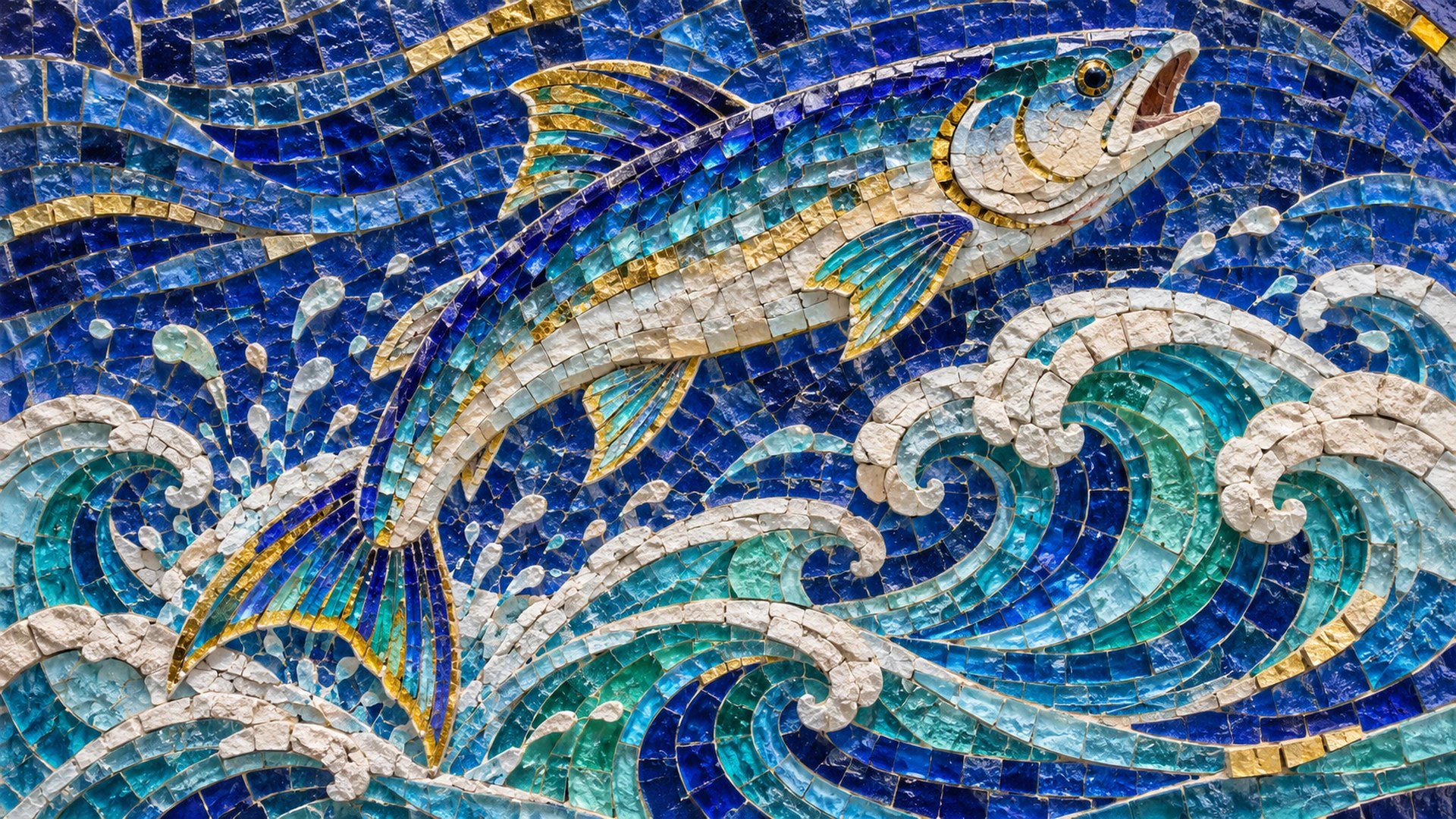
An original mosaic study: a fish leaping over curling waves, made of small cut stone and glass tesserae, rows of pieces flowing around the curve of the body and the waves, deep blue and turquoise glass, a few gold pieces catching the light, pale grout lines, slightly uneven surface.
What to take from mosaic today
- Name the material: marble tesserae, glass smalti, glazed tile, broken crockery.
- Describe the andamento: rows following the curve of the shoulder.
- Give the grout colour and width.
- For glow, ask for gold-backed glass set at slight angles.
Questions about mosaic
What are tesserae?
The small pieces of stone, glass or ceramic from which a mosaic is made.
What is the difference between Roman and Byzantine mosaic?
Roman mosaics were mostly floors of natural stone in many colours. Byzantine mosaics were mostly walls and domes of glass and gold smalti, made to shine with reflected light.
Find a Byzantine or Roman mosaic online and describe how the rows of tesserae move: around the eyes, along the drapery, across the background. Then describe the same figure as if it were painted. Notice what the pieces add.
Sources and further reading
- Roger Ling, Ancient Mosaics (1998).
- Liz James, Mosaics in the Medieval World (2017).