Light drawing without a lens
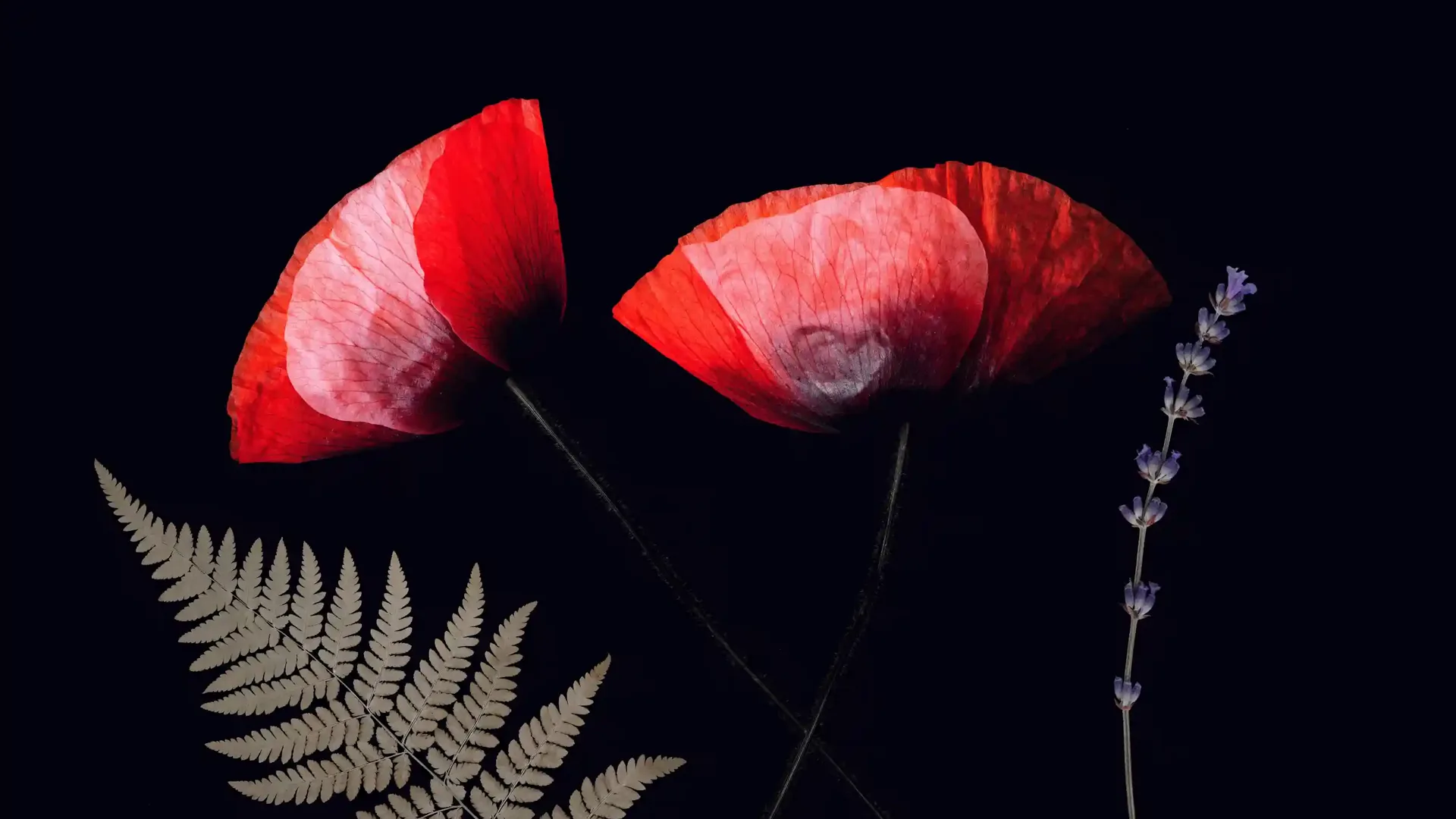
A photogram is made by placing objects directly on light-sensitive paper and exposing it to light. Where an object blocks the light, the paper stays white; where light passes or leaks through, it darkens. The result is a negative silhouette, often ghostly and transparent, made without any camera or lens.
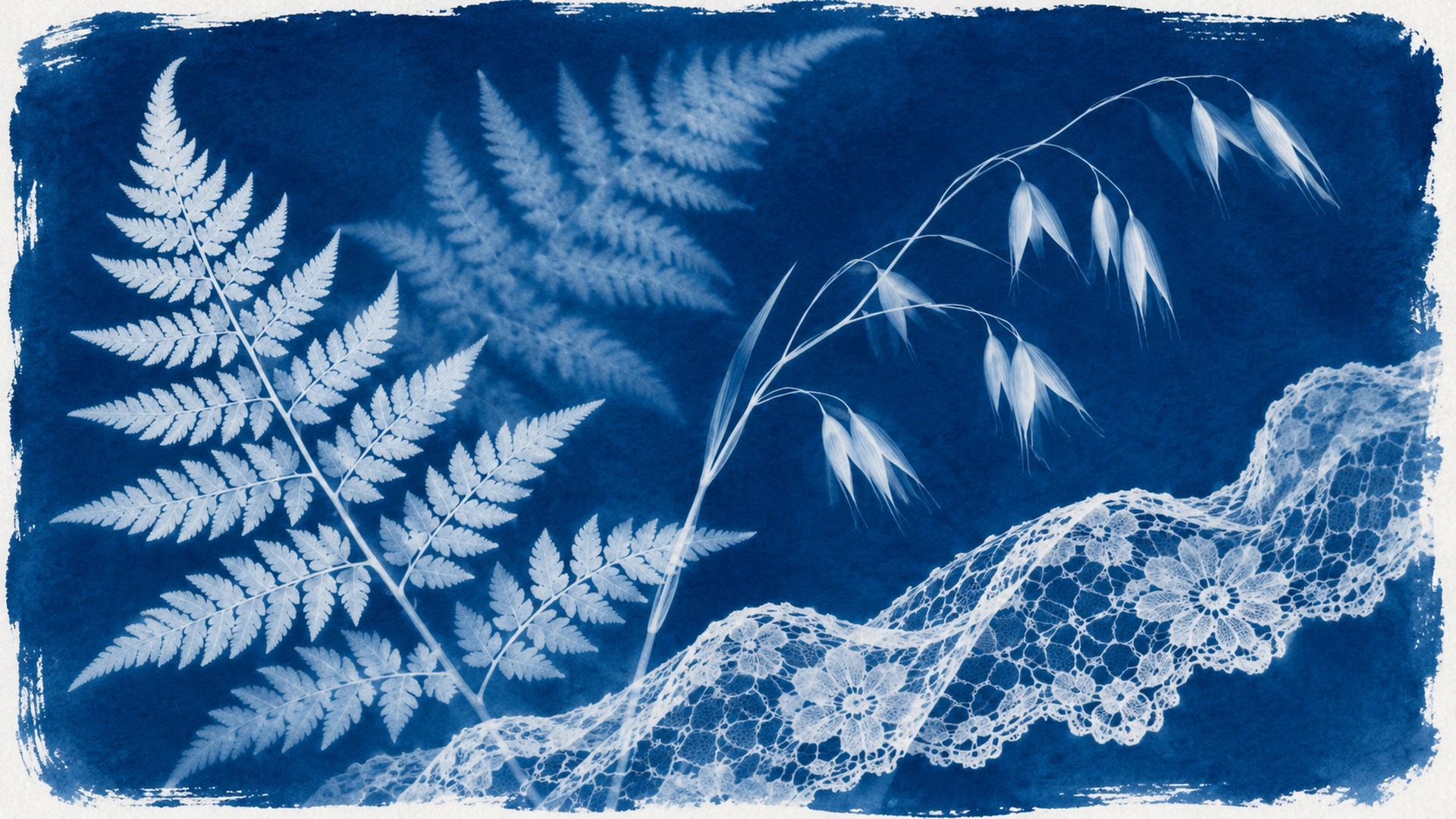
The technique is as old as photography. In 1843 the botanist Anna Atkins published Photographs of British Algae, the first book illustrated with photographs, made as blue cyanotype photograms of seaweed. In the avant-garde of the 1910s and 20s, Christian Schad, Man Ray (who called his 'rayographs') and László Moholy-Nagy turned photograms into abstract art about light itself.
Visual anatomy of photogram
Objects appear as white shapes on a dark ground, the reverse of what we expect.
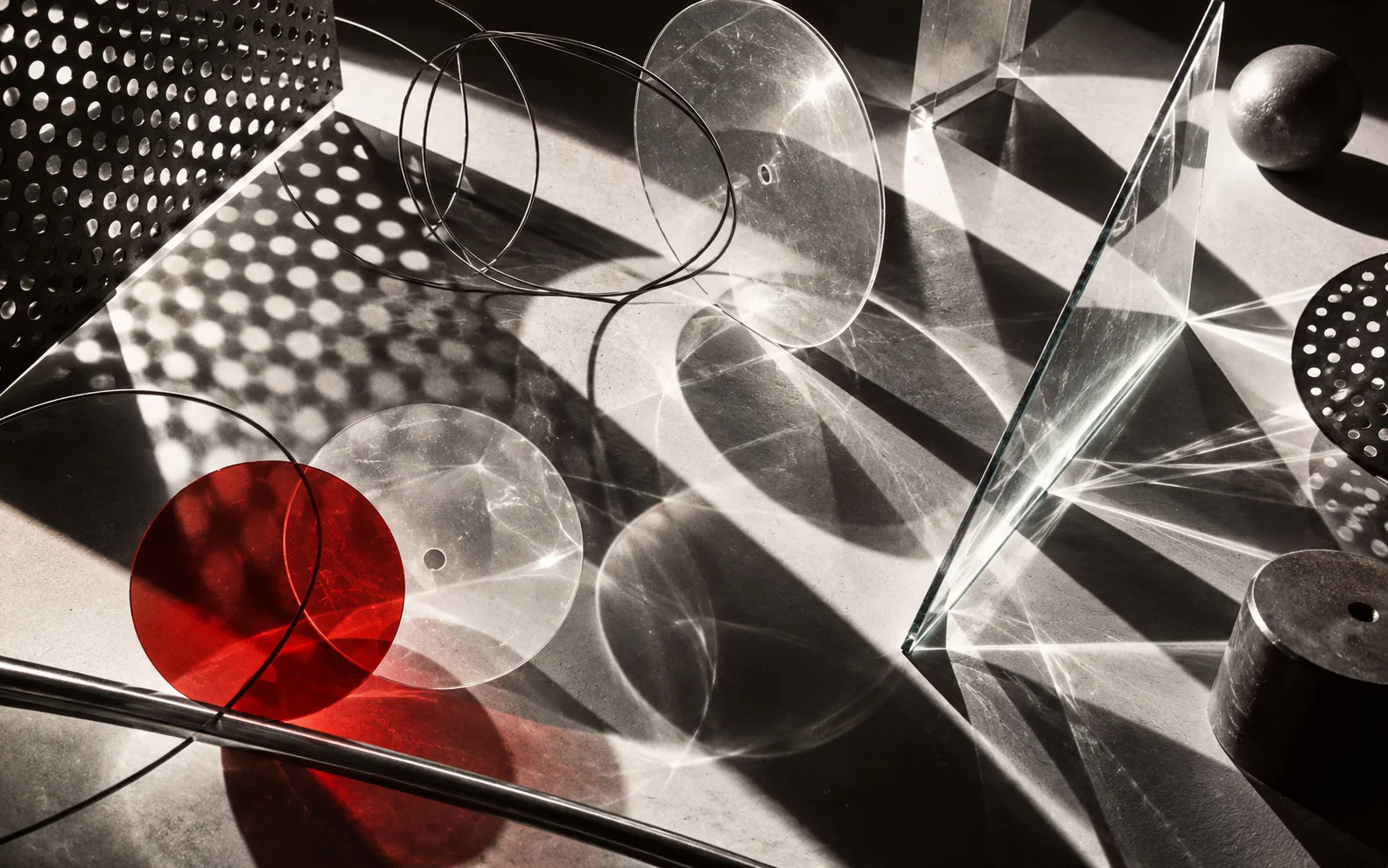
Glass, lace, leaves and liquids let some light through and appear in soft greys.
Objects flat on the paper have sharp edges; raised ones blur and glow.
Usually 1:1: the object at its real size.
Black and white on silver gelatin paper, or deep Prussian blue in cyanotype.
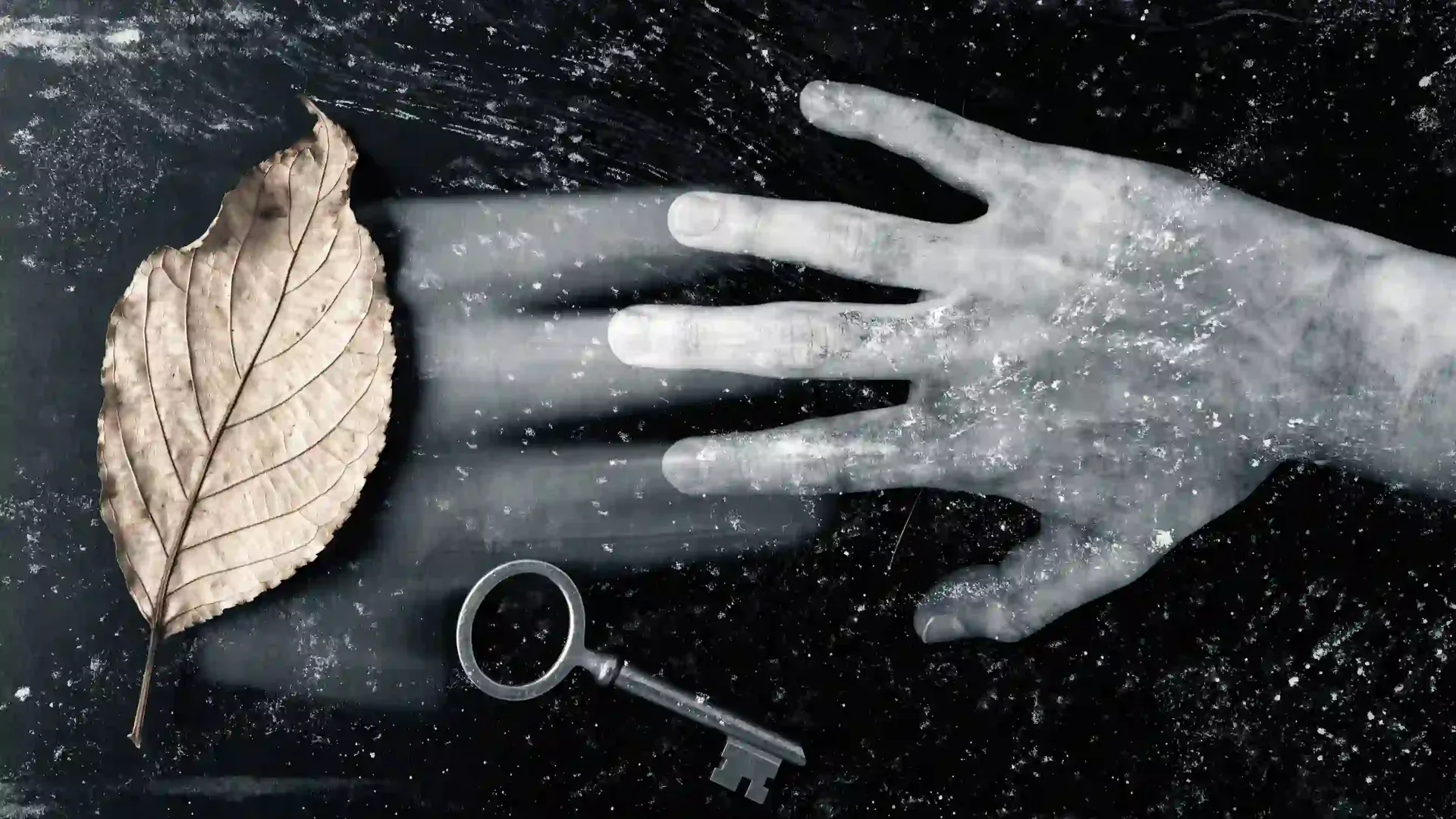
Moving the light or the objects during exposure creates layered, shifting shapes.
How to recognize photogram
- White or pale silhouettes on a dark ground.
- No perspective: objects lie flat at real size.
- Transparent overlapping shapes and soft glowing edges.
Where people get it wrong
A photogram is not the same as a cyanotype: cyanotype is a printing process that can make photograms, but also prints from negatives. And photograms are not simply 'shadows': the most interesting ones use transparency, layering and movement of light.
Words to describe photogram
Precise words for the qualities above. Combine a few of them instead of naming the style or artist alone.
- camera-less photogram
- negative white silhouettes
- translucent layered shapes
- glowing soft edges
- cyanotype Prussian blue
- silver gelatin black and white
- lace and leaf impressions
- abstract light drawing
- 1:1 object scale
- rayograph style
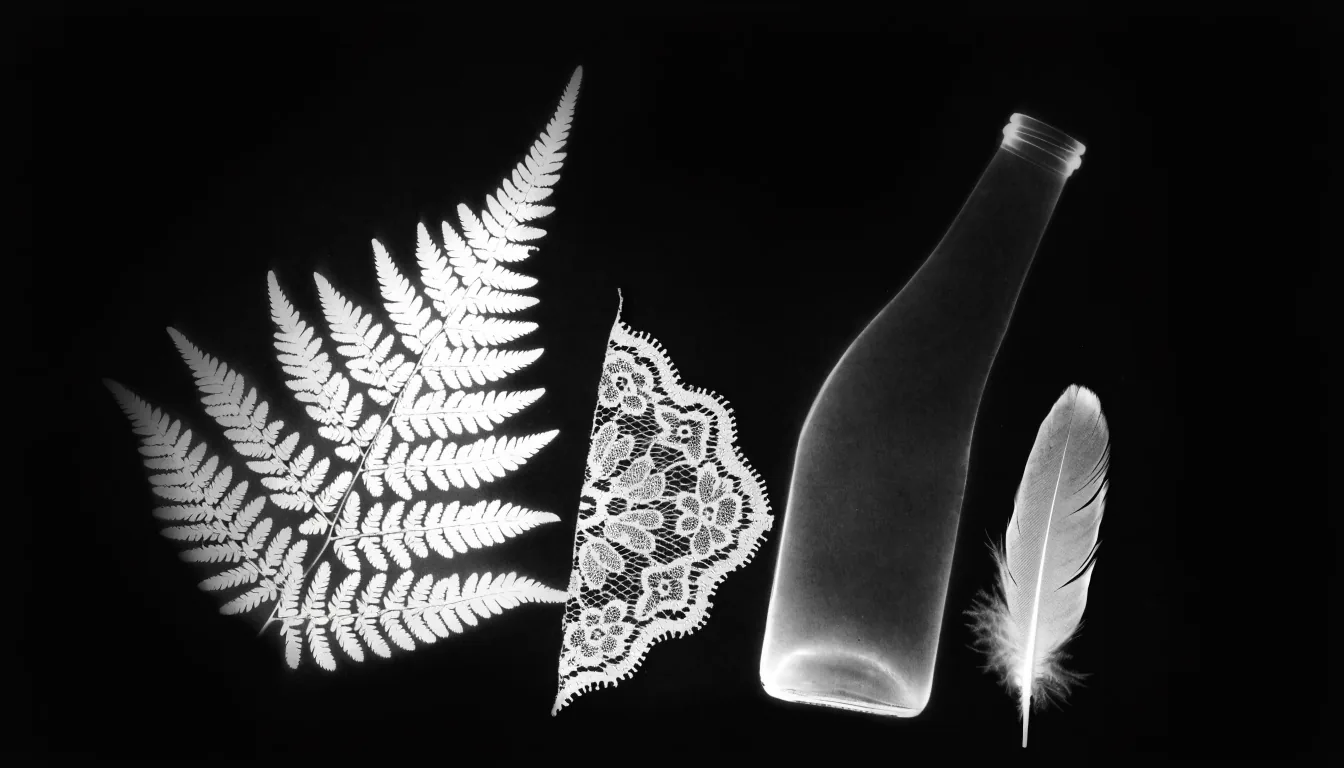
A black and white photogram: a fern leaf, a piece of lace and a small glass bottle laid on photographic paper, appearing as glowing white and grey silhouettes on deep black, the lace pattern sharp, the bottle's curve softly blurred where it lifted from the paper.
What to take from photogram today
- Name the process: silver gelatin photogram or cyanotype.
- List the objects and how much light each lets through.
- Describe edges and tones: sharp, glowing, layered.
Questions about photogram
What is photogram?
A photograph made without a camera: objects placed on light-sensitive paper leave glowing silhouettes where they blocked the light.
How do you recognize photogram?
White or pale silhouettes on a dark ground. No perspective: objects lie flat at real size. Transparent overlapping shapes and soft glowing edges.
How do you describe photogram in words or a prompt?
Name the process: silver gelatin photogram or cyanotype. List the objects and how much light each lets through. Describe edges and tones: sharp, glowing, layered.
Collect five objects with different transparency, such as a leaf, a key, a piece of lace, a glass and a feather. Describe the photogram they would make: which would be pure white, which grey, which blurry.