Moving the lens
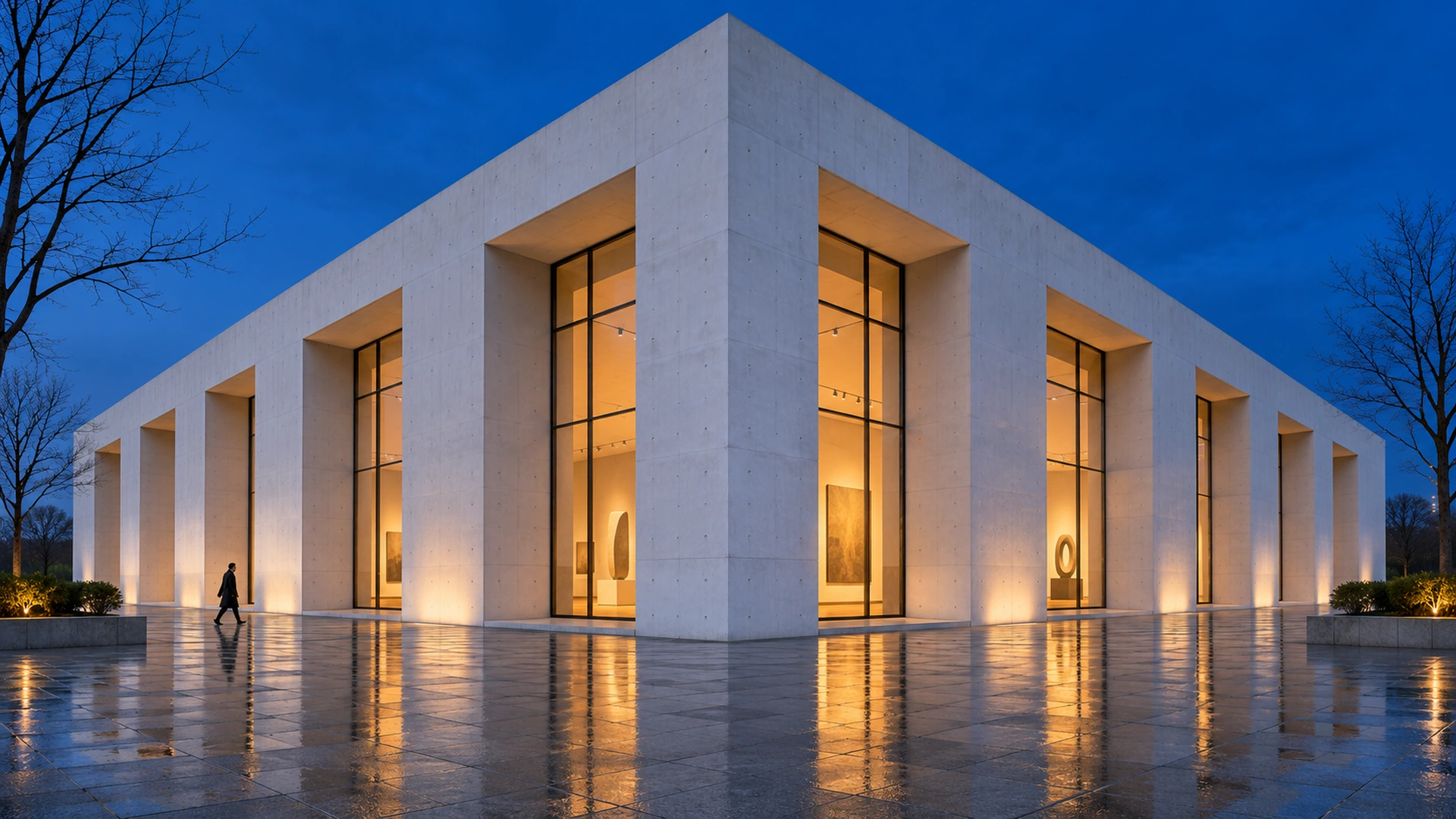
On most cameras the lens and sensor are fixed parallel to each other. Large-format view cameras, and later special tilt-shift lenses, let photographers move them. Shifting the lens up or down keeps the camera level while framing a tall building, so its vertical lines stay straight instead of converging. Tilting the lens changes the angle of the plane of focus, following a rule described by Theodor Scheimpflug in a 1904 patent.
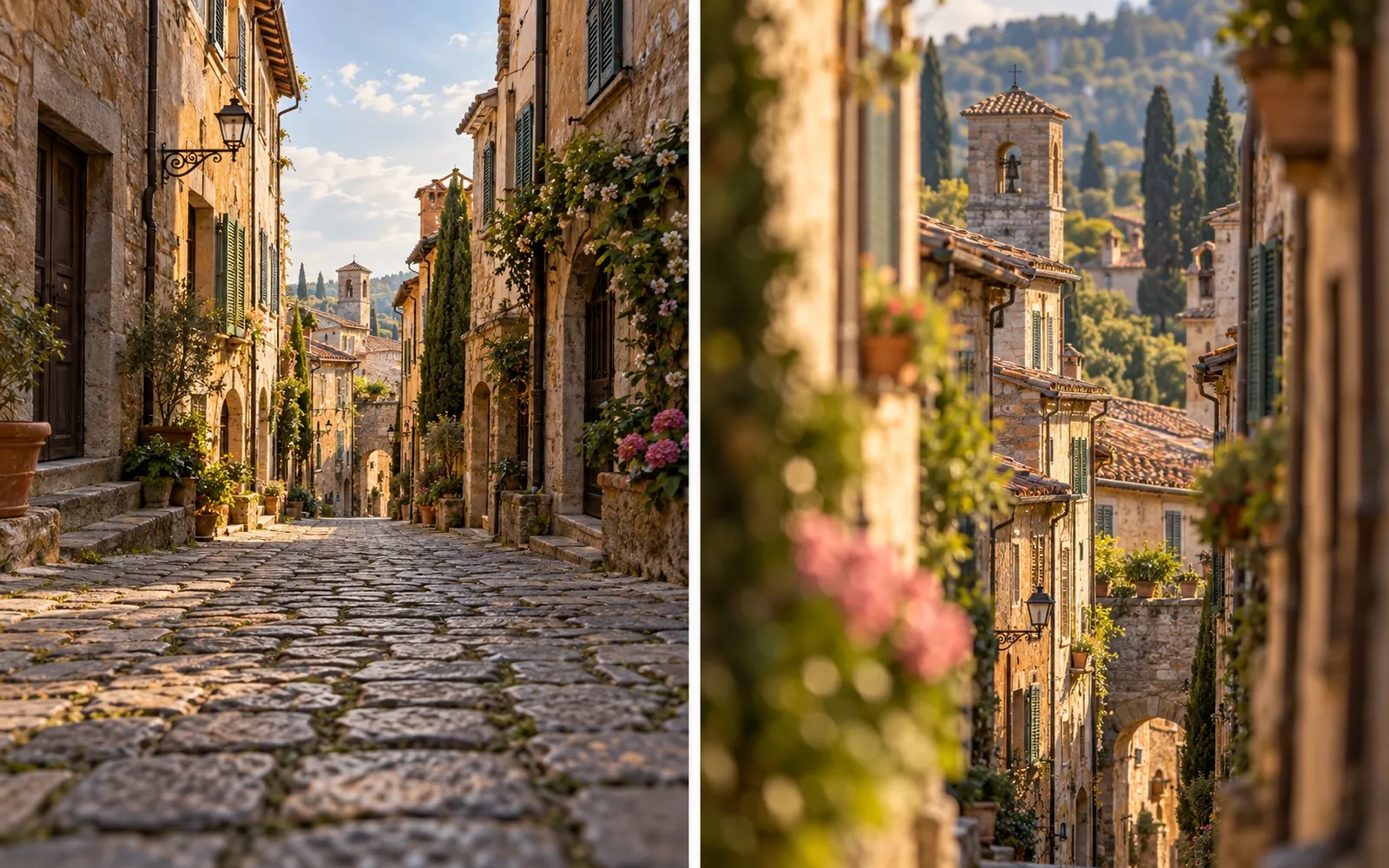
Tilt can extend focus along a whole tabletop or shrink it to a thin diagonal band. That second use created the effect most people mean by 'tilt-shift': photograph a real scene from a high viewpoint with only a narrow strip in focus, and the brain reads it as a small model photographed up close, because that is how macro photographs of models look. Photographers such as Olivo Barbieri made the look famous in the 2000s, and it can now be imitated in editing or with generated images.
Visual anatomy of tilt-shift photography
A thin horizontal or diagonal band sharp; strong blur above and below.
High, looking down at roughly 30–60 degrees, like viewing a model.
Streets, crowds, cars, trains, harbours, stadiums, construction sites.
Often boosted saturation and contrast, making things look painted.
Bright daylight with clear shadows, which adds to the toy look.
With shift: perfectly parallel verticals and no keystone distortion.
Terms
Angling the lens to rotate the plane of focus.
Sliding the lens parallel to the sensor to reframe without tilting the camera.
The rule that relates lens, sensor and focus planes when the lens is tilted.
Imitating the effect with selective blur in editing.
How to recognize tilt-shift photography
- Only a narrow band in focus.
- A high view of a real place.
- Bright, saturated colour.
- People and cars that look like figurines.
Where people get it wrong
Adding blur to any photograph and calling it tilt-shift. The miniature effect needs the right viewpoint: from high above, at a distance, looking down at a scene with many small elements. A blurred close-up of a face or a ground-level street just looks out of focus.
Words to describe tilt-shift photography
Precise words for the qualities above. Combine a few of them instead of naming the style or artist alone.
- tilt-shift
- miniature effect
- toy town look
- narrow band of focus
- selective focus
- high viewpoint
- Scheimpflug principle
- shift lens
- corrected verticals
- boosted saturation
- bright daylight
- model-like scene
An original tilt-shift photography study: a busy harbour town seen from a high hill, only a thin band across the middle in sharp focus with boats, cars and tiny people, strong blur above and below, bright midday sun, saturated toy-like colours, the scene looking like a miniature model.
What to take from tilt-shift photography today
- Set a high viewpoint looking down.
- Ask for a thin band of sharp focus across the middle.
- Use bright daylight and boosted, toy-like colour.
- Choose a busy scene with many small elements.
Questions about tilt-shift photography
How does the tilt-shift miniature effect work?
A narrow band of focus seen from above mimics the shallow depth of field of macro photos of small models, so the brain reads a real scene as a miniature.
What are tilt-shift lenses used for besides miniatures?
Architecture (shift keeps verticals straight) and product or landscape photography (tilt extends focus across a plane).
Describe a real place you know as if it were a model railway layout: the viewpoint, the band of focus, which tiny details catch the eye, and the colour of the light.
Sources and further reading
- Theodor Scheimpflug, British patent no. 1196 (1904).
- Harold M. Merklinger, Focusing the View Camera (1993).