The blue sun print
The astronomer and scientist Sir John Herschel invented the cyanotype in 1842. Paper is coated with two iron salts, ferric ammonium citrate and potassium ferricyanide, then exposed to sunlight or ultraviolet light under a negative or flat objects. Rinsed in water, the exposed areas turn a deep Prussian blue while covered areas stay white.
In 1843 the botanist Anna Atkins used it to make Photographs of British Algae: Cyanotype Impressions, often called the first book illustrated with photographs. Engineers later used the process to copy drawings, which is where the word blueprint comes from. Today it is loved for its simplicity, its blue and its handmade look, on paper, fabric and in mixed media.
Visual anatomy of cyanotype
Deep Prussian blue with white or pale blue highlights.
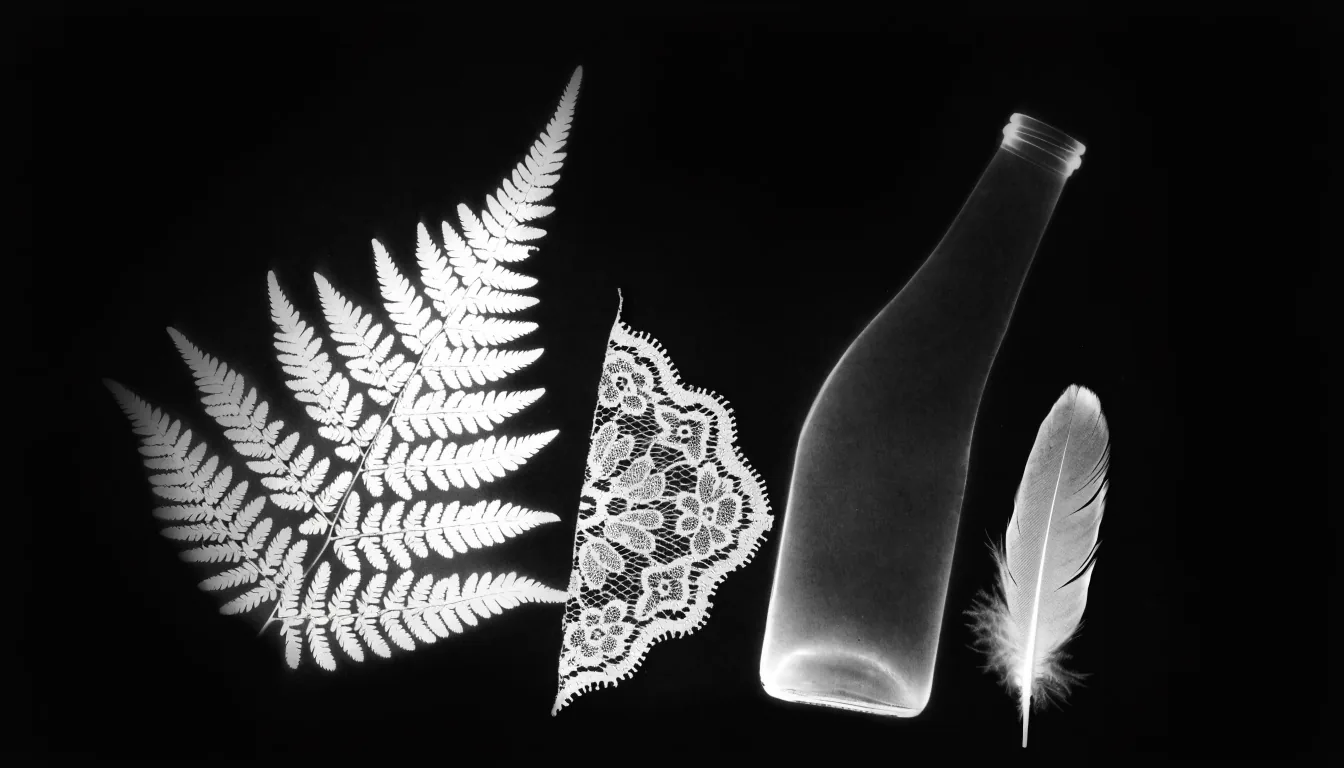
Flat objects such as leaves, lace and feathers become crisp white shapes.
Brushstrokes of the coating often remain visible at the borders.
From hard silhouettes to soft gradients where objects lift off the paper.
Watercolour paper, cotton and linen, with visible texture.
Toning with tea or coffee gives brown or purple-black tones.
Key terms in cyanotype
Exposure in direct sunlight, usually a few minutes.
Negative or object placed directly on the paper.
Botanist and the first great cyanotype artist.
Changing the blue with tannins from tea, coffee or wine.
How to recognize cyanotype
- Deep blue with white silhouettes.
- Visible brushed edges of the coating.
- Botanical or lace-like shapes on textured paper.
Where people get it wrong
Cyanotype is often imitated with a blue filter. The real look comes from the process: white shapes with soft or sharp edges depending on how flat the object lay, uneven coating and the texture of the paper.
Words to describe cyanotype
Precise words for the qualities above. Combine a few of them instead of naming the style or artist alone.
- cyanotype print
- prussian blue
- white botanical silhouettes
- sun print
- brushed coating edges
- watercolour paper texture
- contact print
- soft gradient where objects lift
- tea-toned cyanotype
- camera-less photography
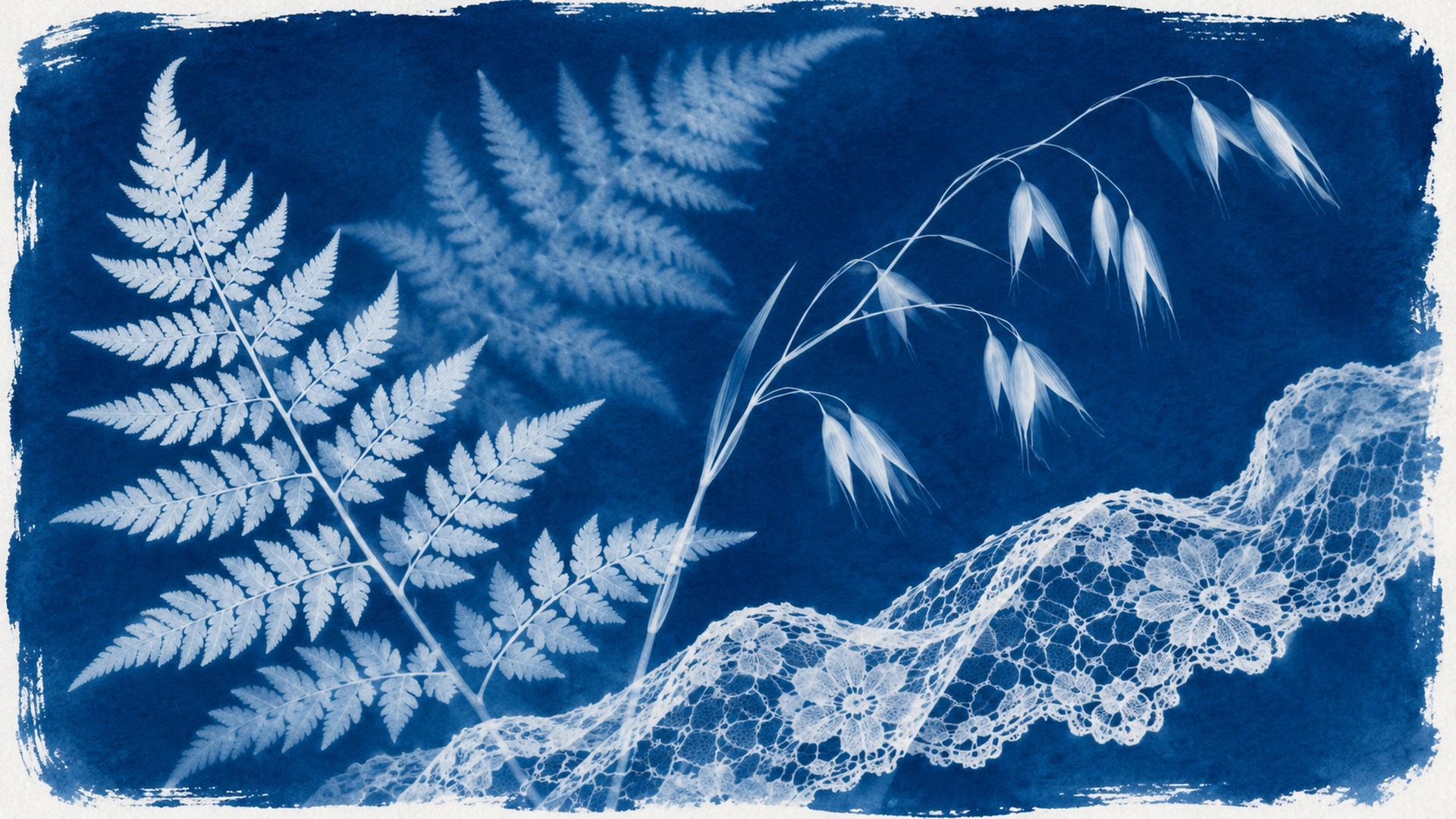
An original cyanotype study: ferns, a sprig of wild oats and a piece of lace laid on textured watercolour paper, printed as crisp and soft white silhouettes on deep Prussian blue, uneven brushed edges of the coating around the border. Not a copy of any existing print. No text.
What to take from cyanotype today
- Describe the shapes and how sharp their edges are.
- Name the blue and any toning.
- Mention the paper or fabric and the brushed border.
Questions about cyanotype
What is cyanotype?
The blue sun print: a 19th-century photographic process that turns sunlight, iron salts and water into Prussian-blue images of plants, negatives and shadows.
How do you recognize cyanotype?
Deep blue with white silhouettes. Visible brushed edges of the coating. Botanical or lace-like shapes on textured paper.
How do you describe cyanotype in words or a prompt?
Describe the shapes and how sharp their edges are. Name the blue and any toning. Mention the paper or fabric and the brushed border.
Collect five flat objects from a walk and plan a cyanotype in words: their arrangement, which edges will be sharp, which soft, and how the border will look.